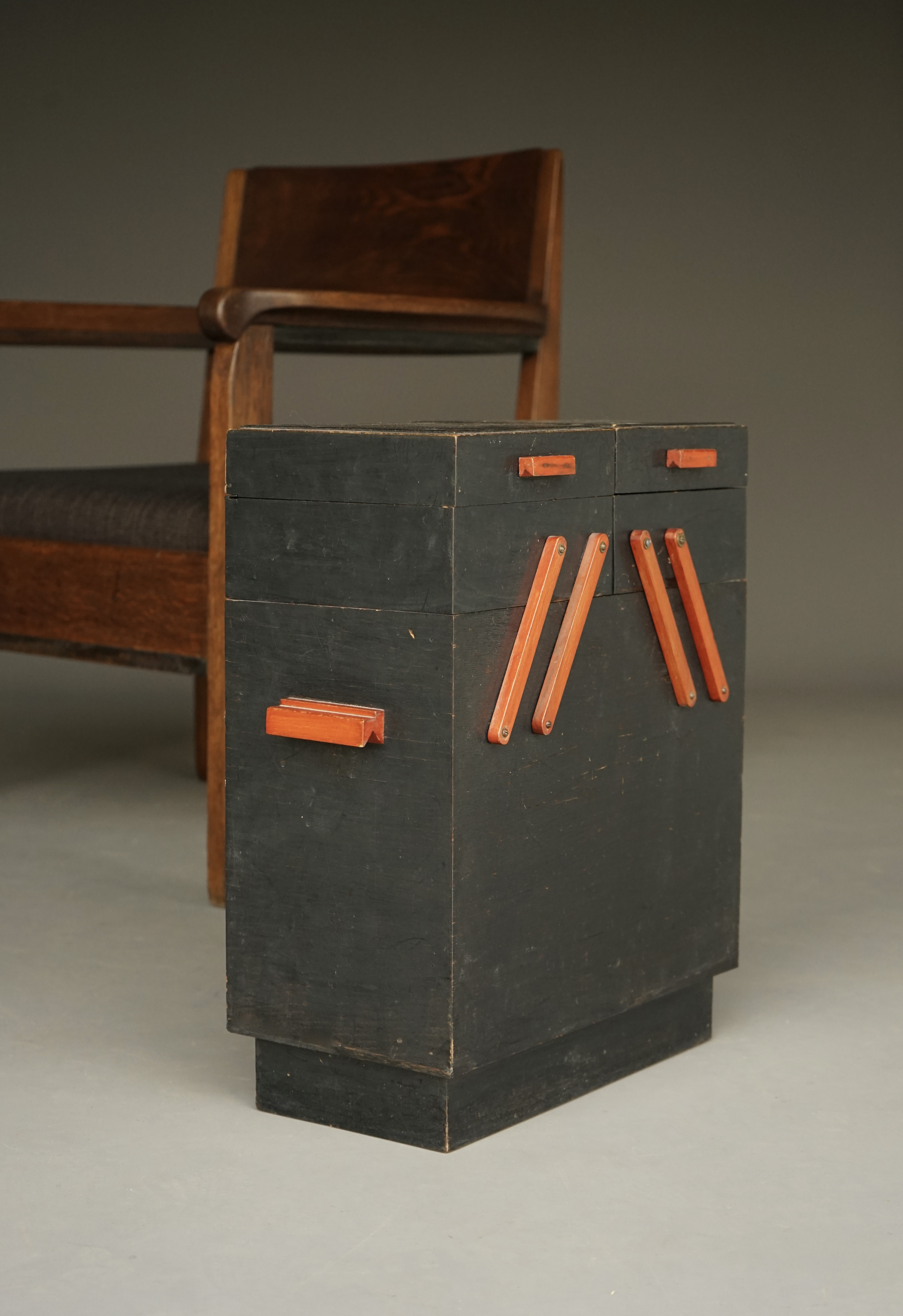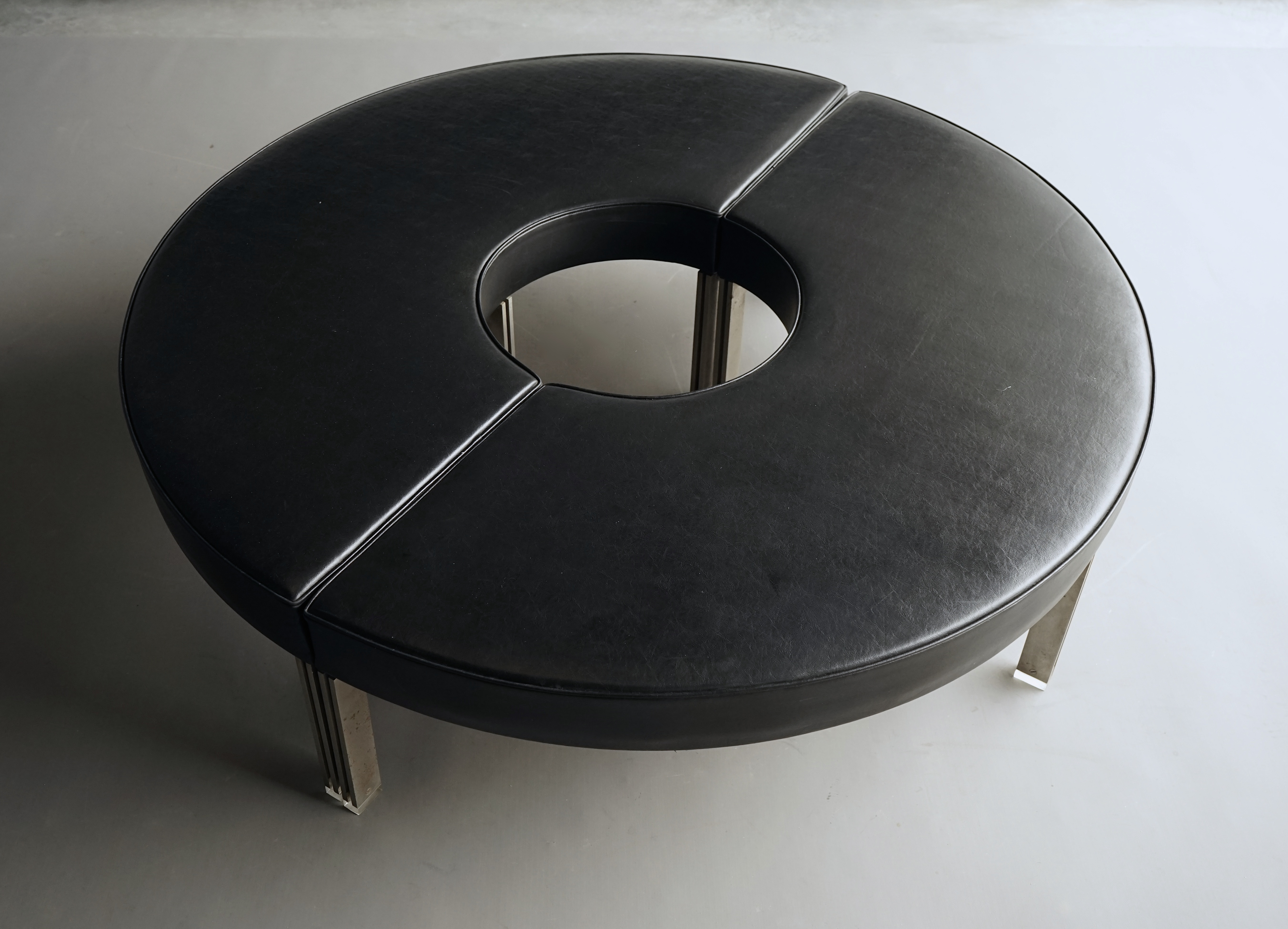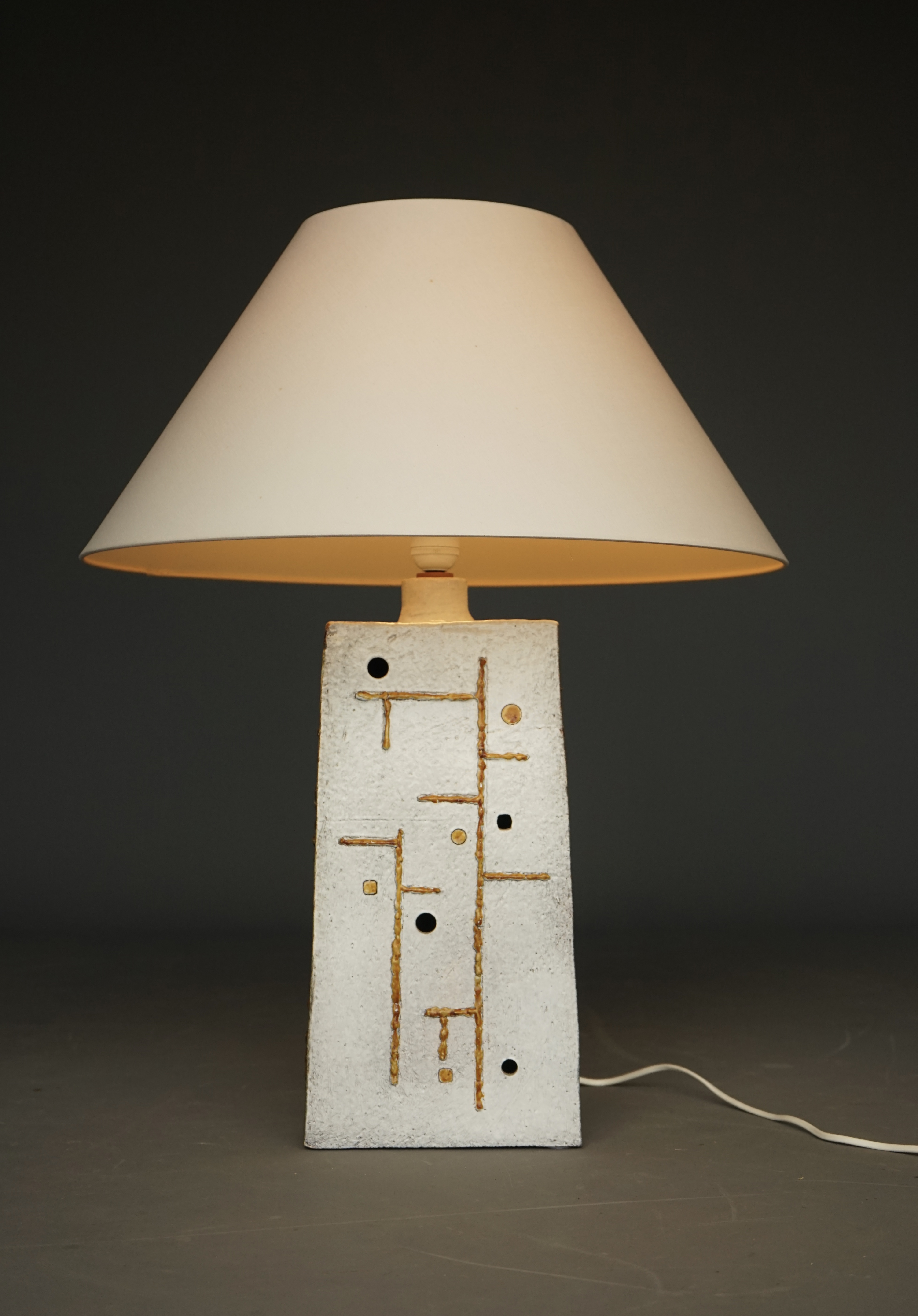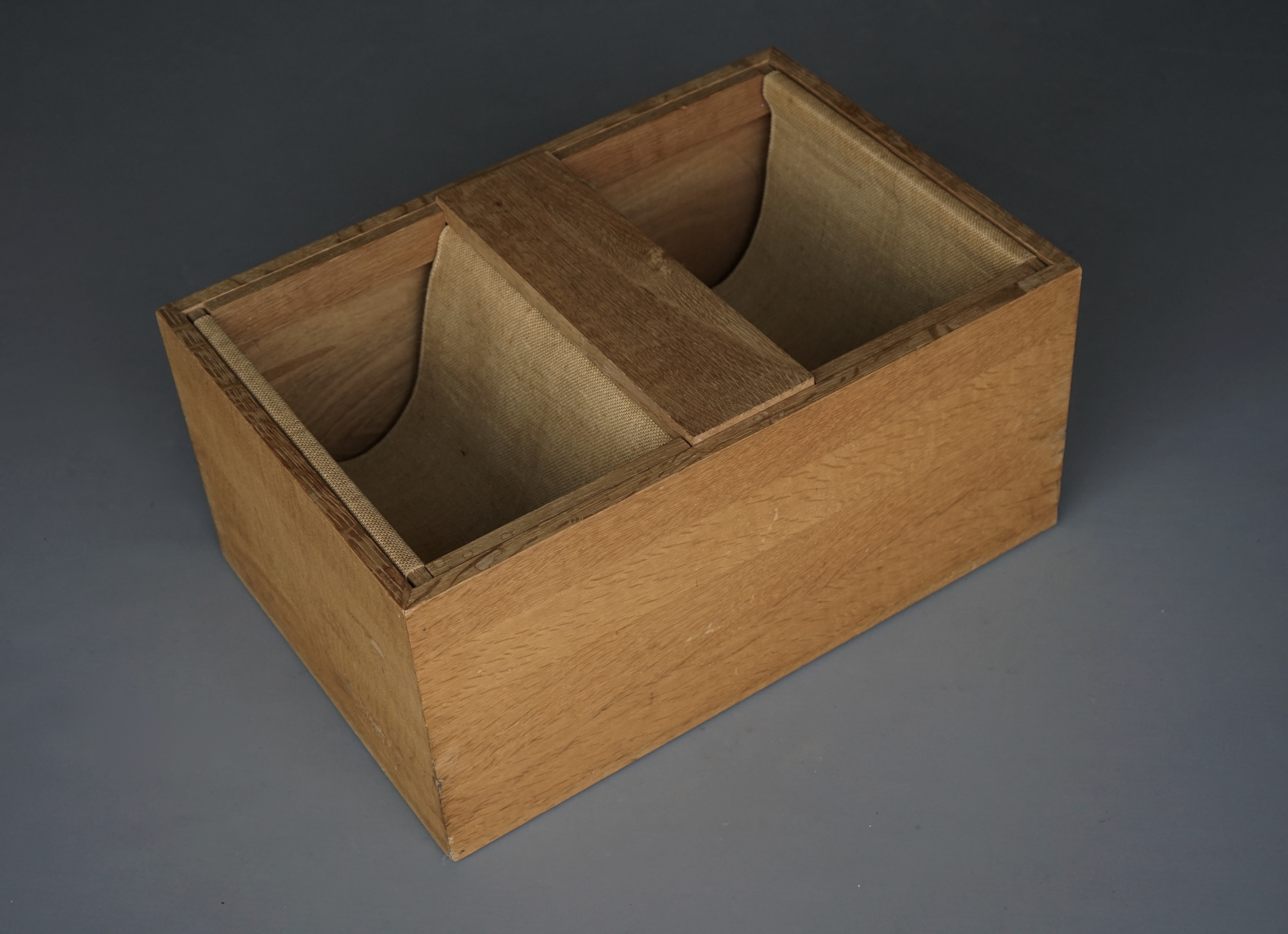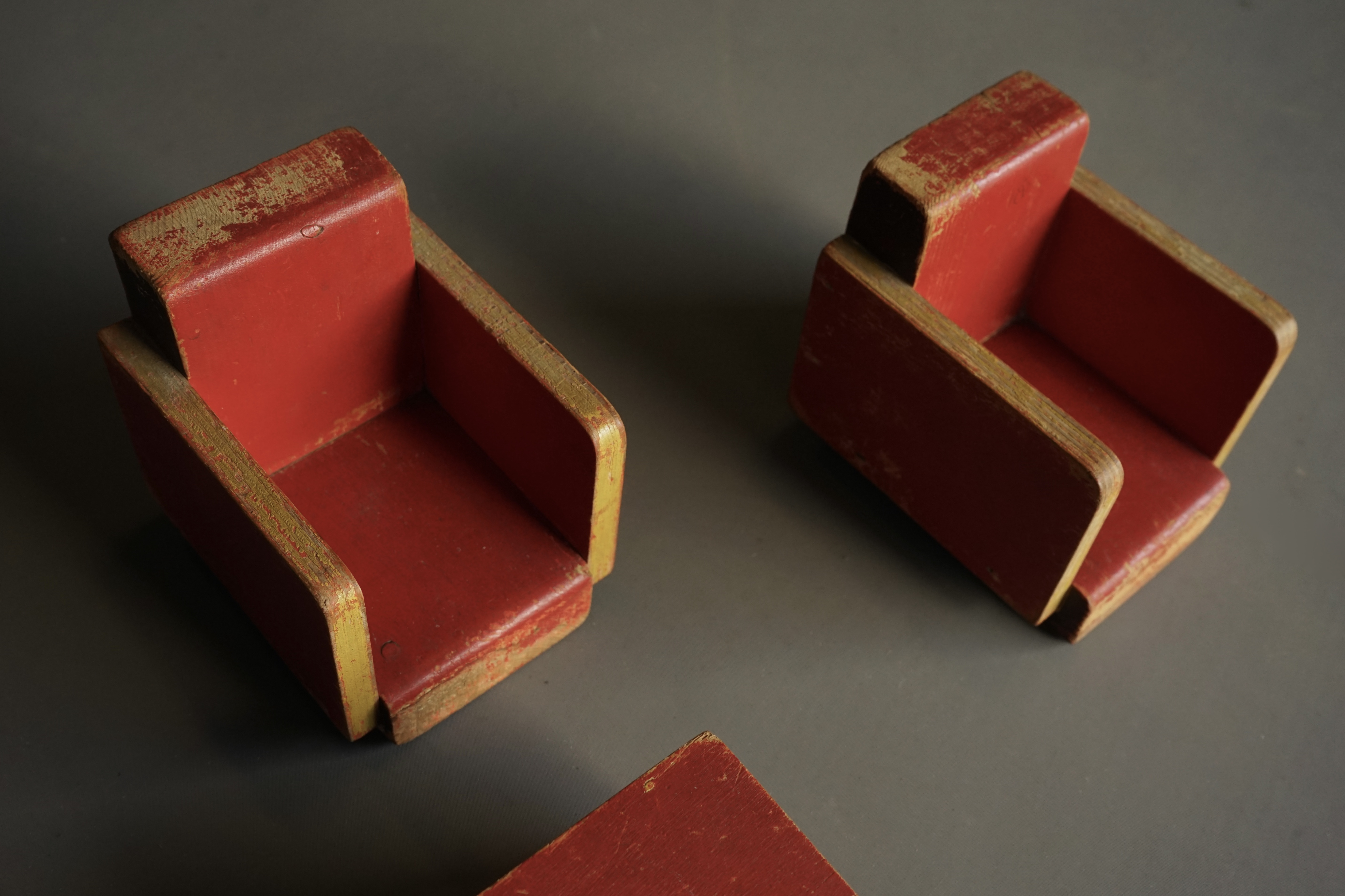
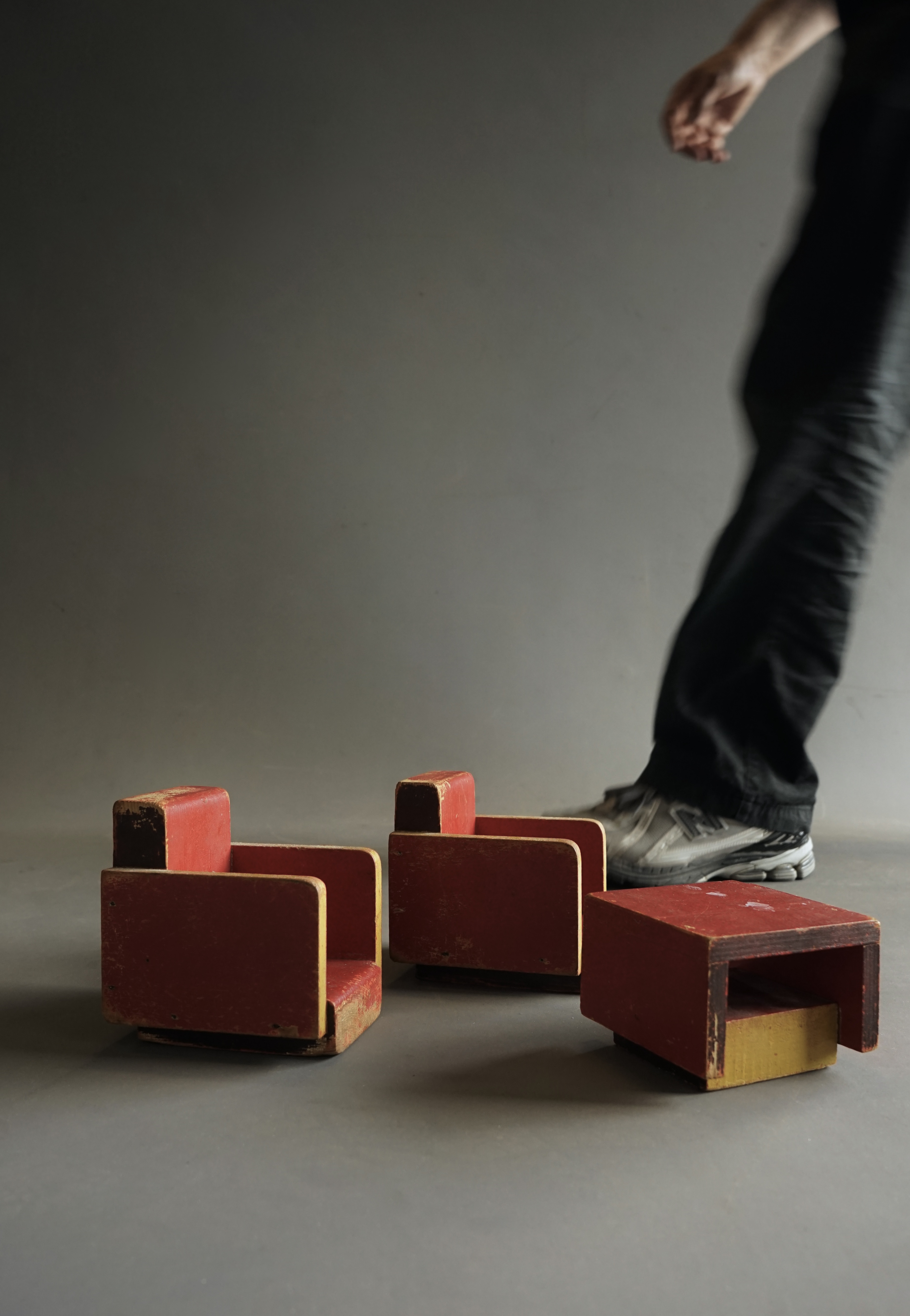
Verzuu, Jacobus Johannes Josephus (Ko) 1901-1971 NL.

ADO speelgoed / toys. Circa 1934-35

Two miniature club chairs and a side table (each piece with company labels and burnished markings)

Between 1925 and 1955 Dutch designer Ko Verzuu designed many toys under the influence of the Dutch Modernist De Stijl painters. His designs were inextricably bound up with innovations in art, health care and pedagogy in the first half of the 20th century. In 1920, the sanatorium Berg en Bosch was founded in the sanctuary on the outskirts of Apeldoorn – this sanatorium offered rest and care to tuberculosis patients. Once patients had recovered from their illness, returning to regular working life often proved to be difficult. In order to prepare patients better for their reintegration, the sanatorium developed a modern treatment: occupational therapy. One of the ways this took shape was in the production of wooden toys. These toys were given the name ADO; an abbreviation that initially stood for Arbeid door Onvolwaardigen (Labour by the Deficient), but was wisely changed in 1962 to Apart Doelmatig Onverwoestbaar (roughly translated as Special Functional Indestructible?)

Price: 1.250,00
http://www.merzbaufurniture.com

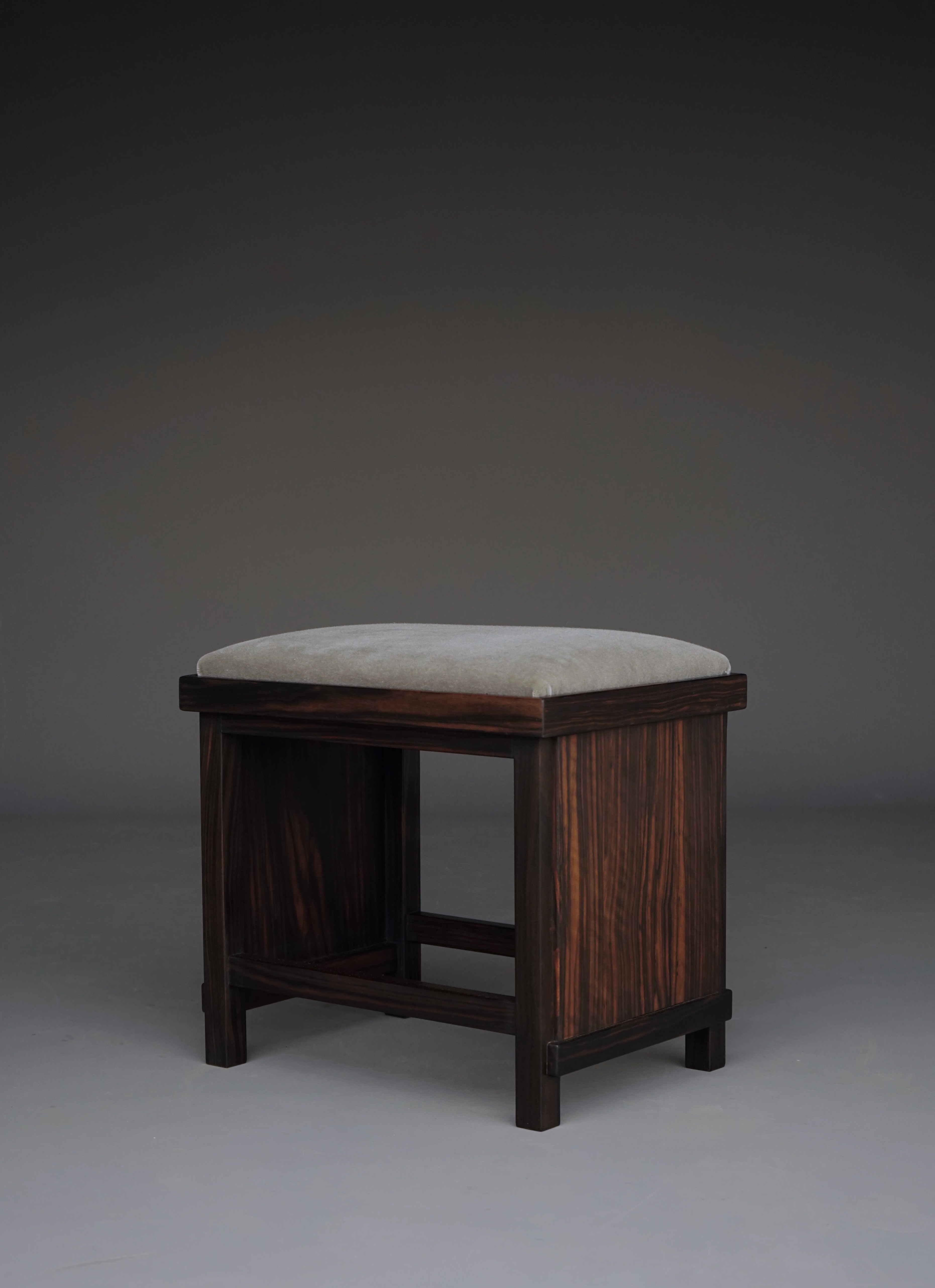
Hendrik (Henk) Wouda (Nl 1885-1946)

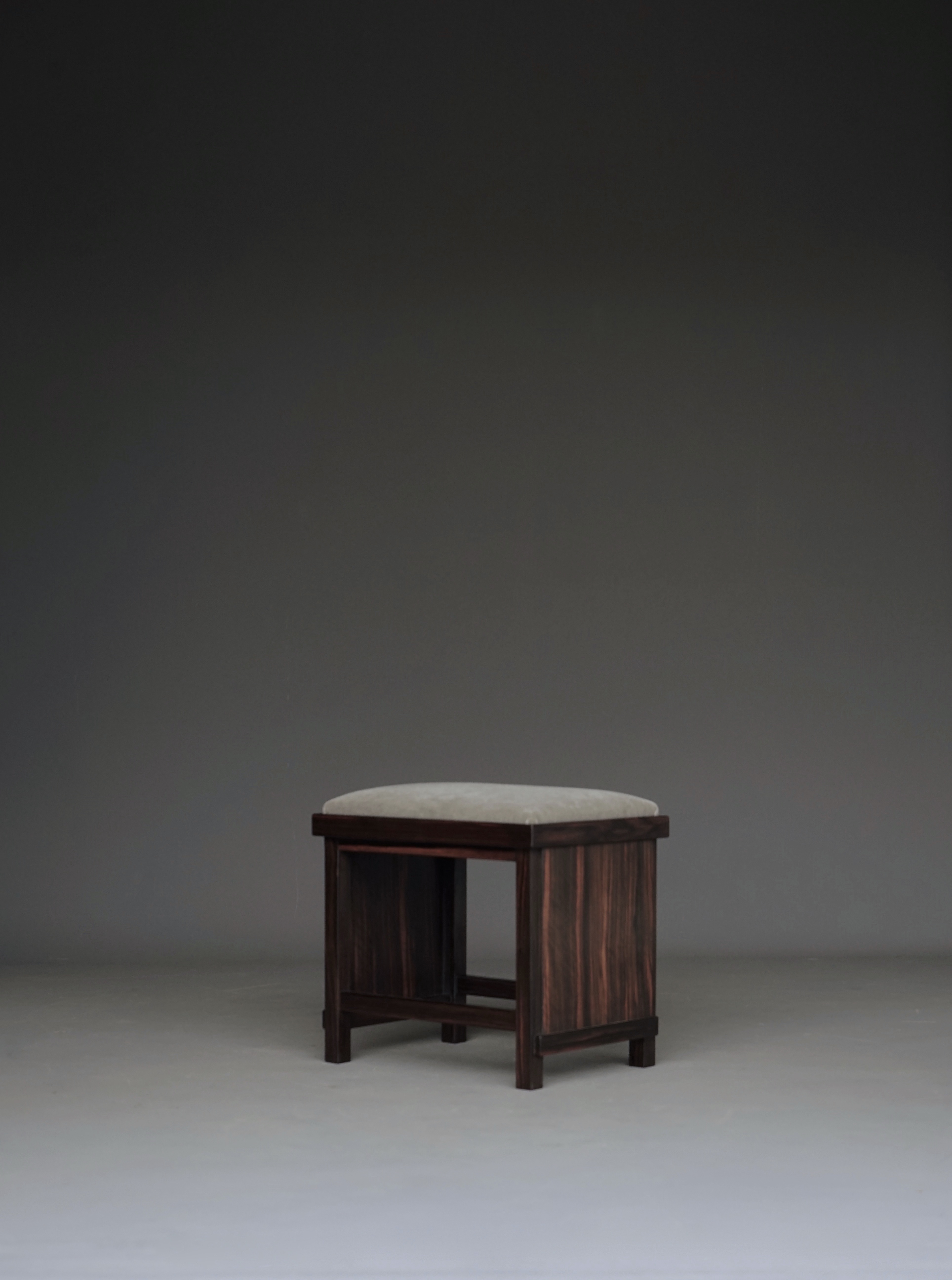
Pander & zonen 1920s. Solid coromandel wood with velvet upholstery.

50cm wide x 38cm deep x 49cm high (seat height). Makers label to the underside.

A rare and important Dutch art deco stool by architect and furniture designer Henk Wouda. This stool would have been made as part of a special commissioned interior design.

After 1916 when Wouda returned from the war he established himself as an architect in Den Haag (The Hague) and a year later joined the renowned furniture firm H.Pander & Zn. It was there that he was given the freedom to develop his own monumental style inspired by the work of the American architect Frank Lloyd Wright. Sleek, austere designs such as this stool are characteristic of this Hague Style also known as Hague Rationalism or the New Hague School.

The stool is a rare find especially as it is completely constructed in solid coromandel wood. The grey/green velvet fabric and upholstery is a later addition to the stool that is fully in keeping with the authenticity of the stool (horsehair filling).

Price: 5.200 euro

http://www.merzbaufurniture.com

Large Dogon scale. Circa 1930s-40s.

210cm high (mounted on steel plate base)

A superb example of an African Dogon tribal ladder/scale. This example is believed to have been made in Mali from the early to mid-twentieth century.
Traditionally the African Dogon ladder was used by the Dogon people to access the upper levels of granaries, climb onto the flat roofs of houses, and bridge clefts in cliffs.

Its repeated forms give it the aesthetic quality of a modernist sculpture.

Price: 2.400 euro

http://www.merzbaufurniture.com