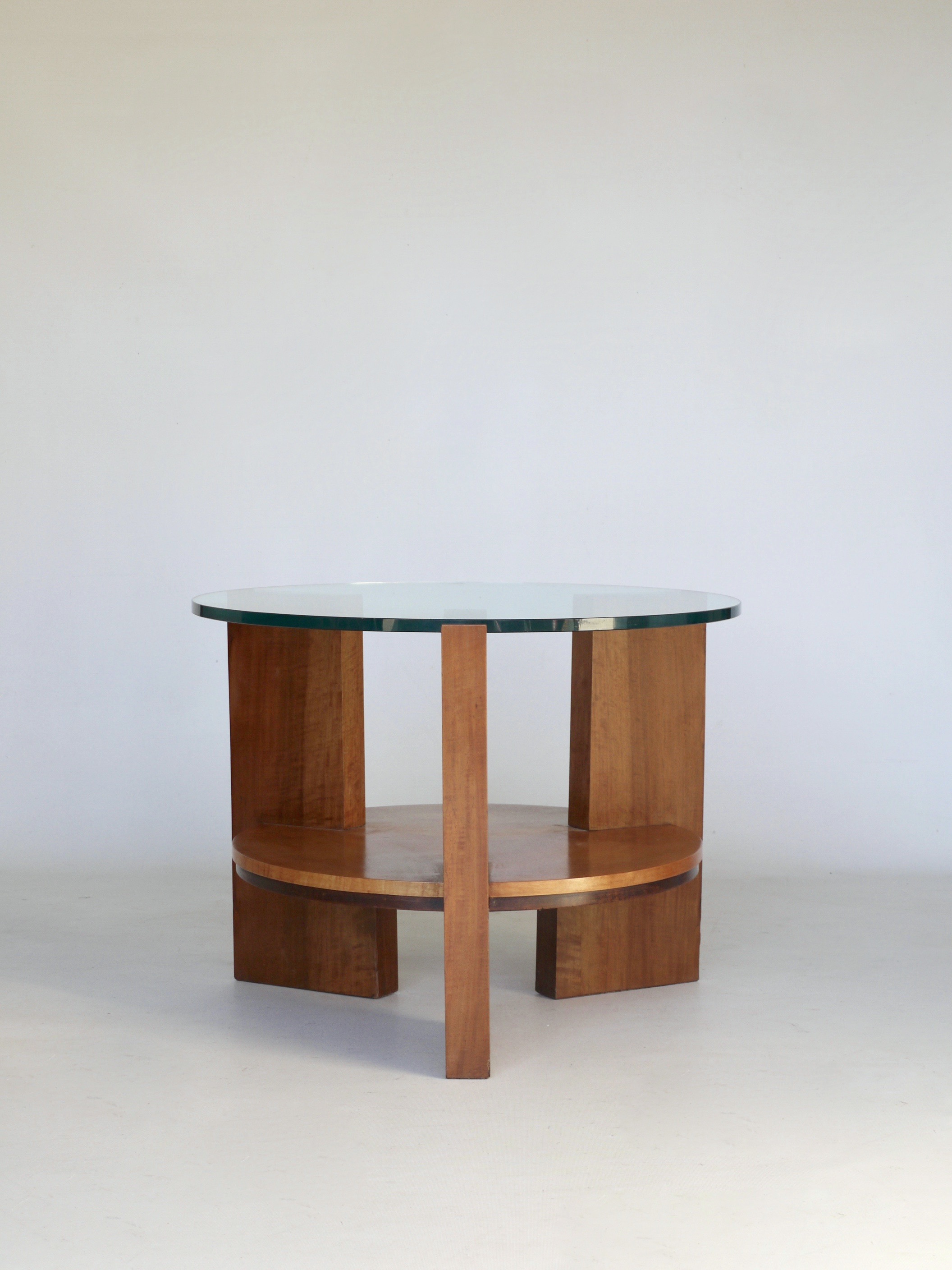
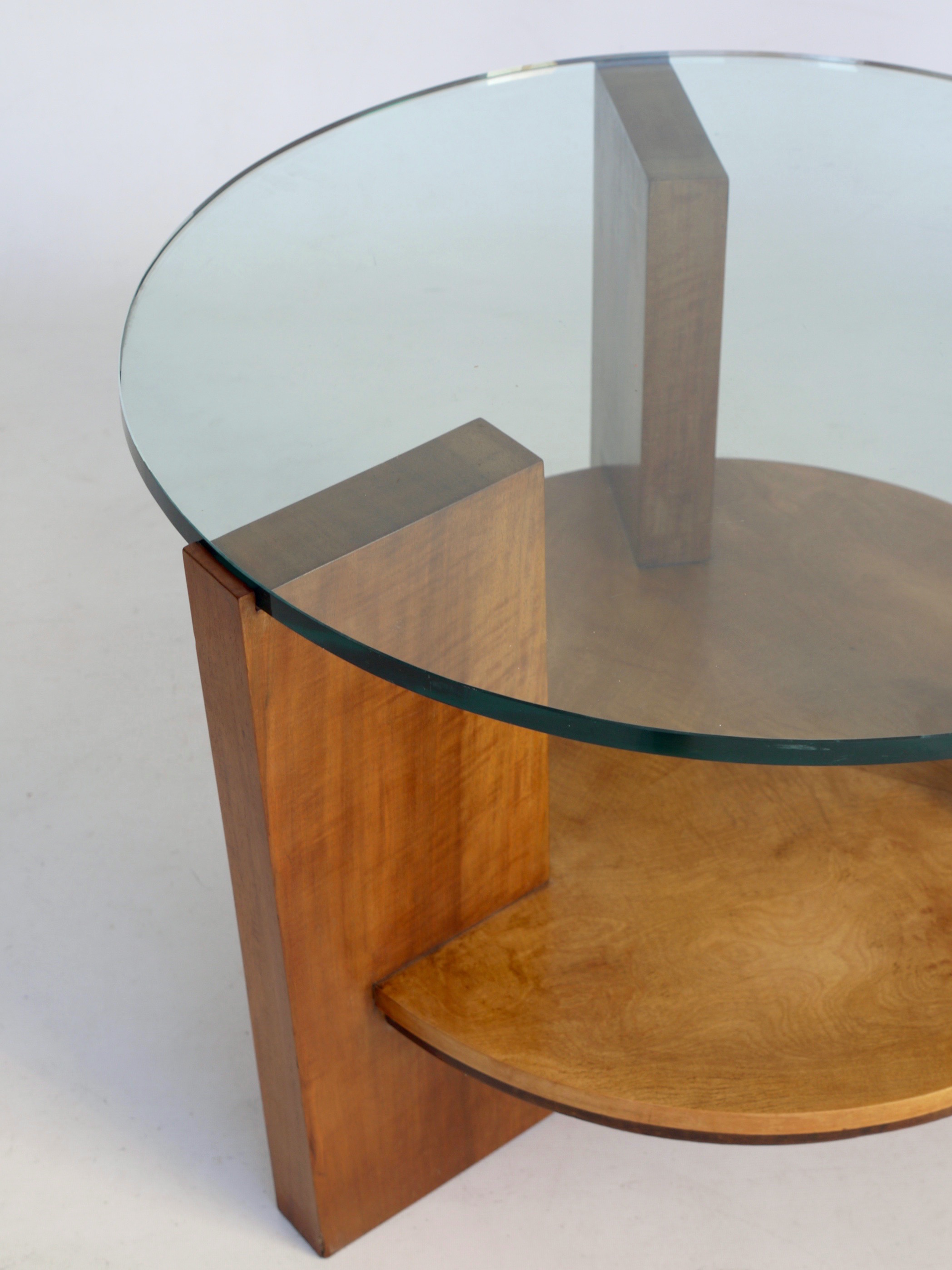
Art Deco/ modernist circular side table.
Maple and cherry woods with thick glass top. 75cm diameter x 57cm high.
A good quality Dutch 1930s/40s Haagse School (Hague School) side table with simple block structure.
Superb condition.
Price: 1.000 euro
furniture, art & design
Art Deco/ modernist circular side table.
Maple and cherry woods with thick glass top. 75cm diameter x 57cm high.
A good quality Dutch 1930s/40s Haagse School (Hague School) side table with simple block structure.
Superb condition.
Price: 1.000 euro
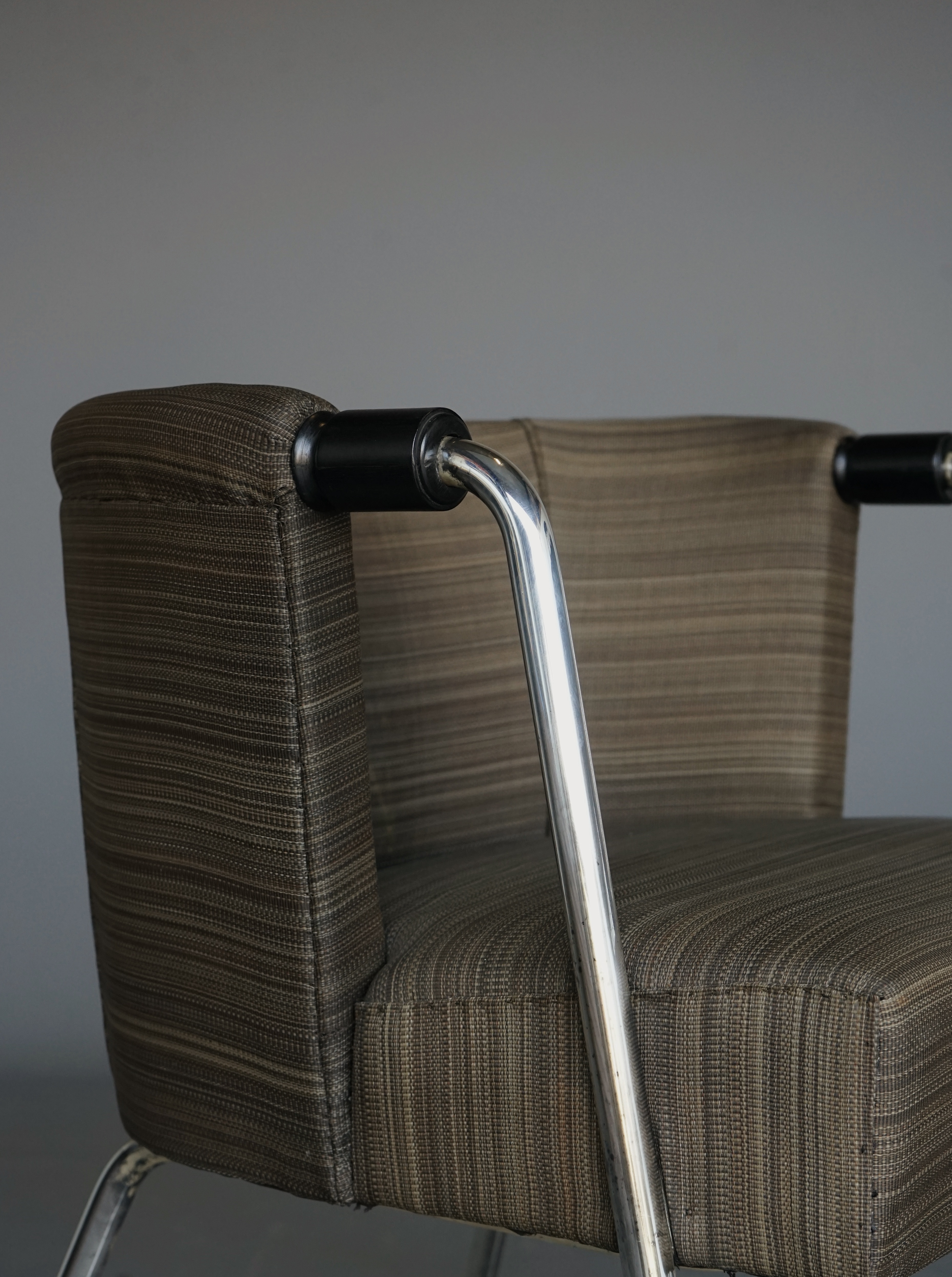
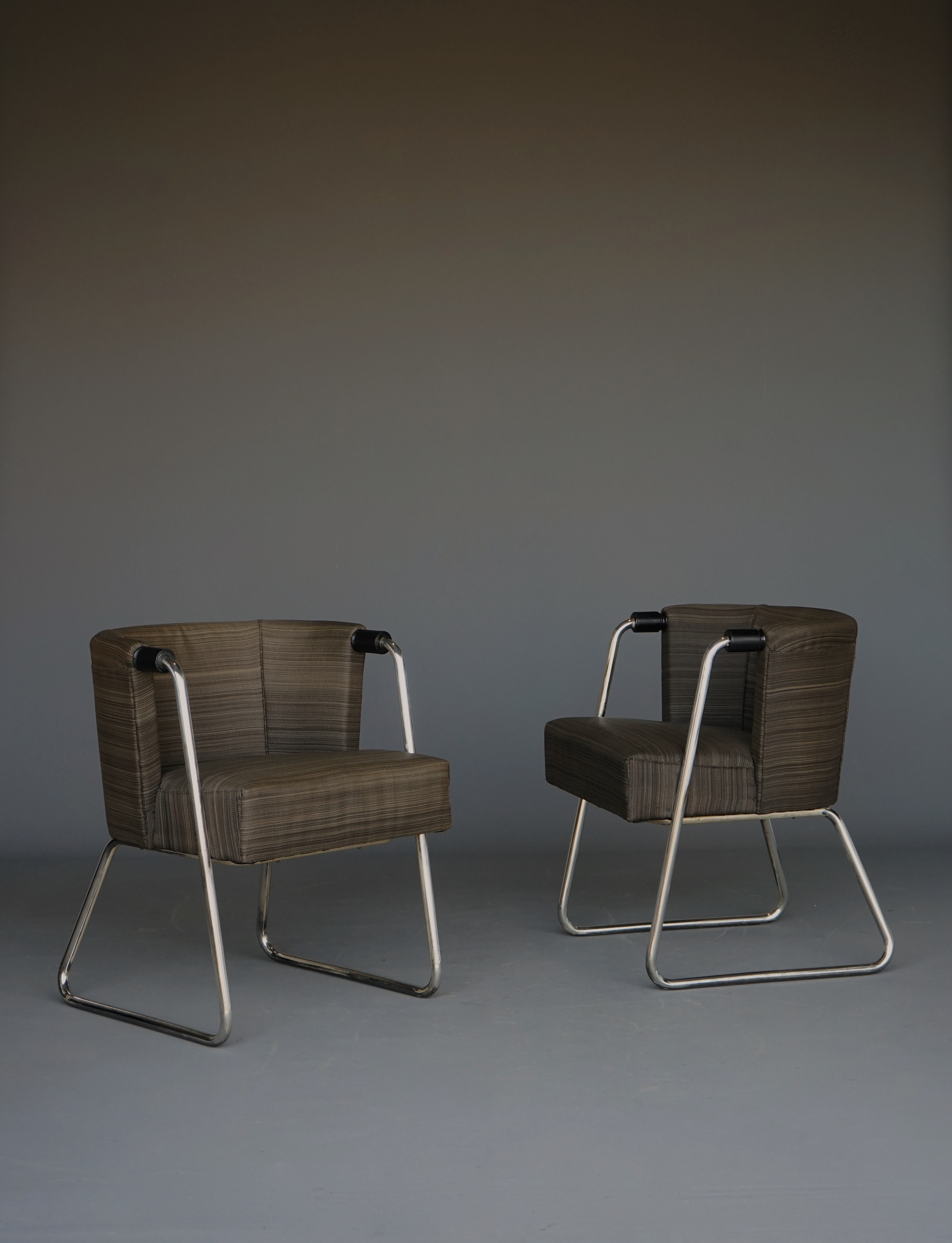
Exceptional pair of armchairs (or possible desk chairs).
Artifort. 1930s
A pair of rare Dutch modernist /functionalist chairs manufactured in the highest quality materials: silver-plated frames, horsehair upholstered seats and with ebony handgrips.
The chairs are from the provincial government building in Maastricht designed in the 1930s by the then ‘rijksbouwmeester’ (chief government architect) Gustav Cornelis Bremer. They were produced by the Maastricht company Artifort as a one-off commission exclusively for the members of the provincial council.
Price: 3.850 euro
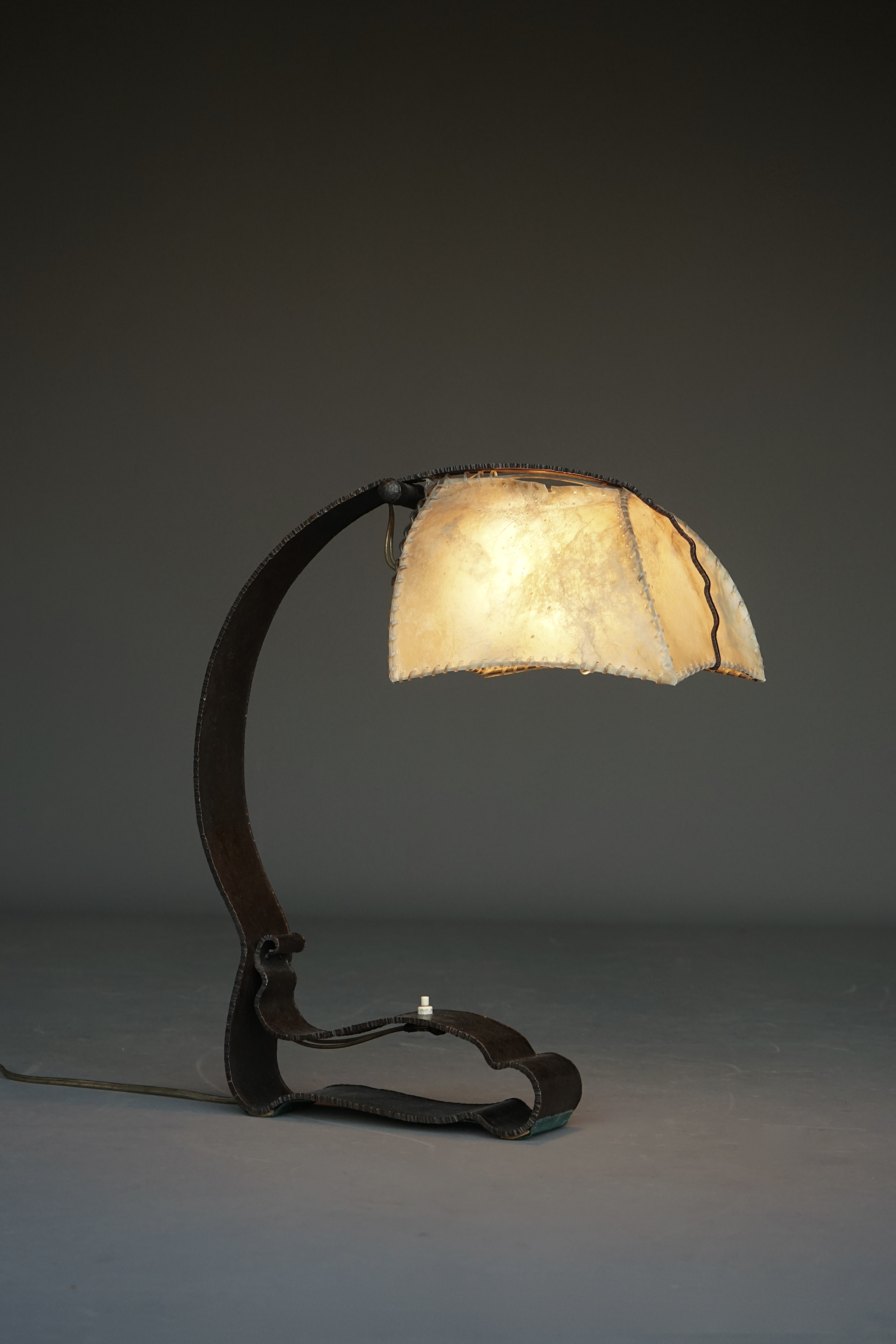
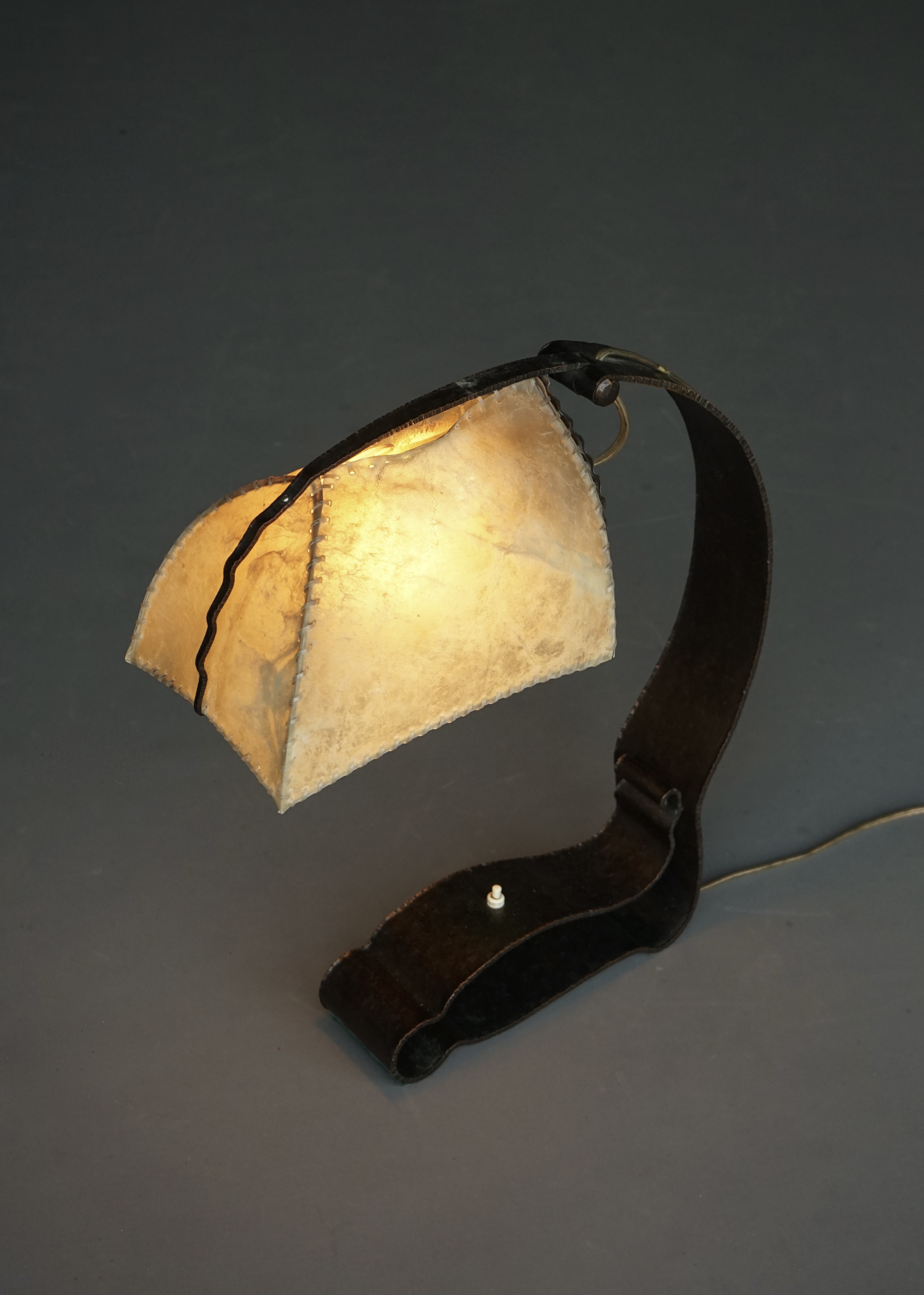
Large Amsterdam School desk lamp. Circa 1920s.
41 x 19 x 52.5cm high
Hand-forged wrought iron desk lamp with original parchment lamp shade. The shade has a bit of heat damage to the top.
The scrolling organic, naturalist forms of this lamp is typical of the Dutch art deco movement known as the “Amsterdamse School’. In the early c20th the Dutch forged a clear identity in the decorative arts that combined the influences of both the Dutch colonies, the ethos of the European Arts & Crafts and Art Nouveau (Nieuwe Kunst) movements.
Price: 1.450 euro
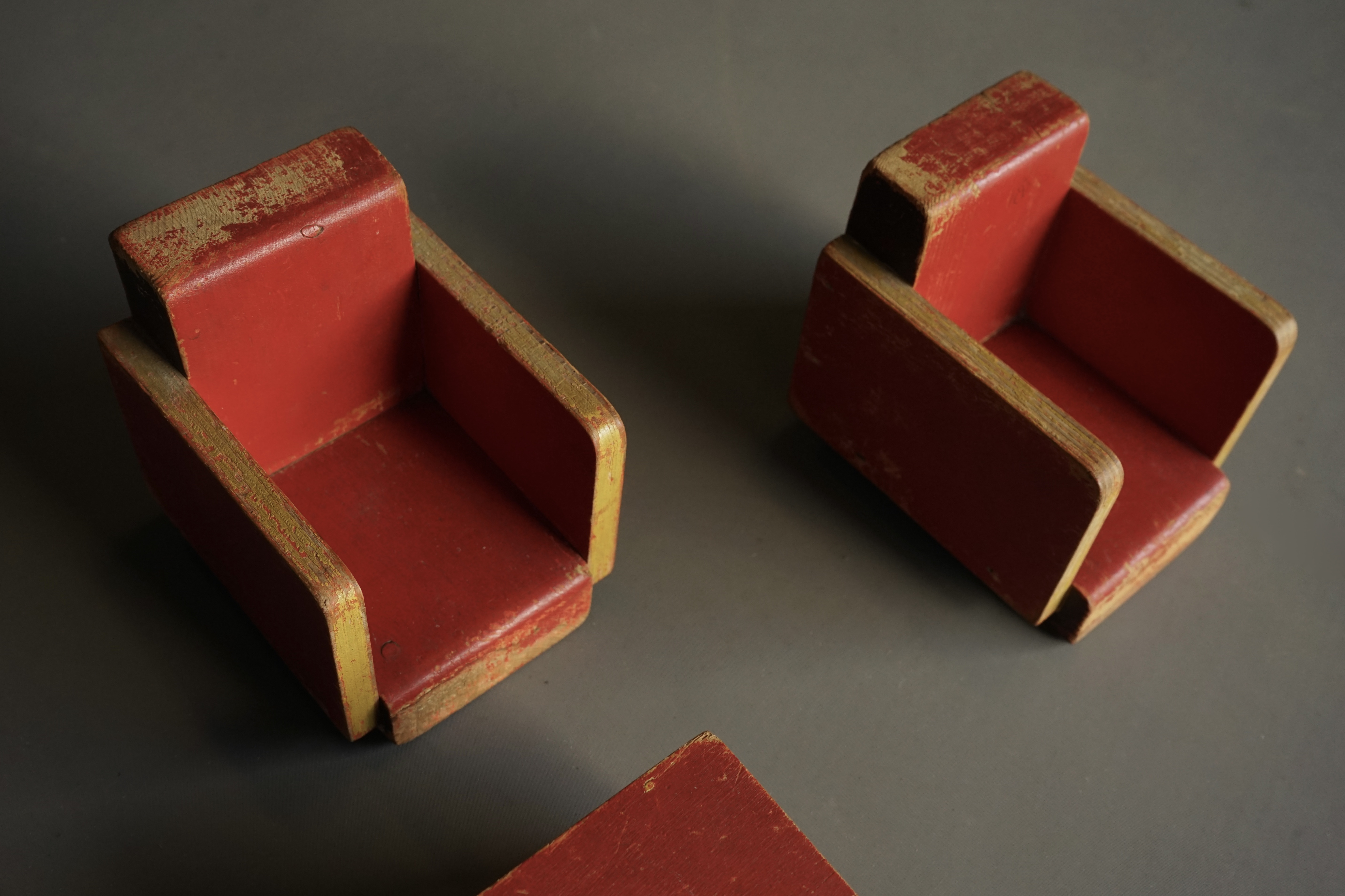
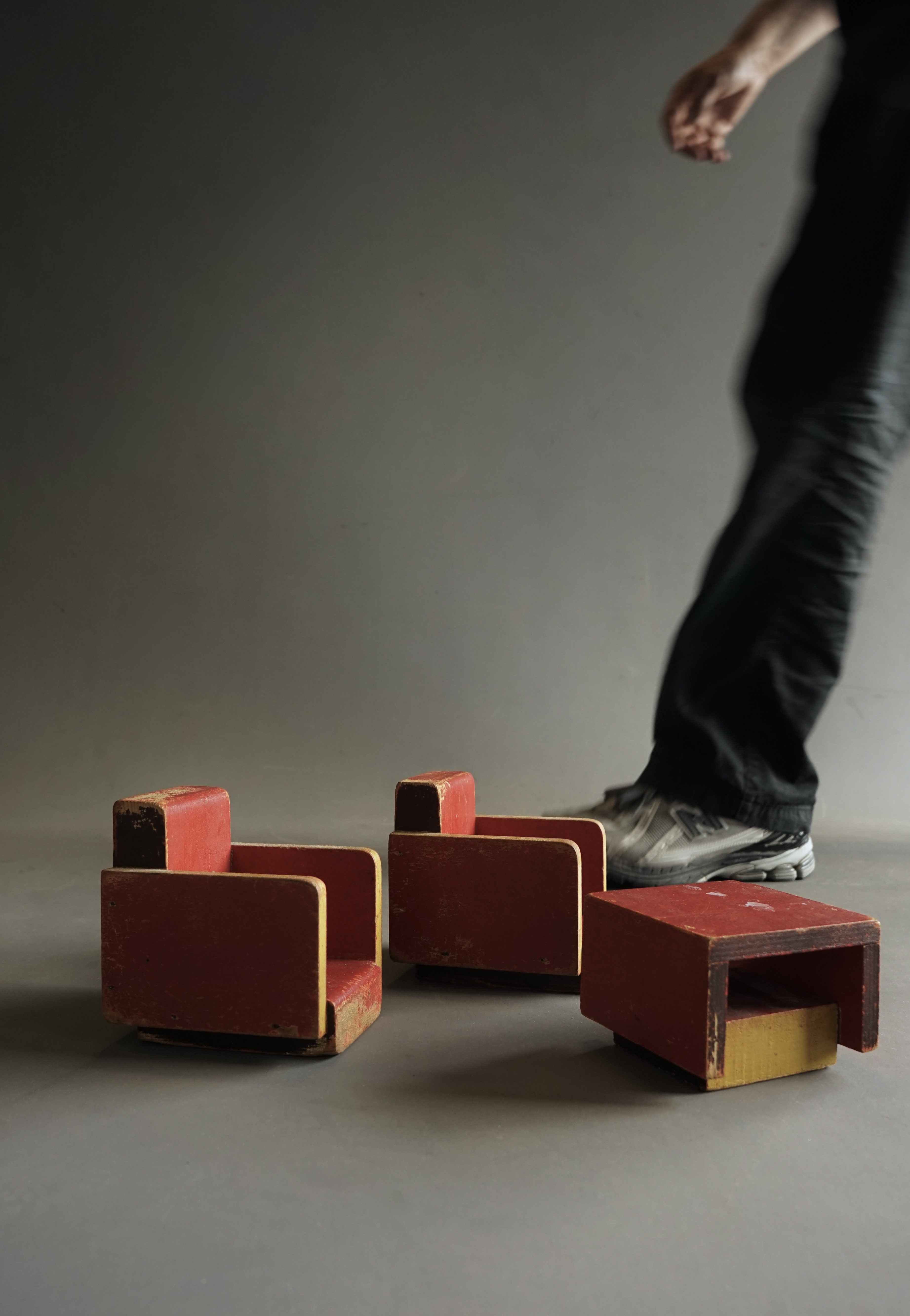
Verzuu, Jacobus Johannes Josephus (Ko) 1901-1971 NL.
ADO speelgoed / toys. Circa 1934-35
Two miniature club chairs and a side table (each piece with company labels and burnished markings)
Between 1925 and 1955 Dutch designer Ko Verzuu designed many toys under the influence of the Dutch Modernist De Stijl painters. His designs were inextricably bound up with innovations in art, health care and pedagogy in the first half of the 20th century. In 1920, the sanatorium Berg en Bosch was founded in the sanctuary on the outskirts of Apeldoorn – this sanatorium offered rest and care to tuberculosis patients. Once patients had recovered from their illness, returning to regular working life often proved to be difficult. In order to prepare patients better for their reintegration, the sanatorium developed a modern treatment: occupational therapy. One of the ways this took shape was in the production of wooden toys. These toys were given the name ADO; an abbreviation that initially stood for Arbeid door Onvolwaardigen (Labour by the Deficient), but was wisely changed in 1962 to Apart Doelmatig Onverwoestbaar (roughly translated as Special Functional Indestructible?)
Price: 1.250,00


Delft School bench
200 x 44.5 x 65.5cm high (seat height 43cm). Solid oak wood.
A stylish and robust Delft School bench/seat. School of M.J. Granpré Molière or A.J. Kropholler .
Traditionalism in the Netherlands emerged shortly after the First World War. It was not so much a style as more of an attitude among architects who, in response to Functionalism and the Expressionism of the Amsterdam School, rediscovered the purity and simplicity of traditional country architecture. Under the leadership of M.J. Granpré Molière, professor at the Technical University in Delft from 1924 until 1953, many of these architects gathered in a movement which after World War Two became known as the Delftse School (‘Delft School’). Granpré Molière’s ideas include a preference for tidy brickwork, a minimal use of decorations, the inspiration taken from national architectural traditions and the use of ‘honest’ (i.e. traditional and natural) materials.
https://www.archimon.nl/history/traditionalism.html
It is easy to comprehend how subsequent Dutch design evolved into an even more simplified and pared-down version of such furniture as this. There are clear visual similarities to Rietveld or De Stijl.
Price: 2.650 euro
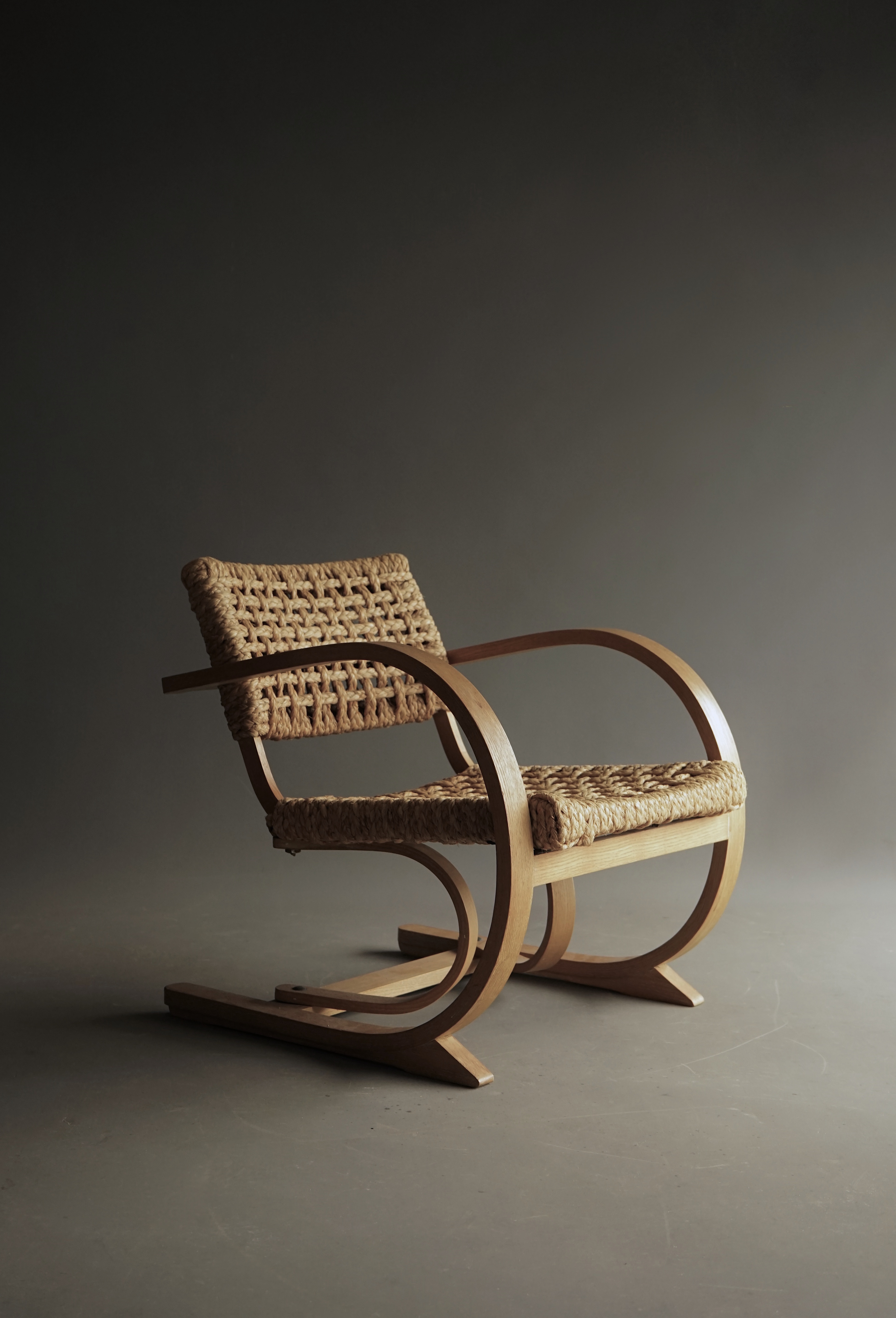
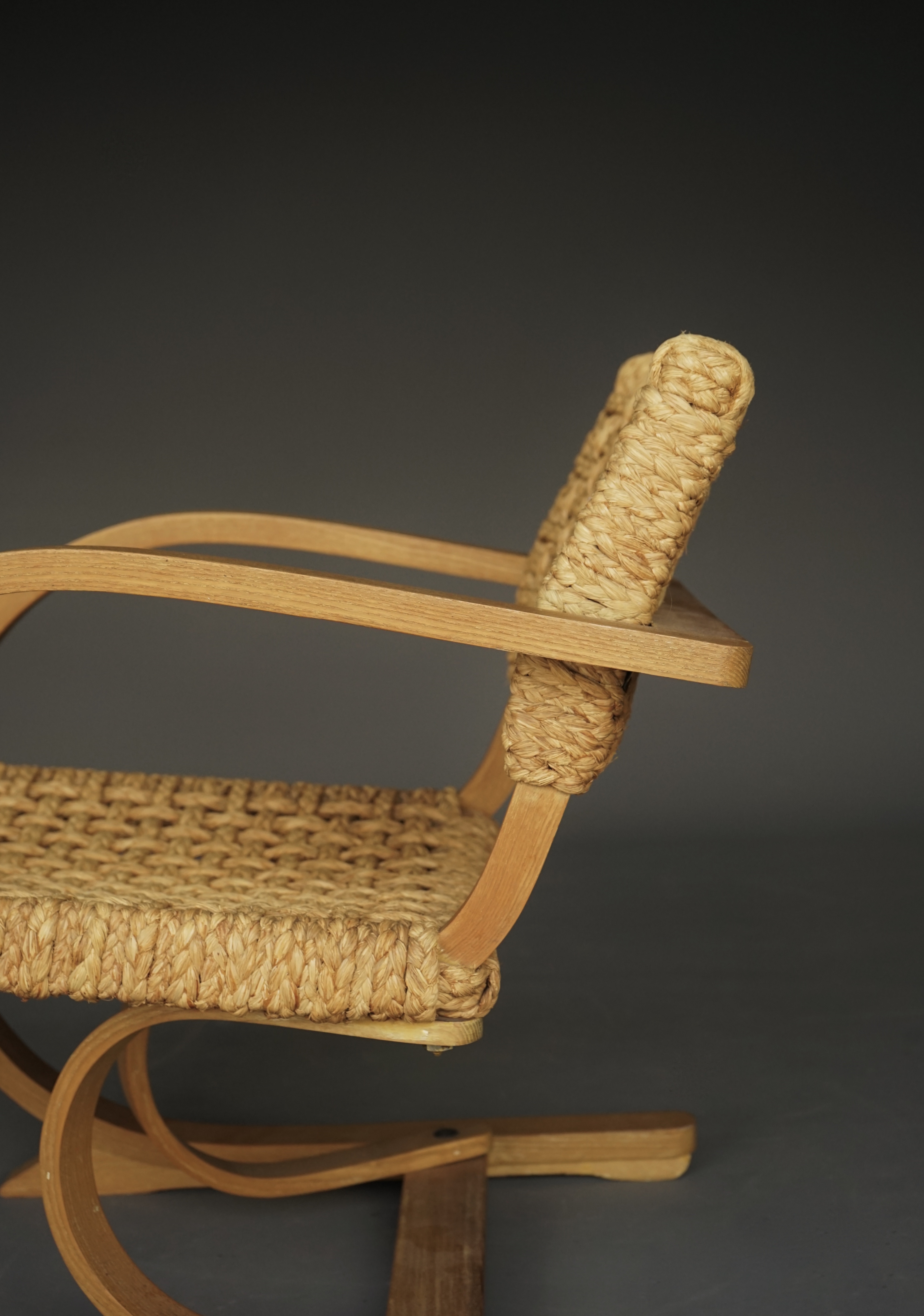
Bas van Pelt (Netherlands 1900-1945)
Oak framed cantilever chair with thick rope woven seat and back. 1930s. My Home/ The Hague.
58 x 68 x 66.5cm high (seat height 35.5cm)
Comfortable chair, designed by Bas van Pelt ca. 1936 for My Home Netherlands.
This chair, designed in 1936 was a precursor to the similar chairs by French designers Andoux & Minet (1940s/50s).
Examples can be found in the permanent collection of the Stedelijk Museum in Amsterdam. Documented in the book ‘My Home: Bas van Pelt, Binnenhuisarchitectuur 1931-95,’ P.Faber, Uitgeverij010.
Price: 3.250 euro


Alvar Aalto (Finland 1898-1976)
Model 70 two-tier side table. Birch and birch faced plywood.
O.Y. Huonekalu-ja Rakennustyötehdas A. B., Turku, Finland.
A classic 1930s-40s early Aalto production circular table. This table is in superb condition, with restored table top and a wonderful honey glazed colour.
Price: 3.200 euro
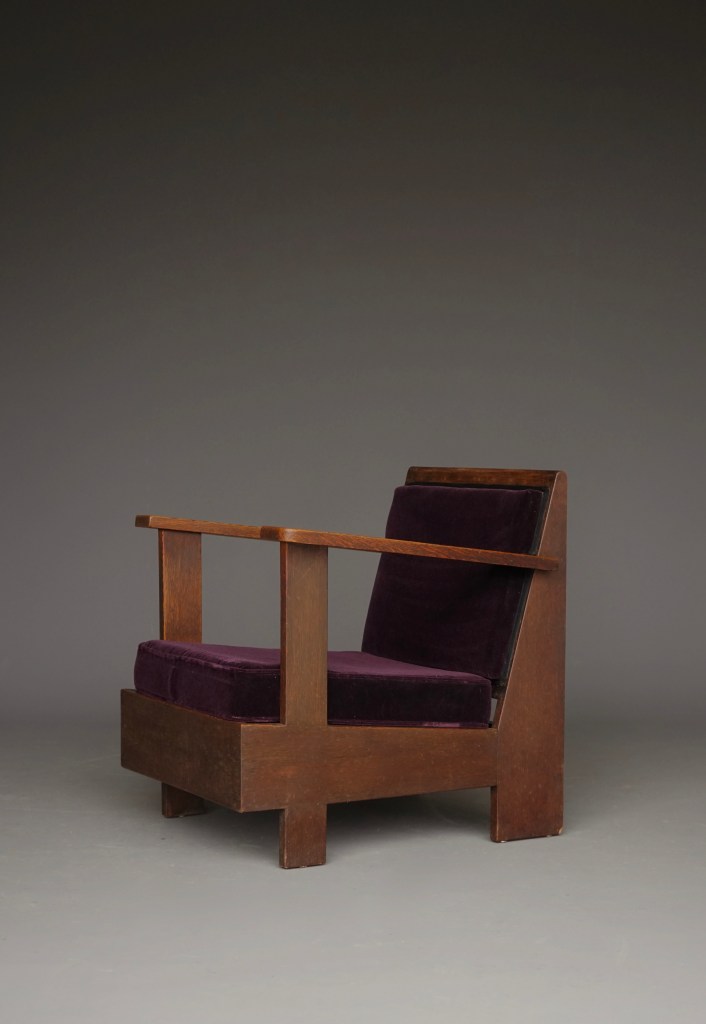
Hague school lady chair. Circa 1920s.
Oak. 60.5 x 64.5 x 65cm high.
A delightful diminutive armchair that we believe was designed as a lady chair. It is unusual not only by its small size but also by its striking modernist lines. This Dutch chair is designed and constructed in typical Dutch Art Deco style known as the Haagse School or Hague School style – a simple geometric constructivist style of the period. According to the previous owner this chair is a design by Hendrik Wouda but we were unable to confirm that. The chair is made out of darkened oak and seems to have its original purple plush velvet upholstery including the loose seat cushion. This chair is a true collectors piece.
Price: 2.400 euro

