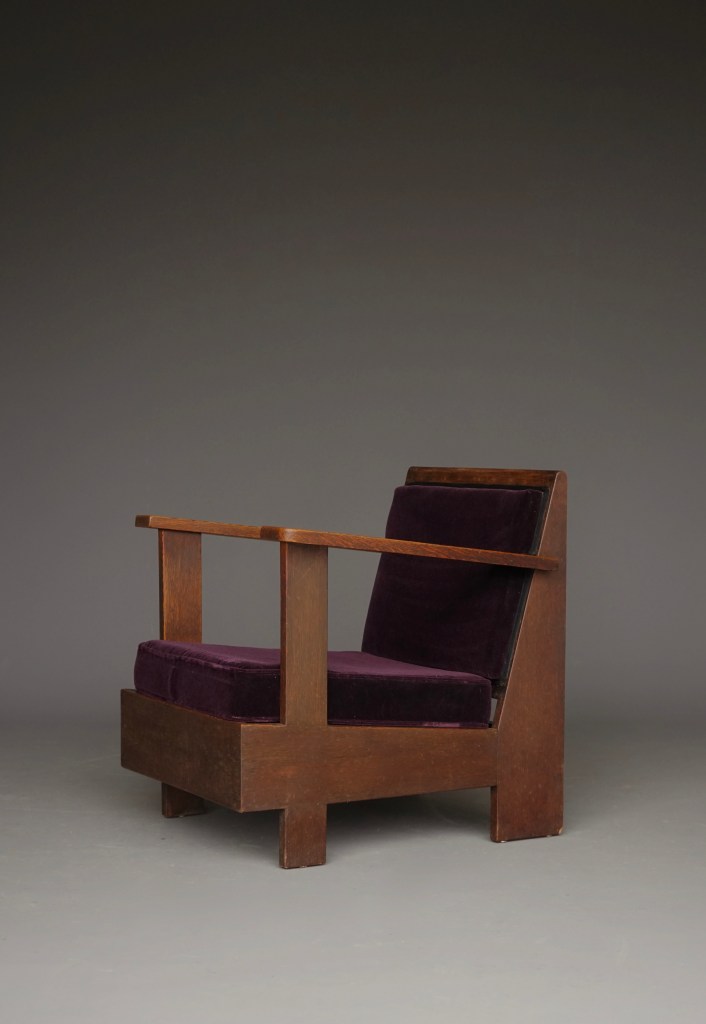
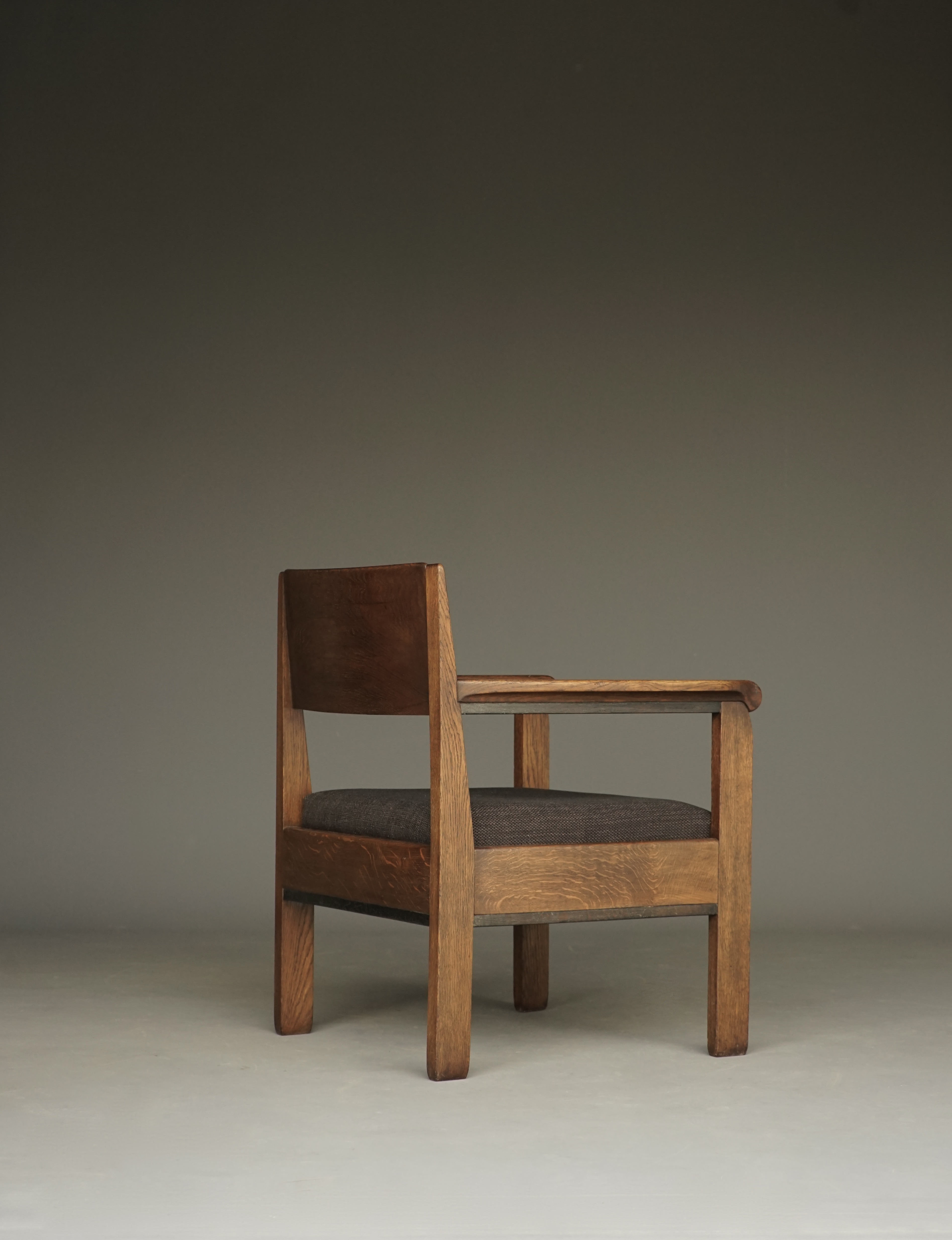
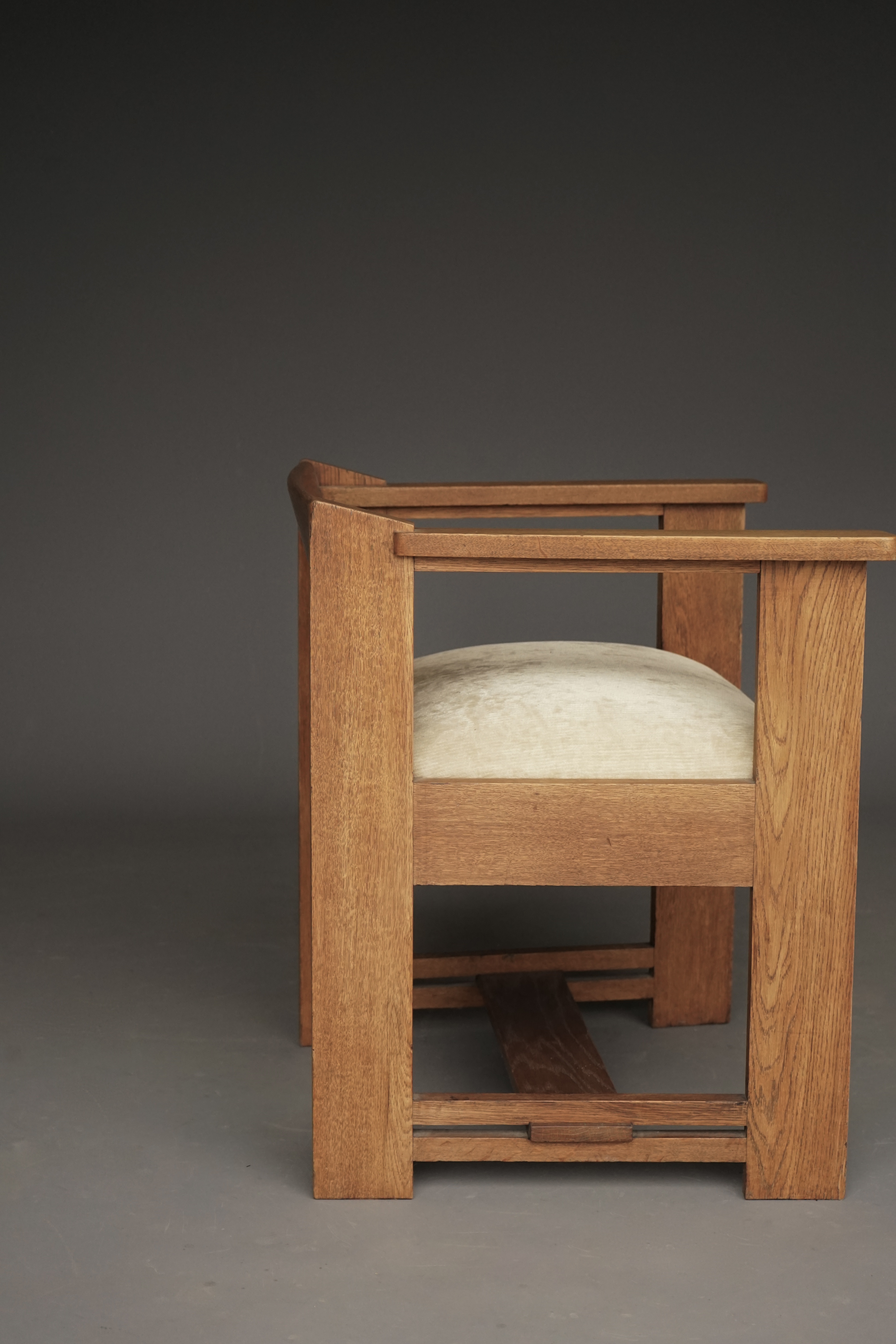
Hendrik Fels (Nl.1882-1962)

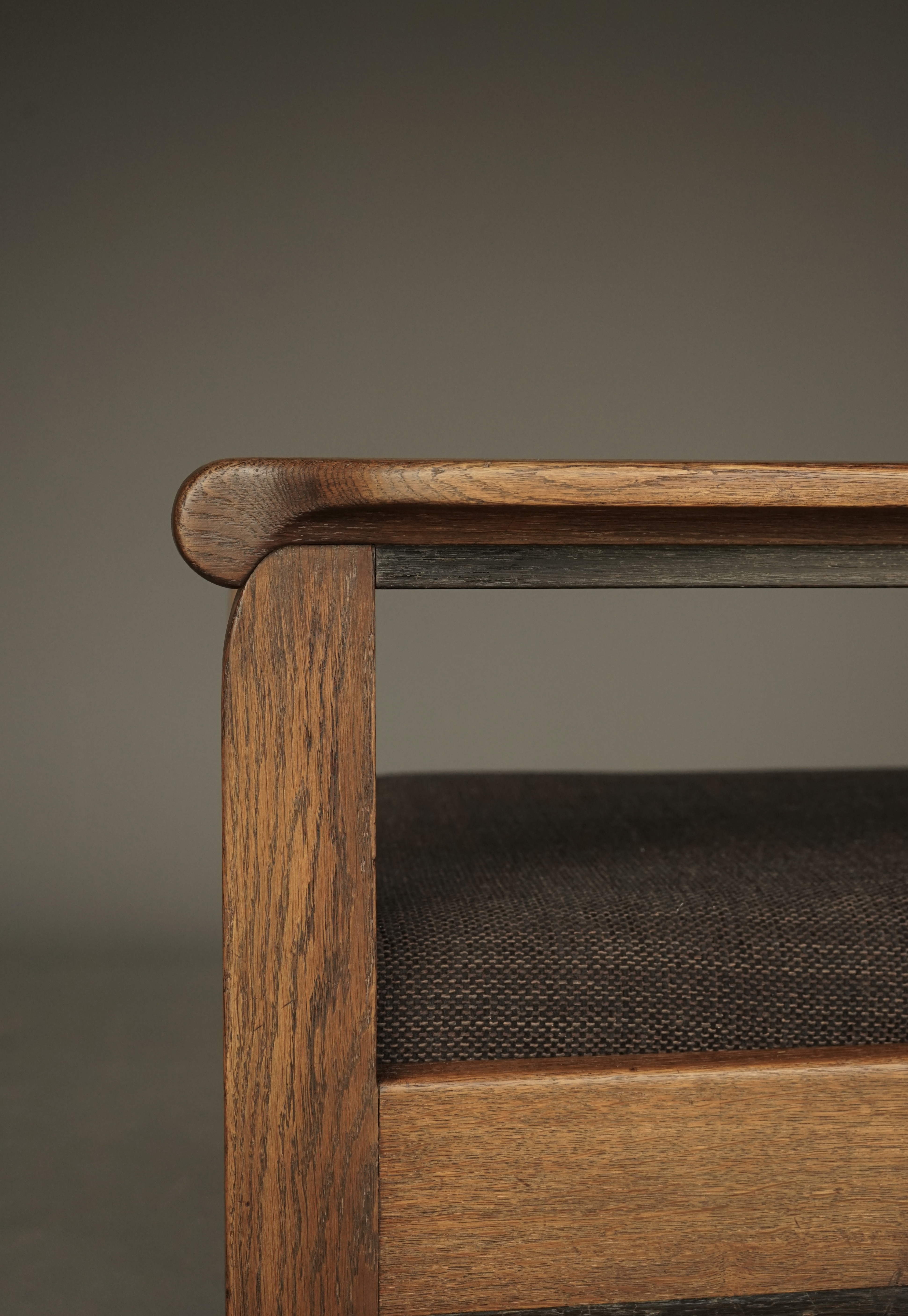
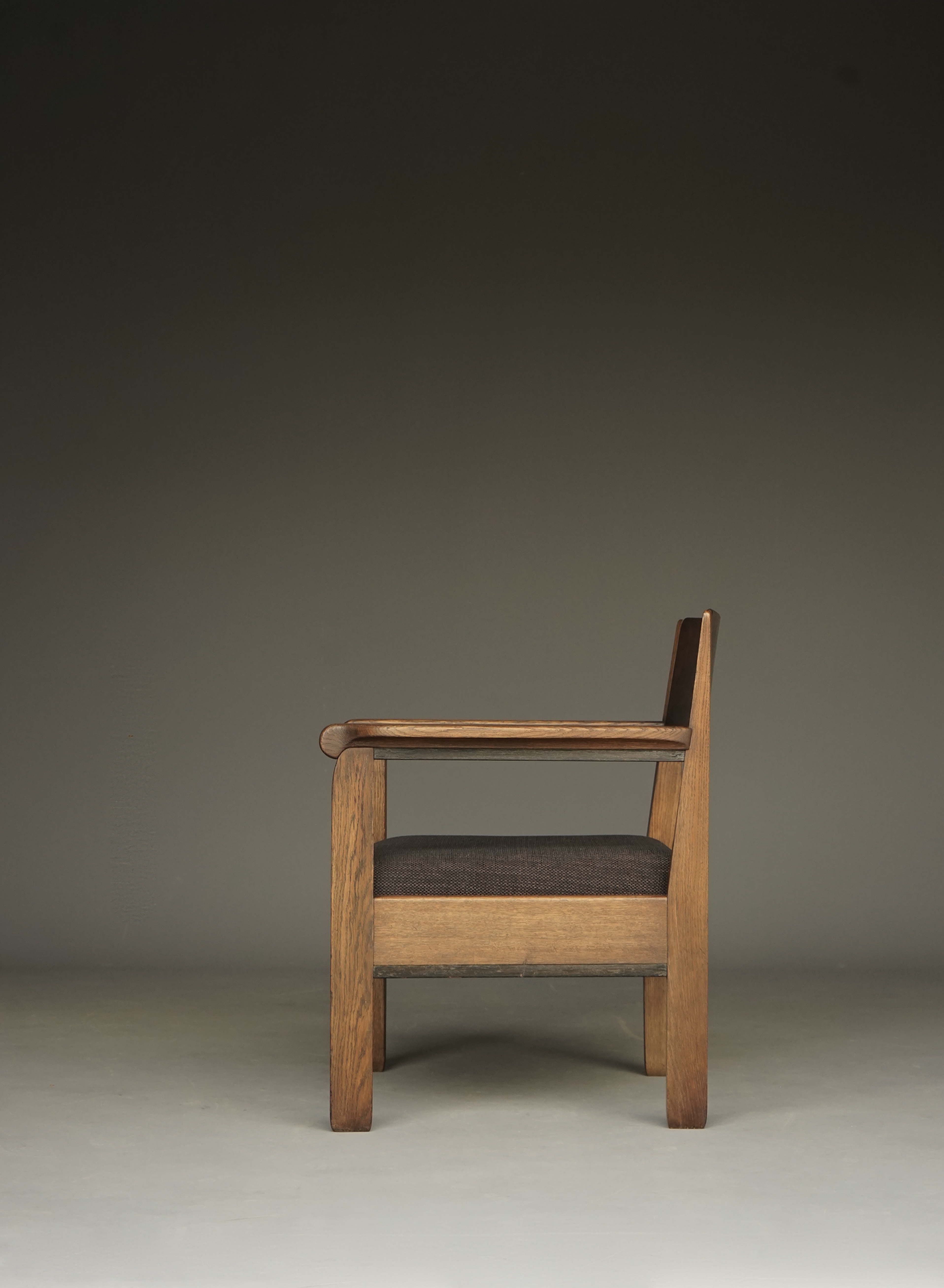
Oak wood. LOV Oosterbeek 1930s

Recently newly upholstered in a dark/warm coloured wool fabric.

71cm wide x 61cm deep x 79.5cm high (seat height 42cm)

A rare low armchair in the Dutch Art Deco / Modernist style. Designed by architect H.Fels for LOV Oosterbeek (shortening of ‘Labor Omnia Vincit’), an idealistic furniture company active between 1910 and 1935. The aim of the LOV company was to produce honest and modern furniture that was made in an artisanal way.
Designers that worked for the L.O.V. consisted of well known names like Frits Spanjaard, Cor Alons and Jan Muntendam as well as Hendrik (Henk) Fels.

Good restored condition (one repair to a corner split in the back rest)

Price: 1.800 euro

http://www.merzbaufurniture.com
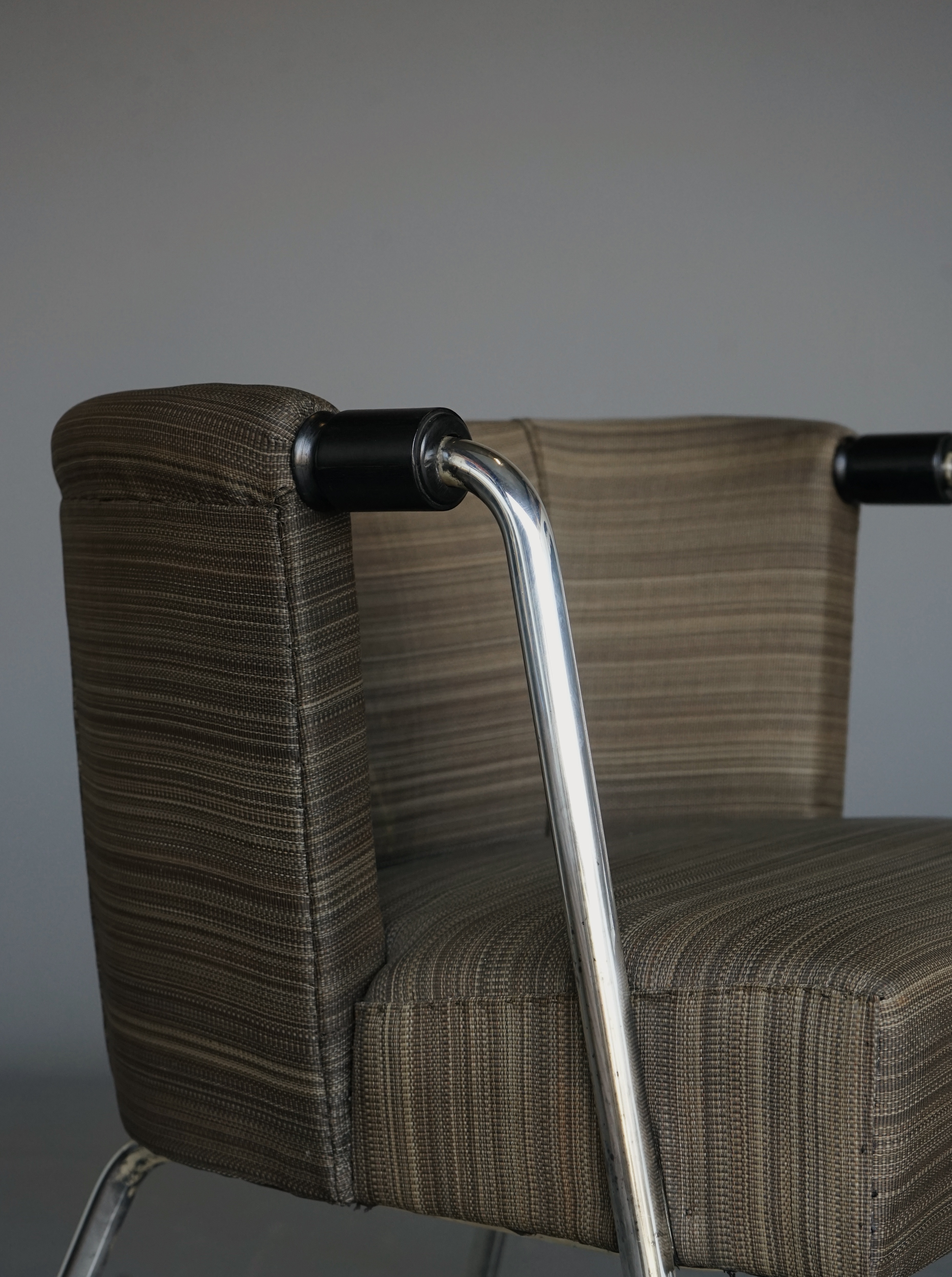
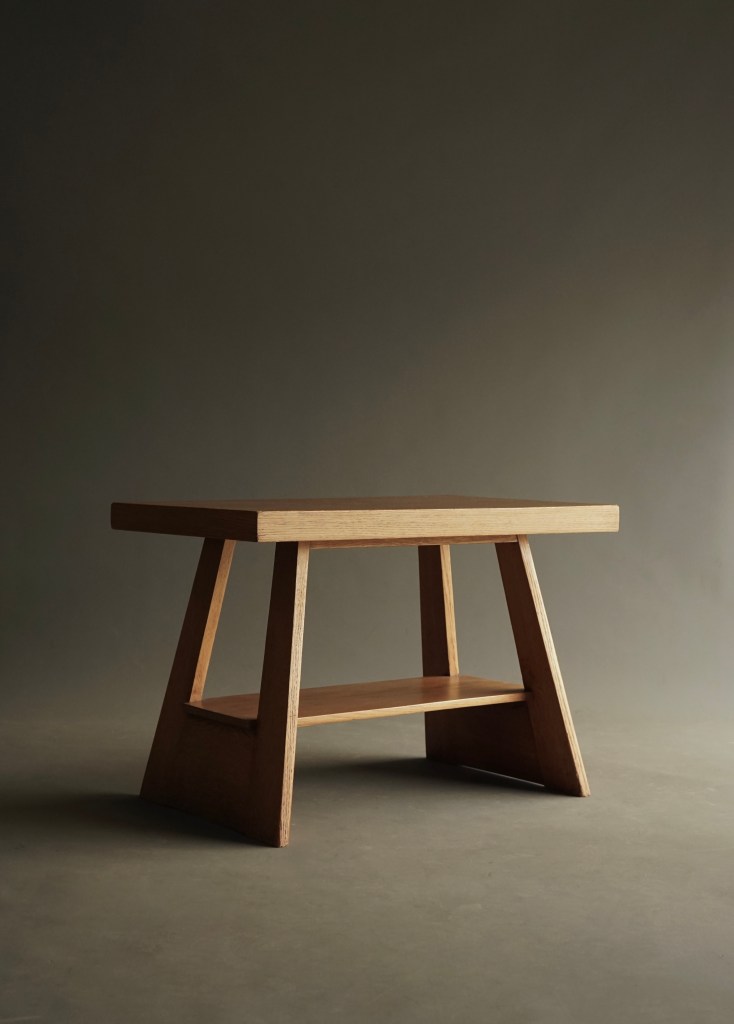
Unusual Dutch oak side table. Circa 1950s.

A small simple and stylish oak side table or coffee table.

Original finish with some signs of age and use / marks to top.

Price: 950 euro

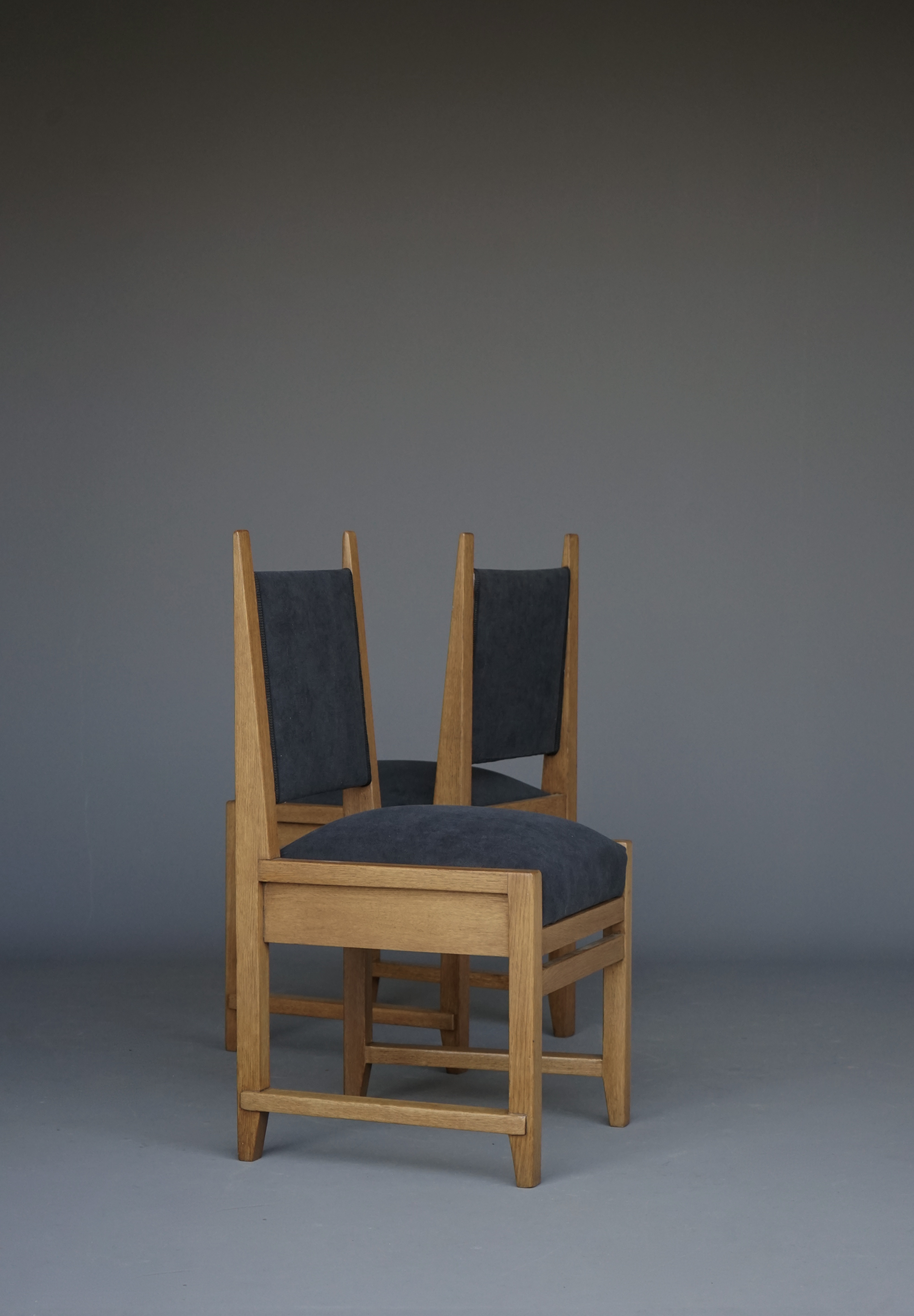
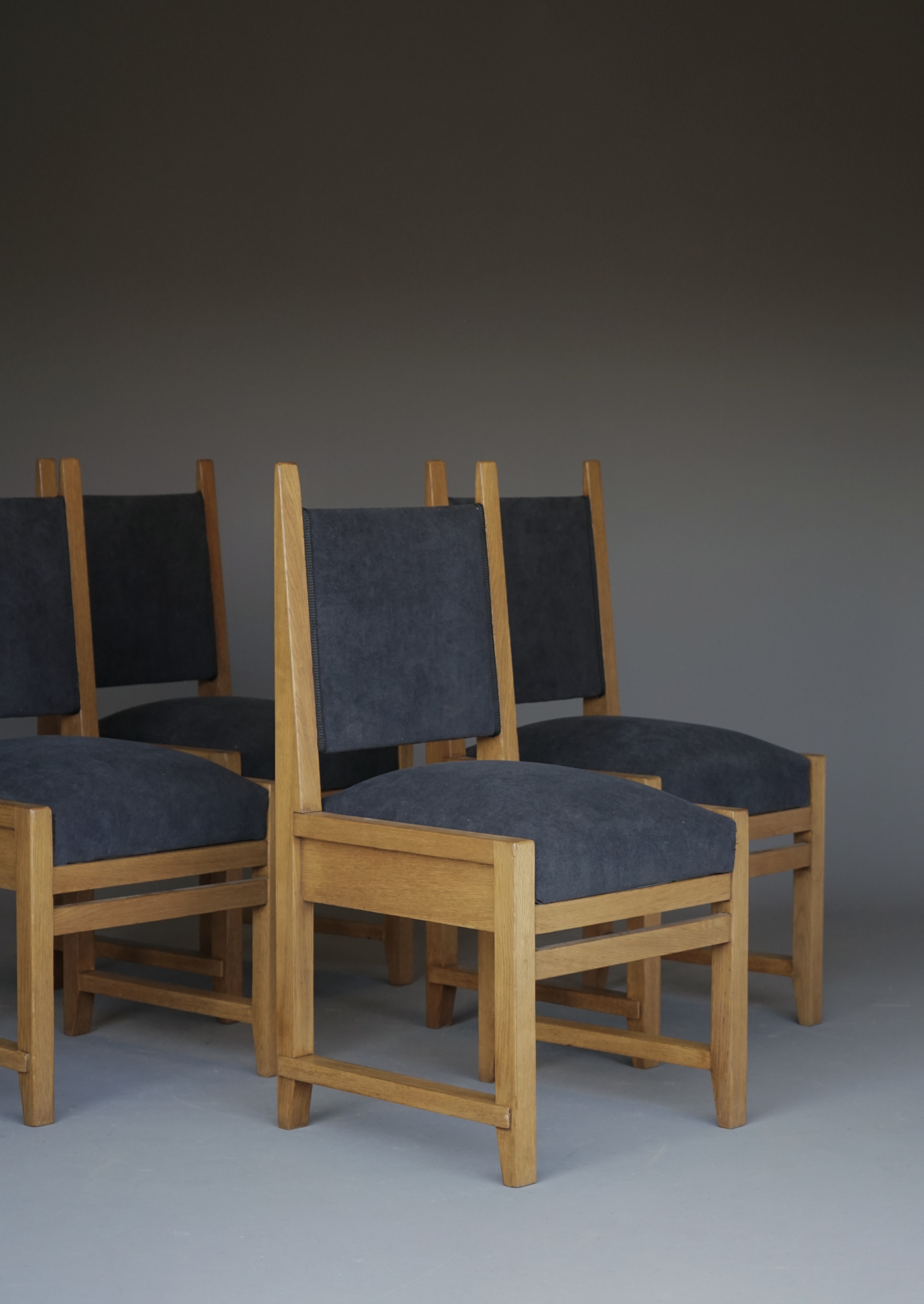
Hendrik (Henk) Wouda (Nl 1885-1946)

Rare set of four oak dining chairs (or two pairs of side chairs).

Later upholstery.

Price: 6.000 euro (set of four)

http://www.merzbaufurniture.com

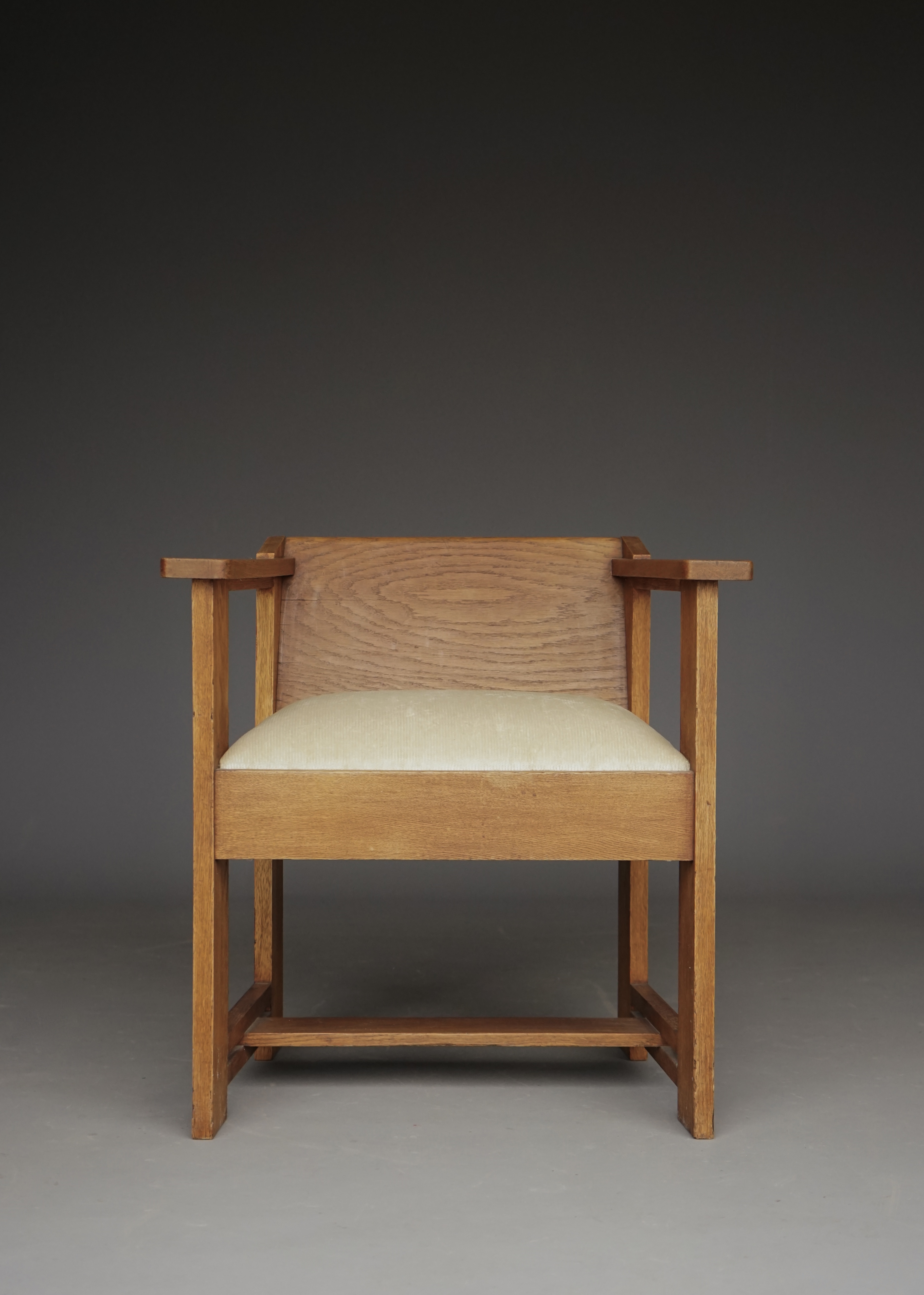
Hague School armchair. Circa 1920s (attrib. to Frits Spanjaard)

Although we have not been able to locate evidence so far to give a definite attribution, the design of this fascinating armchair is loosely attributed to the Dutch early c20th modernist interior and furniture designer Frits Spanjaard (1889-1978)

It is constructed of solid oak wood with a drop-in sprung seat with beige corduroy fabric.

64.5cm wide x 54.5cm deep x 68cm high (seat height 44cm)

Price: 3.800 euro

http://www.merzbaufurniture.com
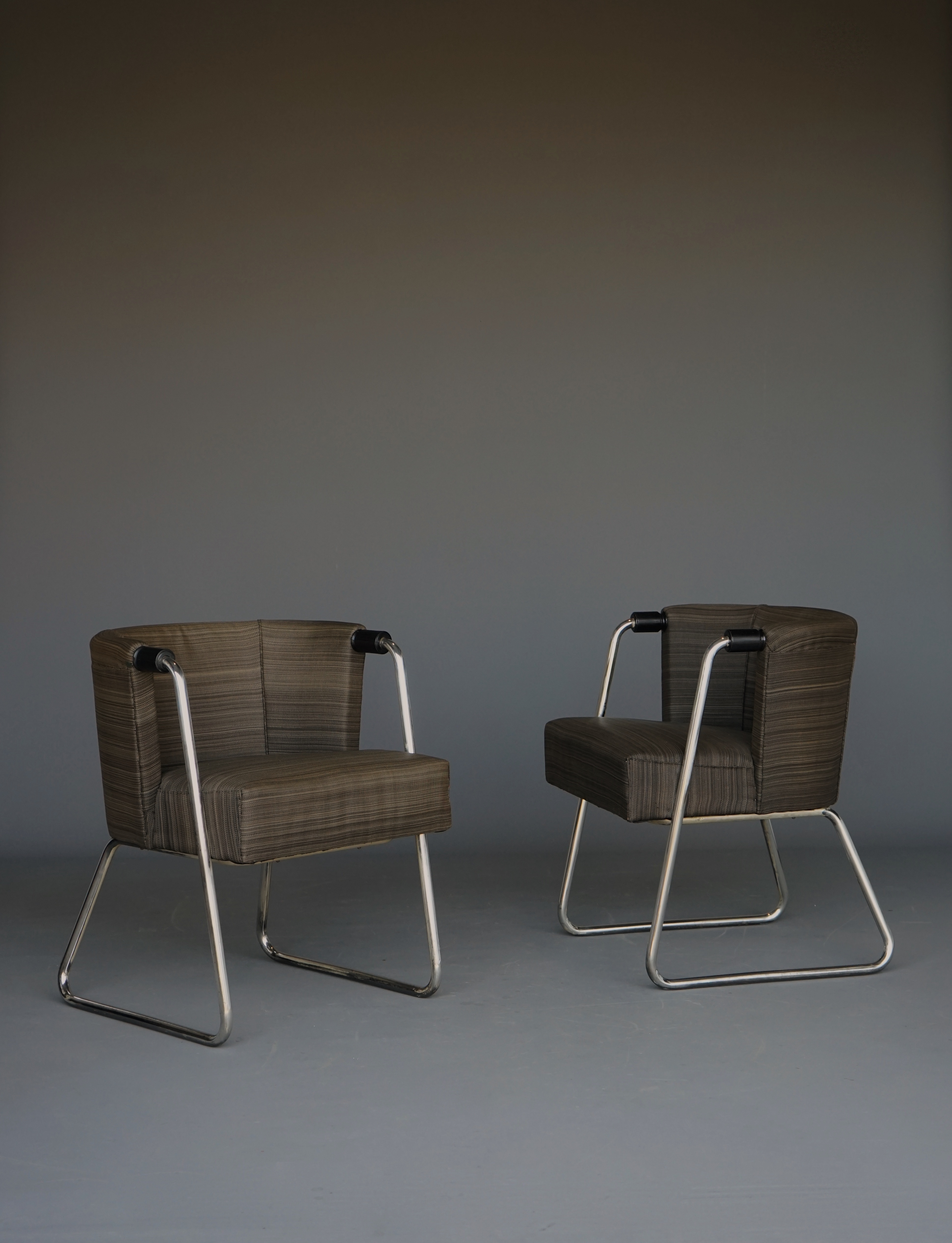
Hendrik (Henk) Wouda (Nl 1885-1946)

Pair of bedside cupboards / pot cupboards.

Oak wood with dark coromandel handles, ceramic interiors and slate tops.

Pander & Zn., 1920s (company labels inside doors). 45 x 32 x 55cm high.

A rare pair of bedside cabinets (or nightstands) by the Dutch architect and furniture designer Henk Wouda (1885-1946).
The cabinets are designed in typical Haagse School style; a fine balance of applied form and weight – In this the Dutch designers were especially influenced by the work of Frank Lloyd Wright.

The cabinets currently contain their original period fittings, namely ceramic pot holders. However, should the buyer wish it would be easy for us to have them removed prior to sending in order to make them suitable for more contemporary storage purposes.

Price: 2,350 euro

http://www.merzbaufurniture.com
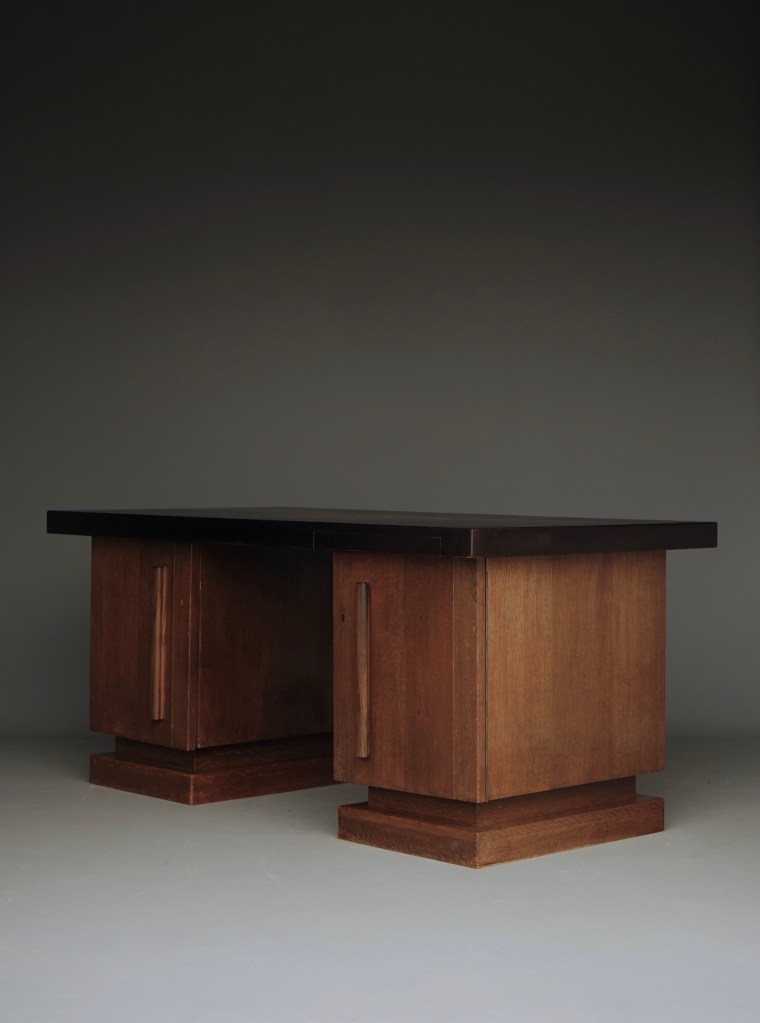
(Attrib.) Cornelius Louis /Cor Alons (Nl 1892-1967)

Oak wood. Restored/ with later upholstered drop in seats. Circa 1920s.


A pair of high quality Dutch Art Deco, Haagse School /stijl armchairs. These chairs could work well as two side chairs but would work equally well as desk chairs.

The design is attributed to the Dutch interior architect and designer Cor Alons. Alons was one of the architects of the Dutch Art Deco movement we now refer to as the ‘Haagse School, or style’. These designers were distinguished from other country’s styles by the application of a sober and cubist language with the intention of achieving a fine balance of form and weight; In this they were especially influenced by the work of Frank Lloyd Wright.
These striking chairs are constructed from solid oak and with the typical straight high back coloured in a contrasting black.

Price: 3.750 euro (x2) or 1.900 (per piece)

http://www.merzbaufurniture.com

Large Art Deco desk

A high quality 1930s French double-sided desk.

Original key and lockable four drawers. 170 x 75 x 75cm high.

Price: 3.600 euro

http://www.merzbaufurniture.com

Delft School bench

200 x 44.5 x 65.5cm high (seat height 43cm)

A stylish Delft School small oak bench / School of M.J. Granpré Molière or A.J. Kropholler .

Traditionalism in the Netherlands emerged shortly after the First World War. It was not so much a style as more of an attitude among architects who, in response to Functionalism and the Expressionism of the Amsterdam School, rediscovered the purity and simplicity of traditional country architecture. Under the leadership of M.J. Granpré Molière, professor at the Technical University in Delft from 1924 until 1953, many of these architects gathered in a movement which after World War Two became known as the Delftse School (‘Delft School’). Granpré Molière’s ideas include a preference for tidy brickwork, a minimal use of decorations, the inspiration taken from national architectural traditions and the use of ‘honest’ (i.e. traditional and natural) materials.
https://www.archimon.nl/history/traditionalism.html

It is easy to comprehend how subsequent Dutch design evolved into an even more simplified and pared-down version of such furniture as this. There are clear visual similarities to Rietveld or De Stijl.

Price: 2.400 euro

http://www.merzbaufurniture.com