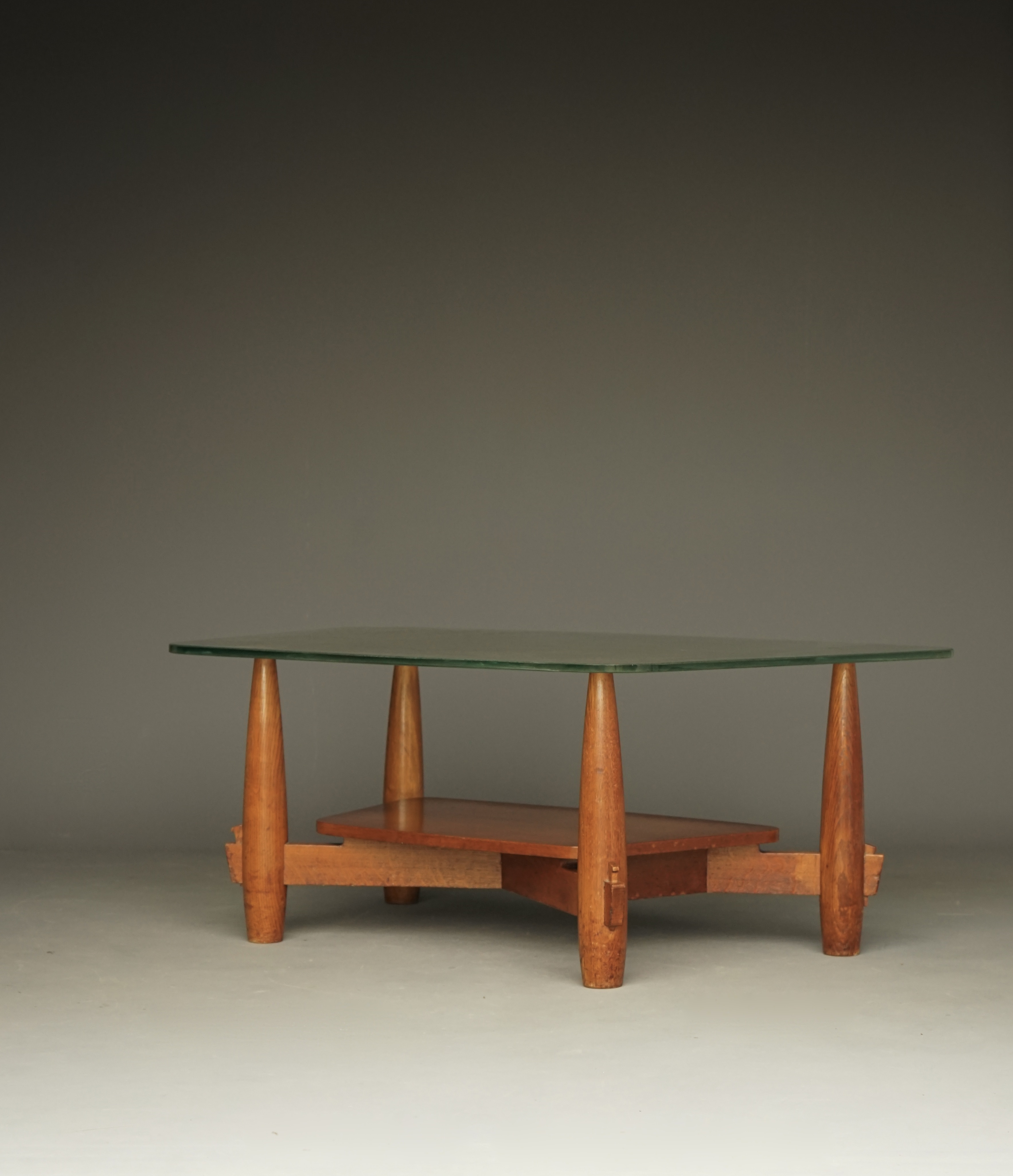
Large Art Deco coffee table. Circa 1930s

131 x 86 x 52cm high. Solid oak and glass.

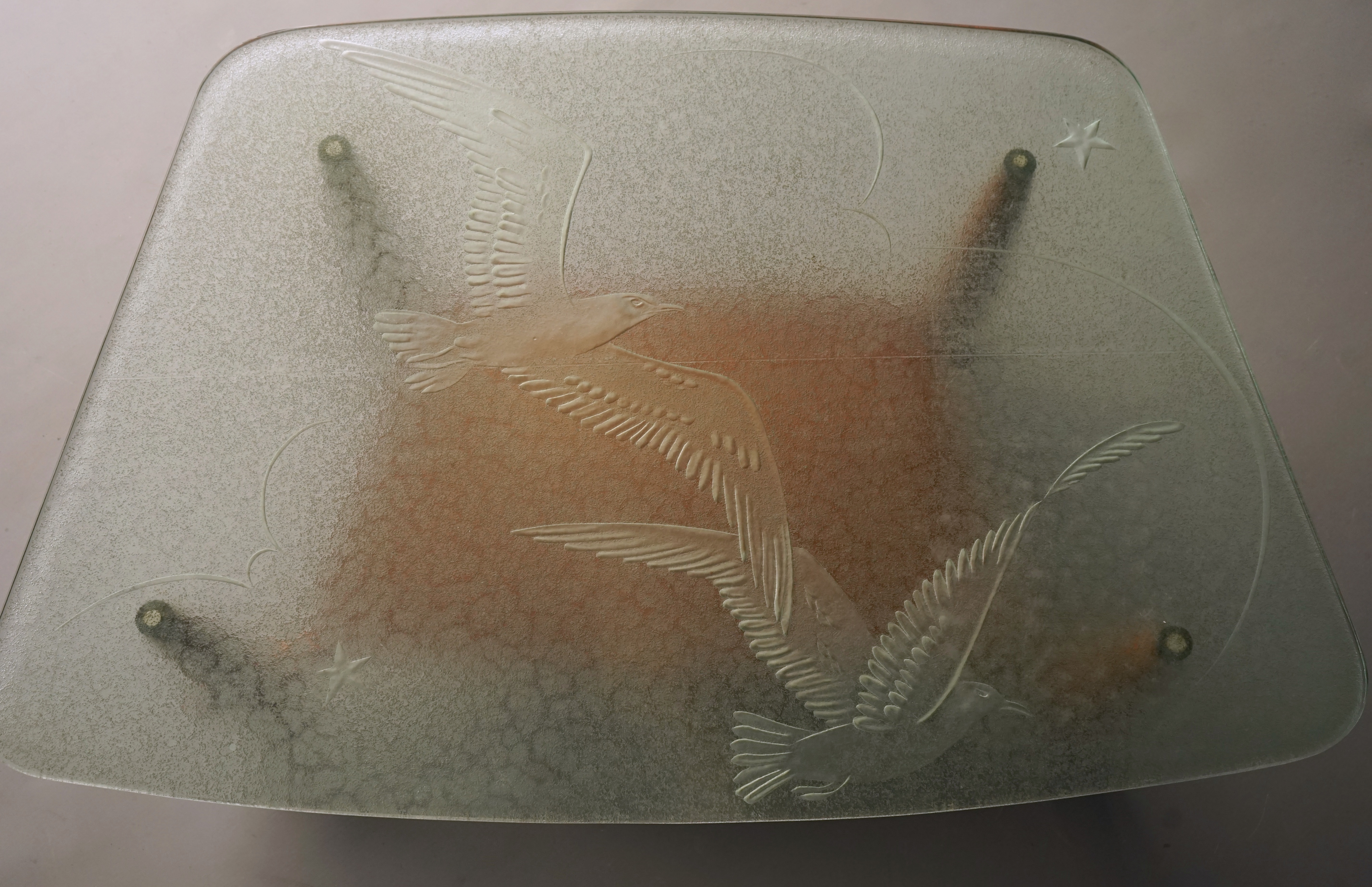
Unique early c20th coffee table with its original feature glass top that seems to conjoin both Art Deco and Brutalist styles. The piece combines the robust qualities of the Brutalist style evident in its chunky wooden base with the elegance of the Art Deco style manifested in the pictorial glass top. These apparent combined qualities in this one piece that gives the table its unique style and character.
The deeply moulded relief images in the thick glass depicts two seagulls in flight. The underside of the glass is textured whereas the top is almost smooth.

The curved fan shape of this table (it is narrower at the front than the back) would make it highly suitable for particular spaces such as between sofas or in front of a curved sofa.

Price: 3.950 euro

http://www.merzbaufurniture.com

Hendrik (Henk) Wouda (Nl 1885-1946)

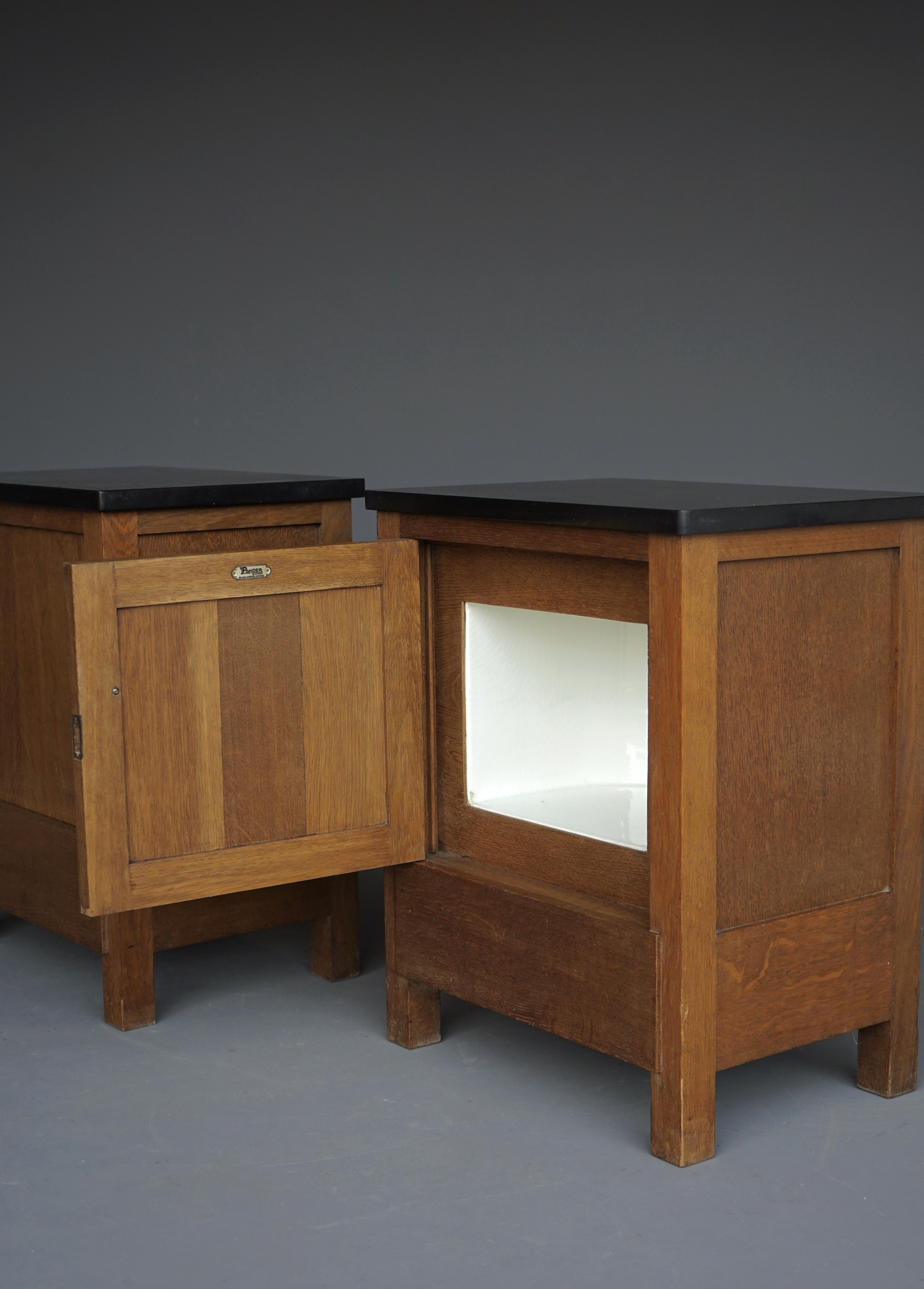
Pair of bedside cupboards / pot cupboards.

Oak wood with dark coromandel handles, ceramic interiors and slate tops.

Pander & Zn., 1920s (company labels inside doors). 45 x 32 x 55cm high.

A rare pair of bedside cabinets (or nightstands) by the Dutch architect and furniture designer Henk Wouda (1885-1946).
The cabinets are designed in typical Haagse School style; a fine balance of applied form and weight – In this the Dutch designers were especially influenced by the work of Frank Lloyd Wright.

The cabinets currently contain their original period fittings, namely ceramic pot holders. However, should the buyer wish it would be easy for us to have them removed prior to sending in order to make them suitable for more contemporary storage purposes.

Price: 2,350 euro

http://www.merzbaufurniture.com

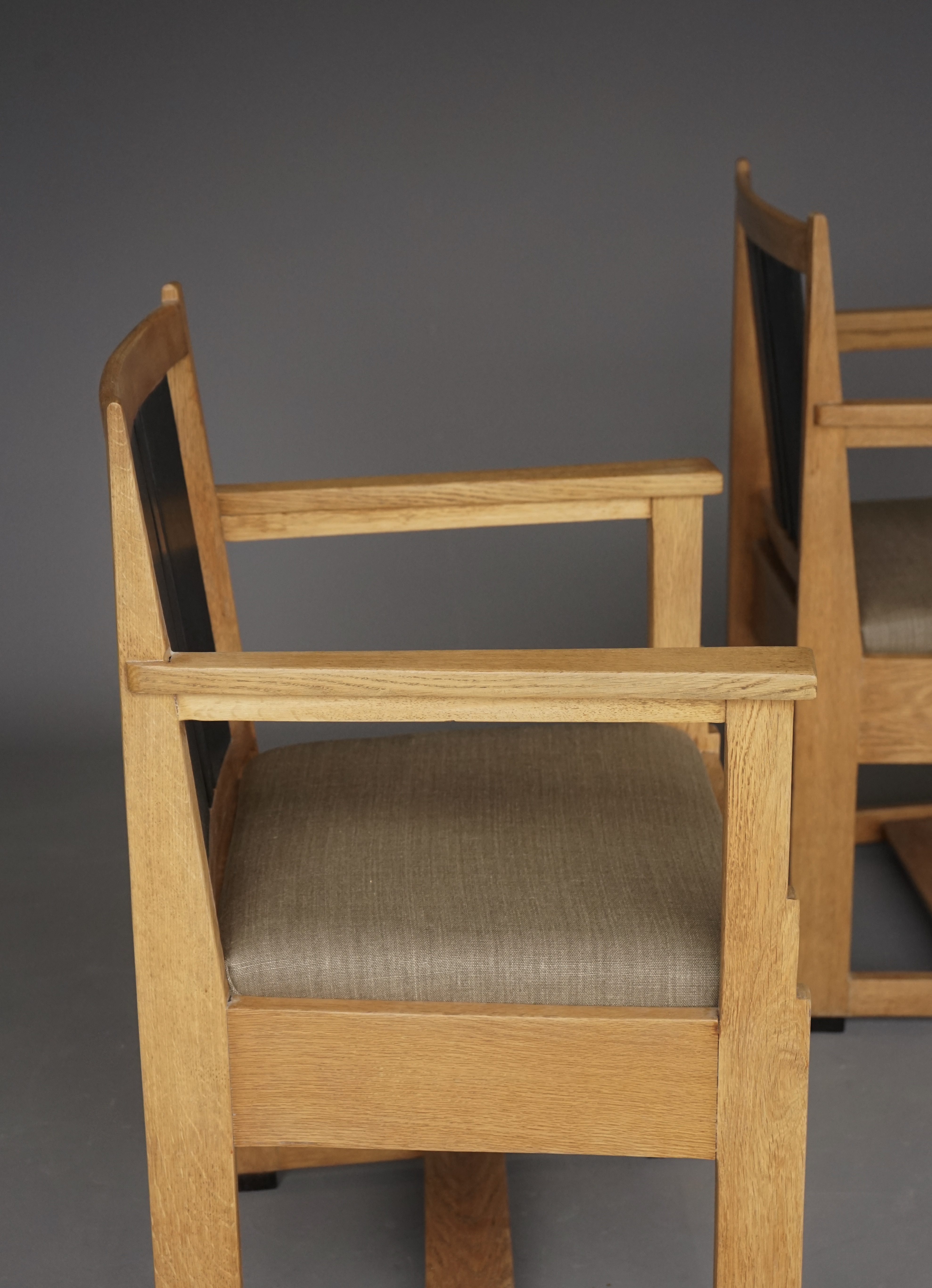
(Attrib.) Cornelius Louis /Cor Alons (Nl 1892-1967)

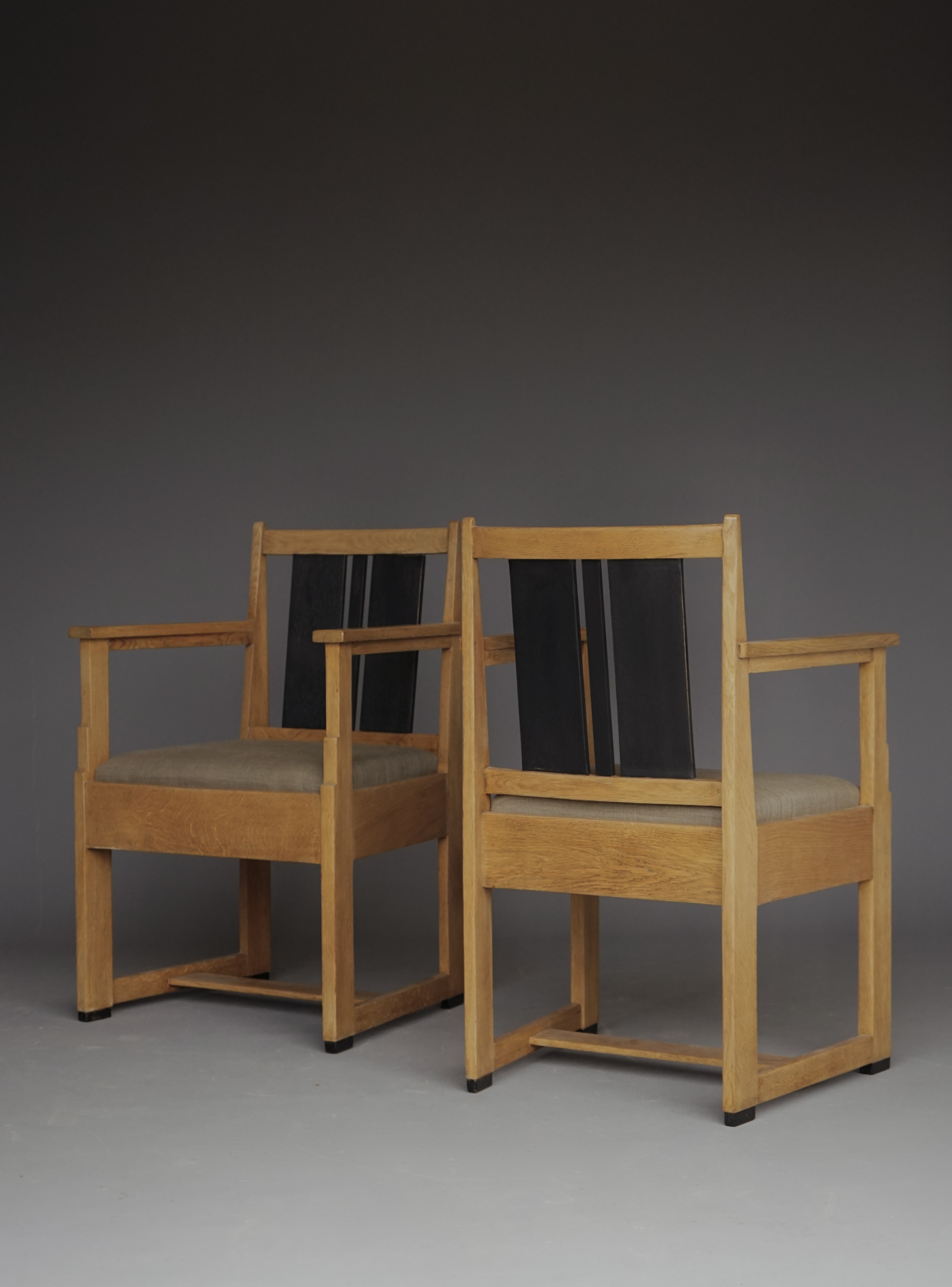
Oak wood. Restored/ with later upholstered drop in seats. Circa 1920s.


A pair of high quality Dutch Art Deco, Haagse School /stijl armchairs. These chairs could work well as two side chairs but would work equally well as desk chairs.

The design is attributed to the Dutch interior architect and designer Cor Alons. Alons was one of the architects of the Dutch Art Deco movement we now refer to as the ‘Haagse School, or style’. These designers were distinguished from other country’s styles by the application of a sober and cubist language with the intention of achieving a fine balance of form and weight; In this they were especially influenced by the work of Frank Lloyd Wright.
These striking chairs are constructed from solid oak and with the typical straight high back coloured in a contrasting black.

Price: 3.750 euro (x2) or 1.900 (per piece)

http://www.merzbaufurniture.com

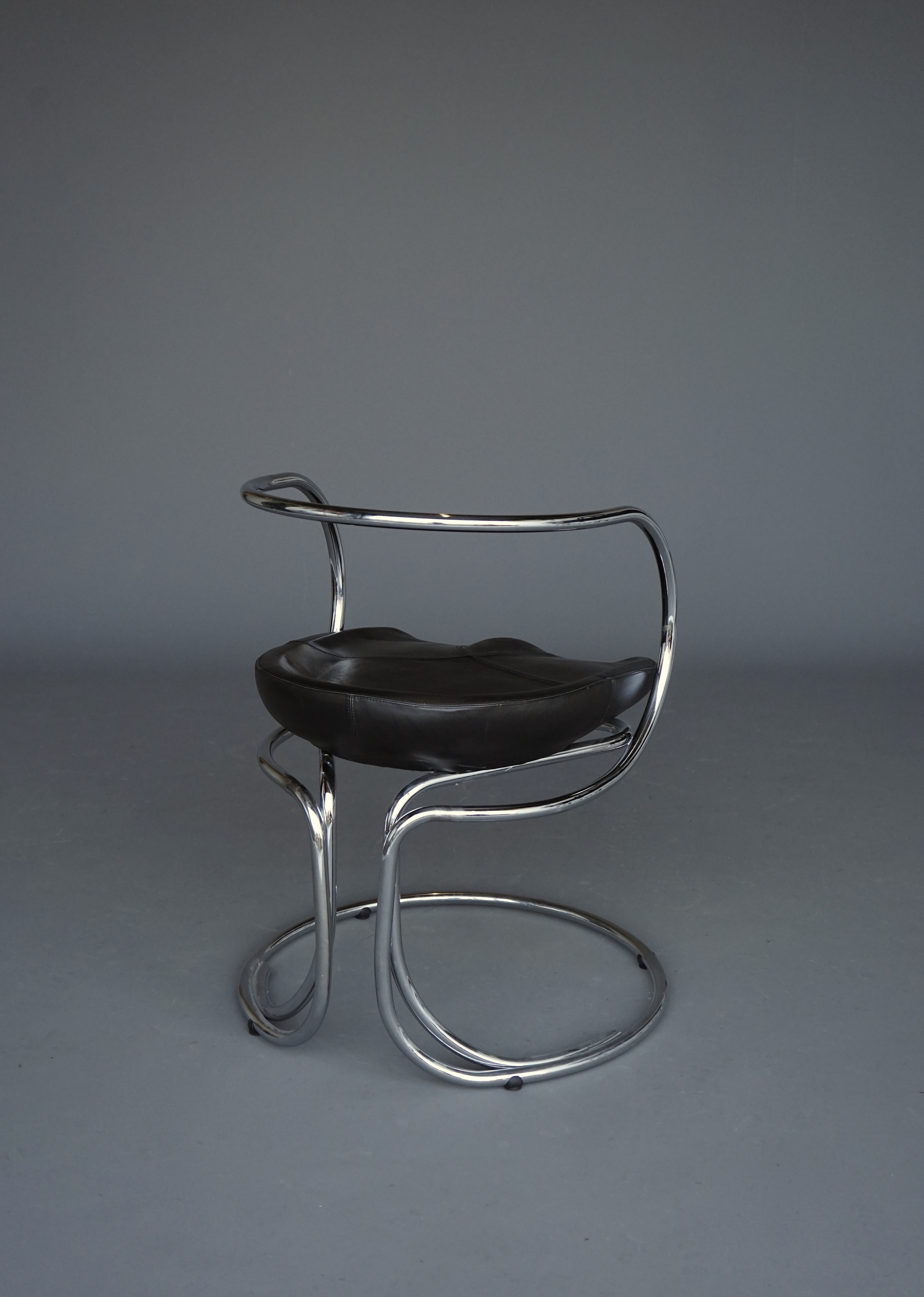
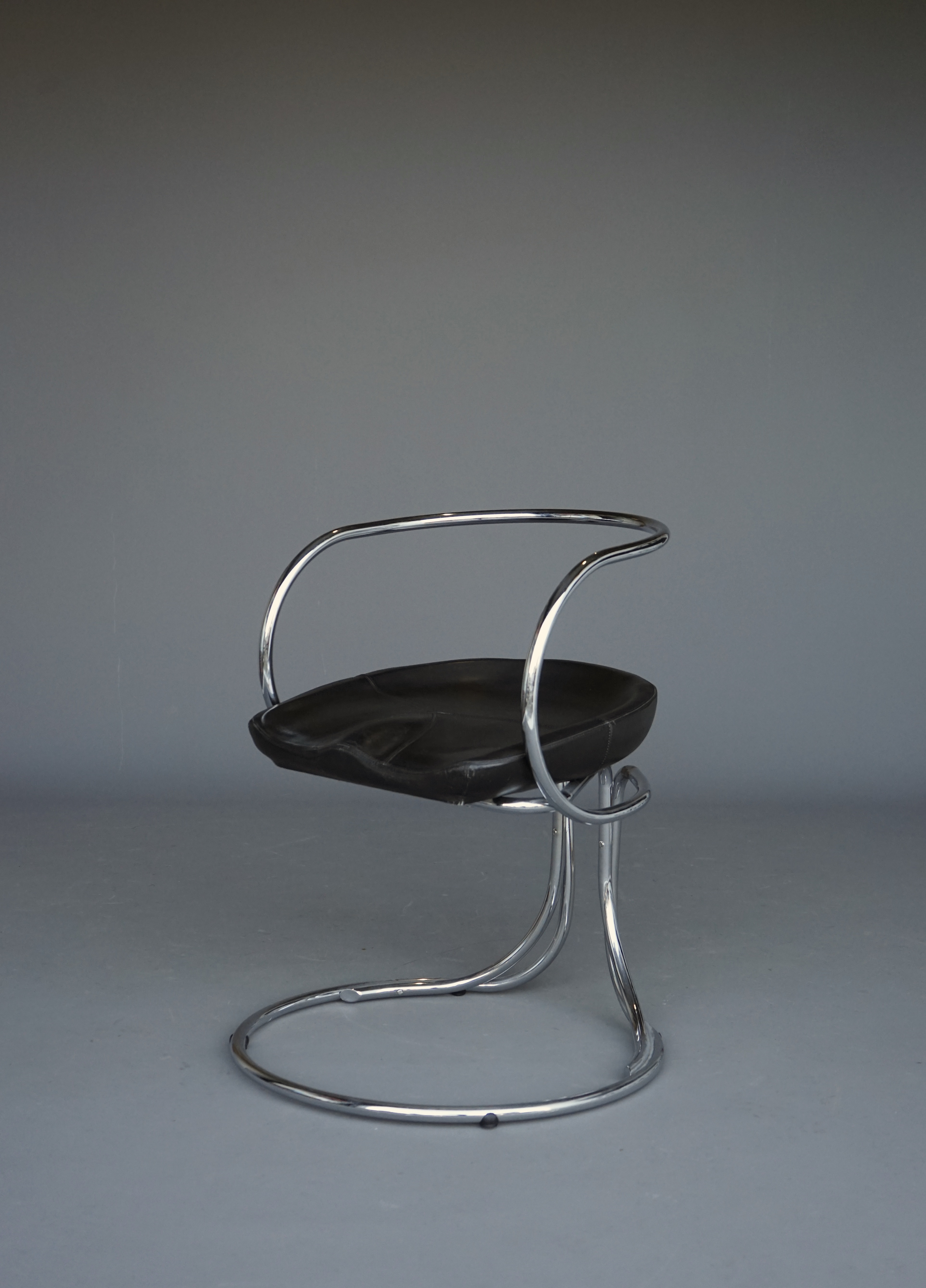
Vladimir Tatlin (Russia 1885-1953)

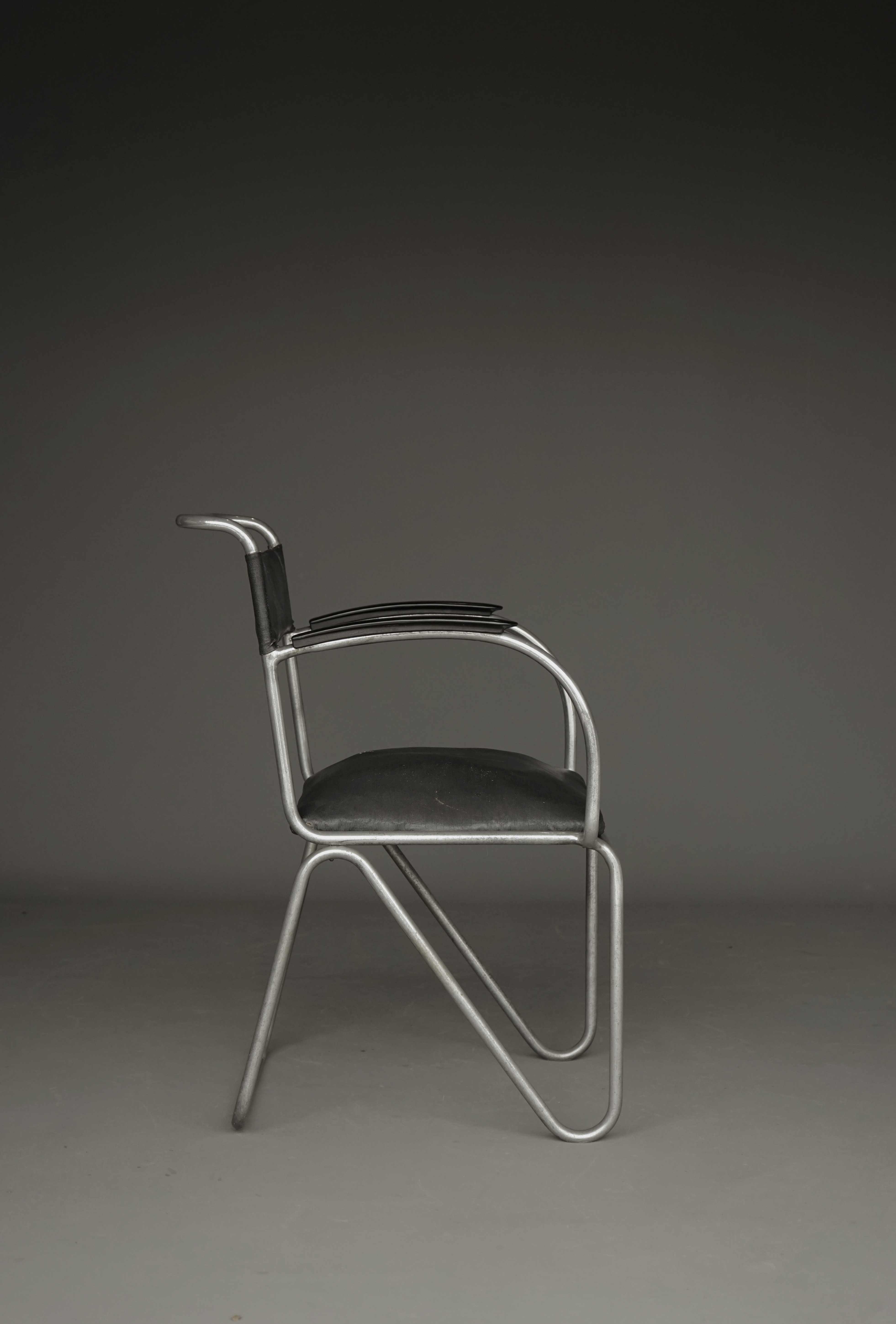
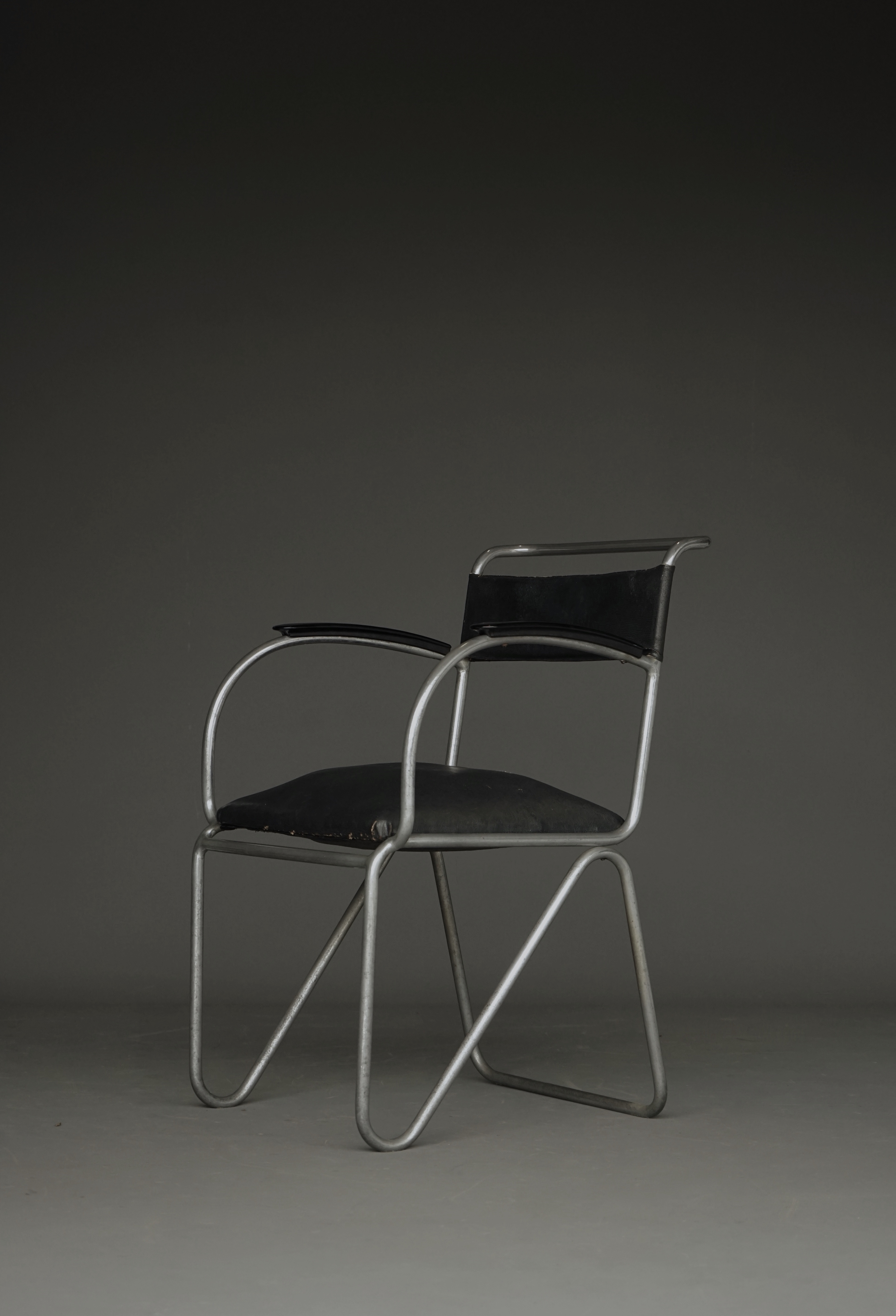
Tatlin Chair

Chromed steel tubular frame with black leather upholstered seat. 55cm x 70cm x 80cm high.

Vladimir Tatlin was a Russian and Soviet painter, architect, and stage-designer. Tatlin achieved fame as the architect who designed The Monument to the Third International, more commonly known as Tatlin’s Tower, which he began in 1919. With Kazimir Malevich he was one of the two most important figures in the Soviet avant-garde art movement of the 1920s, and he later became an important artist in the Constructivist movement

Designed by Russian constructivist Vladimir Tatlin (1885-1953) in 1927. The prototype for this chair was made initially in bent cane. From the 1950s it was manufactured by Nikol International, Italy with a tubular metal frame and leather seat.

Price: 1.400 euro

http://www.merzbaufurniture.com

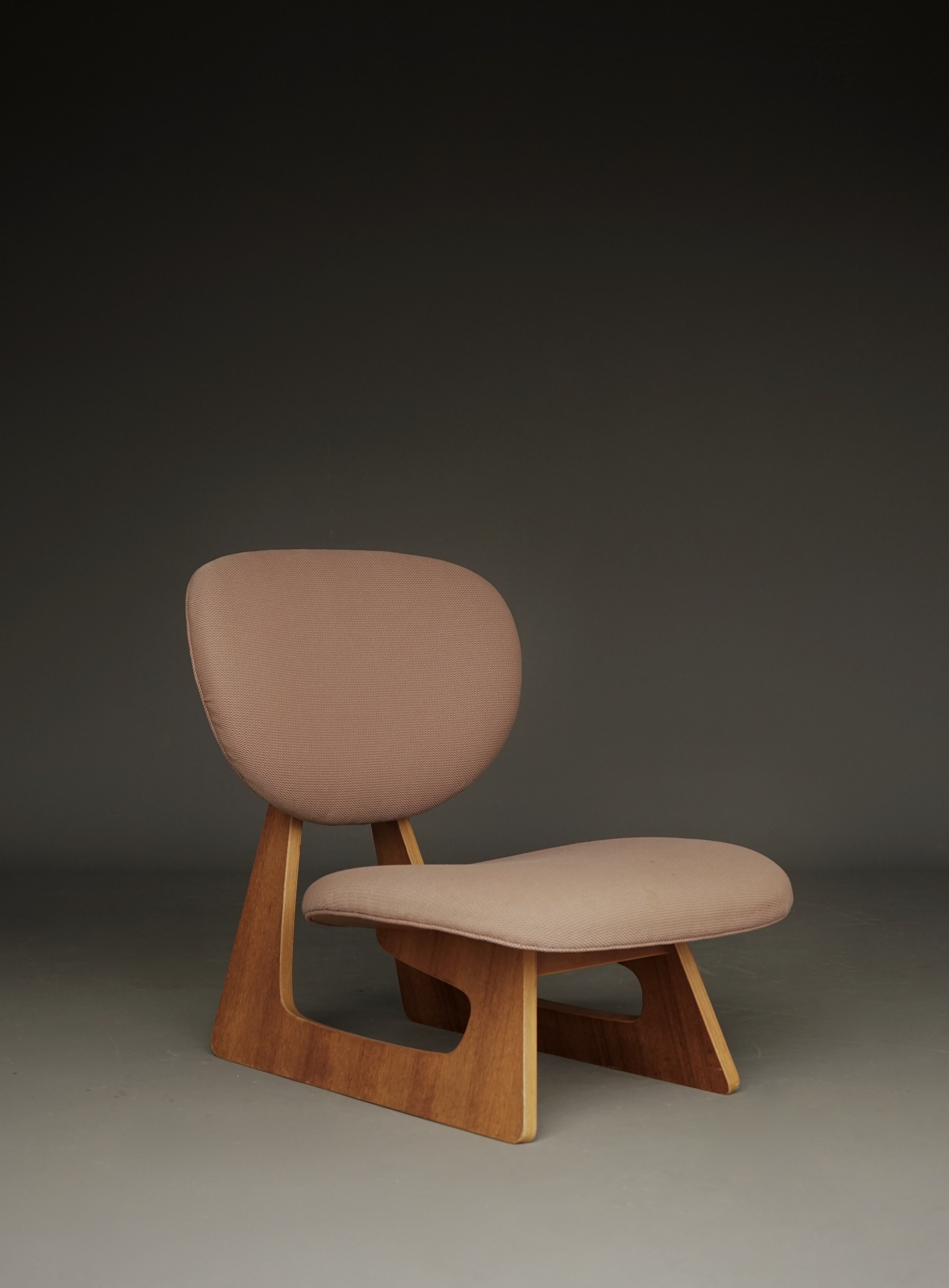
Kwok Hoi Chan (HK 1939-1990)

Rare sz15 lounge chair for ‘t Spectrum 1973.


This sculptural chair was manufactured for a short period during which time it is believed that around only 100 of the chairs were manufactured. This one was purchased from the first owner and is in superb original condition with only minimal signs of age and use.
.
Tubular steel and thick leather 72x90x68cm

Price: 3.600 euro

http://www.merzbaufurniture.com

monotube chair

Wim van den Bergh (Nl.c20th)

chromed steel tube with leather slung seat. 48.5 wide x 67 deep x 73cm high.

Wim van den Bergh is an architect, writer, and professor of Housing and Design at RWTH Aachen.

An 80s homage to early modernism this is a highly elegant and rare chair: Only 30 examples of this chair were ever produced (by hand) of which the first prototype was commissioned by Museum Boijmans van Beuningen in Rotterdam in 1981.

Price: 4.500 euro

http://www.merzbaufurniture.com

1980s side chair

Sido and François Thévenin (France mid-c20th)

metal & buffalo leather side chair. Stamped. 1970s/80s.

An elegant sculptural side chair made by the famous French duo known for working across a range of specialisms including architecture, sculpture and furniture design. Like many imaginative artist/designers who came to the fore in the 1980s, their work combines elements of Postmodernism to create a narrative object : Gothic, baroque and brutalism combined in a theatrical narrative. This 1970s-80s art-chair would look fabulous in any stylish interior. It has the maker’s brandished marks to the back of the leather seat.

Born on the French Riviera in 1931, François Thévenin’s output oscillates between architecture, sculpture, design and poetry using his favourite material, metal. Trained at the Beaux-Arts in Paris in the 1950s, he met his future wife and partner Gisèle Sidoti, known as Sido (1934-86). In 1958, after his military service, François and Sido moved to the south, to Cannes-la-Bocca, where their house-workshop is still located.

Price: 3,200 euro

http://www.merzbaufurniture.com

Isokon No.1 Stool

Venesta plywood table/stool for Isokon. 1930s

Plywood No.1 table/stool with its accompanying circular tray. Manufactured by Luterma. Both stool and tray are stamped/labelled Venesta.

The British furniture entrepreneur Jack Pritchard managed Venesta the import company for Luterma in England who later formed the Isokon furniture company which most notably employed Marcel Breuer. These tables/stools were distributed in England post 1933 until 1939 exclusively by Isokon alongside designs by Marcel Breuer and Egon Riss.

Although the designer of the stool remains anonymous, in 2004 the art historian Alastair Grieve described a modification of the original Luterma stool (of which this stool is one) when he wrote that the original design was subsequently re-designed by the architect and founder of the Bauhaus Walter Gropius (hired as a consultant to Isokon). The very slight alterations Gropius made was to include sharper curves to the cut-out squares of the stool. Gropius’s drawings for the redesign can reportedly be found in the collection of the V&A Museum, London.

The separate tray placed on top of the stool is unusual and rare in that it is much thinner than all other trays we have seen. This has led to some minor warping over time (which may have been why it was produced later with a thicker rim?) The thinner rimmed tray may suggest that this was an early production or at the least a more limited production?

h.46.5cm x w.44cm x d.44cm

Literature:-

  • Kermik, Juri (2004) The Luther factory: Plywood and furniture 1877-1940
  • Daybelge & Englund, (2019); Isokon and the Bauhaus in Britain
  • Pritchard, Jack (1984); View from a Long Chair: The Memoirs of Jack Pritchard

Price: 3.650 euro

http://www.merzbaufurniture.com