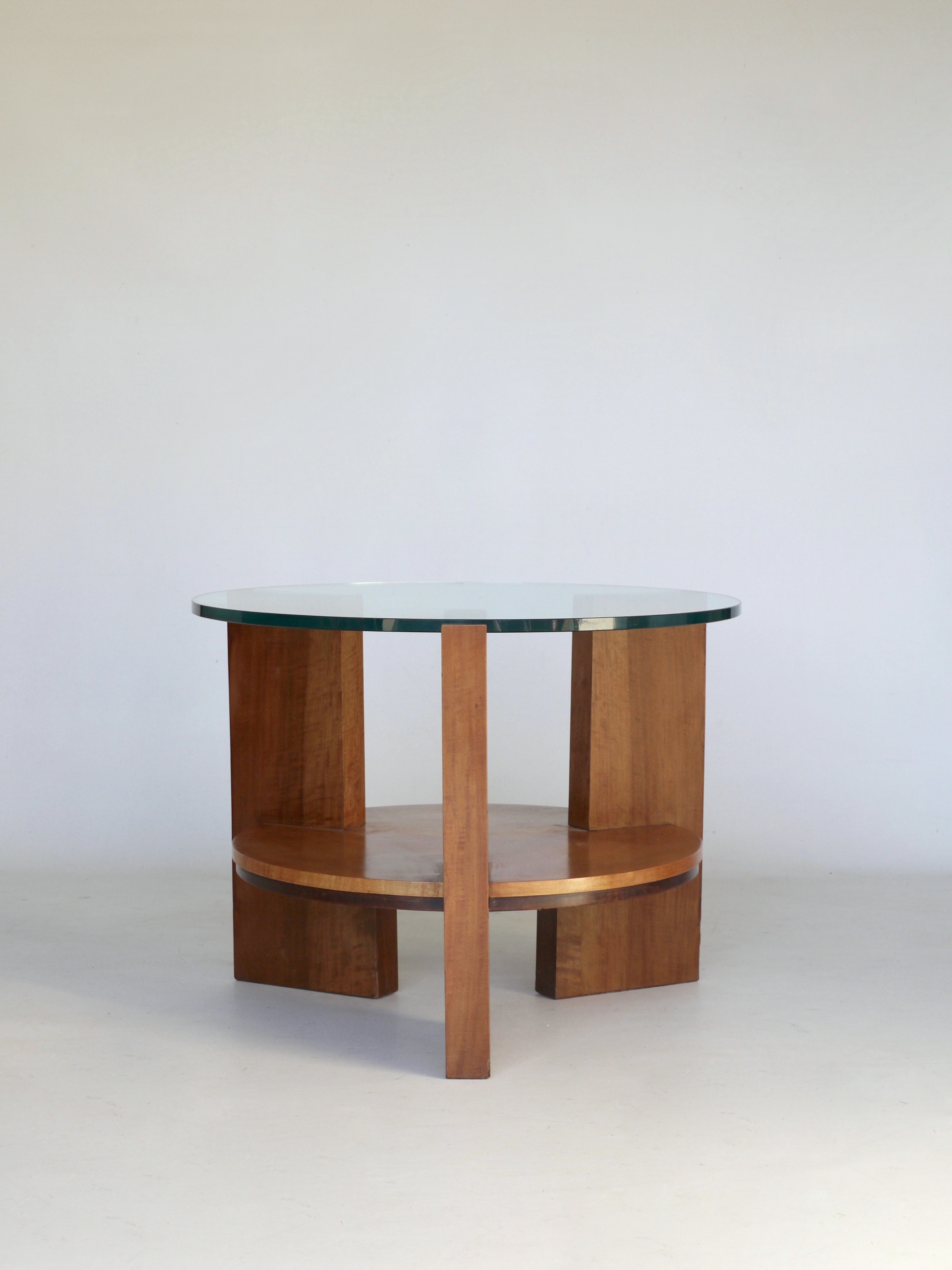
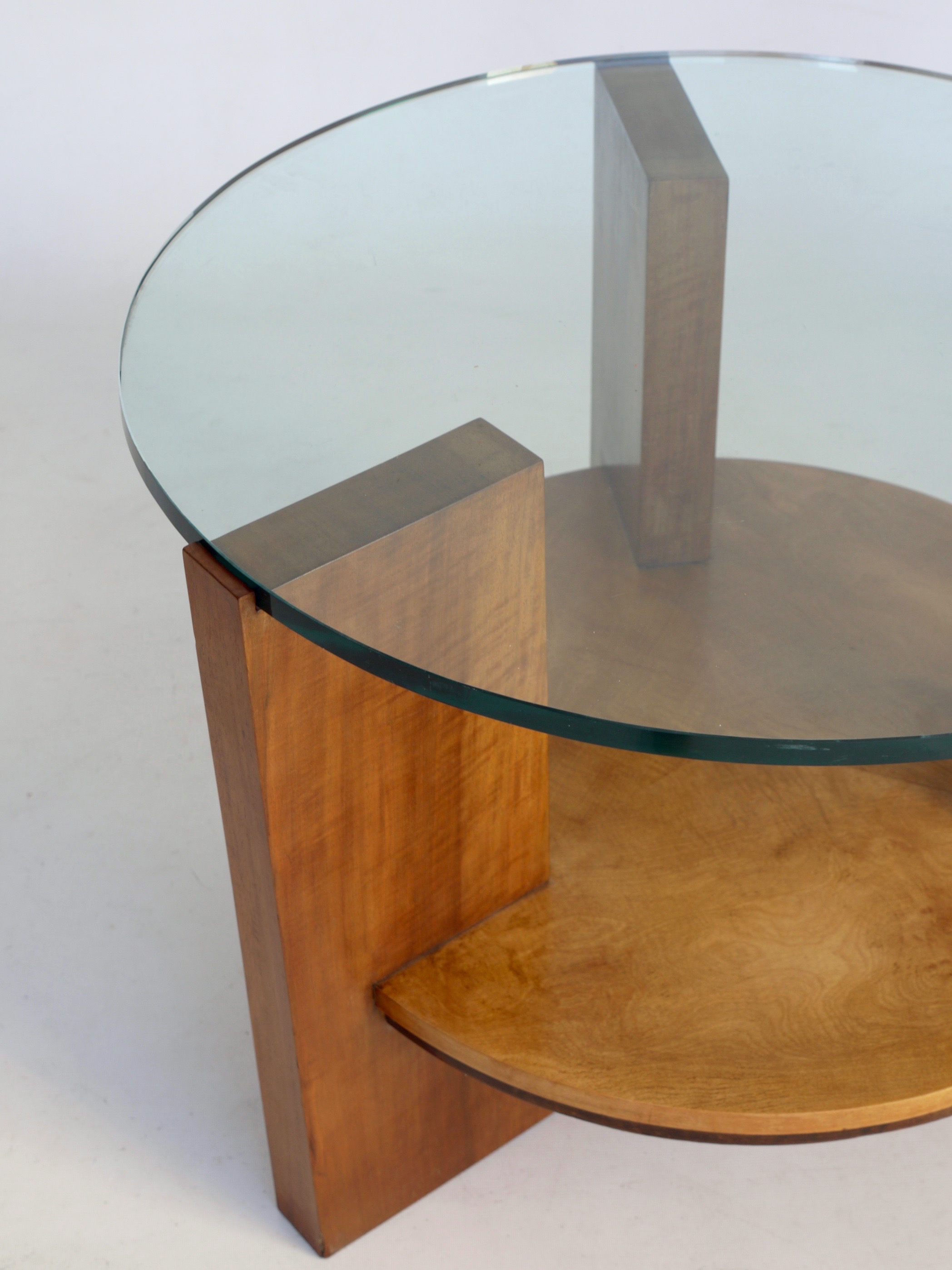
Art Deco/ modernist circular side table.
Maple and cherry woods with thick glass top. 75cm diameter x 57cm high.
A good quality Dutch 1930s/40s Haagse School (Hague School) side table with simple block structure.
Superb condition.
Price: 1.000 euro
furniture, art & design
Art Deco/ modernist circular side table.
Maple and cherry woods with thick glass top. 75cm diameter x 57cm high.
A good quality Dutch 1930s/40s Haagse School (Hague School) side table with simple block structure.
Superb condition.
Price: 1.000 euro
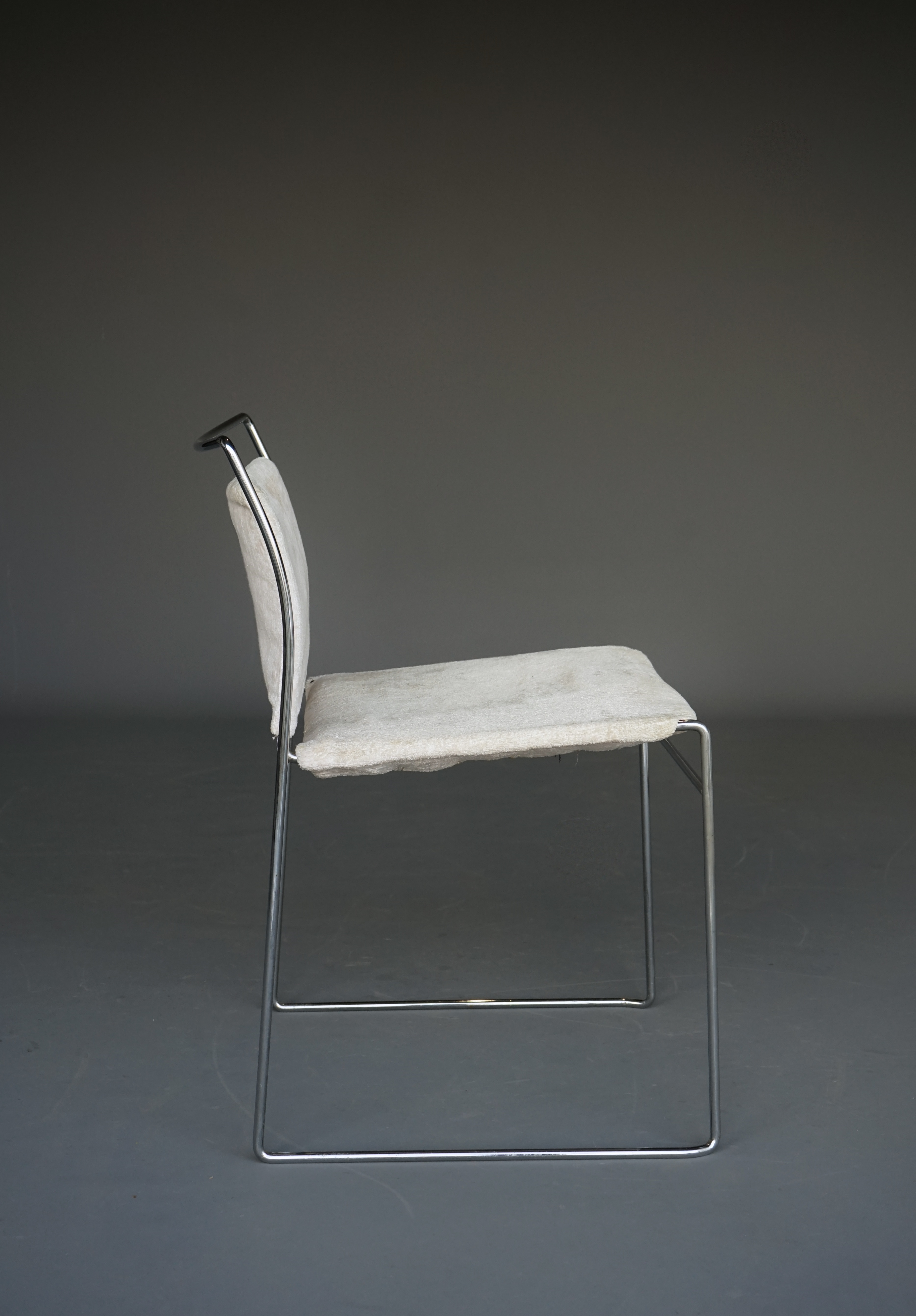
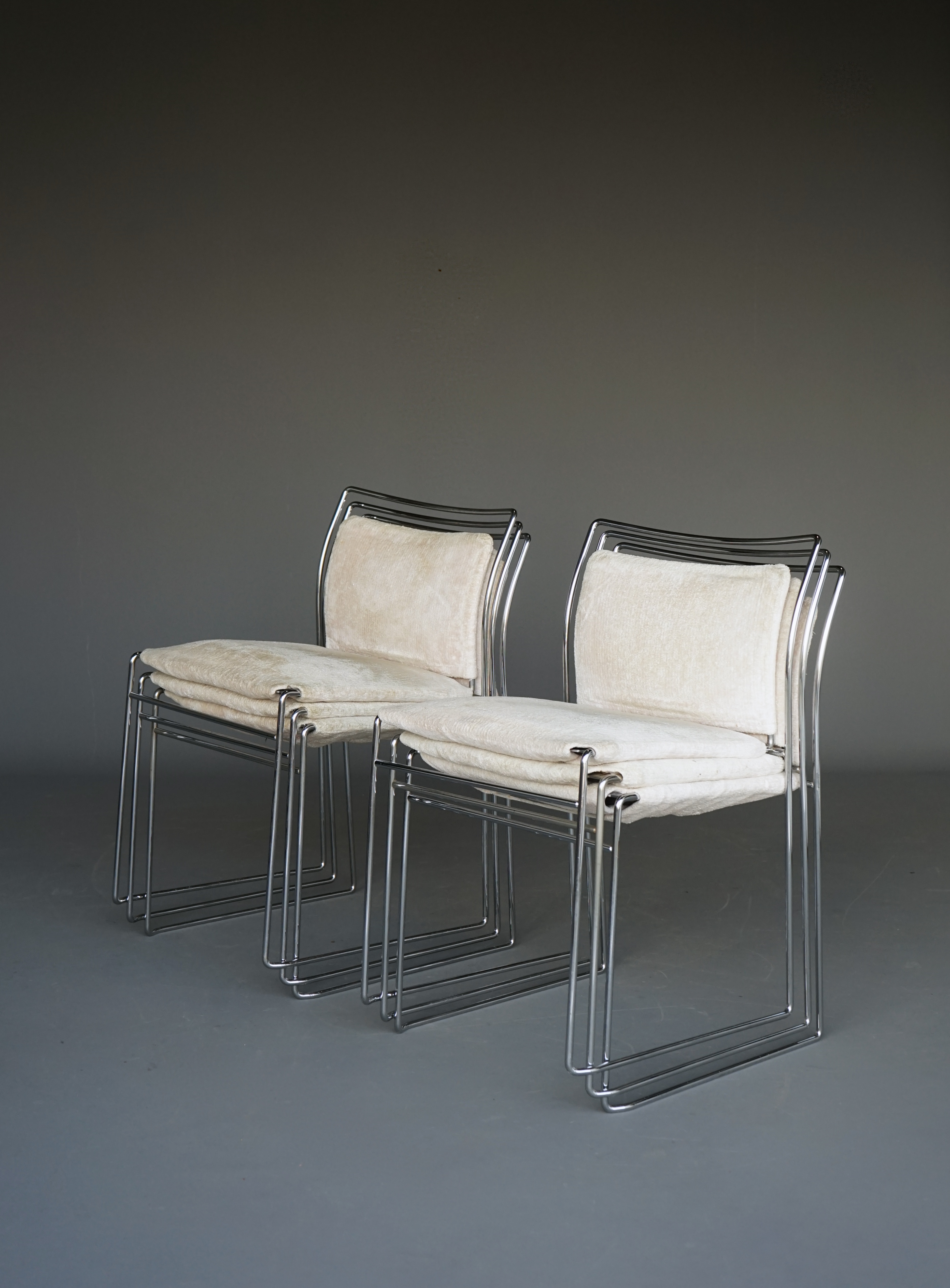
Kazuhide Takahama (Jp.1930-2010)
x6 Model ‘Tulu’ dining chairs. Simon (Gavina/Simon International). / Printed makers labels to the underside. 1960s.
Chromed slender steel rod frames, with pink/champagne upholstered seats.
A rare set of 6 sleek dining chairs. Unlike traditional chairs bent from a heavy metal tube, the Tulu uses a slender steel rod that was electric induction-welded before receiving a chrome or painted finish. This technique allowed for tighter, continuous curves and a lightweight, graphic silhouette.
The upholstery is showing definite signs of age and use – we do not believe that this is the original upholstery (although have seen many for sale with the same fabric?) and highly recommend that the buyer has them reupholstered for use (we have priced them accordingly)
Price: 2.000 euro
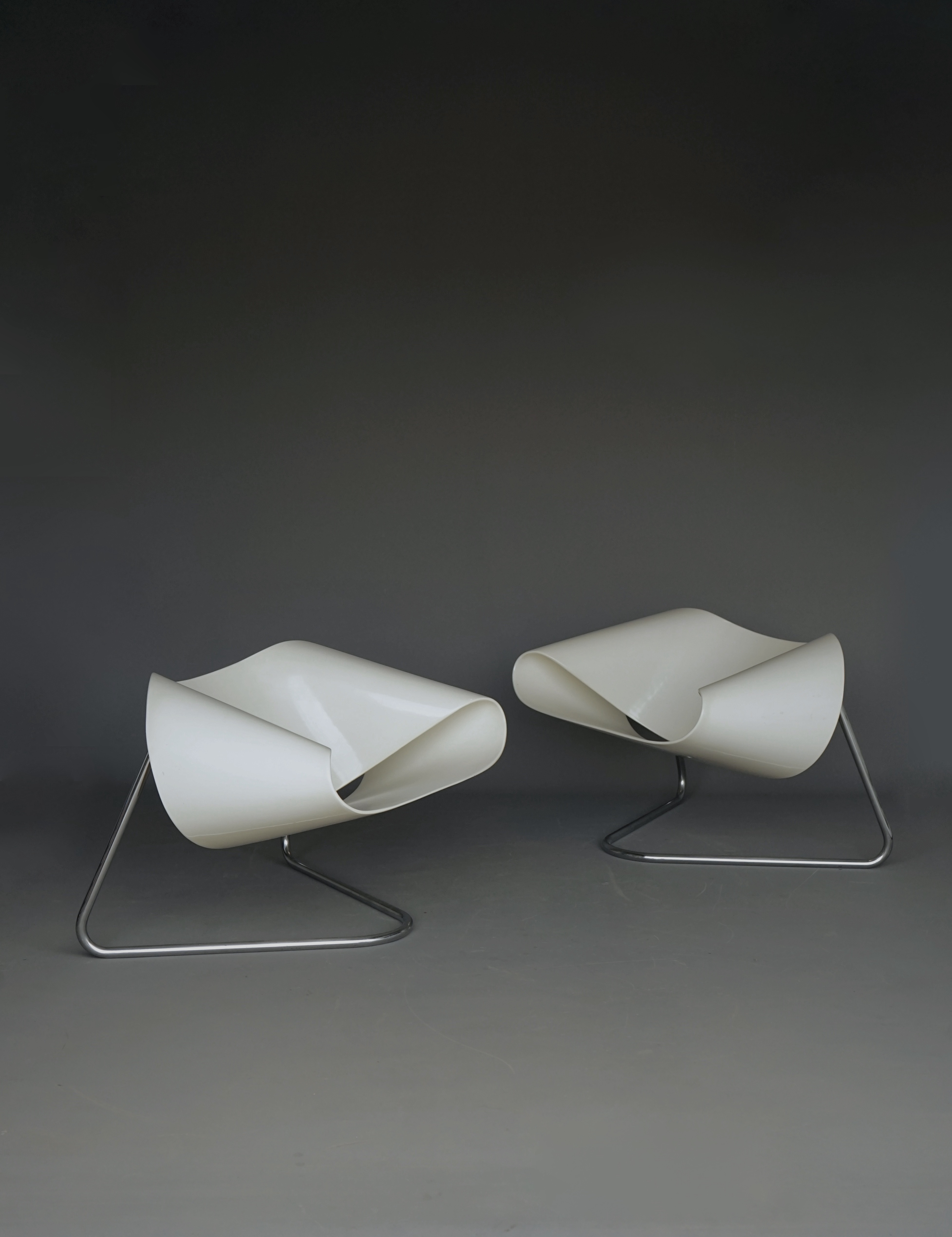
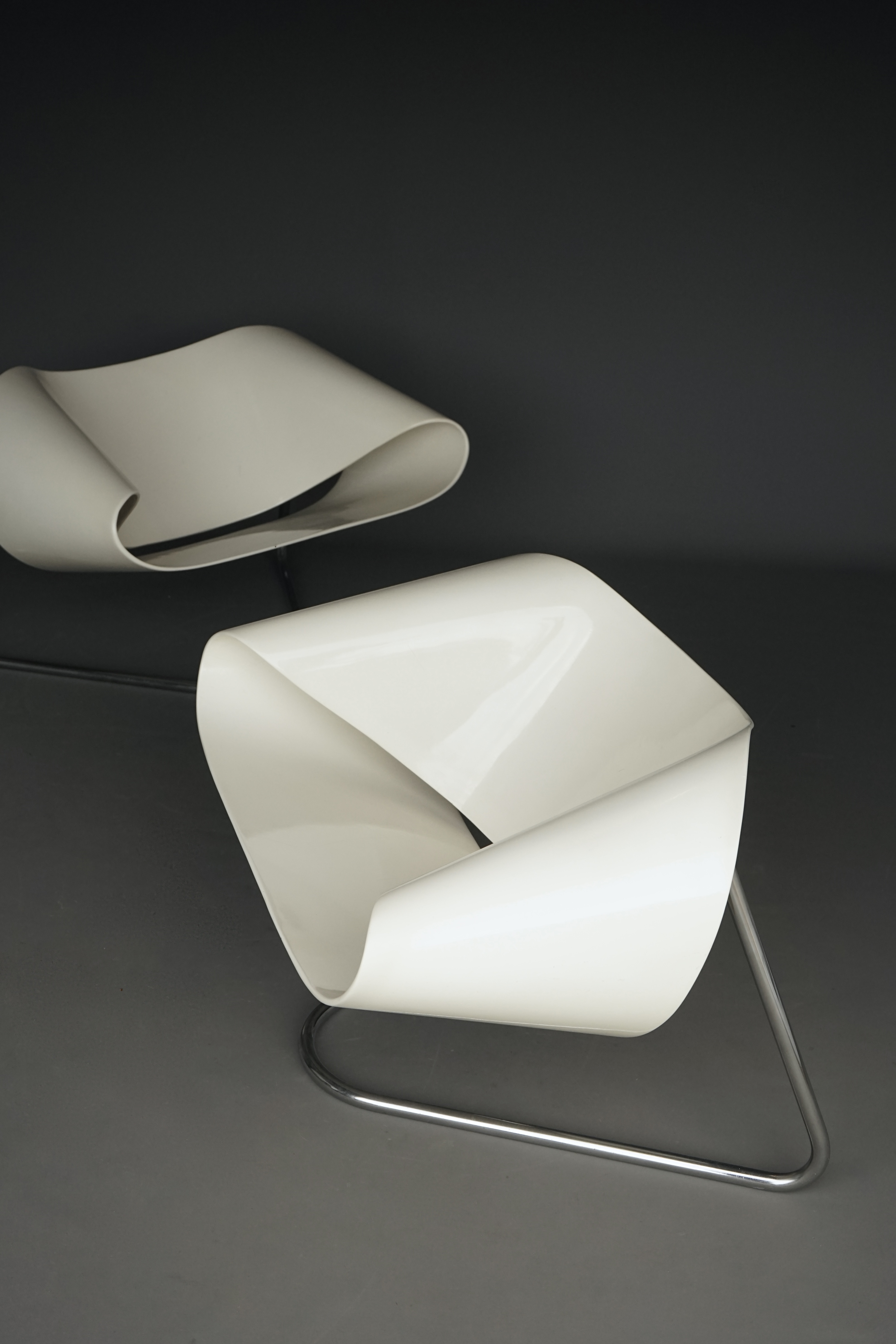
Cesare Leonardi and Franca Stagi (Italy c20th)
‘Ribbon’ Lounge Chairs (Model CL9), Fiarm. Italy.
102 x 67 x 58cm high (seat height 38.5cm at the front)
Iconic and revolutionary 1960s design chairs manufactured in lacquered fiberglass and with chrome plated tubular frames. The chairs are very comfortable due the wide and ergonomically slightly tilted seat with integrated armrests which hangs on to the tubular frame with the use of rubber molds attached under the armrests. The cantilever tubular frames provide a subtle bounce and gives the chair an open, elegant sculptural look.
Good original condition with only minor evidence of age and use – The rubber molds below the seats were re-glued to the seats at some point in the 1970s.
Price: ON HOLD
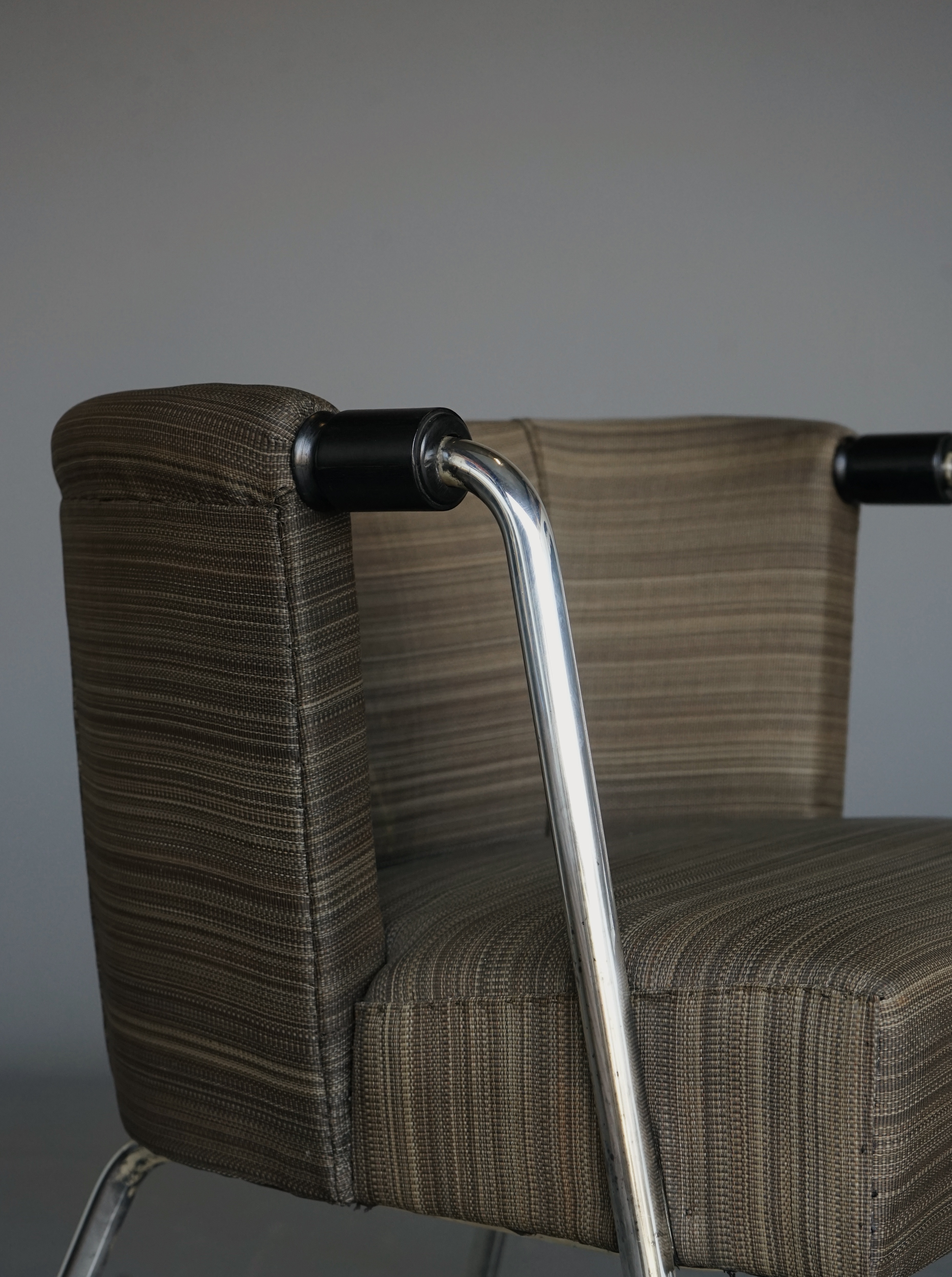
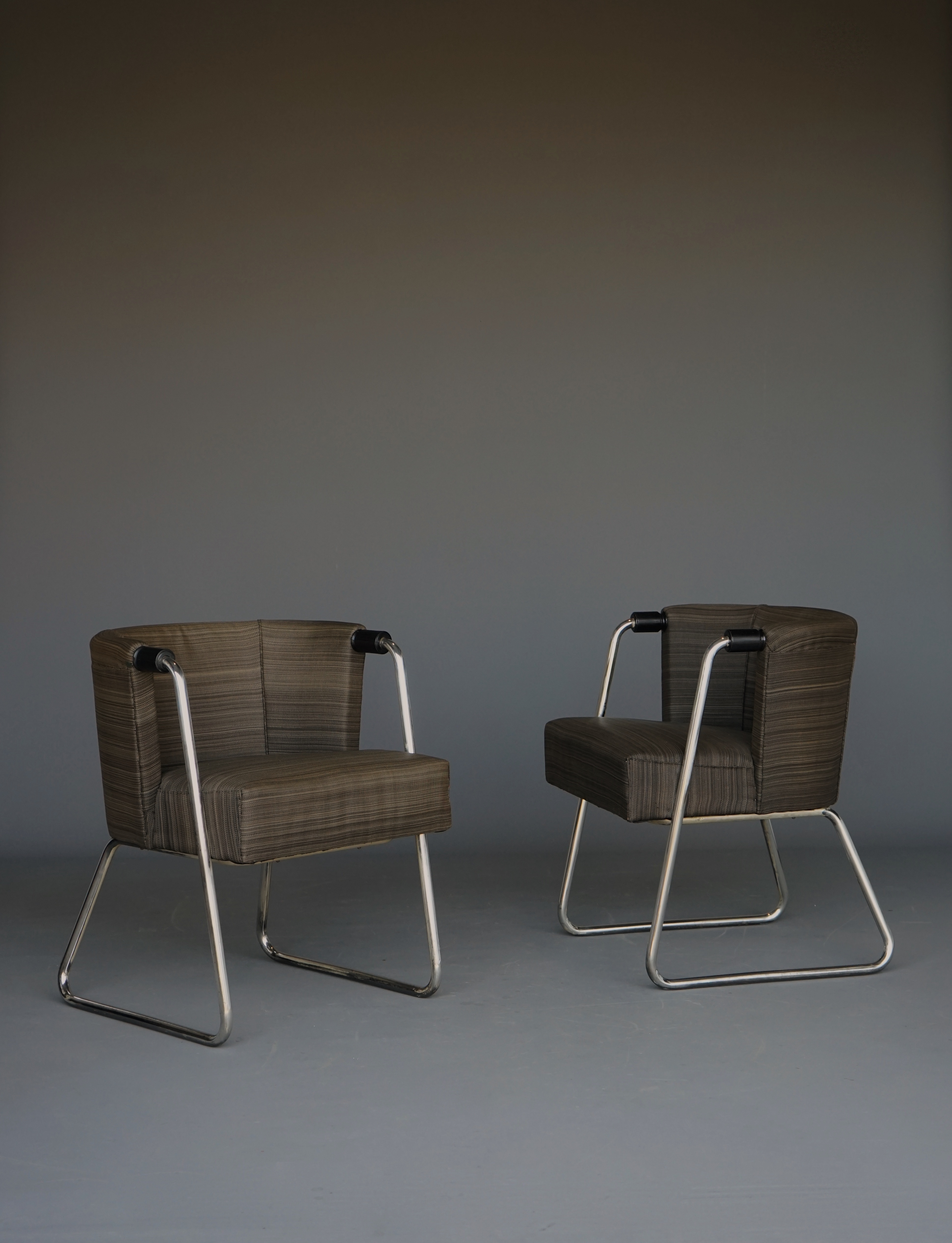
Exceptional pair of armchairs (or possible desk chairs).
Artifort. 1930s
A pair of rare Dutch modernist /functionalist chairs manufactured in the highest quality materials: silver-plated frames, horsehair upholstered seats and with ebony handgrips.
The chairs are from the provincial government building in Maastricht designed in the 1930s by the then ‘rijksbouwmeester’ (chief government architect) Gustav Cornelis Bremer. They were produced by the Maastricht company Artifort as a one-off commission exclusively for the members of the provincial council.
Price: 3.850 euro
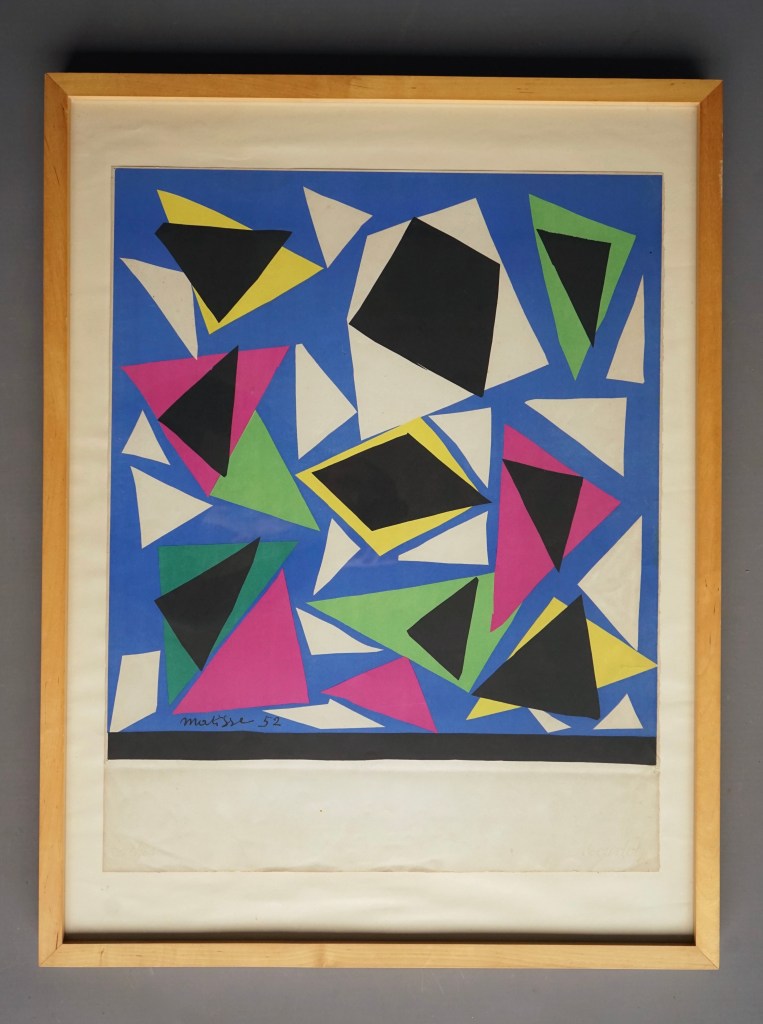
Henri Matisse (Fr.1869-1954)
Galerie Kléber Paris, 1952, Lithograph. 52.5 x 66cm
A very rare six colour lithograph by Henti Matisse, 1952. This lithograph was designed to commemorate the centenary of the well-known Paris based Galerie Kléber. Adding to its rarity is that this print was pulled before lettering, knowing as ‘avant la lettre’. Produced by the famous Atelier Mourlot (watermark within the paper). The print currently has a modern wooden frame.
Price: 1.700 euro
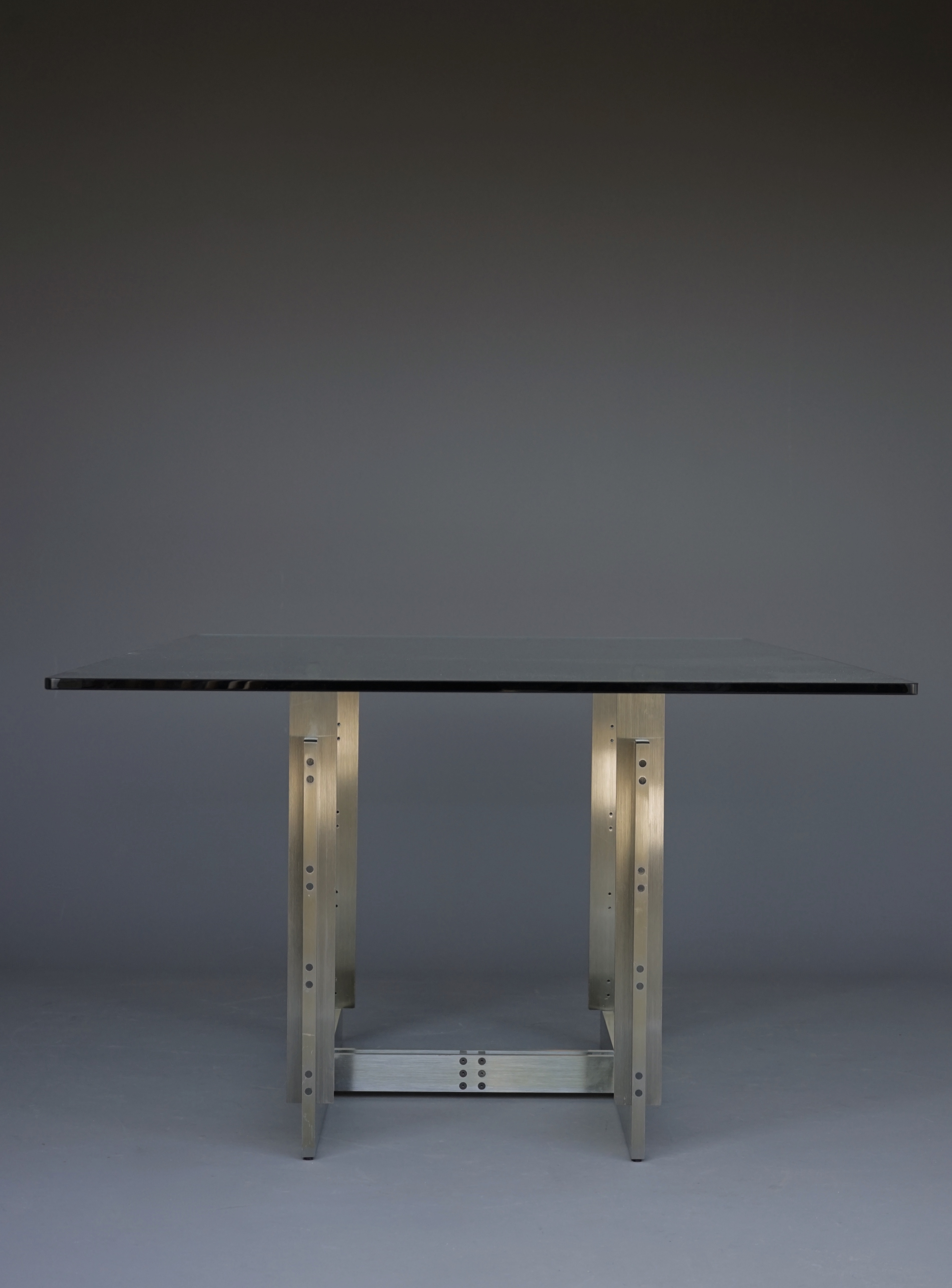
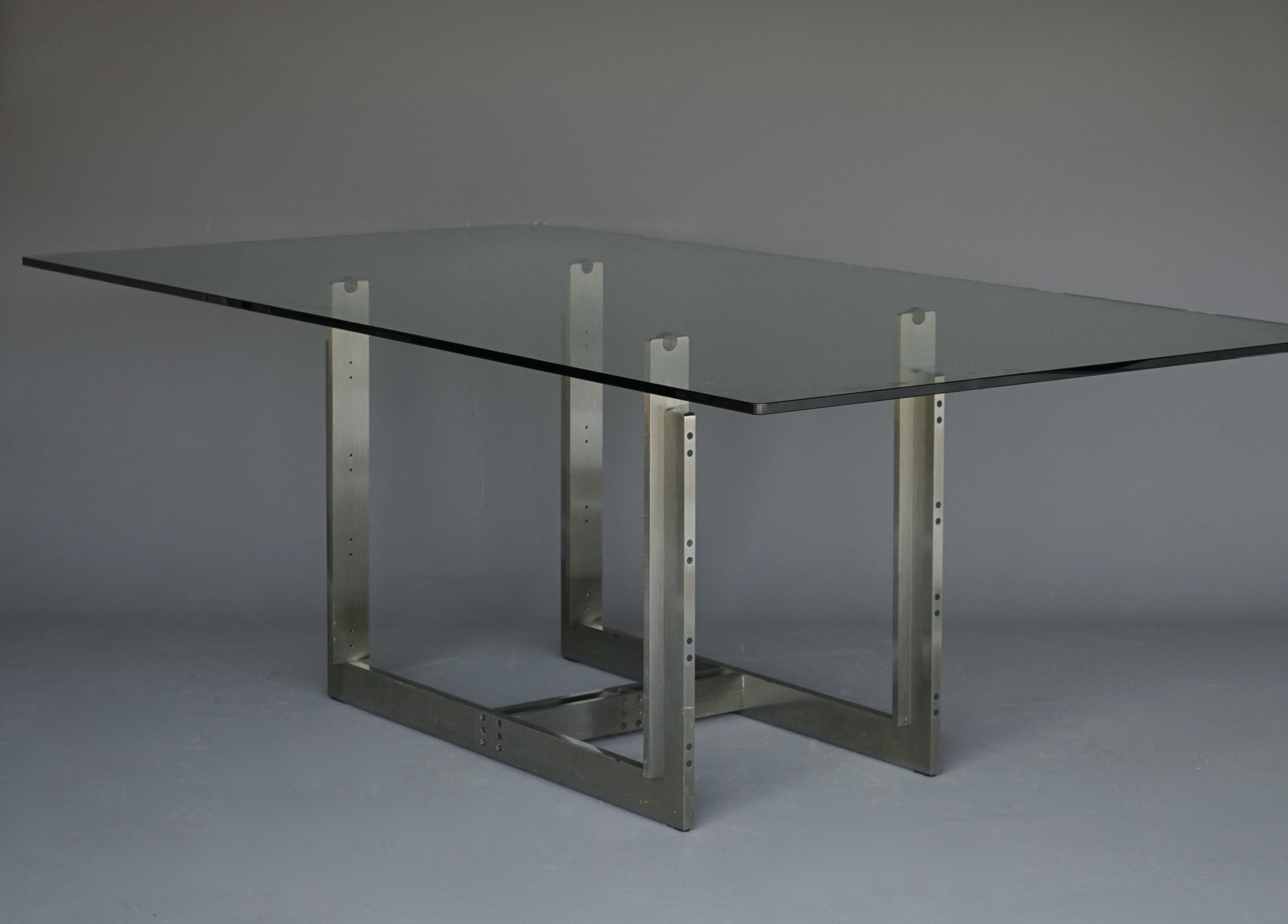
Carlo Scarpa (It. 1906-1978)
Model ‘Sarpi’. 1970s. 209 x 109 x 72cm high.
This outstanding dining table was designed by well known Italian architect Carlo Scarpa in the 1970s and produced by Simon Gavina. It has a brushed stainless steel frame and thick glass top and visible connections.
Simon Gavina produced a collection of sculptural designs of which this table was one, named “Ultrarazionale” which reflected Scarpa’s approach to Post-war Italian design. The designs have subsequently become icons of the c20th.
In good stable condition but with some surface scratches and discolouration to the frame.
Price: 5.600 euro
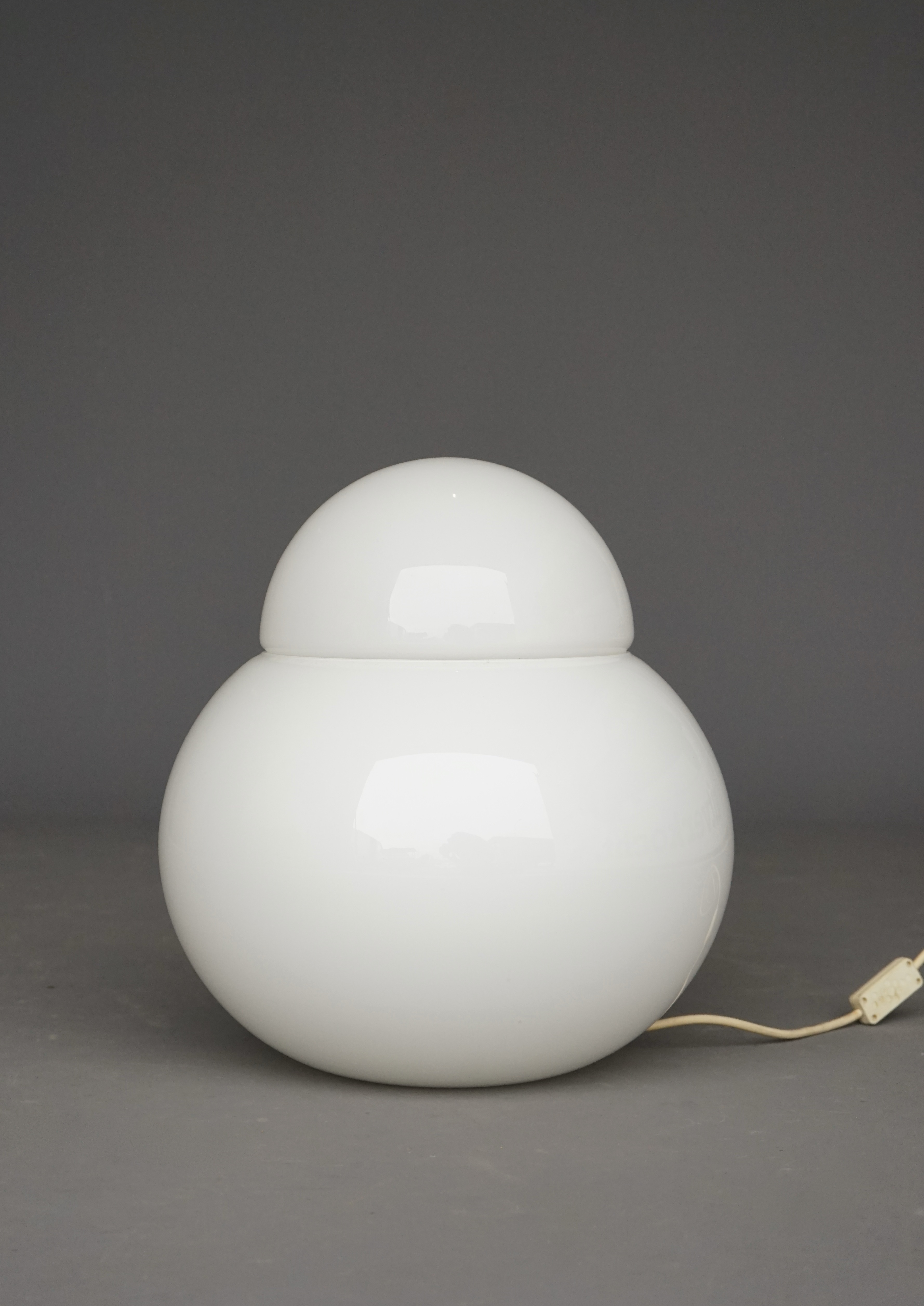
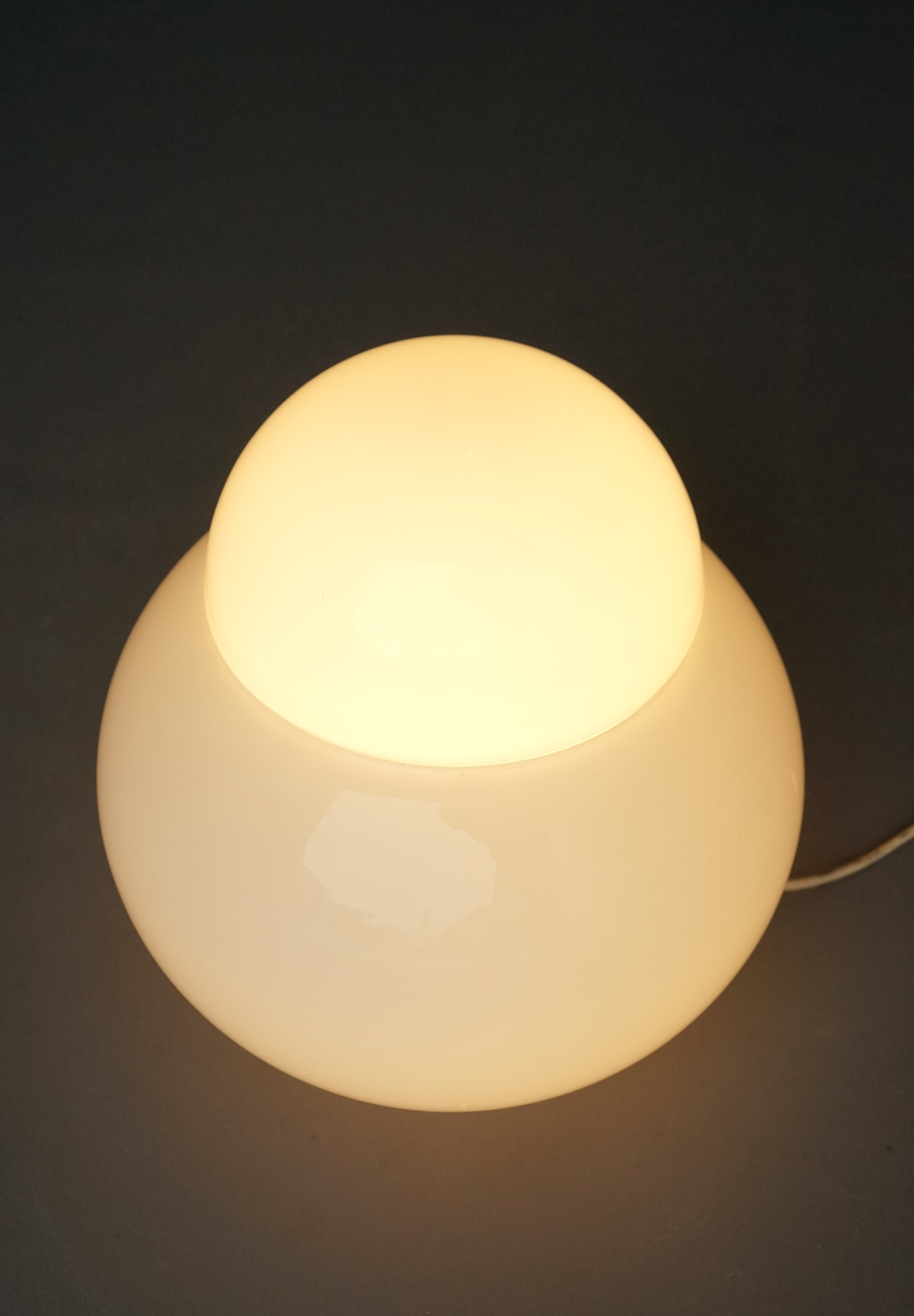
Sergio Asti (Italy 1926 – 2021)
40 x 40 x 42cm high. Candle, Italy. 1968
Daruma lamp by Sergio Asti. This lamp is the largest size (42 cm high) that was produced by the Italian company Candle in 1968. (Later productions were made by Fontana Arte). The lamp is made out of two parts hand blown glass that makes it easy to access the lamp fitting inside. It gives out a very attractive warm glow. It has its original fittings and is fully marked with Candle sticker.
Price: 1.650 euro
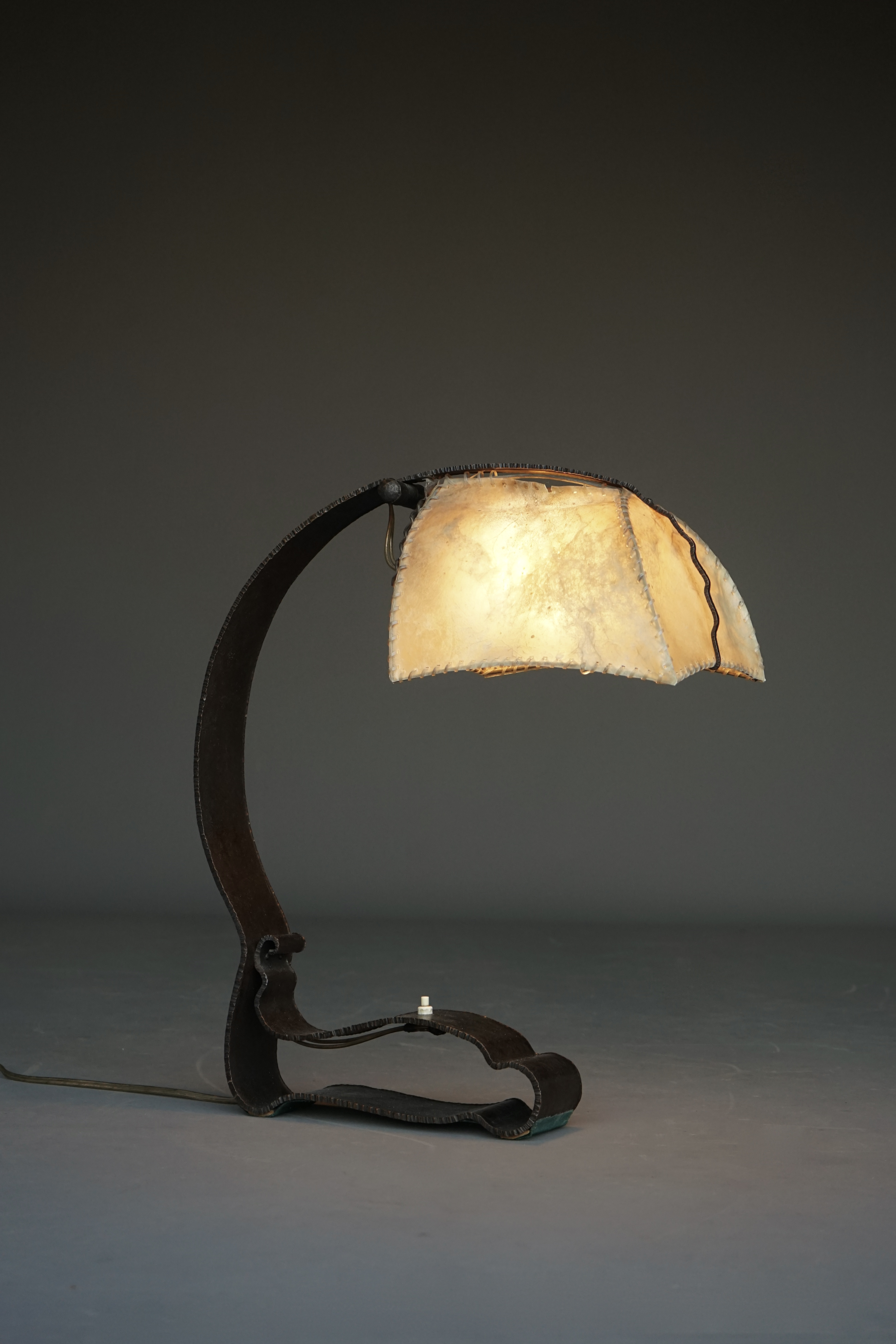
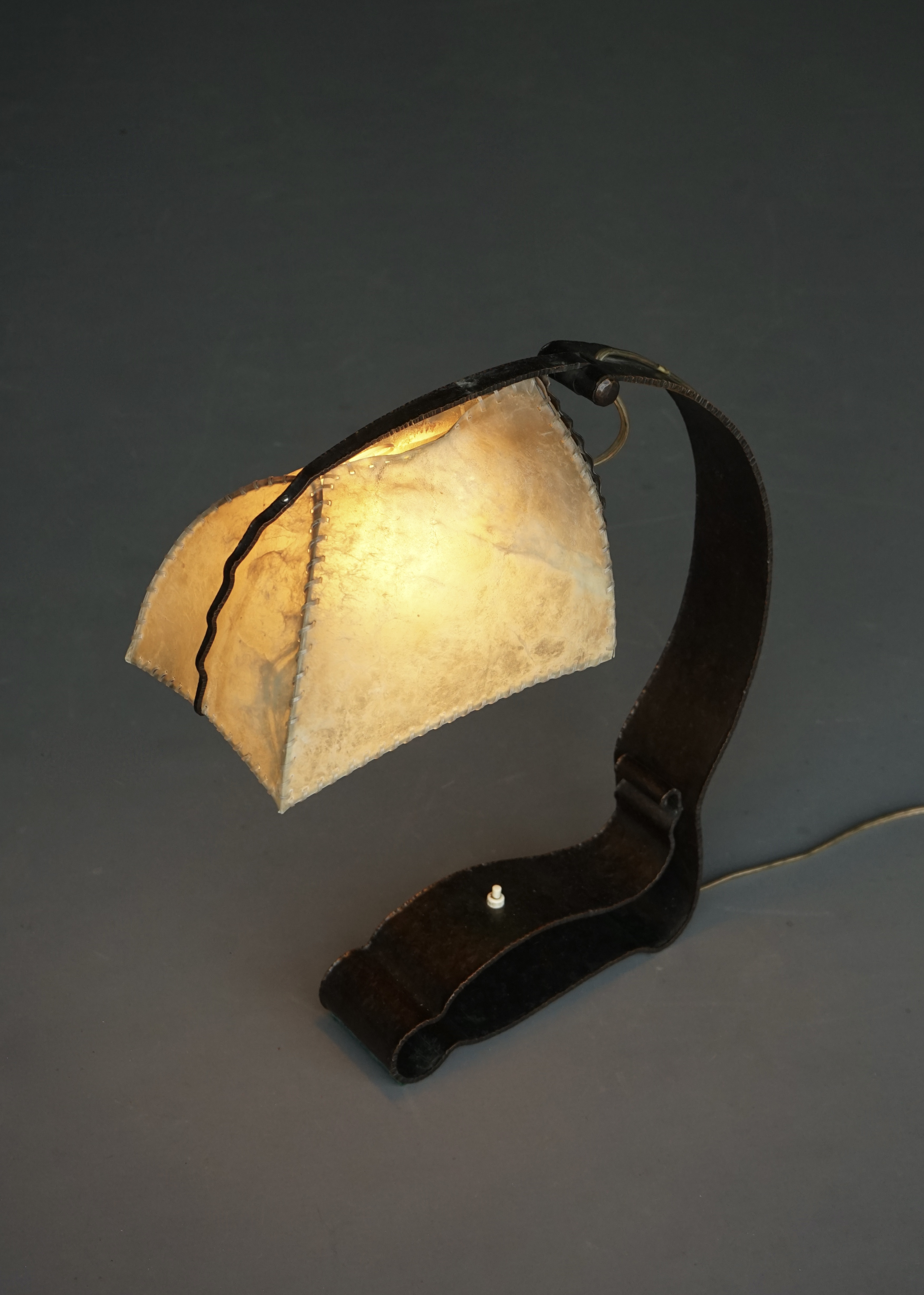
Large Amsterdam School desk lamp. Circa 1920s.
41 x 19 x 52.5cm high
Hand-forged wrought iron desk lamp with original parchment lamp shade. The shade has a bit of heat damage to the top.
The scrolling organic, naturalist forms of this lamp is typical of the Dutch art deco movement known as the “Amsterdamse School’. In the early c20th the Dutch forged a clear identity in the decorative arts that combined the influences of both the Dutch colonies, the ethos of the European Arts & Crafts and Art Nouveau (Nieuwe Kunst) movements.
Price: 1.450 euro

