Bernhard Hoetger (Ger. 1874-1949)

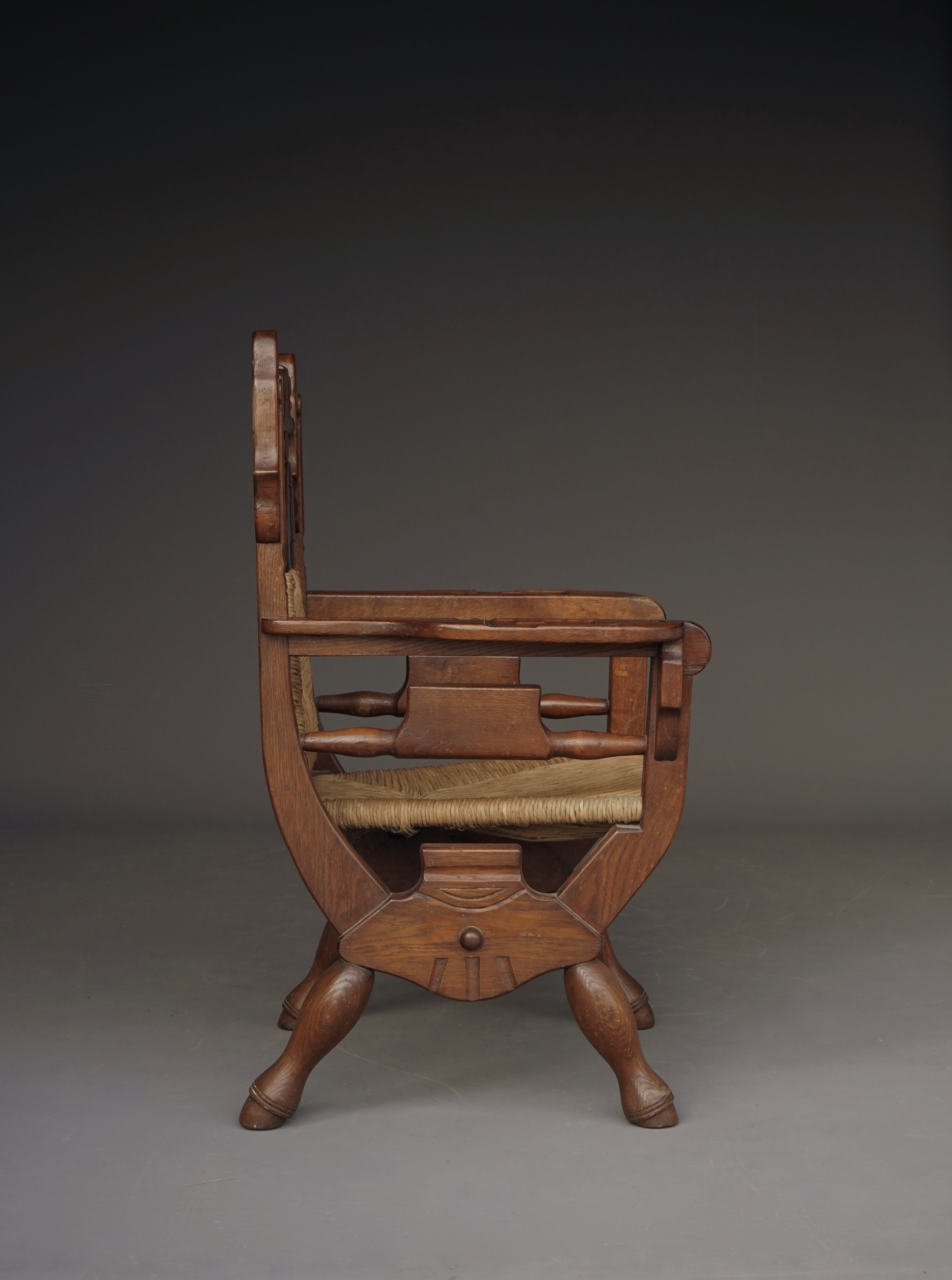
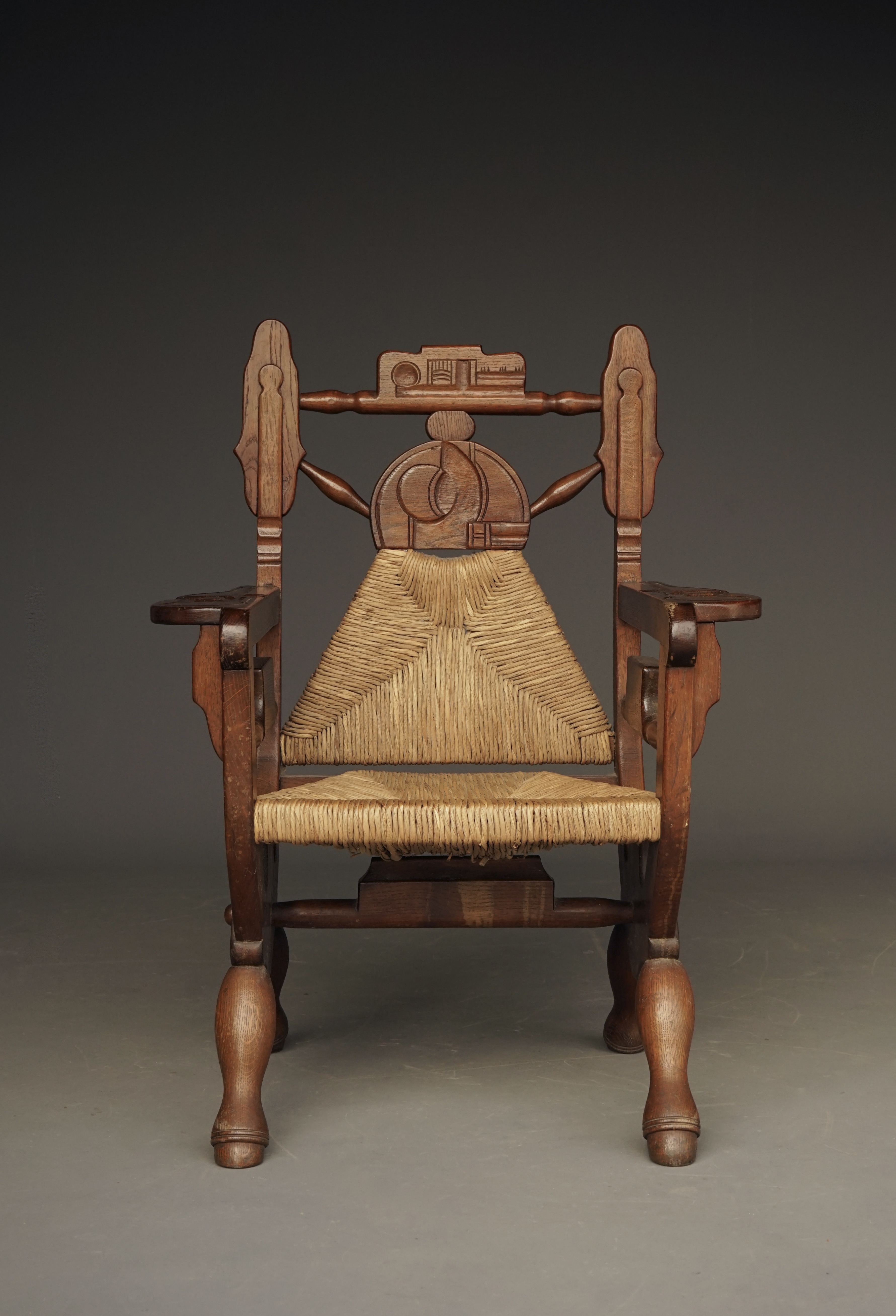
Oak armchair. Manufactured at Worpsweder Kunsthütten, Germany between 1923-27.

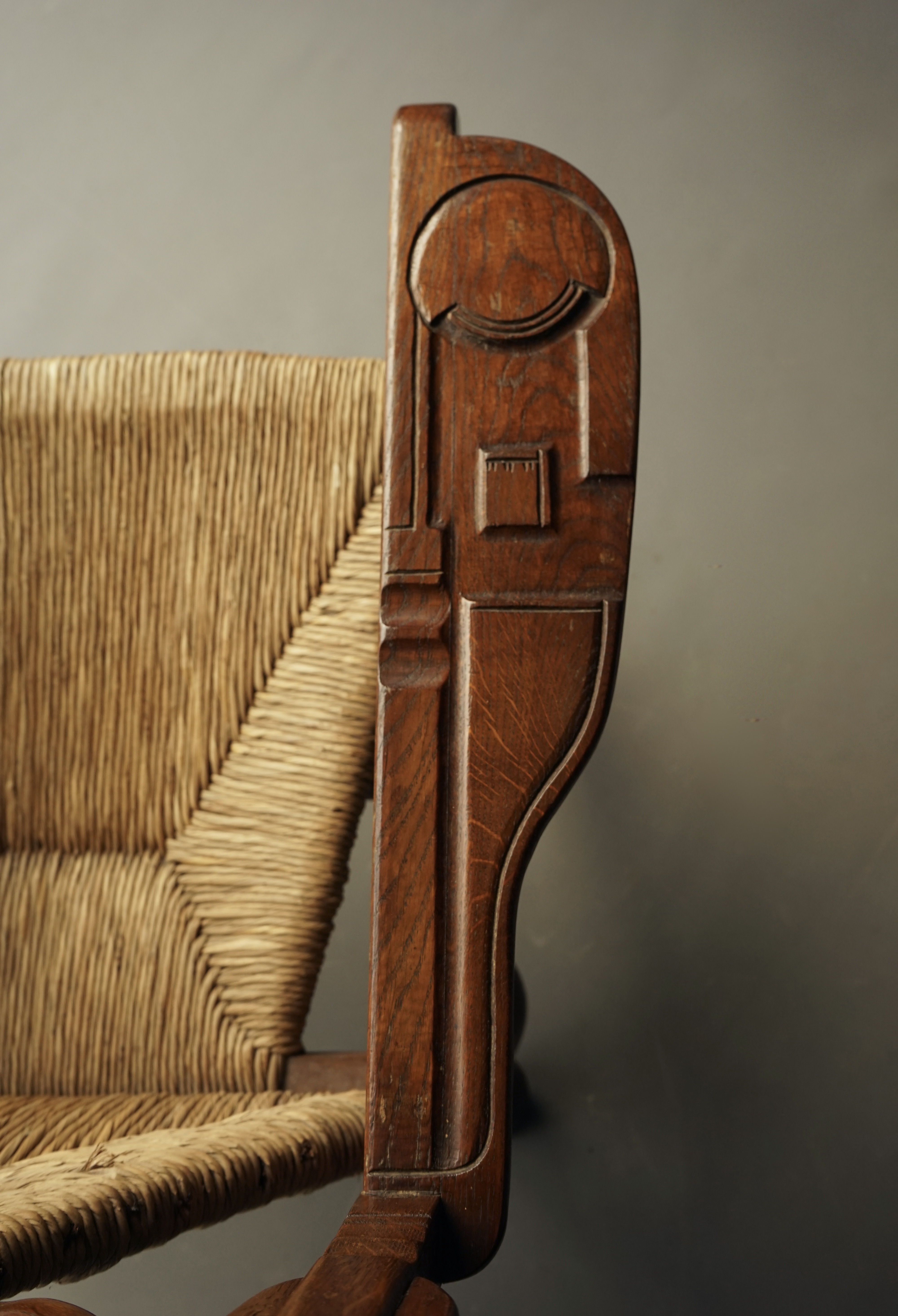
A unique, bizarre and complex designed expressionist oak armchair from 1920s with original rush seat and back.

The chair was designed by sculptor and architect Bernhard Hoetger whose work intersected with völkisch mysticism, esotericism and pseudo-historical mythologies. The spritualist/theosophical movements in Europe started by Madam Blavatsky and colonel Olcott in the 1870s and came to prominence in the 1930s with Kandinsky ‘concerning the spiritual in art’ and soon afer the Bauhaus and anthroposophical movements. Hoetger’s art was part of this wider vision of a new future for mankind in the years following WWI.

Overall, the chair’s form is the manifestation of mystical beliefs: the coinciding of folk art and futurist ideals and racial-pagan utopias.

The chair is created using traditional craft vernaculars and is adorned with a range of carved symbols; various cultural references from Egyptian, Mesopotamian, the Americas, to the Arts & Crafts and Bauhaus movements. Its feet take on the form of goat hoofs that firmly plant it onto the earth and yet the back and arm rests look to the heavens using pictorial abstract designs based planetary alignments and geometry.

Worpsweder Kunsthütten were a group of experimental arts & crafts workshops founded in 1923 by Bernhard Hoetger in the Worpswede artist’s colony. Operating until 1927, the workshops brought together young artisans to create avant-garde, expressionist objects from clay, metal, and wood.

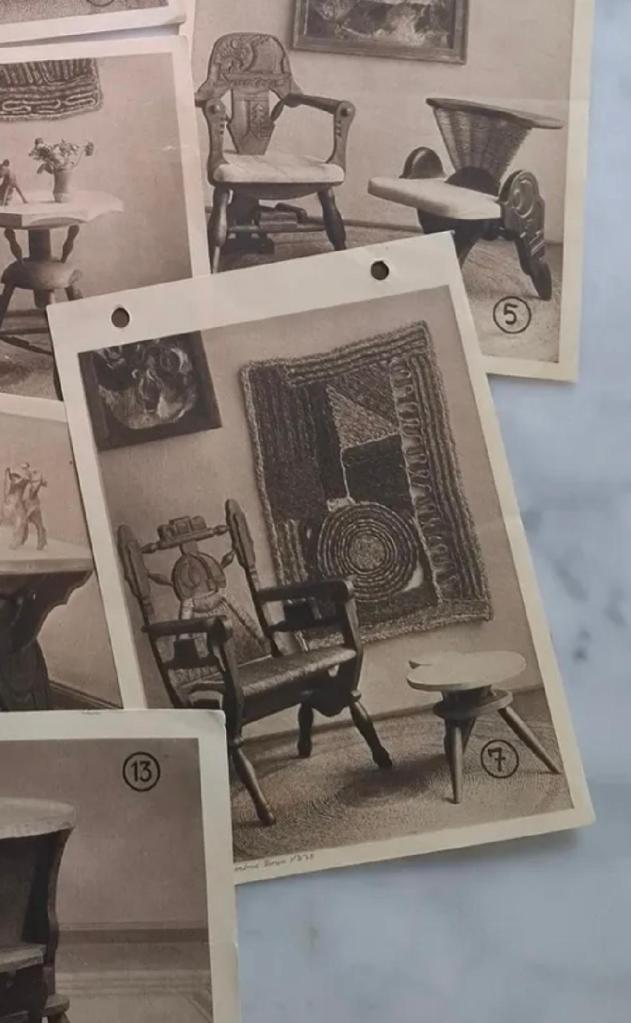
Ref: a version of this chair is pictured in the catalogue of the Worpsweder Kunsthütten from 1924 (shown in stories)Ref: a version of this chair is pictured in the catalogue of the Worpsweder Kunsthütten from 1924 (image below)
Price: On request
http://www.merzbaufurniture.com

Liberty & Co. Circa 1875-1915. ‘Thebes’ stool.

Oak. 34.8 x 31.5 x 36.5cm high.

The rarest of the Thebes stool range made for Liberty & Co., London.

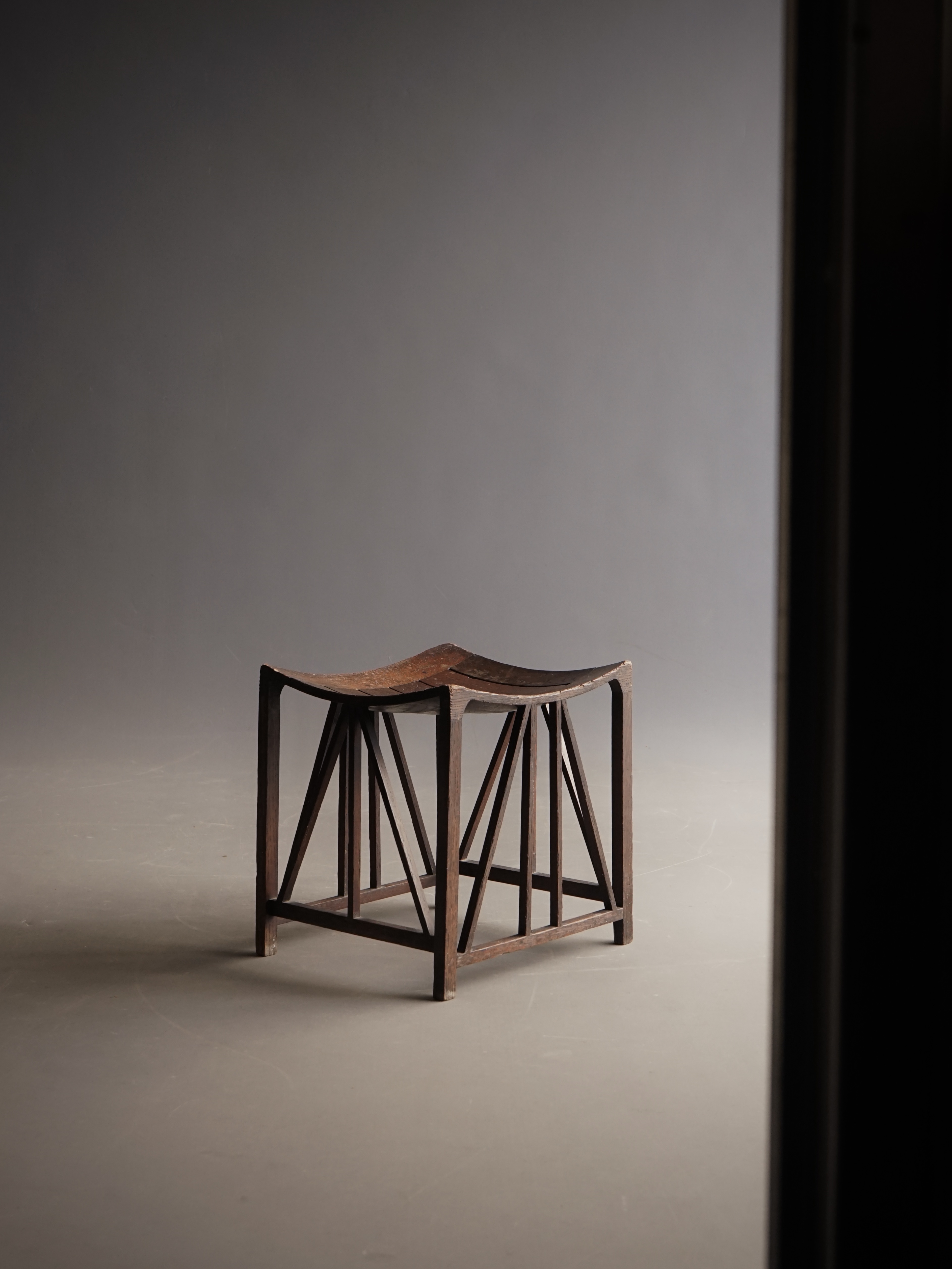
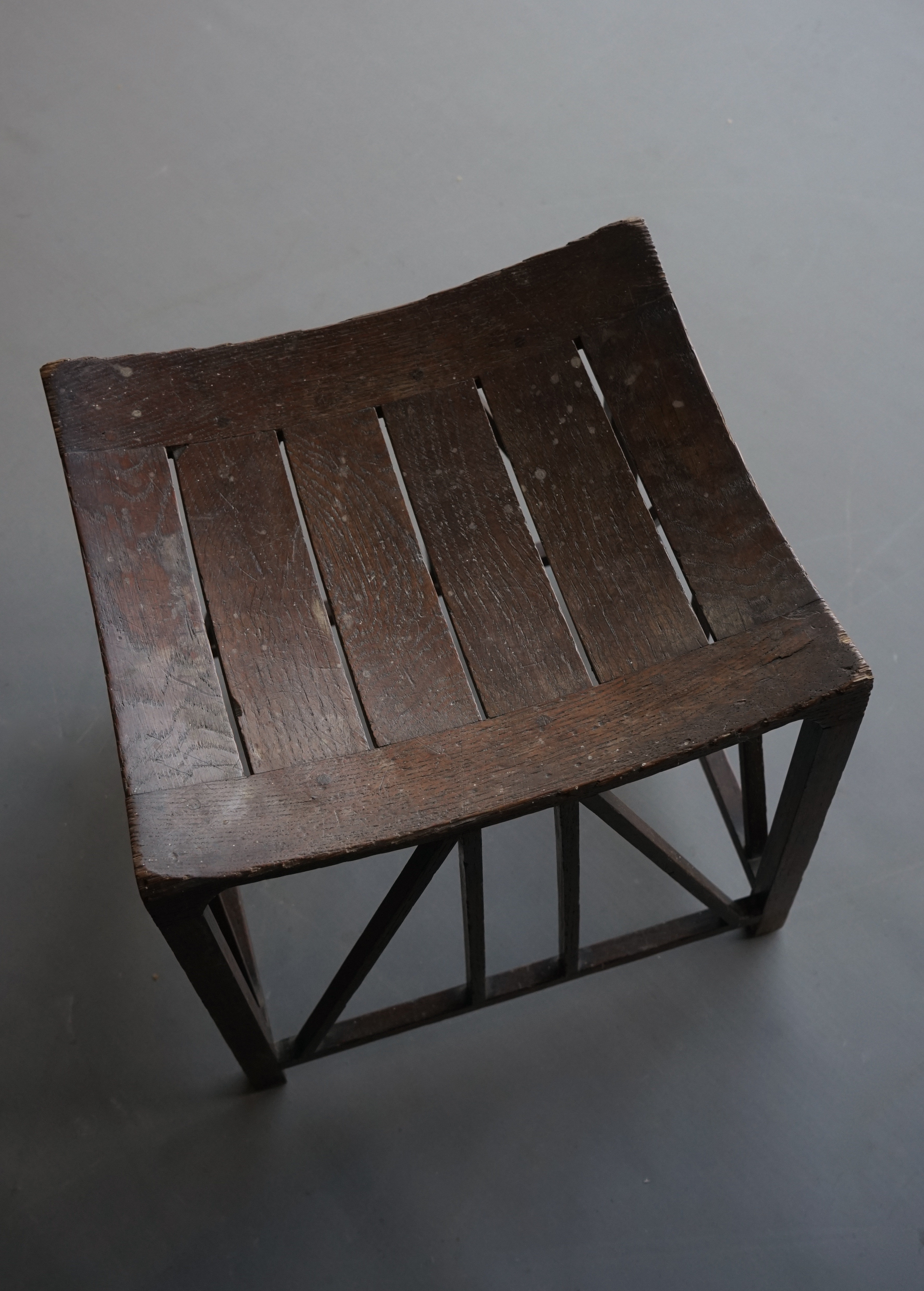
This special little Arts & Crafts / Egyptian revival stool constructed of a concave slatted seat on a slender square section frame. It is in completely untouched original condition – very stable but with a few light stains and edge wear commensurate with age and use.

Price: 10.500 euro

http://www.merzbaufurniture.com

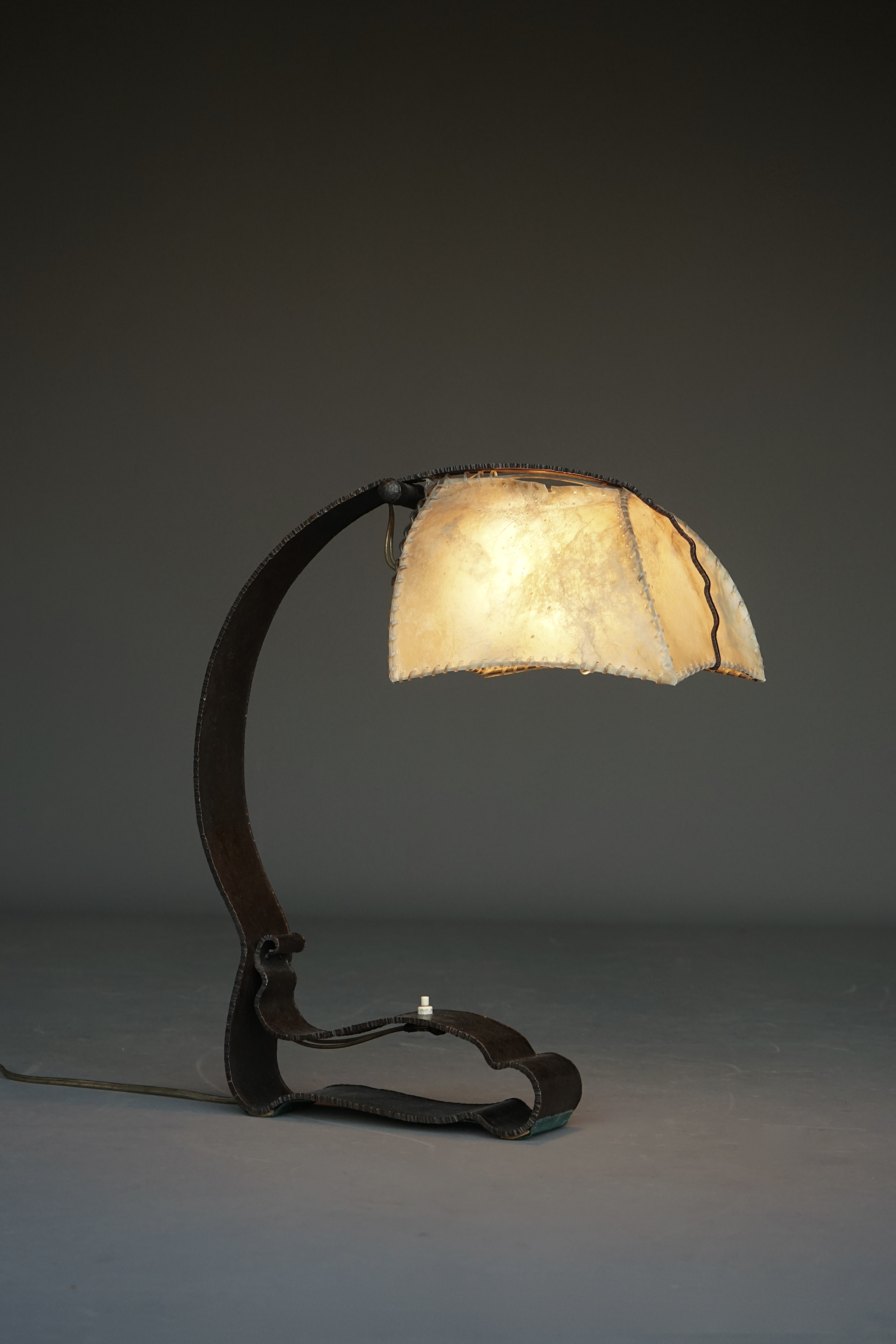
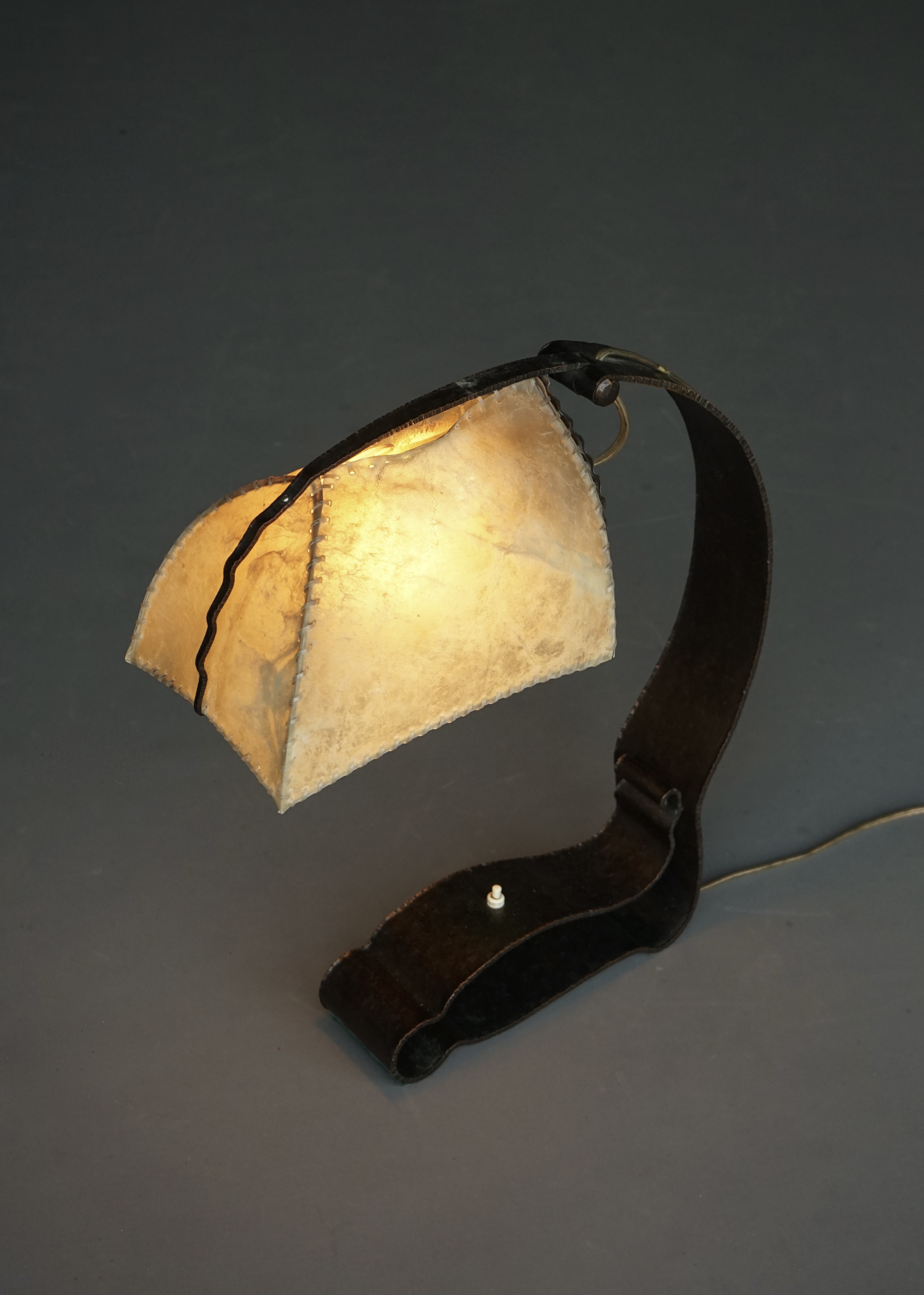
Large Amsterdam School desk lamp. Circa 1920s.

41 x 19 x 52.5cm high

Hand-forged wrought iron desk lamp with original parchment lamp shade. The shade has a bit of heat damage to the top.

The scrolling organic, naturalist forms of this lamp is typical of the Dutch art deco movement known as the “Amsterdamse School’. In the early c20th the Dutch forged a clear identity in the decorative arts that combined the influences of both the Dutch colonies, the ethos of the European Arts & Crafts and Art Nouveau (Nieuwe Kunst) movements.

Price: 1.450 euro

http://www.merzbaufurniture.com

Alexander Kropholler (Nl.1881-1973)


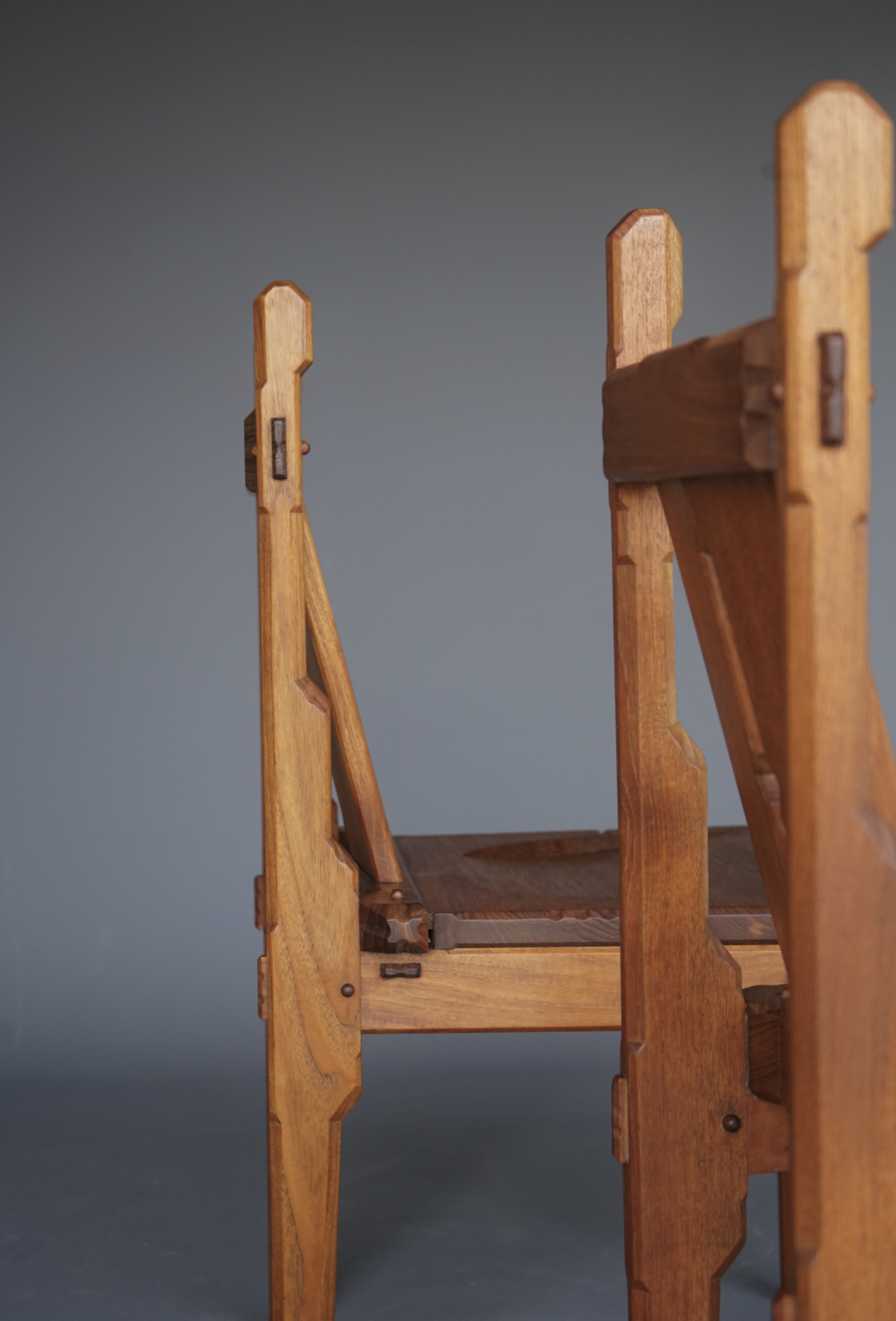
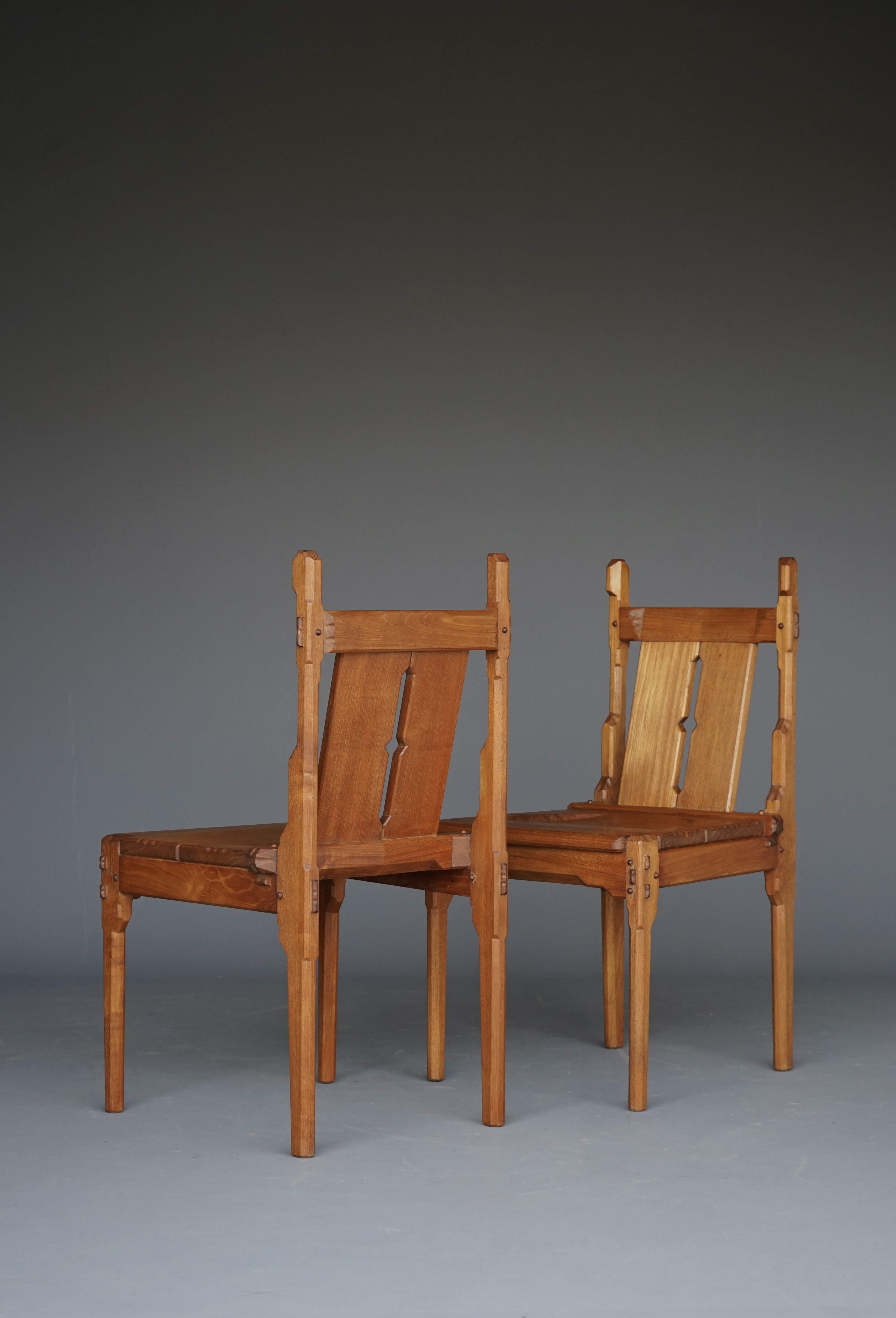
Rare side chairs in teak wood. Circa 1930s.
.
Alexander Kropholler was a trained carpenter and a self-taught architect whose work was influenced by that other great name in Dutch architecture H.P. Berlage. Traditionalist and historical architecture was of particular importance to his work, and he incorporated overt references to established vernaculars from Medieval to 17th century historical buildings as well as the designs of earlier Egyptian and Gothic revival styles.
In 1908 Kropholler converted to Roman Catholicism. He was looking for what he thought to be a particular Dutch style; sober, earnest and functional. This is evident in the meticulous design of these chairs.
The modern and enduring appeal of the chairs lies in the ‘Truth to material’ principles and skilful structuralism; their intricate construction is revealed and featured in the design.

Literature: De Zwaarte van de Materie; Het architectonisch werk van A.J.Kropholler (1881-1973), 2020 naiOIO

Price: 3.800 euro (x2) 7.000 euro (x4)

http://www.merzbaufurniture.com

Eric Gill (Uk.1882-1940)

Holy water stoop. 1930s. Hoptonwood stone with patinated bronze display stand.

18 x 24 x 25cm high (when mounted on stand)

Provenance: By descent to Mary Gill, 1940 and to her daughter Joan Hague, 1963. Acquired from Rosalind Erangey, daughter of Joan and René Hague, 1994. Personal collection 1994-now.


A water stoop (vessel containing holy water) Biographer Fiona McCarthy confirms that Gill carved several water stoops whilst working at Pigotts (the farm house near High Wycombe where Gill lived and worked from 1928). The carved lettering to the underside of this one is evidence that the stone was repurposed for use – It also shows signs of once having once been set into the walls of a church.

Eric Gill, worked as a sculptor, typographer, illustrator and stone carver. Gill designed many fonts still in use today, most notably Gill Sans (1927-1930) and Perpetua (1929). He influenced the next generation of British stone carvers and letter cutters through his work and teachings, and established an informal Arts and Crafts community in Ditchling Common, England.
Gill was a Catholic convert, and after 1913, his work became increasingly involved with religious themes. Moreover, in recent years Gill has become a controversial figure, due largely to the erotic nature of much of his art and his own sexual behaviour/extreme proclivities, as revealed in his diaries.

Price: 11.000 euro

http://www.merzbaufurniture.com