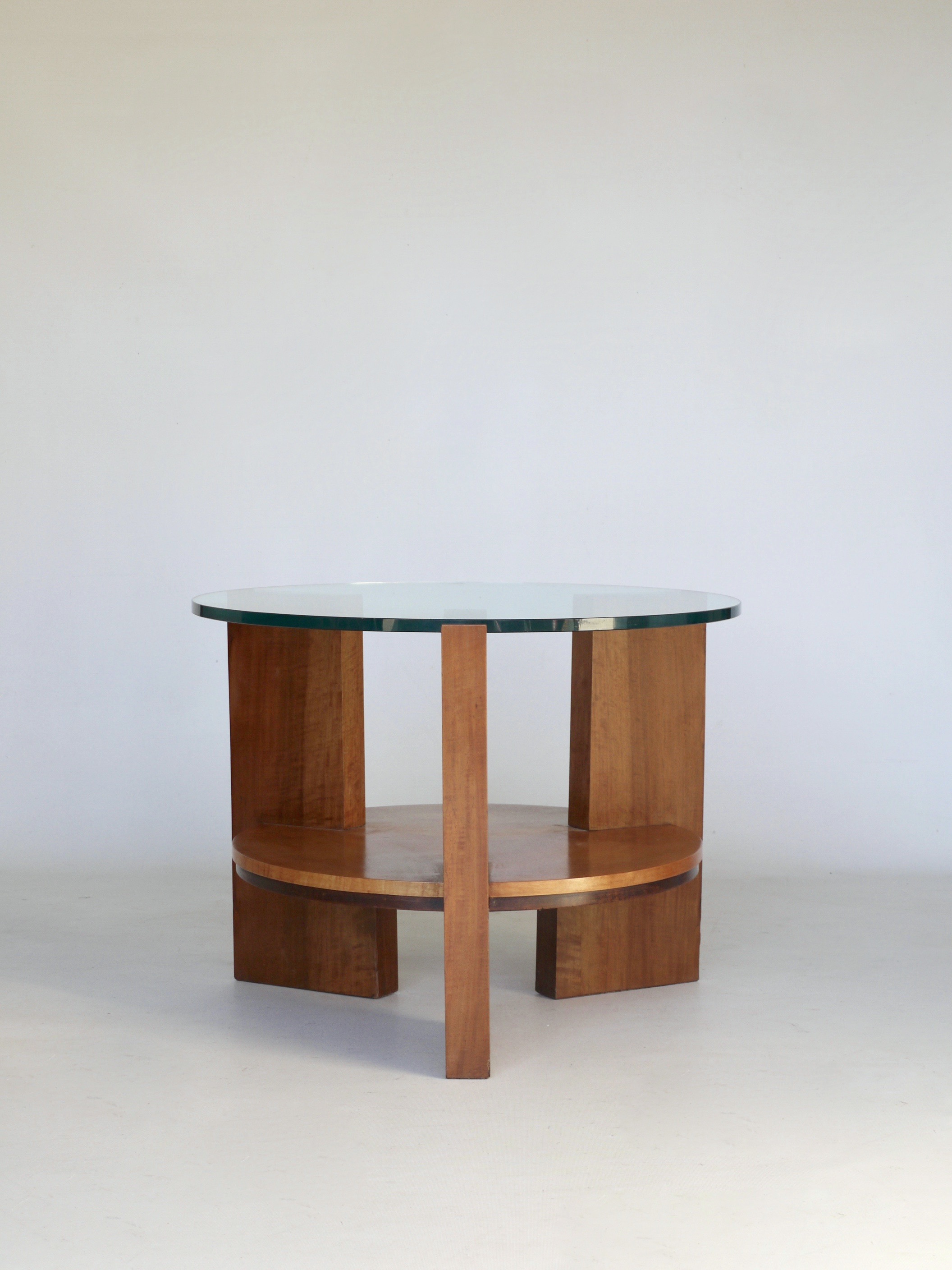
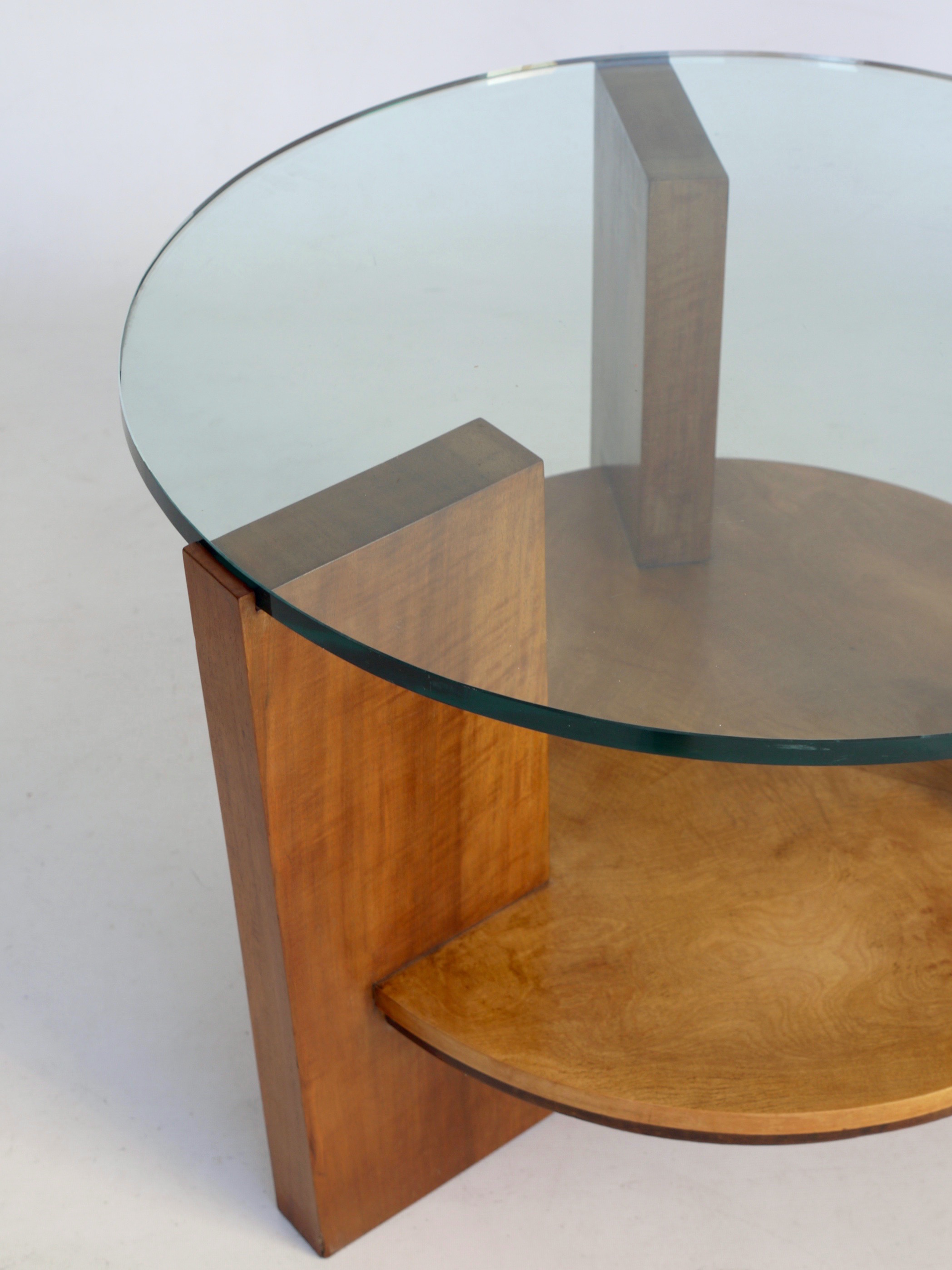
Art Deco/ modernist circular side table.
Maple and cherry woods with thick glass top. 75cm diameter x 57cm high.
A good quality Dutch 1930s/40s Haagse School (Hague School) side table with block structure.
Price: 1.000 euro
furniture, art & design
Art Deco/ modernist circular side table.
Maple and cherry woods with thick glass top. 75cm diameter x 57cm high.
A good quality Dutch 1930s/40s Haagse School (Hague School) side table with block structure.
Price: 1.000 euro
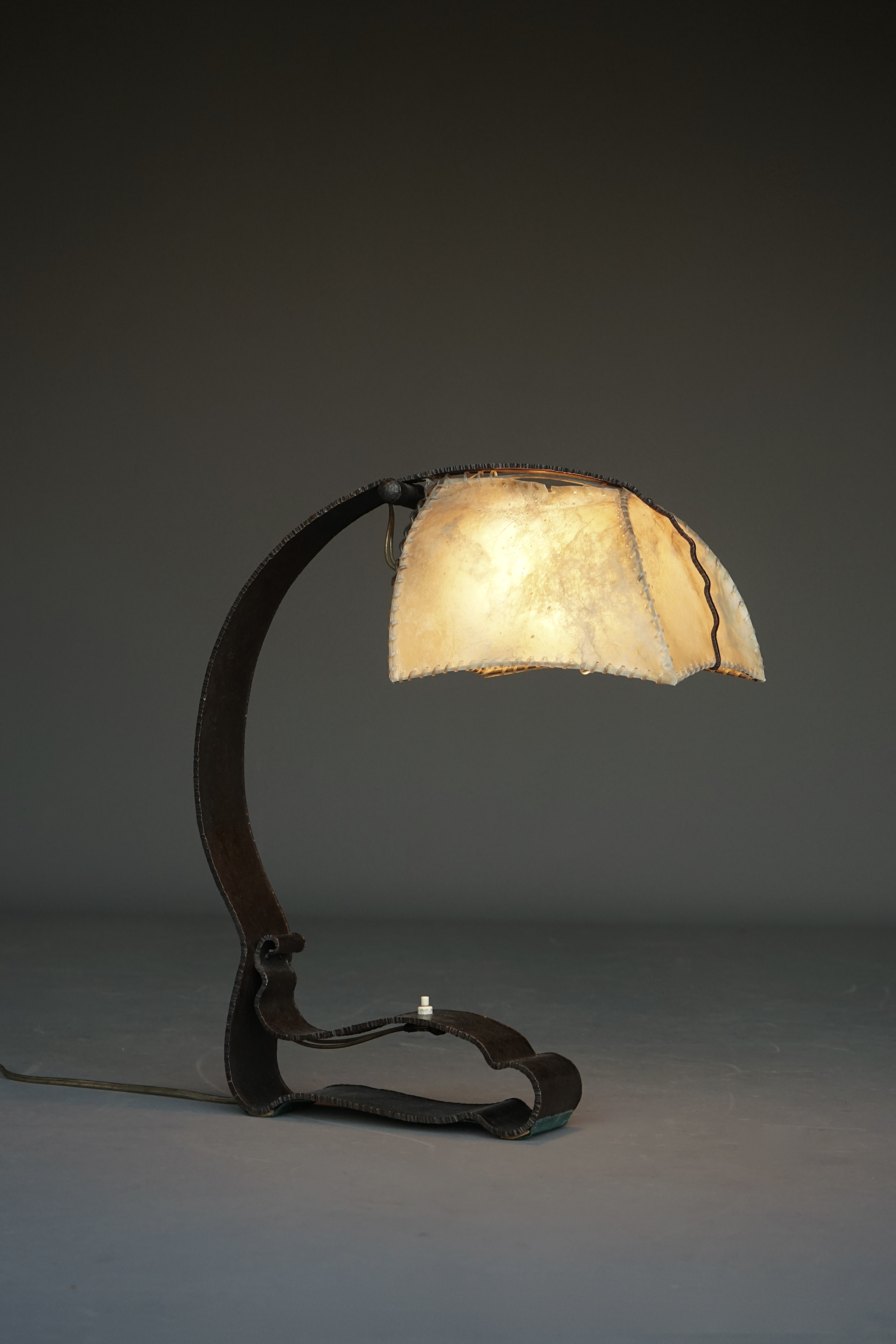
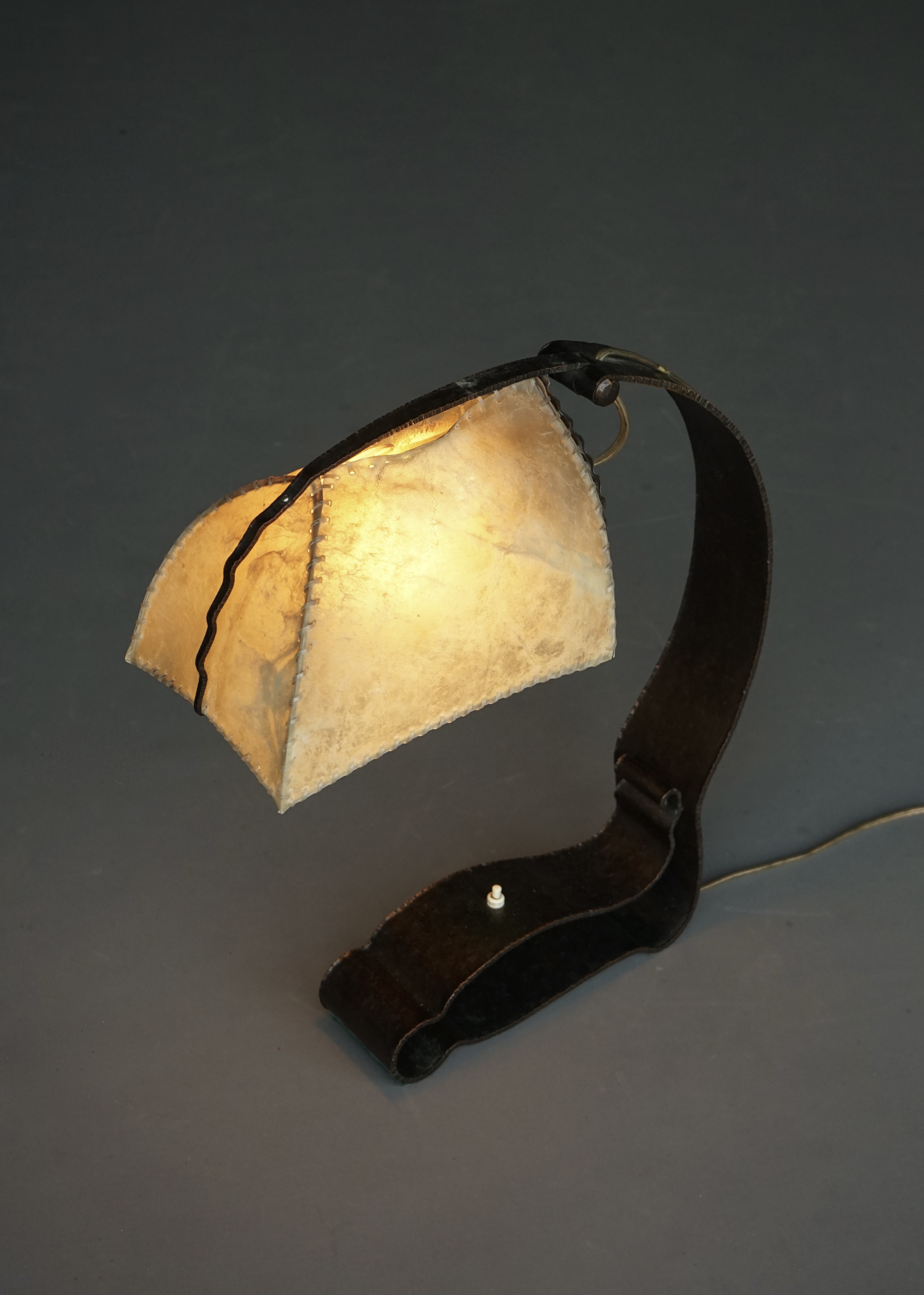
Large Amsterdam School desk lamp. Circa 1920s.
41 x 19 x 52.5cm high
Hand-forged wrought iron desk lamp with original parchment lamp shade. The shade has a bit of heat damage to the top.
The scrolling organic, naturalist forms of this lamp is typical of the Dutch art deco movement known as the “Amsterdamse School’. In the early c20th the Dutch forged a clear identity in the decorative arts that combined the influences of both the Dutch colonies, the ethos of the European Arts & Crafts and Art Nouveau (Nieuwe Kunst) movements.
Price: 1.450 euro
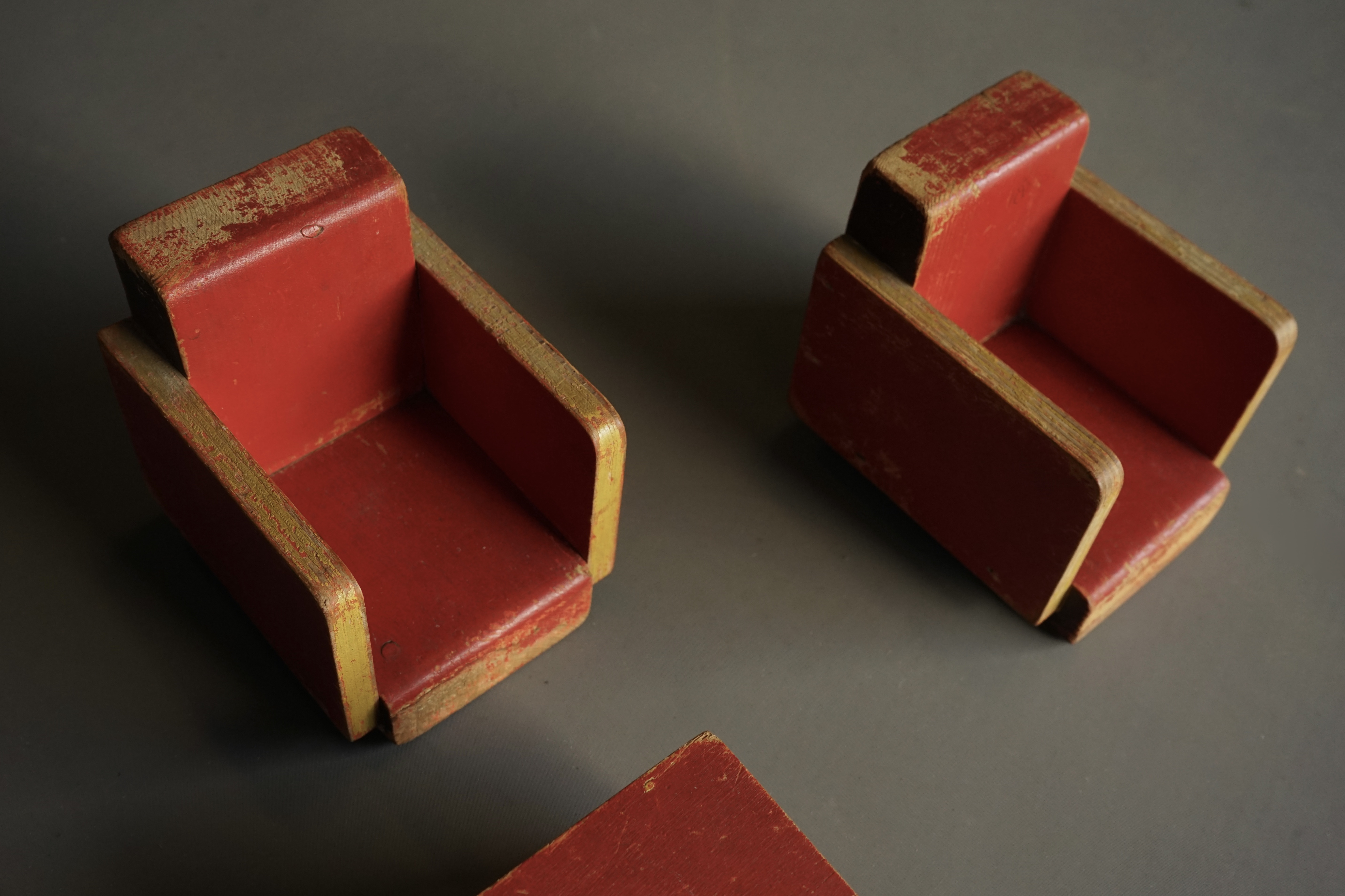
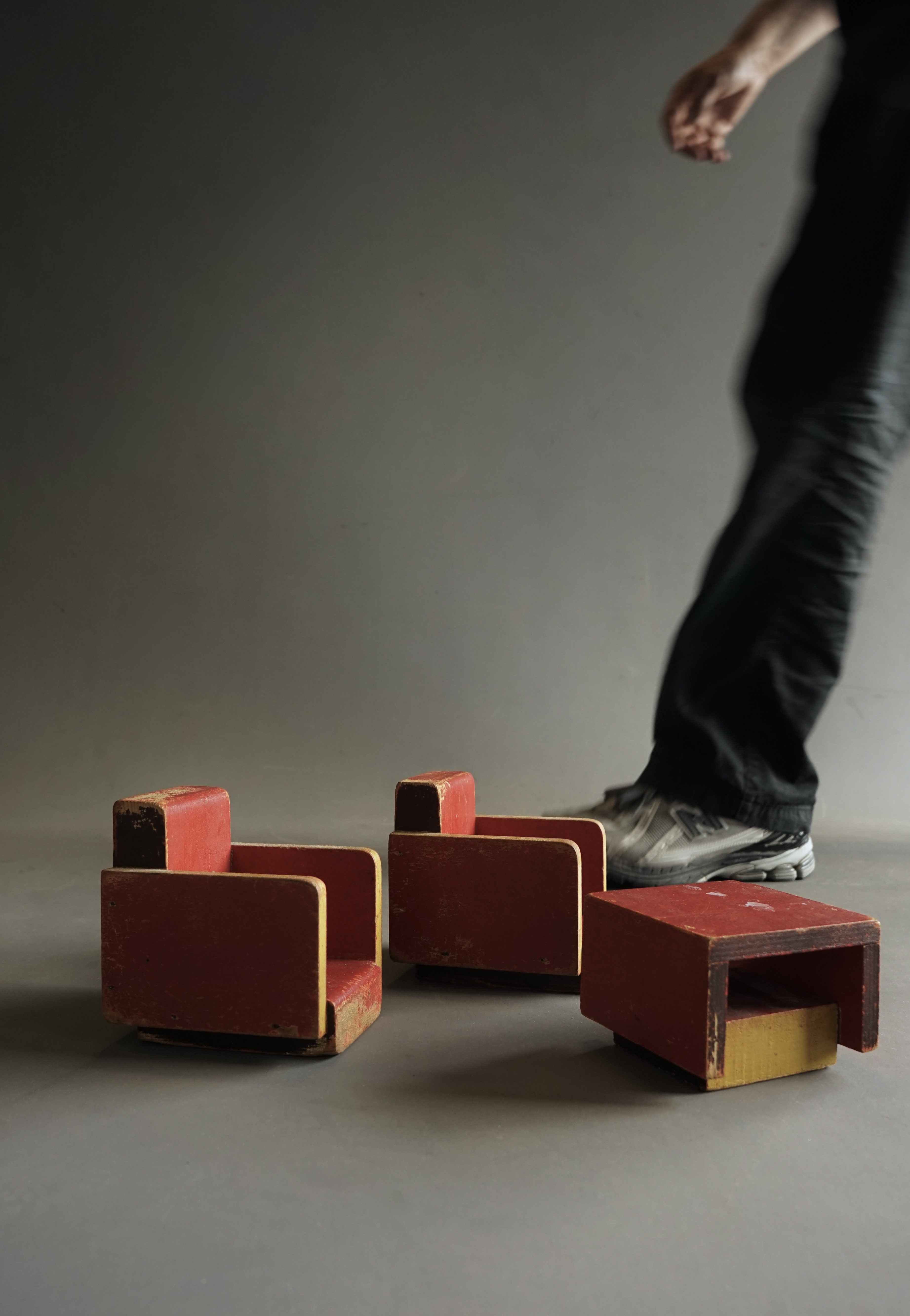
Verzuu, Jacobus Johannes Josephus (Ko) 1901-1971 NL.
ADO speelgoed / toys. Circa 1934-35
Two miniature club chairs and a side table (each piece with company labels and burnished markings)
Between 1925 and 1955 Dutch designer Ko Verzuu designed many toys under the influence of the Dutch Modernist De Stijl painters. His designs were inextricably bound up with innovations in art, health care and pedagogy in the first half of the 20th century. In 1920, the sanatorium Berg en Bosch was founded in the sanctuary on the outskirts of Apeldoorn – this sanatorium offered rest and care to tuberculosis patients. Once patients had recovered from their illness, returning to regular working life often proved to be difficult. In order to prepare patients better for their reintegration, the sanatorium developed a modern treatment: occupational therapy. One of the ways this took shape was in the production of wooden toys. These toys were given the name ADO; an abbreviation that initially stood for Arbeid door Onvolwaardigen (Labour by the Deficient), but was wisely changed in 1962 to Apart Doelmatig Onverwoestbaar (roughly translated as Special Functional Indestructible?)
Price: 1.250,00
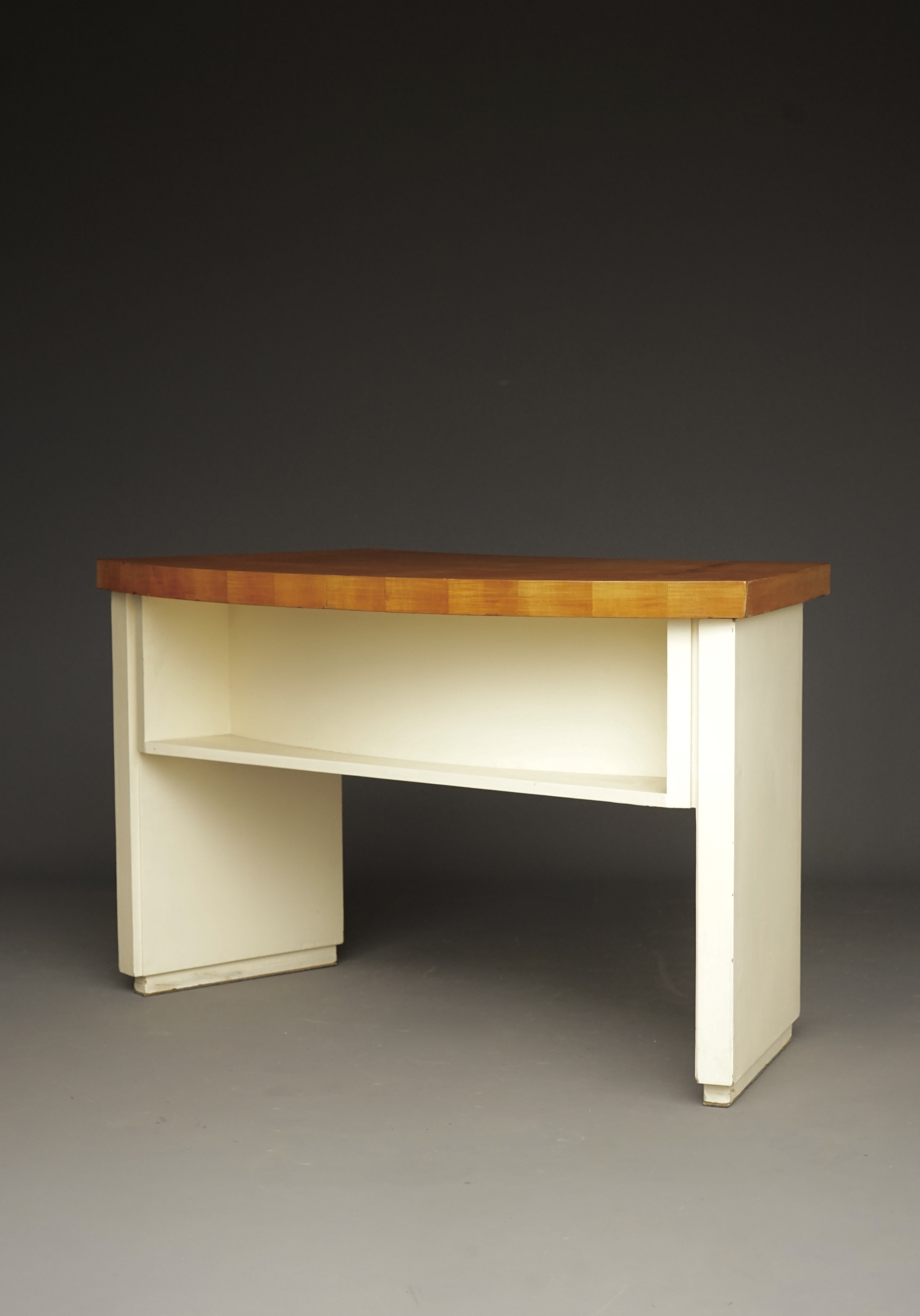

Gebroeders Reens desk
Gebroeders Reens (Nl early-mid-c20th)
Amsterdam desk 1930s
126 x 64 x 75.5cm high. Maple/birch and lacquered wood
A small a Dutch 30s art deco/modernist curved desk. Warm maple veneer with off-white lacquered wood.
This double-sided/freestanding desk was part of the interior of the jewellery shop S.Spyer located at the Koningsplein in Amsterdam. In 1929-1930 the shop was redesigned by Amsterdam architect Harry Elte, giving the shop a more modern Art Deco shopfront and interior. The furniture was executed by the Gebroeders Reens company. (original key monogrammed ‘R’).
Price: 2.700 euro

