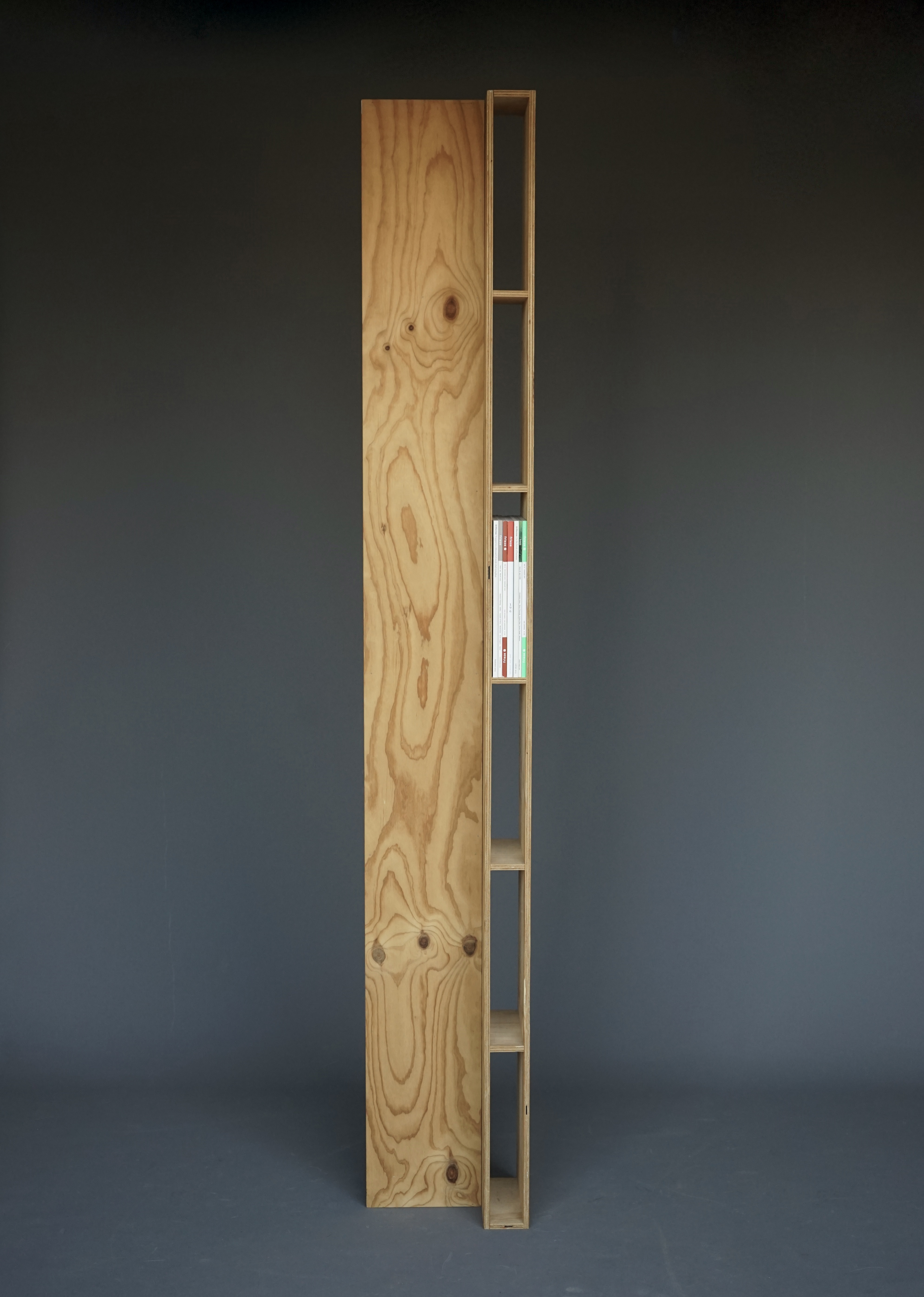
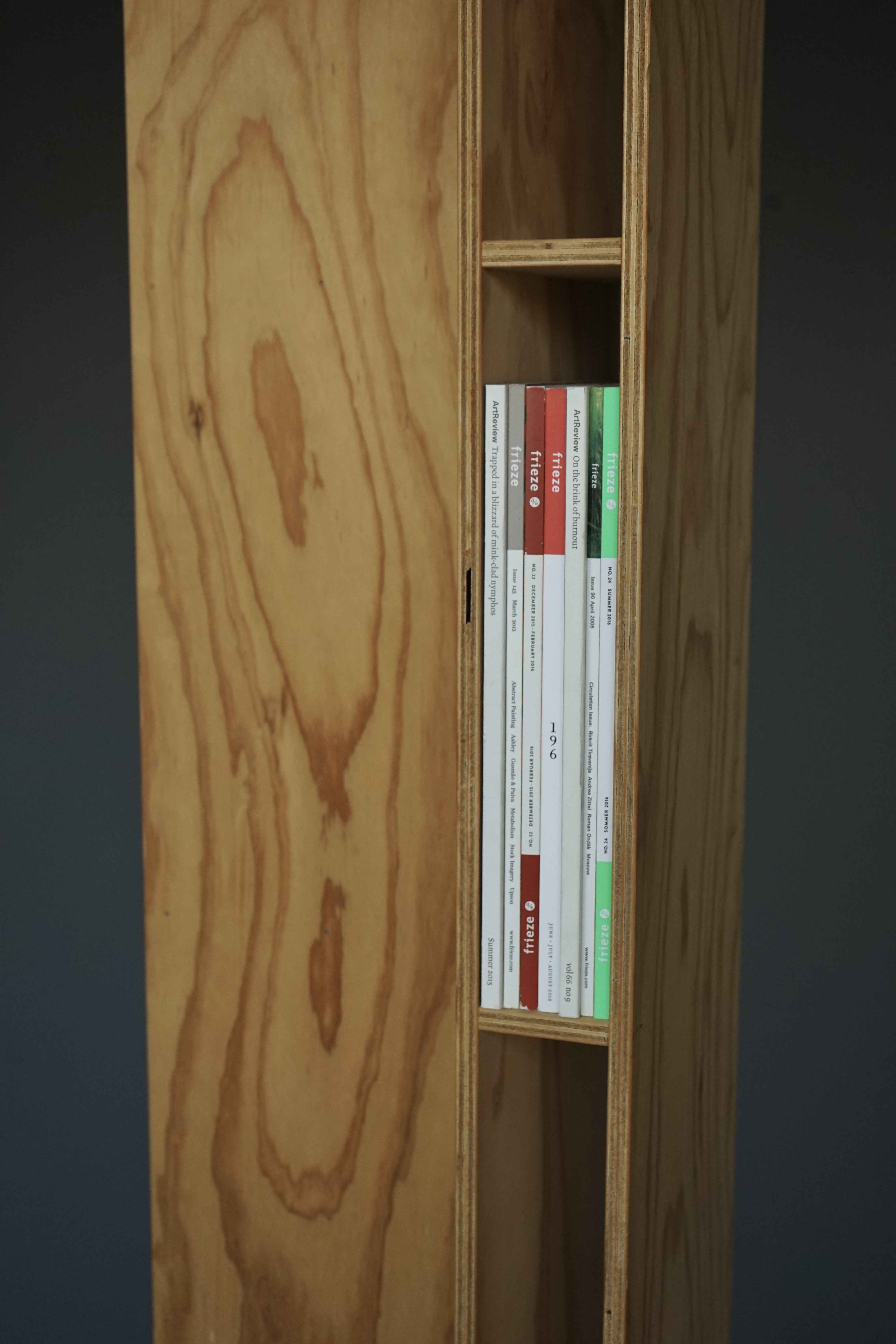
An unusual free-standing architectural shelving unit made to hold periodical magazines (it has 12 compartments). It is made from pine wood faced plywood that now has an attractive warm tone.
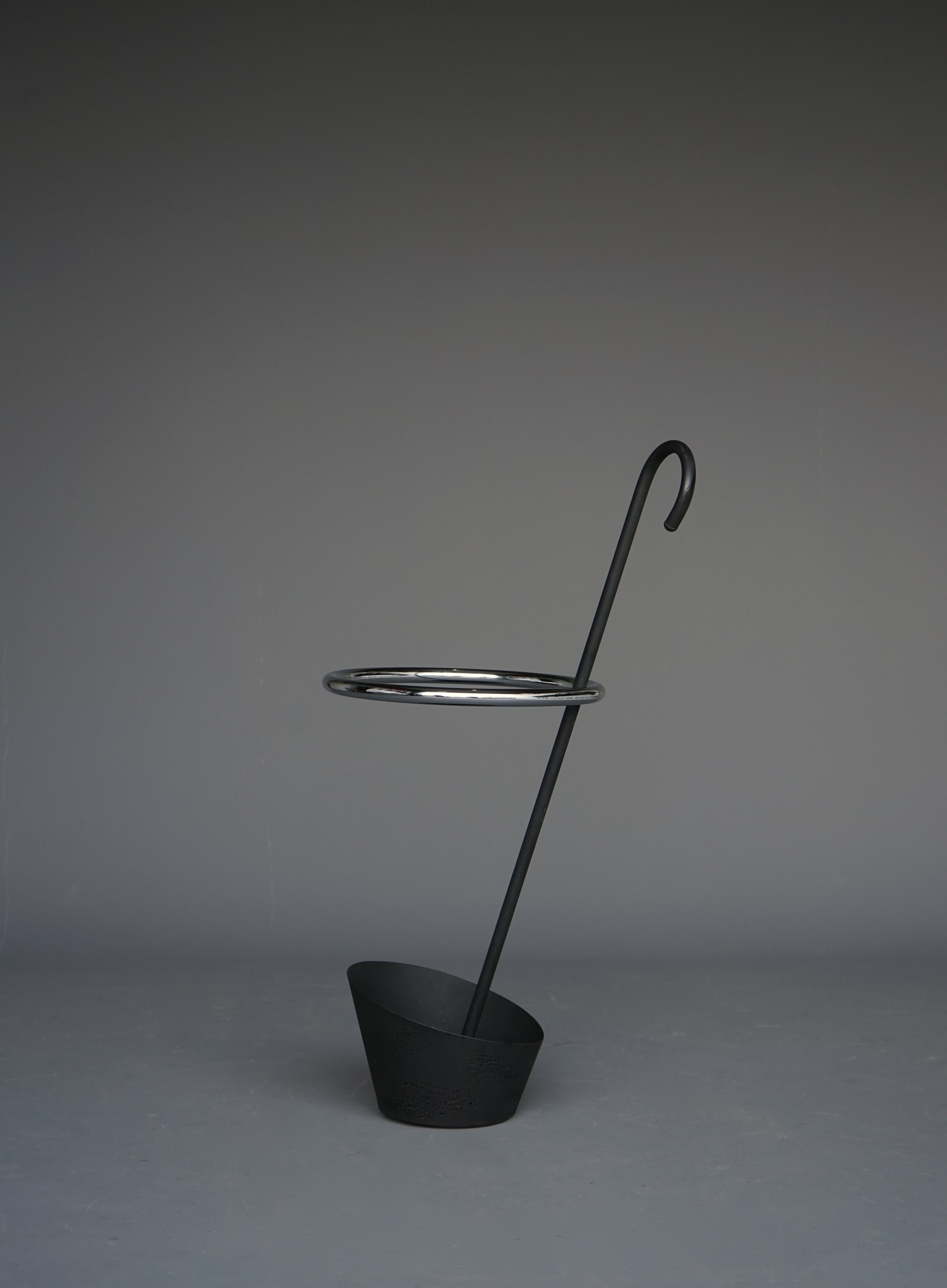
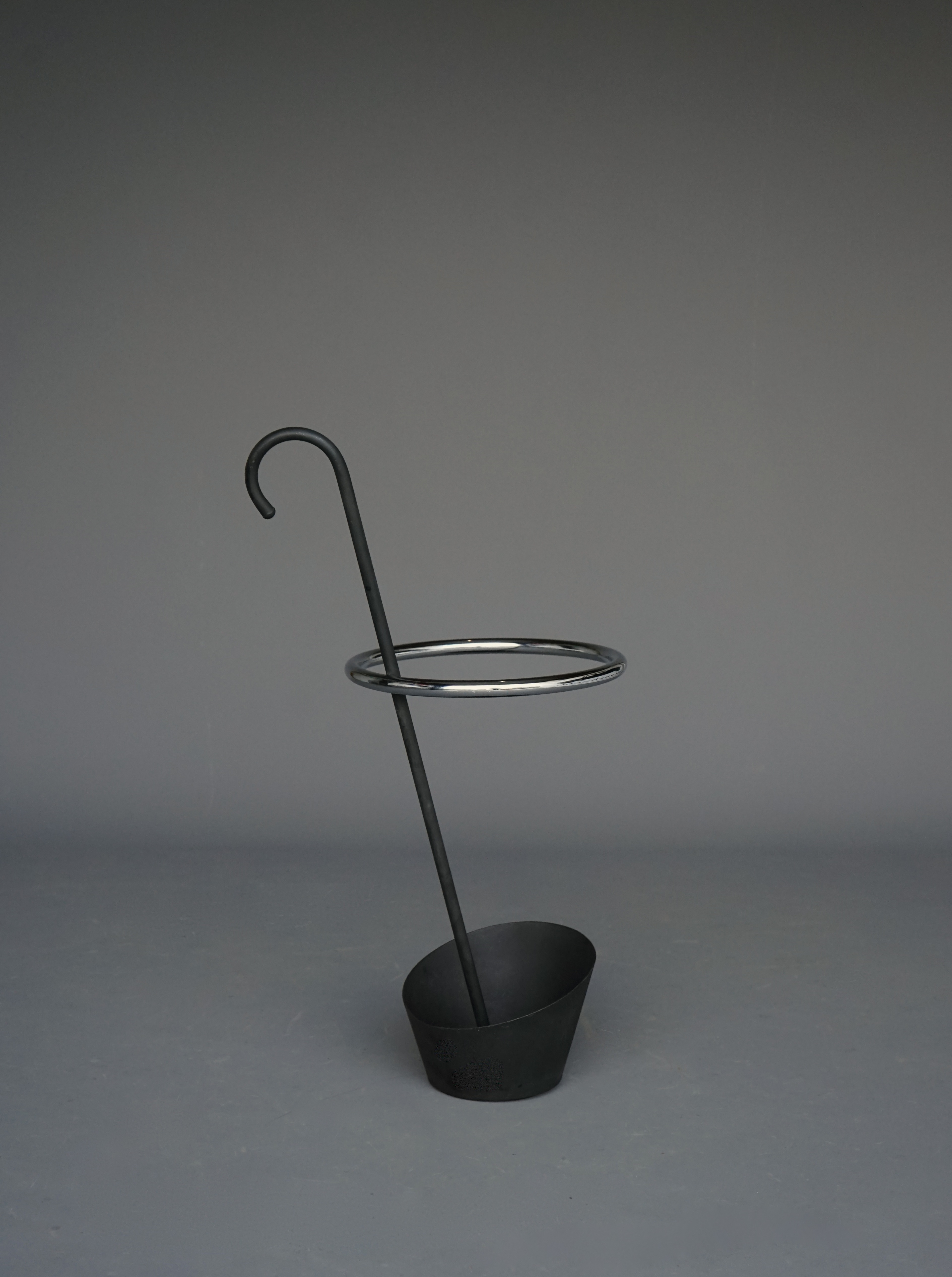
A rare design classic: An umbrella stand designed by Shiro Kuramata for Pastoe in 1986. In a design typical of the Postmodern period it establishes an effective playful synthesis of art and functionality.
The Dutch company Pastoe only produced this model for two years and not many were manufactured during that period.
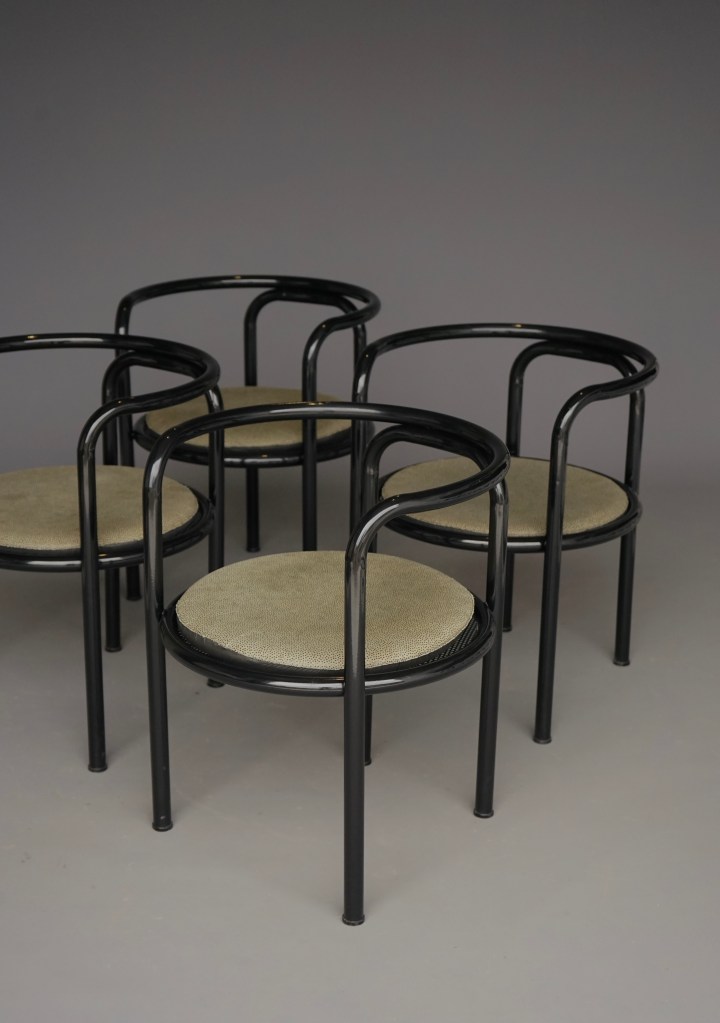
Set of 4 ‘Locus Solus’ chairs for Poltronova, Italy 1960s
55.5 x 54 x 66.5cm high
enamelled black tubular metal frames with perforated seats. This set comes with their original loose waxed cotton cushions with dotted black on grey pattern. The design of these chairs was intended to be a playful take on the classic bentwood design.
An unusual large sculpture made out of waxed fiber and composite material. This stylish work is made by a unknown artist in 1993. Signed JE and dated 93 on the top sphere. Its natural colouring and materials combined with surreal forms make this a real statement piece….for anyone interested in combining it into an experimental interior.
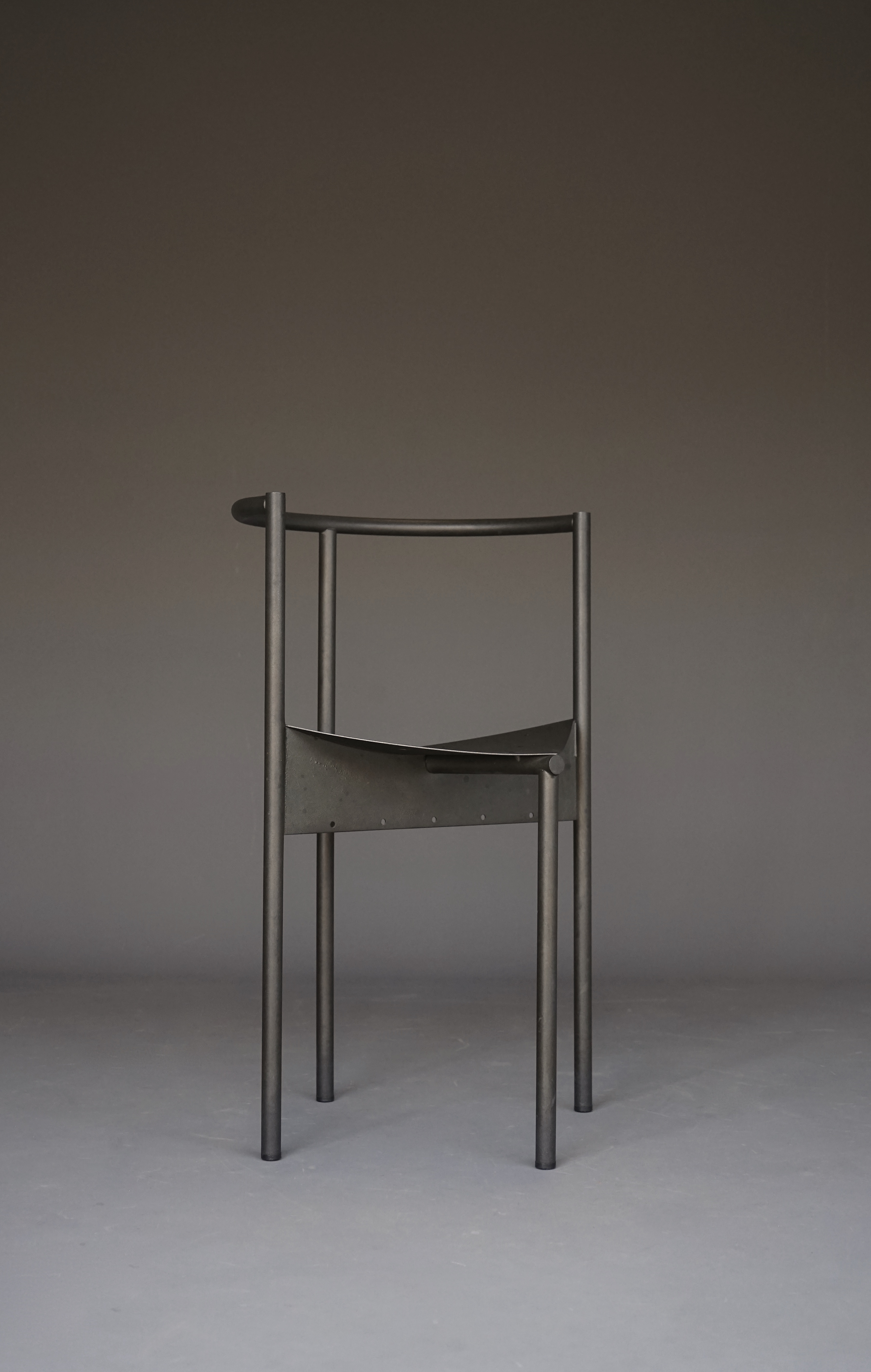
metal & buffalo leather side chair. Stamped. 1970s/80s.
An elegant sculptural side chair made by the famous French duo known for working across a range of specialisms including architecture, sculpture and furniture design. Like many imaginative artist/designers who came to the fore in the 1980s, their work combines elements of Postmodernism to create a narrative object : Gothic, baroque and brutalism combined in a theatrical narrative. This 1970s-80s art-chair would look fabulous in any stylish interior. It has the maker’s brandished marks to the back of the leather seat.
Born on the French Riviera in 1931, François Thévenin’s output oscillates between architecture, sculpture, design and poetry using his favourite material, metal. Trained at the Beaux-Arts in Paris in the 1950s, he met his future wife and partner Gisèle Sidoti, known as Sido (1934-86). In 1958, after his military service, François and Sido moved to the south, to Cannes-la-Bocca, where their house-workshop is still located.
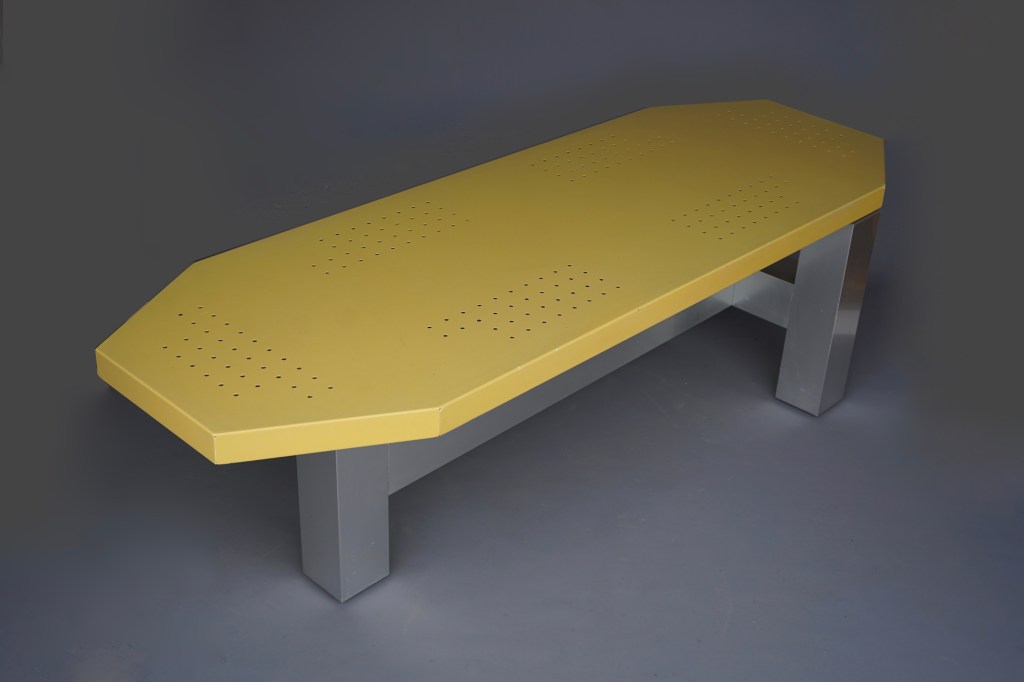
Enamelled steel and aluminium. 244 x 85 x 75cm / Initial prototype TE20 table.
’t Spectrum Bergeyk 1988. Model TE20 (Carol). Aluminium and lacquered steel.
Rare modernist table designed by Martin Visser and Joke van der Heyden. This particular table appears to come from a small test series (or one of a series of prototypes whereby Visser was still experimenting with the design – there are some quite primitive connections and test holes where you can see Visser grappling with the design).
These first tables have a slightly different build than the later production tables; they do not have the rubber connections between the top and leg structures that the later tables had – Instead the illusion of the top floating above the base is created by incorporating a slight gap between the top and base sections. The same illusion is created at the base of the legs where a single rubber beyond view creates the illusion of the whole table floating slightly above the floor.
There were 3 different versions: TE20 (Carol), TE21 (Sofie) and TE22 (Eva). This TE20 table is the largest of the series.
The booklet entitled ‘Martin Visser, collected work‘ contains a full description of the creation of the TE20.



 [merzbau]