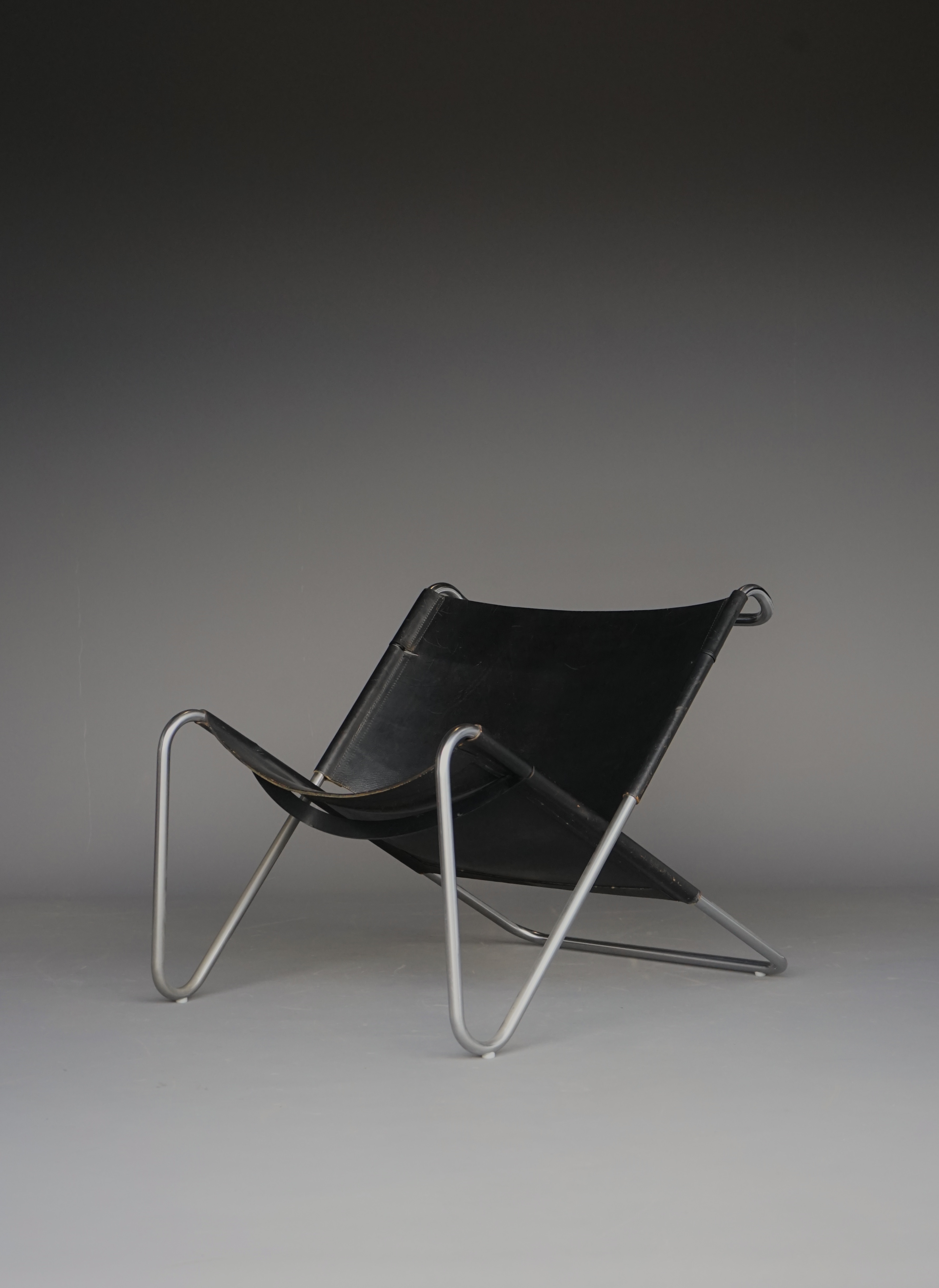
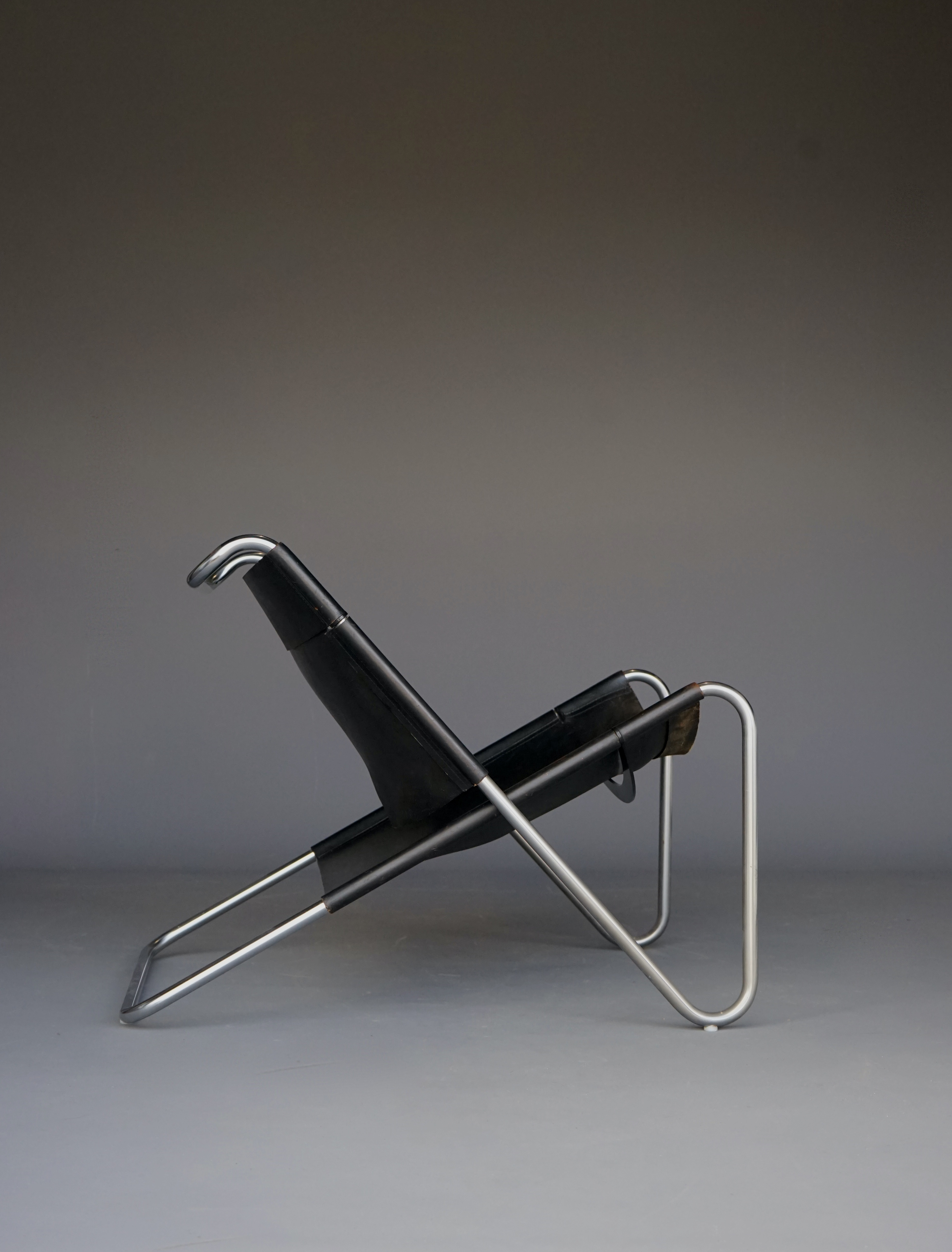
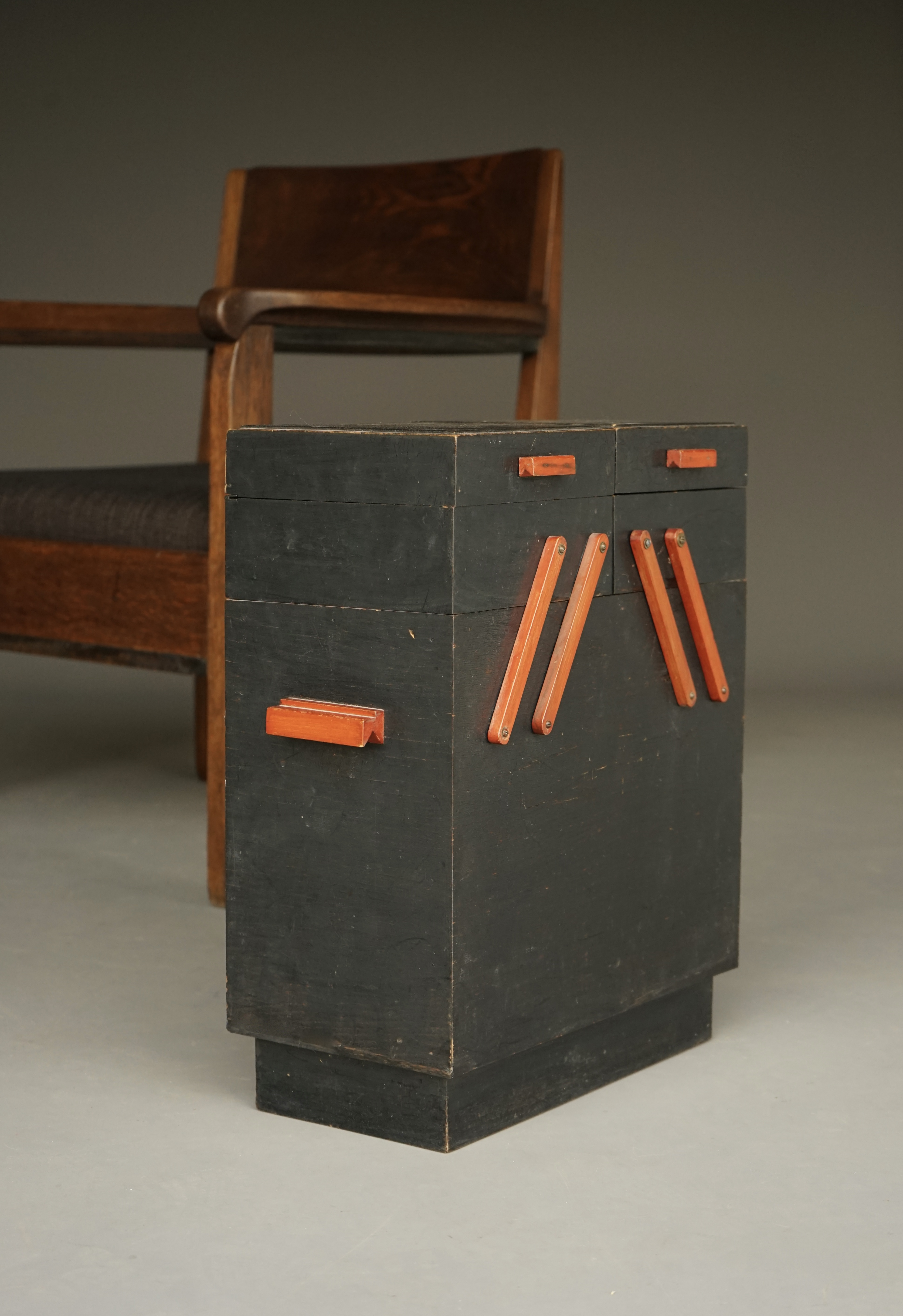
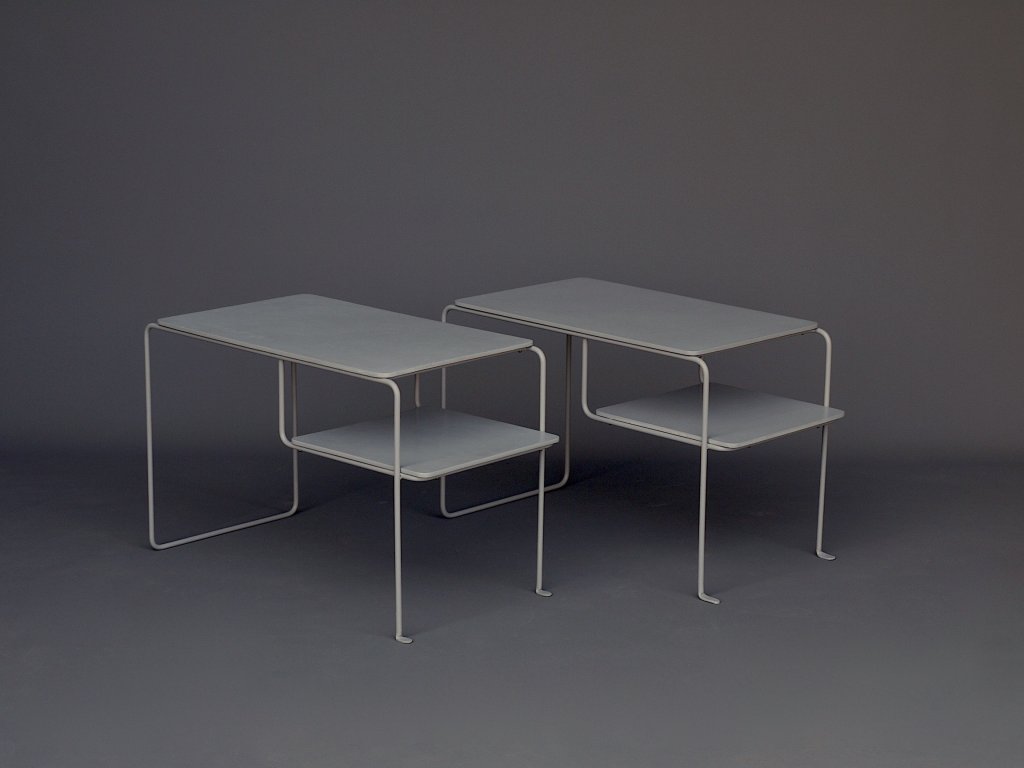
This sculptural chair was manufactured for a short period during which time it is believed that around only 100 of the chairs were manufactured. This one was purchased from the first owner and is in superb original condition with only minimal signs of age and use. . Tubular steel and thick leather 72x90x68cm
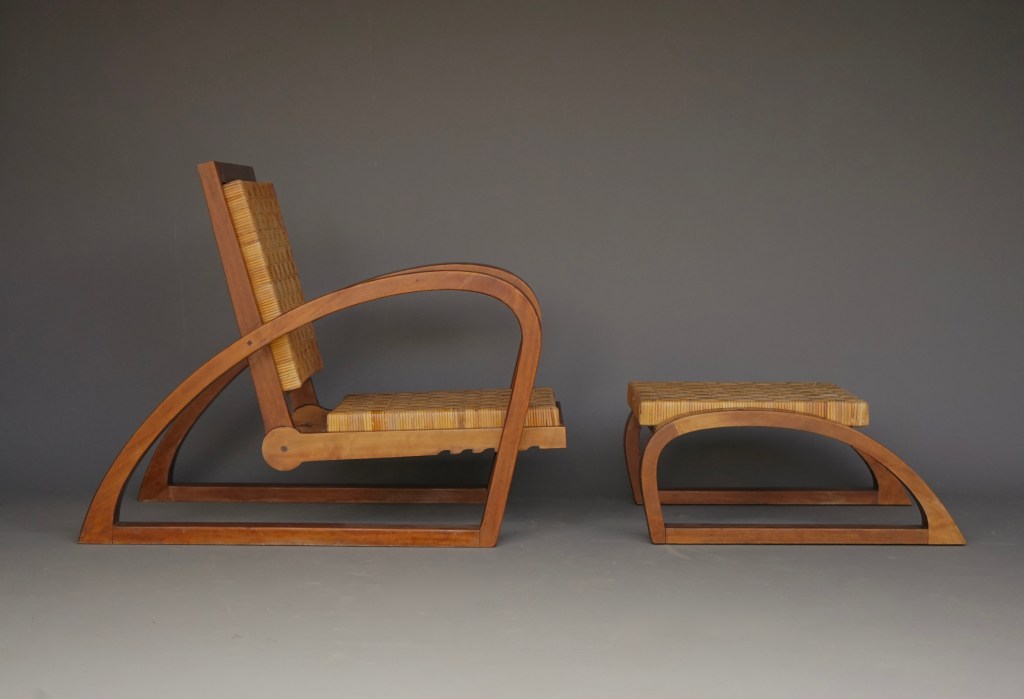
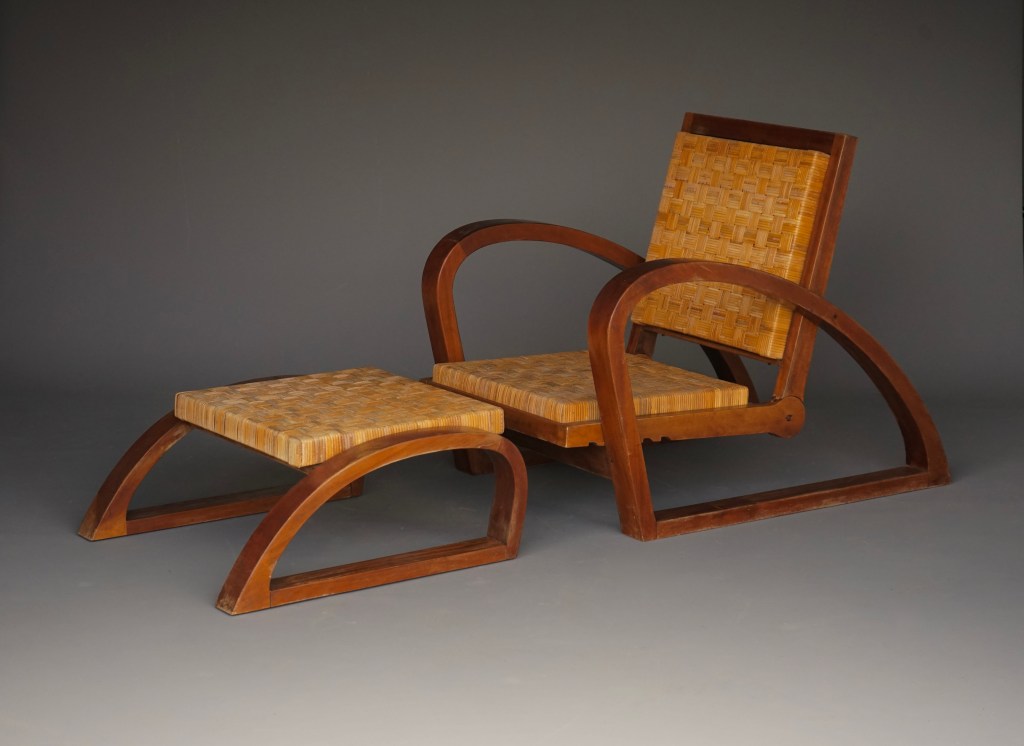
A rare three position lounge chair and ottoman/footstool attributed to Francis Jourdain, 1920s.
This design stands out for its curved lines and the three-position system that allows the seat and backrest to be tilted. Nicely executed out of pear wood and woven cane seat and back.
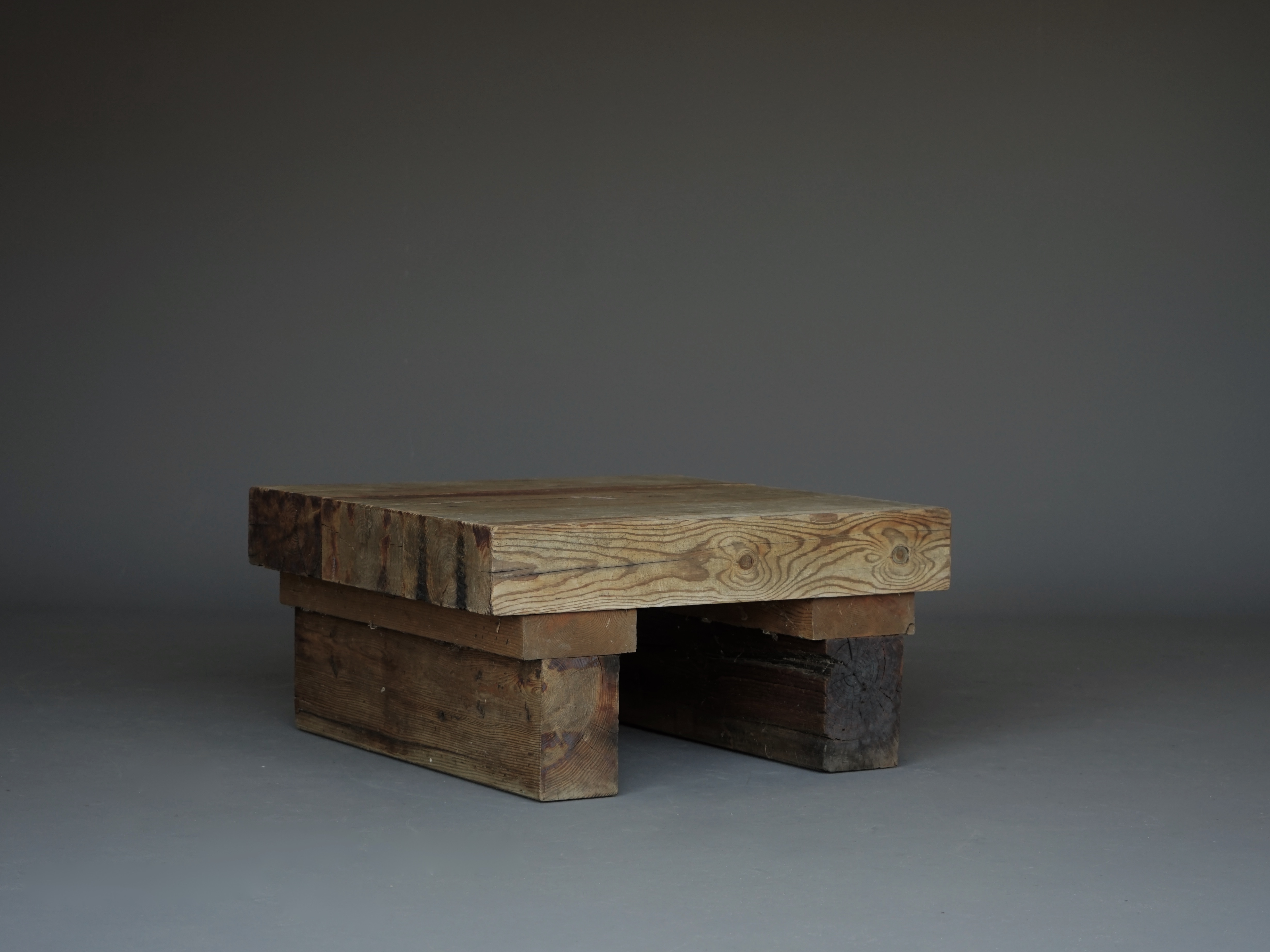
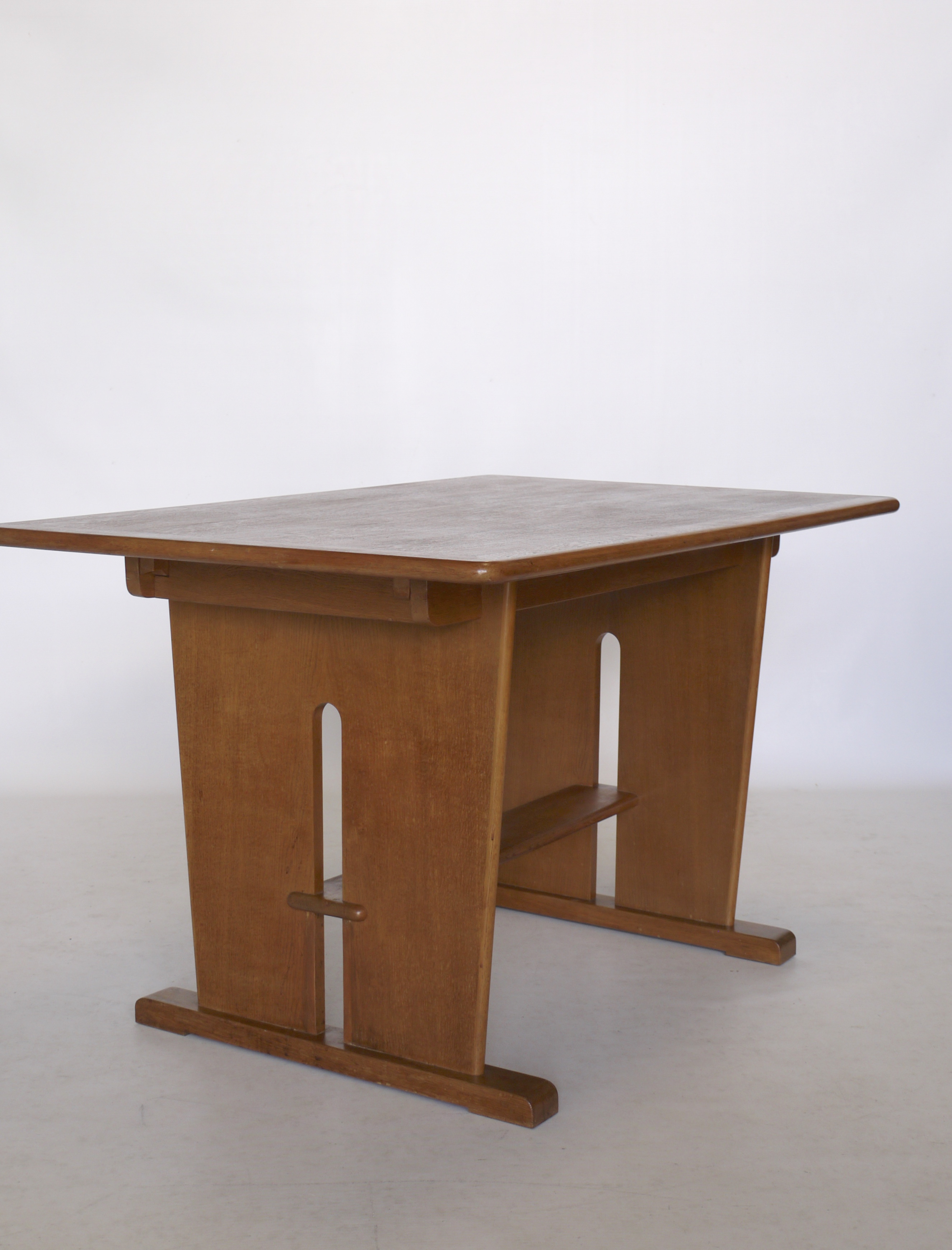
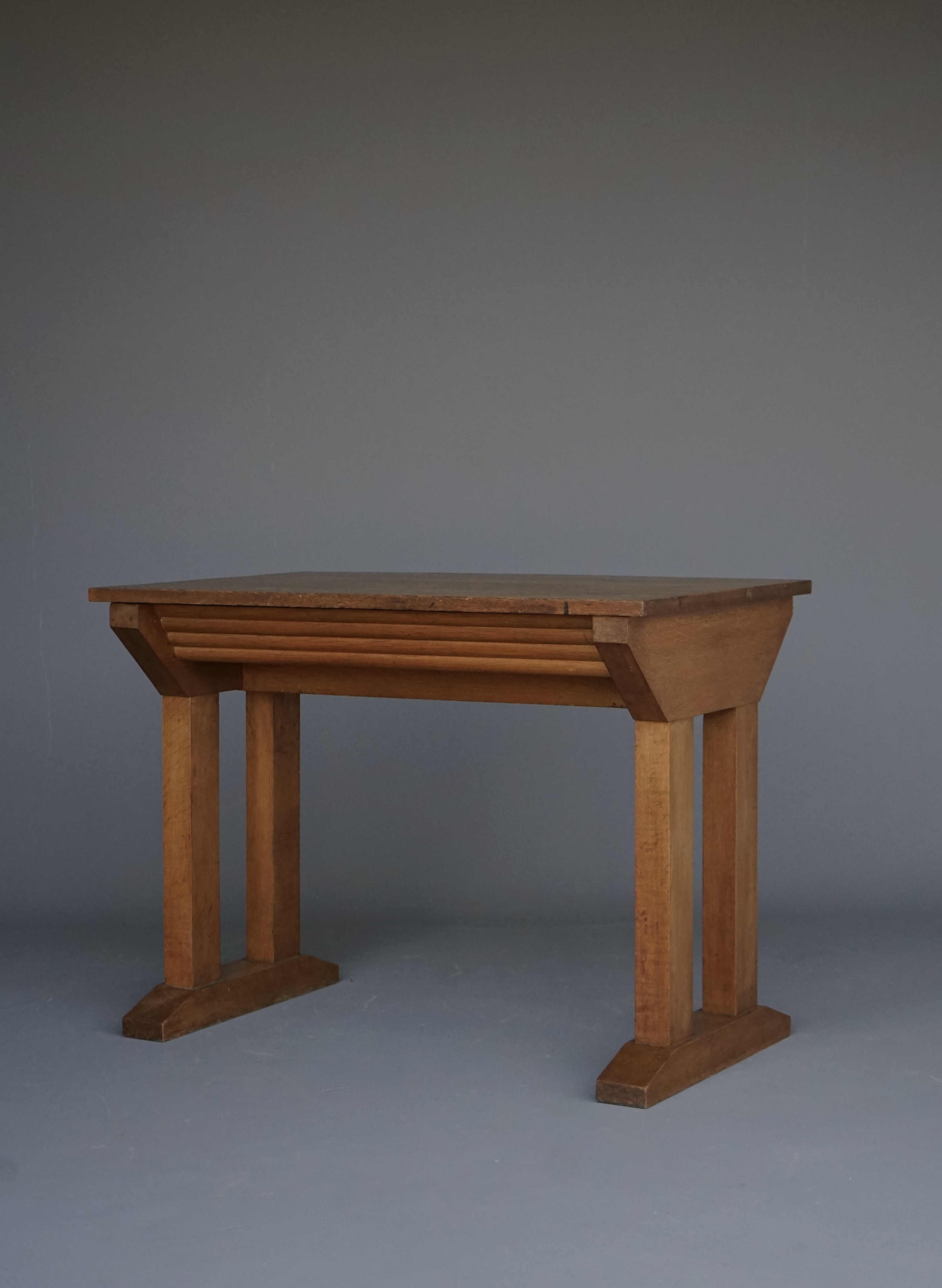
Dutch oak constructivist table. A simple designed small side table (or desk) that combines classical and geometric block components to form a bold design table with quite an architectural feel to it.
There are some old marks and patina from years of use, but overall it is in good solid condition.
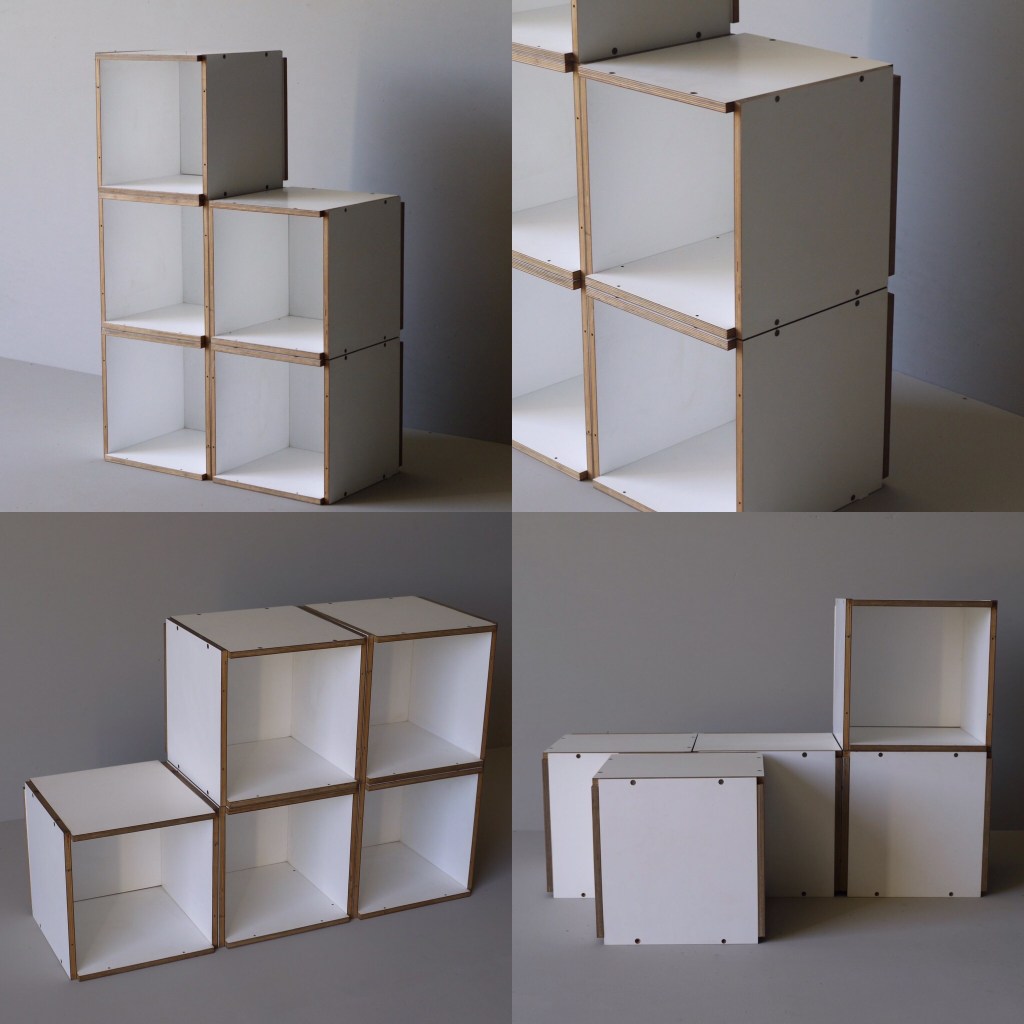
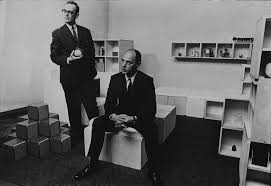
Jan Slothouber & William Graatsma (NL. Mid-c20th) Five original modular cubes from the 1970s. Laminated plywood. . The Dutch duo Slothouber & Graatsma established themselves from the 1950s as artist/designers with the cube form as their key motif around which they developed various principles of cubic construction alongside multiples and variations thereof. Despite its restrictions they admired the cube for its clarity of form. They applied their thinking around it to a variety of objects, and artworks from small jewellery-scale 3d models and games to larger installation works. Highly driven personalities, they considered themselves as discoverers of ‘the many applications of the democratic system of cubics’; a system that would ostensively act to counter the rise of the expressive individualism in post-WWII culture. (They later established the CCC_the Center for Cubic Constructions as a forum for promoting their ideas). Due to their diverse and multidisciplinary output they were never to become global names – But they were a highly respected creative team (representing The Netherlands at the Venice Biennale in 1970) and in 1965 the Stedelijk Museum in Amsterdam honoured them with the exhibition ‘Vier kanten: maat, vorm, kleur, letter’ (Four sides: size, form, colour, letter). Donald Judd for one was a great admirer of their work.