Piet Klaarhamer (Nl 1874-1954)

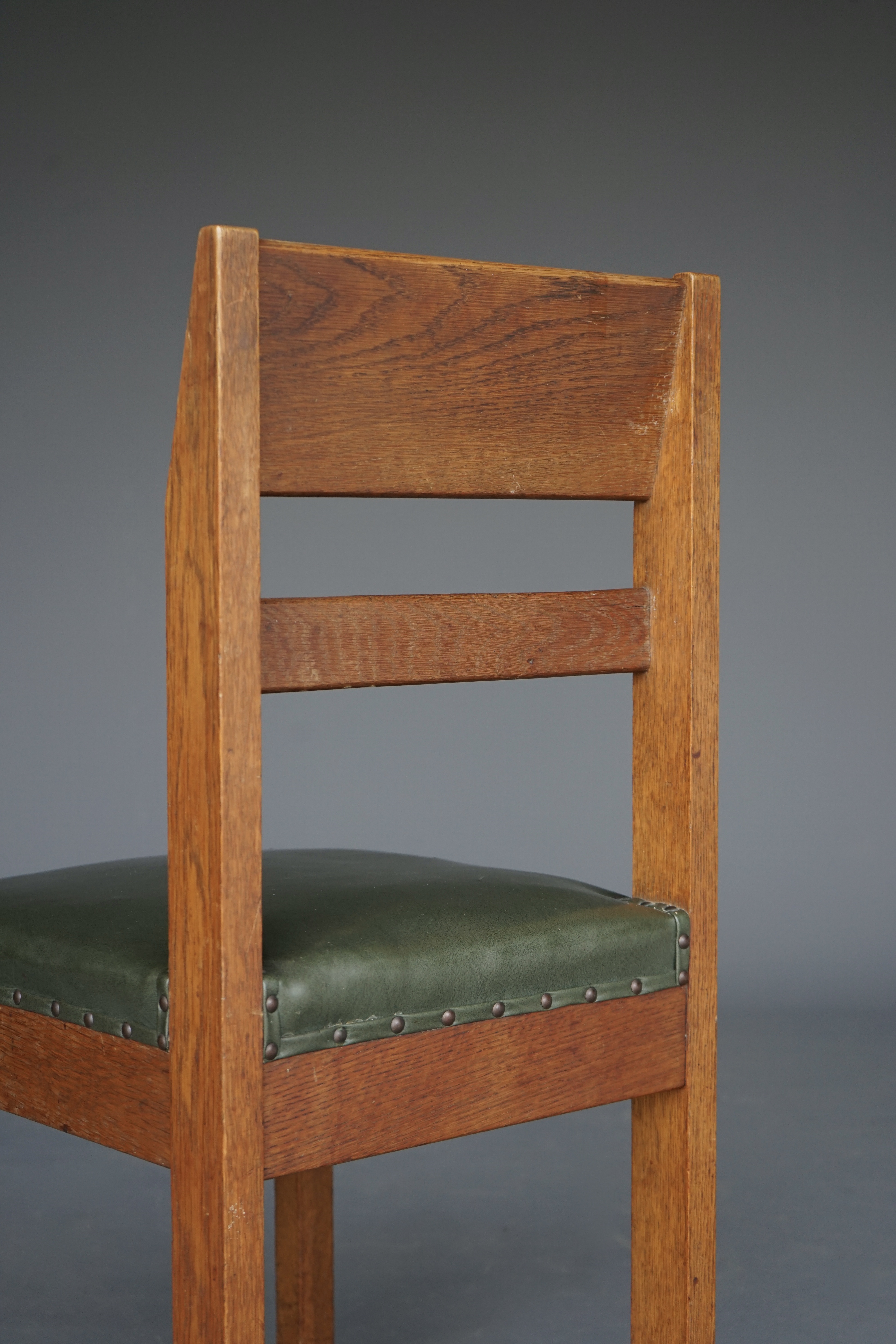
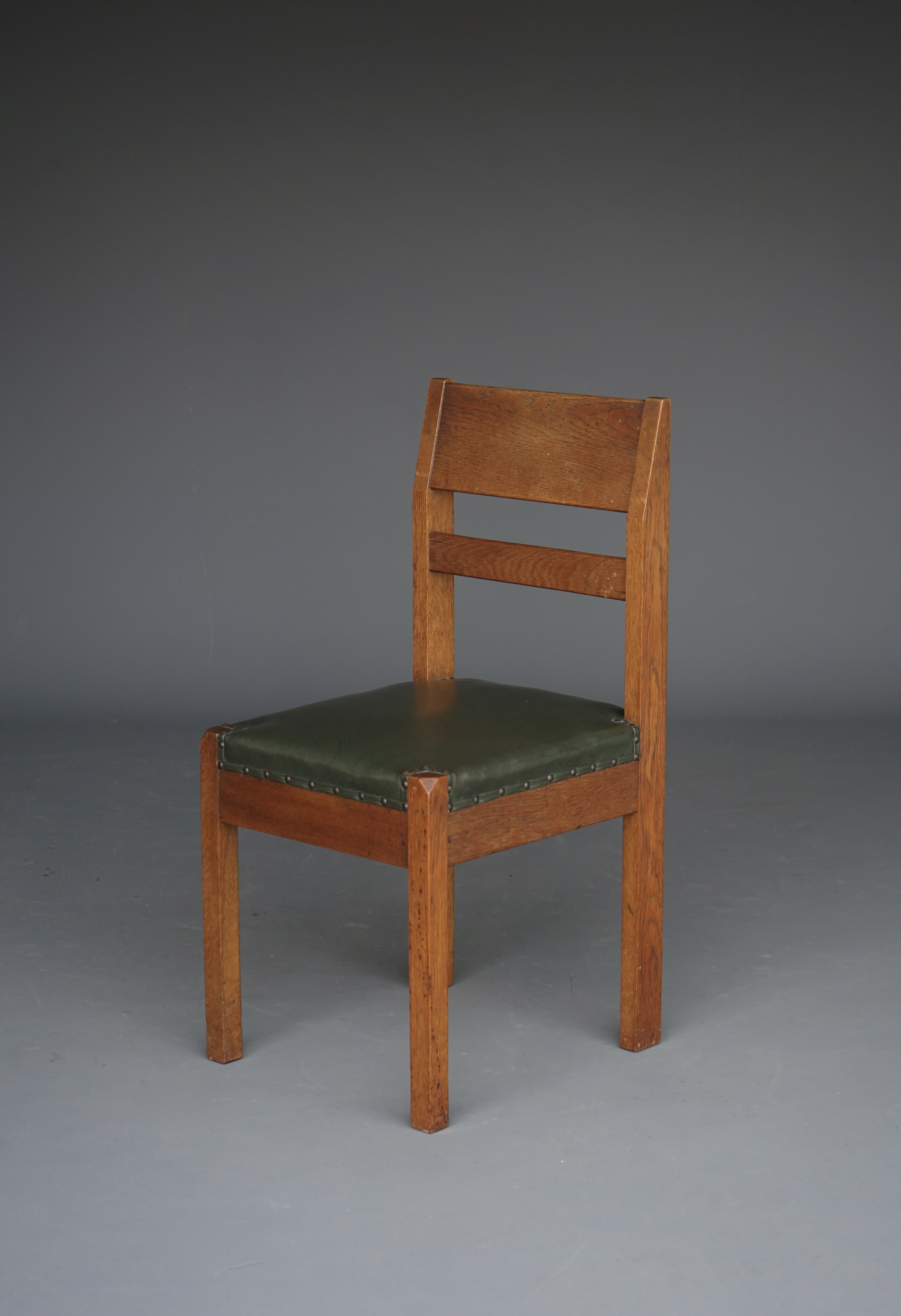
Pair of oak chairs with green leatherette upholstery. Circa 1917.

The early designs of modernist architect Piet Klaarhamer use simple, rudimentary constructions, and demonstrate an honest use of the materials used.

We have two of these chairs for sale – These important chairs were the first pieces of furniture that Klaarhamer designed that were produced in larger quantities around 1917, (although probably still manufactured in very limited numbers) by company called NV Nederlandse Meubel en Houtwarenfabriek in Zaandam.

Klaarhamer’s designs had a clear influence on his students, including the well-known architects Piet Elling and Gerrit Rietveld.
The design of this particular model (without arms) inspired Rietveld in the design of his well known ‘Military Chair’ in 1923. It is a design that is well documented in the monograph on Klaarhamer written by author/historians Marijke Kuper & Monique Teunissen*. This book details a letter (with a sketch of the chair) by Gerrit Rietveld to the architect J.J.P Oud.

Price: On Request

http://www.merzbaufurniture.com

*Literature: Piet Klaarhamer Architect en Meubelontwerper. Marijke Kuper & Monique Teunissen, nai010. 2014
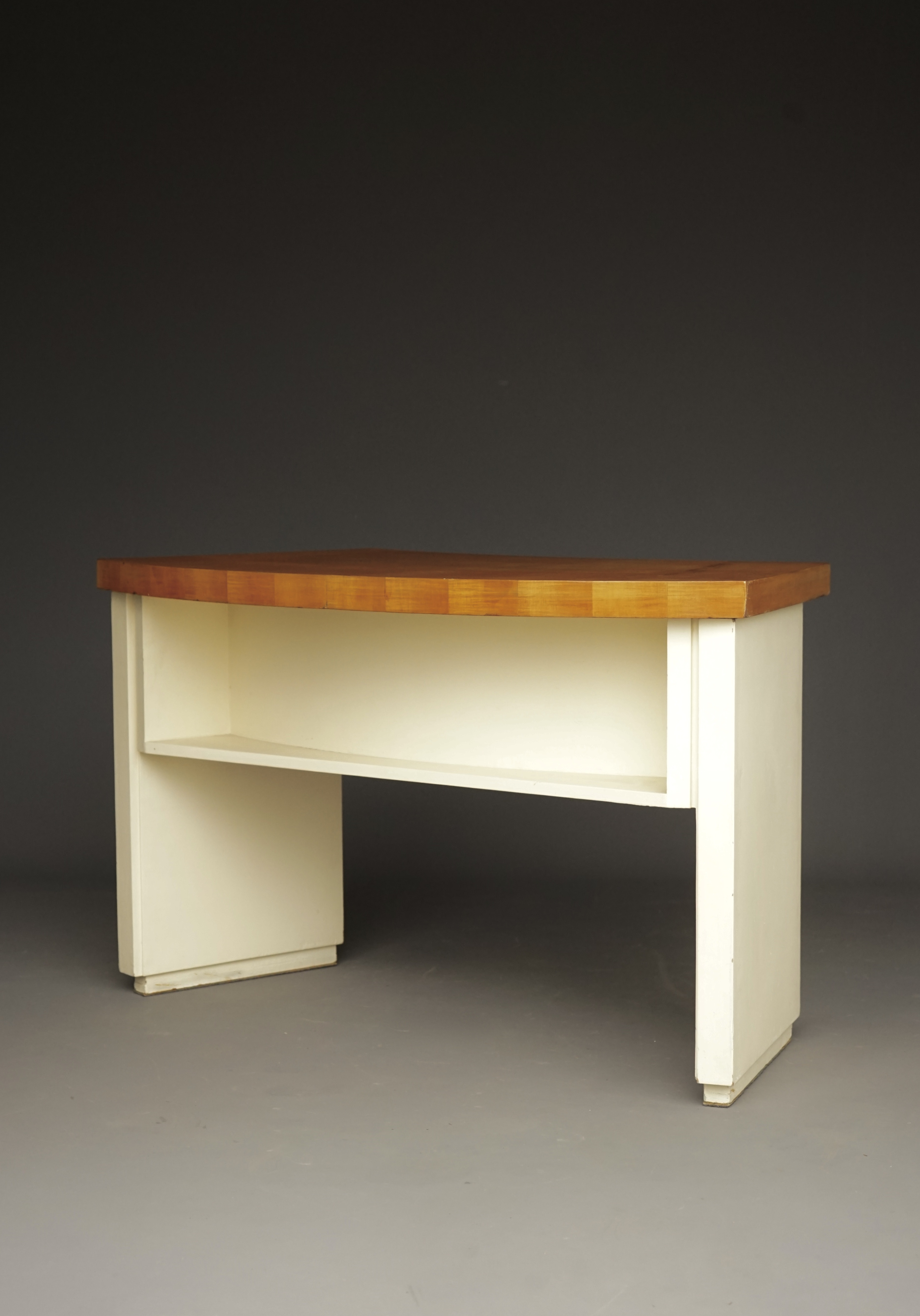
Gebroeders Reens desk

Gebroeders Reens (Nl early-mid-c20th)

Amsterdam desk 1930s

126 x 64 x 75.5cm high. Maple/birch and lacquered wood

A small a Dutch 30s art deco/modernist curved desk. Warm maple veneer with off-white lacquered wood.
This double-sided/freestanding desk was part of the interior of the jewellery shop S.Spyer located at the Koningsplein in Amsterdam. In 1929-1930 the shop was redesigned by Amsterdam architect Harry Elte, giving the shop a more modern Art Deco shopfront and interior. The furniture was executed by the Gebroeders Reens company. (original key monogrammed ‘R’).

Price: 2.500 euro

http://www.merzbaufurniture.com

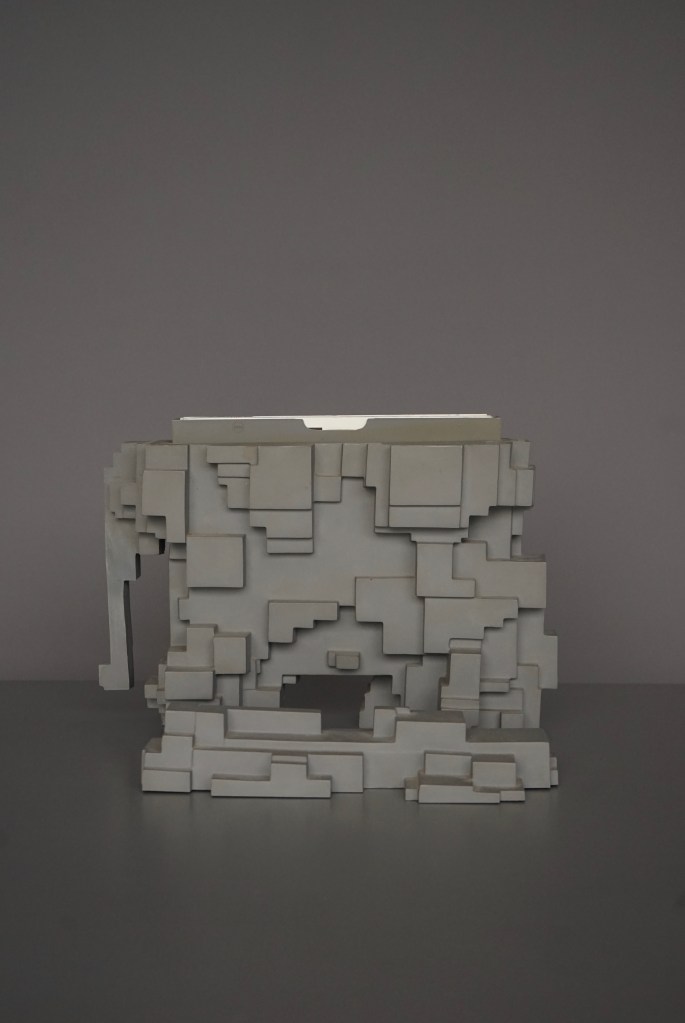
Paolozzi elephant

Sir Eduardo Paolozzi KBE, RA (Uk 1924-2005)

Acrylic resin / linoleum. 1970s.

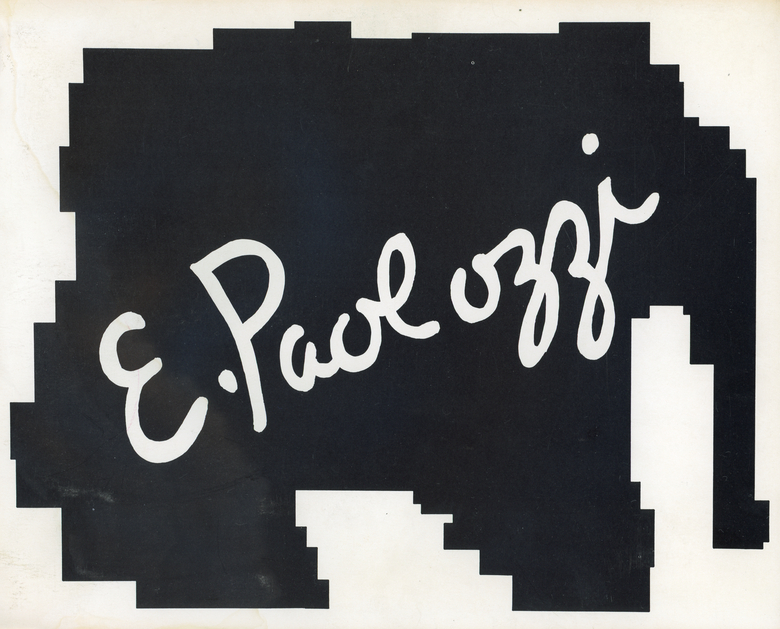
Cubist elephant advertising box. Acrylic resin / linoleum. Circa 1970s.

The Scottish graphic designer and sculptor Eduardo Paolozzi was commissioned by the linoleum company Nairn Floors to promote their products to architects and designers in the 1970s. Of the 3000 made, a limited number have survived and are coveted by collectors. Examples can be found in New York’s Metropolitan Museum of Art, the Victoria & Albert Museum etc.

The top of the elephant is a lid that can be removed to reveal an inner compartment containing a selection of pamphlets/ brochures. One of the brochures details the design process from conception to the production stage of the elephant itself.

It has the artists impressed signature and is marked as number 630 from an edition of 3000. It has a presentation card with an indistinct signature (R/D?.Day) as well as all the pamphlets that were supplied with the box (One of the pamphlets has suffered some water damage that has resulted in all the pages sticking together unfortunately but the rest are all still intact) As often happens with these, the elephant’s trunk has been glued back on at some point during its lifetime.

39 x 14 x 29cm high

Price: 1,590 euro

http://www.merzbaufurniture.com

Anton Cepka Brooch 1970s

Anton Cepka (Czech.1936-now)

BROOCH WITH SMOKY QUARTZ GEMSTONE. 1970-1974. Brooch made of silver plate with finely engraved net decoration, set with cabochon-shaped smoky quartz gemstone. Artist’s original by most famous Slovak jeweler Anton Cepka. Ag 900/1000. Total weight 140 g, length 11,6 cm, height 4,7 cm.

Compare with: H. W. Drutt English, P. Dormer, Jewelry of our time. Art, ornament and obsession, London 1995, p. 96. – Á. Schrammová: Anton Cepka – šperky a objekty, in: 53. Bulletin of Moravia Gallery in Brno, Brno 1997, p. 208-210.

1,200.00 euro

http://www.merzbaufurniture.com