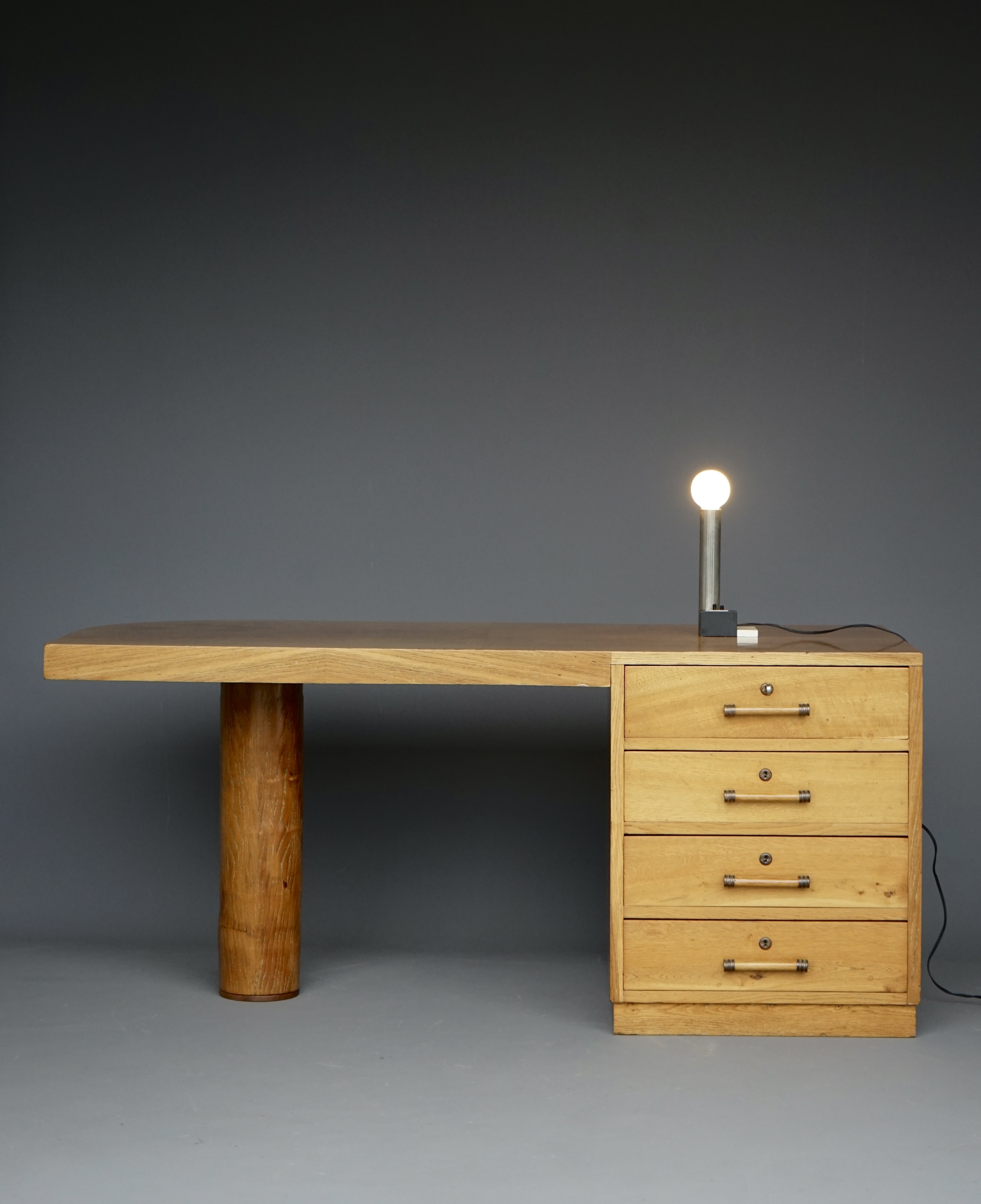
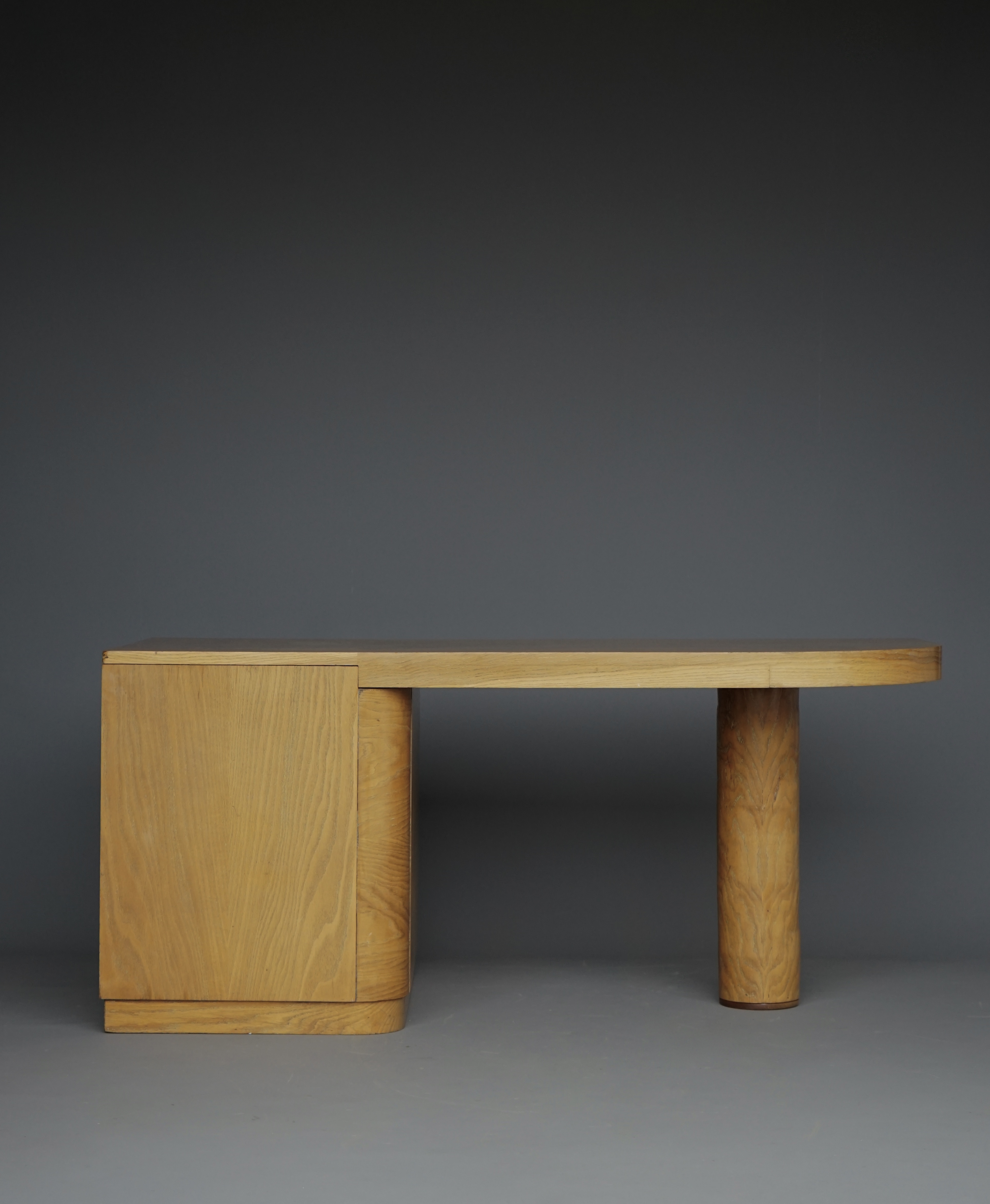
Large Art Deco desk
A high quality 1930s French double-sided desk.
Original key and lockable four drawers. 170 x 75 x 75cm high.
Price: 2800 euro
furniture, art & design
Large Art Deco desk
A high quality 1930s French double-sided desk.
Original key and lockable four drawers. 170 x 75 x 75cm high.
Price: 2800 euro
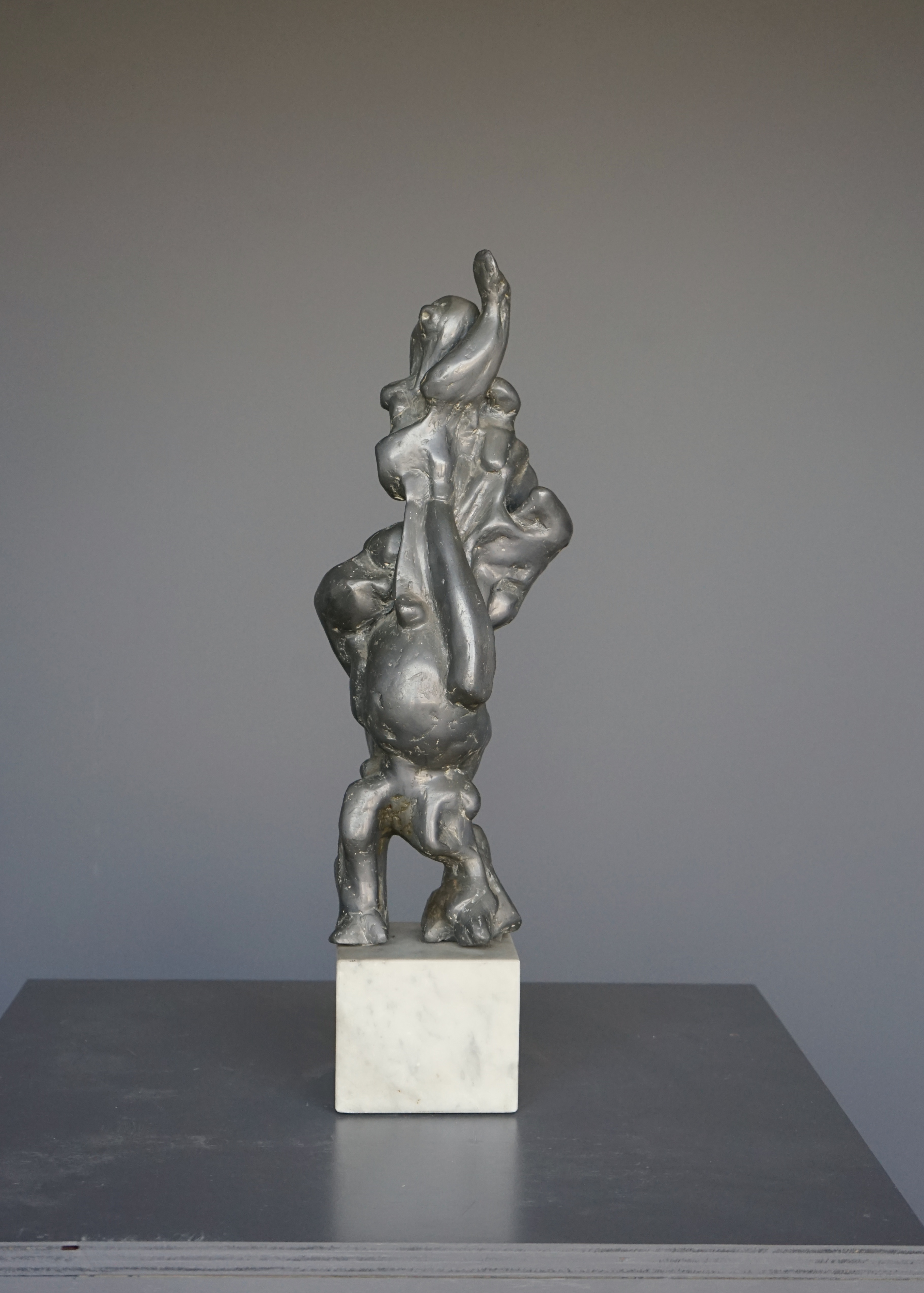

Midcentury abstract sculpture
Unsigned 1960s sculpture.
Lead and marble. 57cm high / base 12 x 12cm.
A large and heavy abstract lead sculpture executed by an unknown artist in the 1960s. Its overall impression is of a modern dynamic figure in molten lead; a figure morphing into various biomorphic or abstract forms.
Price: 875 euro

Jan de Jong / Dom Hans van der Laan (Nl 1904-1991)
Pair of original Bossche School church benches/pews from the Sint-Willibroduskerk in Almelo. 1960s.
Stained pine wood with hand forged large nails.
302 x 67 x 86.5 (seat height 48.5) Note: Measurements are according to van der Laan’s theories of the ‘plastic number’ system.
Two rare long benches designed by the Dutch Benedictine monk and architect Dom Hans van der Laan and executed by fellow architect Jan de Jong for the Sint-Willibroduskerk in Almelo.
The architect Jan de Jong who worked closely together with Dom Hans van der Laan was responsible for the design of the church and its interior. They created an outstanding body of work ,very much defining what is called now the Dutch Bossche School style.
The artist Wim van Hoof was responsible for the entire colour scheme of the church and its interior (including these benches). The colour of the benches is mostly green but has a touch of brown with a silvery blue tint.
The benches were purchased after the demolition of the church in 2005 and is in a very nice original condition.
Price: 11,000 euro (per piece)


Aldo van den Nieuwelaar (Nl. 1944-2010)
Globe Floor lamp. Domani, 1970s.
35 x 35 x 130cm high
A rare floorlamp from the ‘Globe’ series, designed by Dutch architect and designer Aldo van den Nieuwelaar.
Lamps designed by Aldo van den Nieuwelaar such as this one were all produced in small quantities. It has an elegant minimalist one section curved white metal stem with large glass sphere that nests comfortably onto it.
Price: 1.100 euro

1970s Brutalist abstract sculpture. Unsigned.
A large basalt stone sculpture composed of simple modernist/architectural forms. At some time this sculpture has stood in a garden which has resulted in a thin layer of moss on some parts.
It measures 36 x 12 x 45cm high.
Price: 1.500 euro
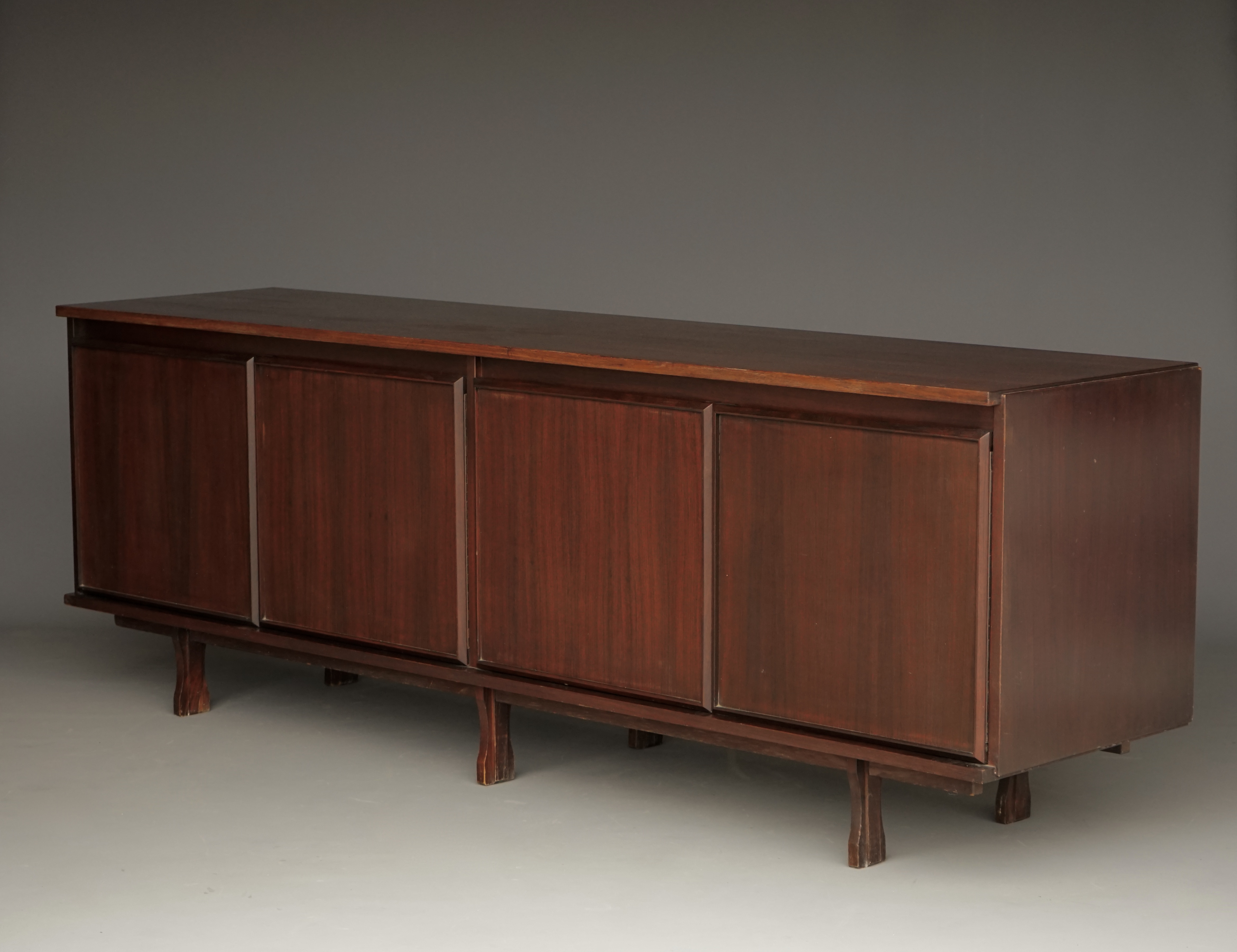

Italian 1960s sideboard
Giovanni Ausenda (Italy mid-c20th)
model ‘Caleno’ credenza/sideboard ±1960s for Stilwood, Italy.
Rosewood & Mahogany. 213 x 53 x 74cm high.
This Brutalist Italian sideboard with subtle architectural details has a strong classical presence. This is what we would call a sideboard for life! Anchored in the right setting this is a timeless design that can look like it has always been there.
Price: 3.900 euro

Art Deco stool
A 1930s Art Deco vanity stool. Unknown origin. (unrestored)
Mahogany and maple wood veneers around a wooden constructed base.
We have left the period linen upholstery – A possible upholstery project or just left as it is.
Price: 1.000 euro


Eric Gill (Uk.1882-1940)
Holy water stoop. 1930s. Hoptonwood stone with patinated bronze display stand.
18 x 24 x 25cm high (when mounted on stand)
Provenance: By descent to Mary Gill, 1940 and to her daughter Joan Hague, 1963. Acquired from Rosalind Erangey, daughter of Joan and René Hague, 1994. Personal collection 1994-now.
A water stoop (vessel containing holy water) Biographer Fiona McCarthy confirms that Gill carved several water stoops whilst working at Pigotts (the farm house near High Wycombe where Gill lived and worked from 1928). The carved lettering to the underside of this one is evidence that the stone was repurposed for use – It also shows signs of once having once been set into the walls of a church.
Eric Gill, worked as a sculptor, typographer, illustrator and stone carver. Gill designed many fonts still in use today, most notably Gill Sans (1927-1930) and Perpetua (1929). He influenced the next generation of British stone carvers and letter cutters through his work and teachings, and established an informal Arts and Crafts community in Ditchling Common, England.
Gill was a Catholic convert, and after 1913, his work became increasingly involved with religious themes. Moreover, in recent years Gill has become a controversial figure, due largely to the erotic nature of much of his art and his own sexual behaviour/extreme proclivities, as revealed in his diaries.
Price: 11.000 euro
 [merzbau]