Shigeru Uchida (Japan 1943-now)

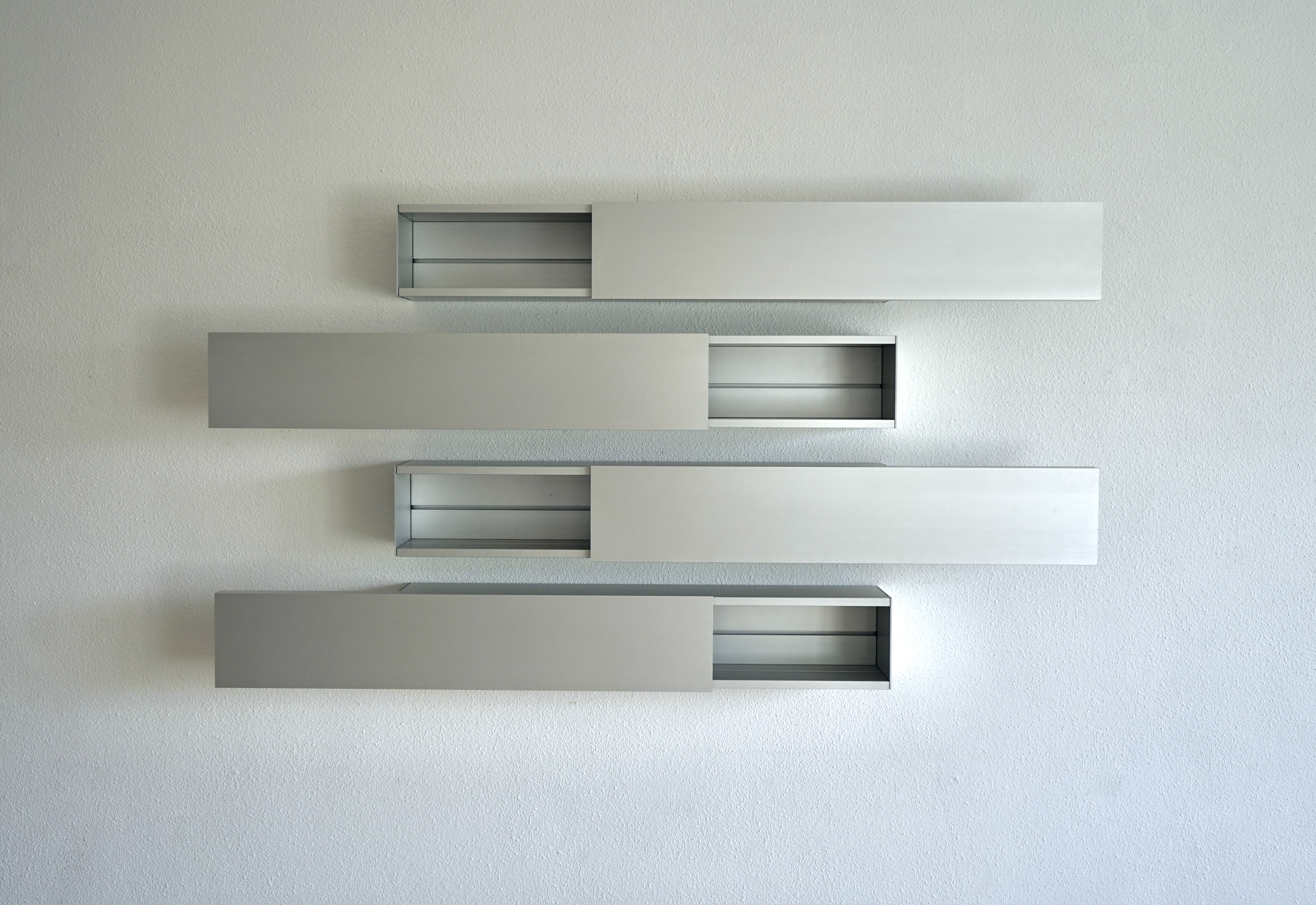
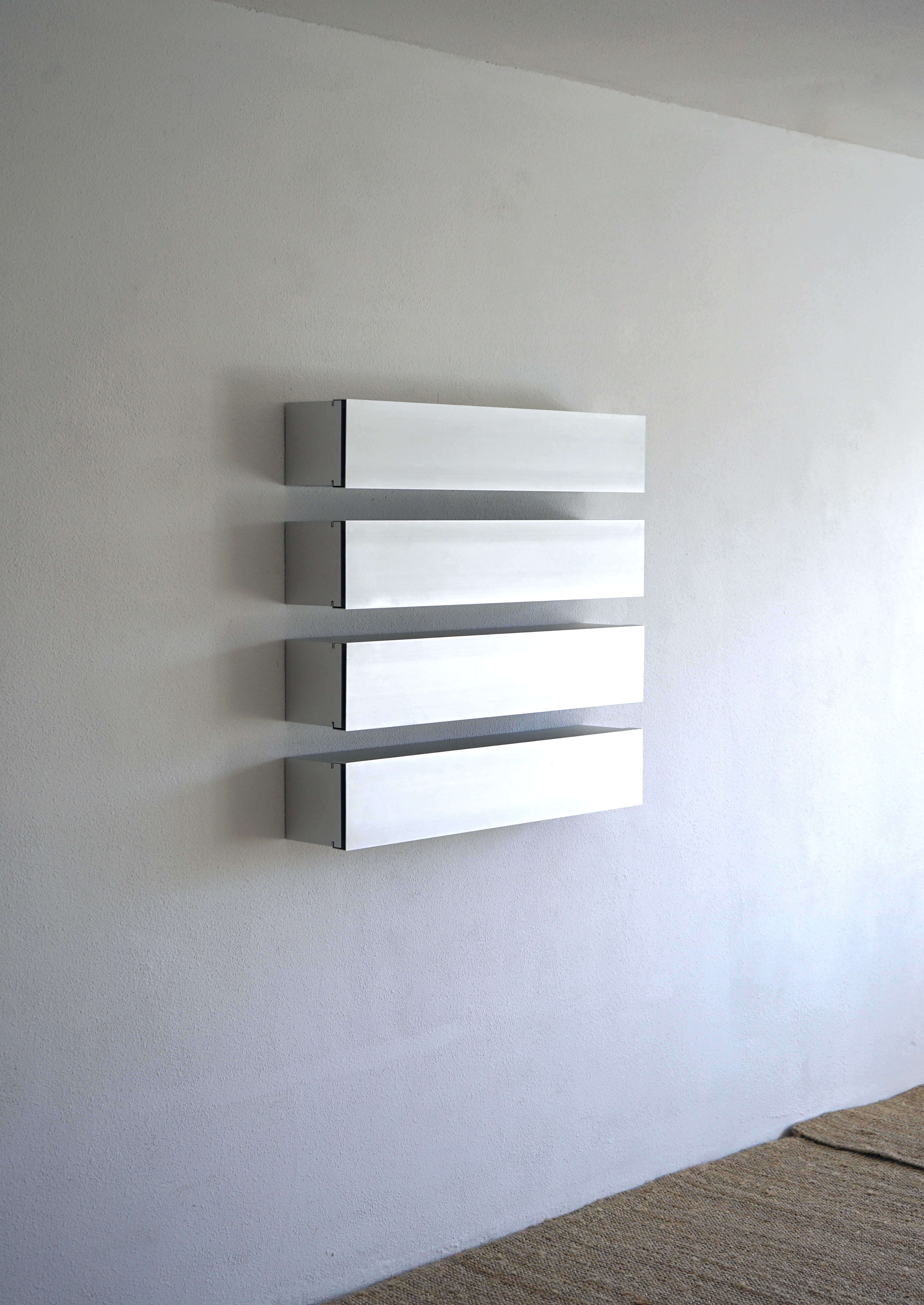
A-Line storage cabinets/shelves, Set of 3. Pastoe/Netherlands 1990s. Aluminium.

90 x 18 x 17.5 cm high

A set of finely engineered A-Line ‘Horizontals’ that are made from anodised aluminium. They each have softly sliding doors that slide to both the left or to the right.
Each unit is fully marked with the Pastoe company name.

They hang easily to the wall by sitting onto a wall connection that fixes to the wall with just a few screws.

Price: 3.500 euro (set of 3) (or 1.300 euro per piece)

http://www.merzbaufurniture.com

midcentury kinetic sculpture

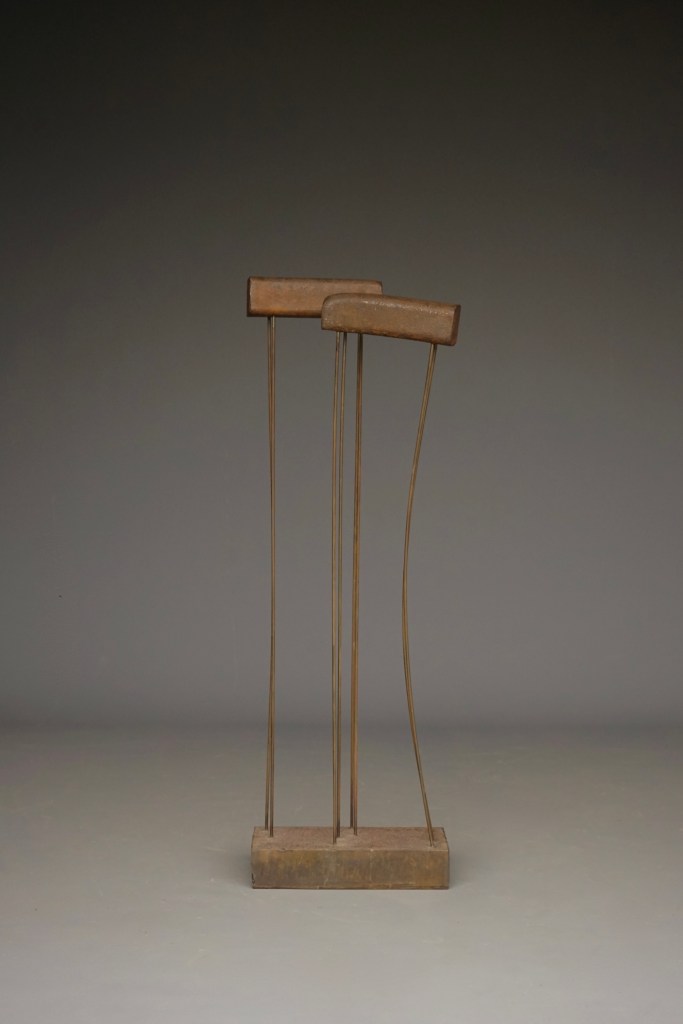
Circa 1960s standing sculpture in the manner of Harry and Val Bertoia. The sculpture weighs ±50kg. and is made from solid iron and steel. The two standing sections can be easily moved so that they swing slightly from side to side.

38 x 19 x 118cm high

Price: 2.200 euro

http://www.merzbaufurniture.com

Eric Gill (Uk.1882-1940)

Holy water stoop. 1930s. Hoptonwood stone with patinated bronze display stand.

18 x 24 x 25cm high (when mounted on stand)

Provenance: By descent to Mary Gill, 1940 and to her daughter Joan Hague, 1963. Acquired from Rosalind Erangey, daughter of Joan and René Hague, 1994. Personal collection 1994-now.


A water stoop (vessel containing holy water) Biographer Fiona McCarthy confirms that Gill carved several water stoops whilst working at Pigotts (the farm house near High Wycombe where Gill lived and worked from 1928). The carved lettering to the underside of this one is evidence that the stone was repurposed for use – It also shows signs of once having once been set into the walls of a church.

Eric Gill, worked as a sculptor, typographer, illustrator and stone carver. Gill designed many fonts still in use today, most notably Gill Sans (1927-1930) and Perpetua (1929). He influenced the next generation of British stone carvers and letter cutters through his work and teachings, and established an informal Arts and Crafts community in Ditchling Common, England.
Gill was a Catholic convert, and after 1913, his work became increasingly involved with religious themes. Moreover, in recent years Gill has become a controversial figure, due largely to the erotic nature of much of his art and his own sexual behaviour/extreme proclivities, as revealed in his diaries.

Price: 11.000 euro

http://www.merzbaufurniture.com

Wim den Boon (Nl. 1912-68)

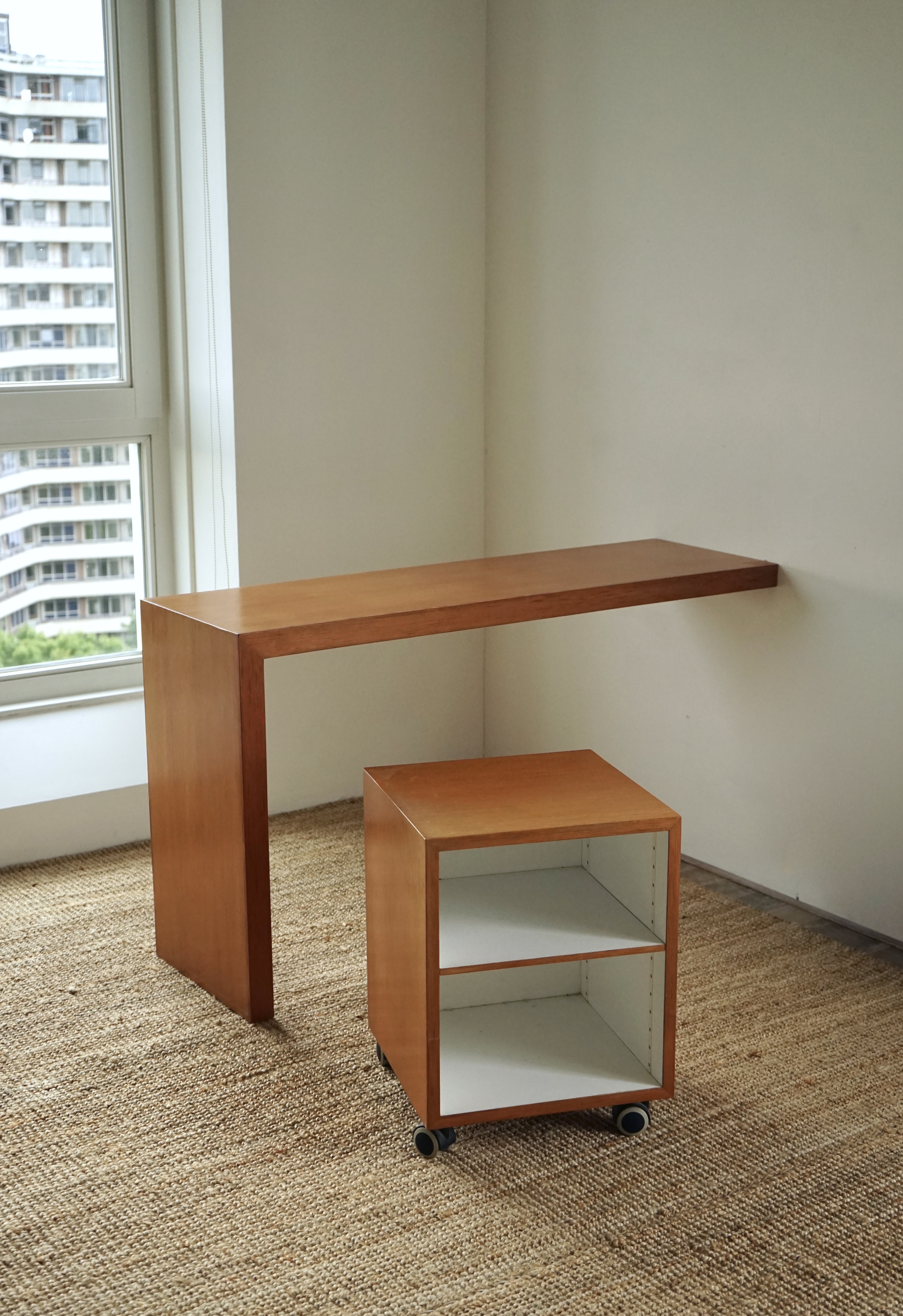
A small wall mounted oregon pine desk (ladies desk) with accompanying drawer unit.

128 x 39.5 x 72cm high
Designed and made to commission for a private residence in Laren, NL in the 1960s (Like much of den Boon’s work this item documented at the Het Nieuwe Instituut, Rotterdam). It was initially designed to work as a vanity unit, although nowadays can be used as a neat little desk.

Purchased from its initial owner who commissioned it amongst other furniture specifically for their home.

Between the 1950s & 60s, Dutch designer and architect Wim den Boon was at the height of his powers. His success alongside other designers as ‘Group &’ (including Hein Stolle, etc.) and later with Goed Wonen lay in the fact that his purist design of the interiors and furniture fitted in seamlessly with the functionalist design of the late thirties. (Goed Wonen was a foundation and leading magazine formed after the war with the aim of “raising the standard of living in the Netherlands by improving home furnishings in the broadest sense of the word…”)

Den Boon wrote several articles for Goed Wonen – His articles are almost without exception educational, presenting readers sometimes quite forcibly with the liberating nature of the new design. His polemical character, stubbornness, and especially the strongly didactic tone of his articles was too much for many employees and readers of Goed Wonen and in 1950 the editors forced him to resign. It was also around 1950 that he broke his relationship with ‘Groep &’ and established himself as an independent interior designer in The Hague. From then on, his interior designs are increasingly characterised by a very careful treatment of the space that can be very strict, deliberate, and sober but also highly refined. Throughout this golden period of the 50s-60s, an extensive oeuvre was created, varying from small renovations and furniture designs to complete new construction projects for private individuals such as those who commissioned this piece.

This is a unique piece of Dutch mid-century modern design history (please note that we are also selling other items that came out of the same house)

Minor superficial wear and tear. A scratch to the top of the drawer unit and some minor discolouring.

Price: 1.450 euro

http://www.merzbaufurniture.com
monotube chair

Wim van den Bergh (Nl.c20th)

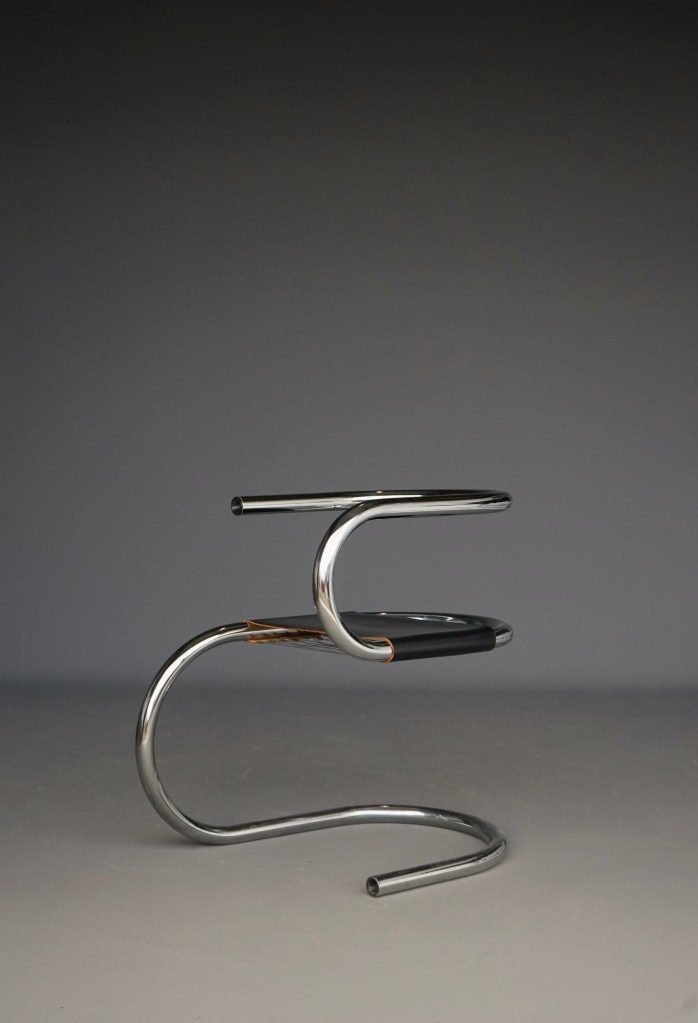
chromed steel tube with leather slung seat. 48.5 wide x 67 deep x 73cm high.

Wim van den Bergh is an architect, writer, and professor of Housing and Design at RWTH Aachen.

An 80s homage to early modernism this is a highly elegant and rare chair: Only 30 examples of this chair were ever produced (by hand) of which the first prototype was commissioned by Museum Boijmans van Beuningen in Rotterdam in 1981.

Price: 4.500 euro

http://www.merzbaufurniture.com
Philippe Starck (Fr.1949-Now)

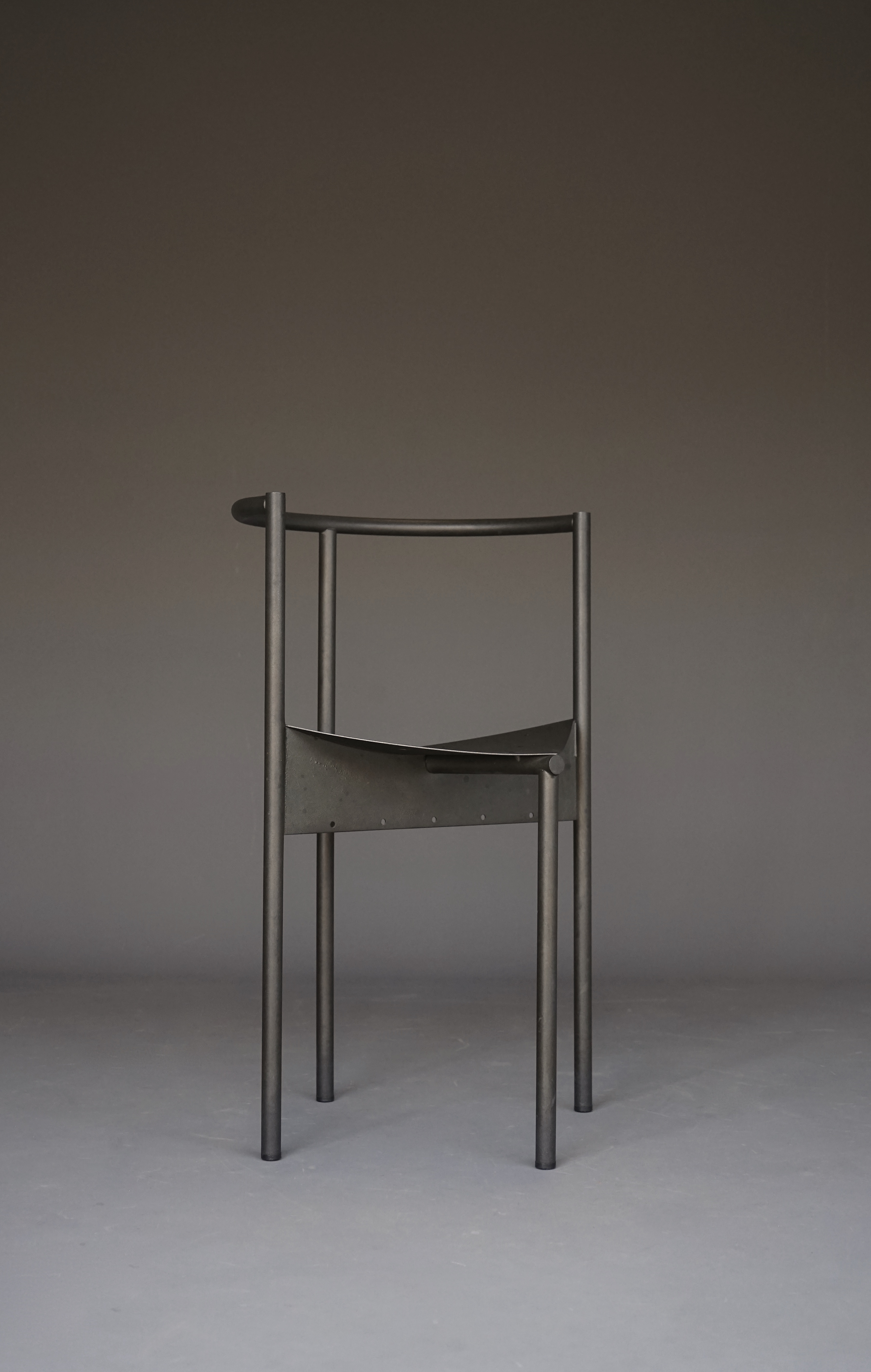
Early edition Wendy Wright chair for Disform, 1986. Grey coated steel.

A balanced architectural chair composed of primary geometric shapes.

Price: 1.875 euro

http://www.merzbaufurniture.com
‘less’ table

Jean Nouvel (Fr. 1945- now)

‘Less’ Table. Molteni / France. 1990s

Steel plate. 190 x 90 x 72.5 cm high

A rare first steel edition of the ‘Less’ table by Jean Nouvel (later editions were in aluminium and lighter). The table was originally designed for Foundation Cartier office in Paris.

The top has a distinctive sunken underside, not seen when viewed from above – the result is the illusion of a wafer thin top supported by four thin legs.

Original lacquered surface in anthracite metallic grey/silver colour. In good condition – some minor scratches. The legs can be unscrewed from the top.

Price: 2,750 euro

http://www.merzbaufurniture.com