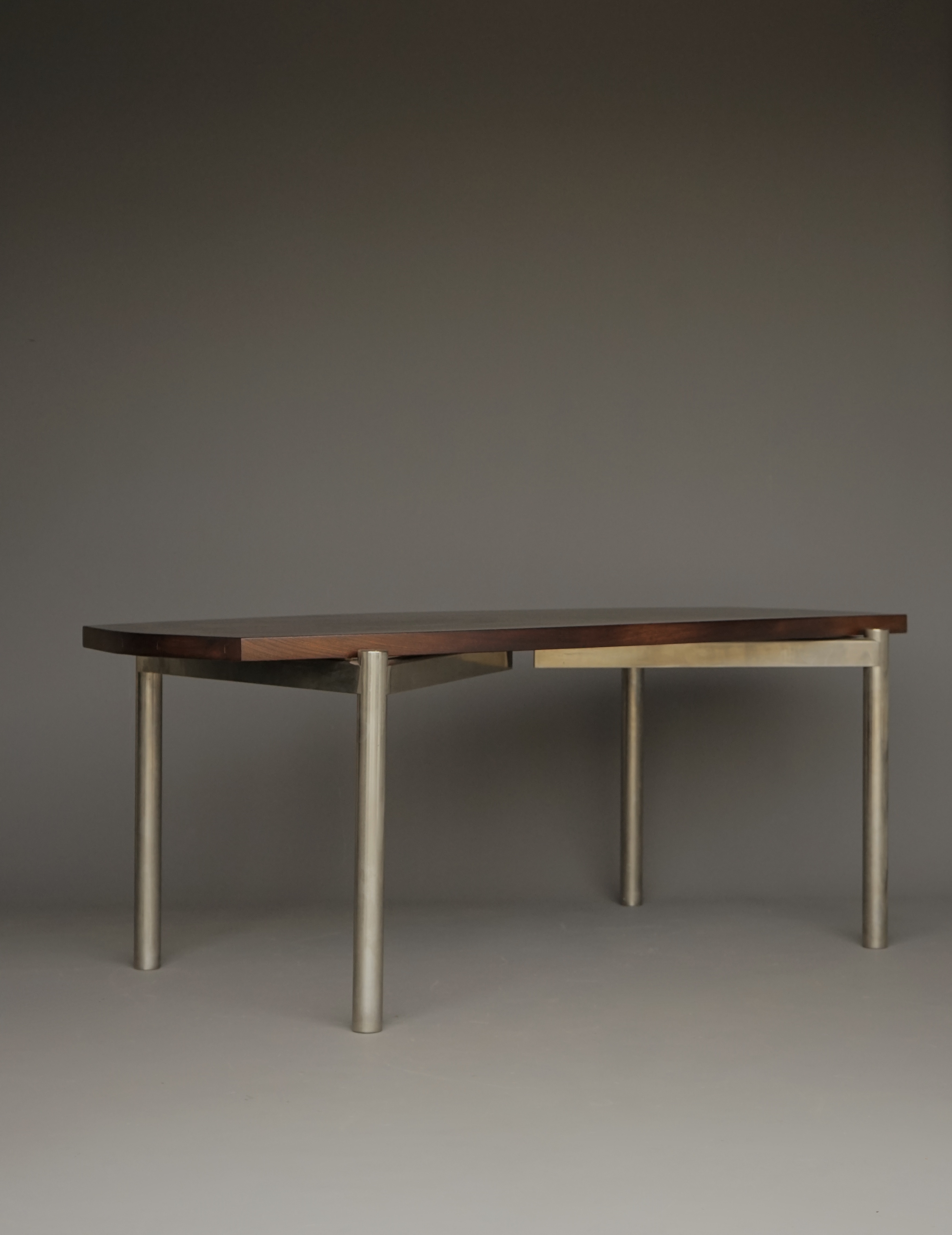
Wim den Boon (Nl.1912-68)

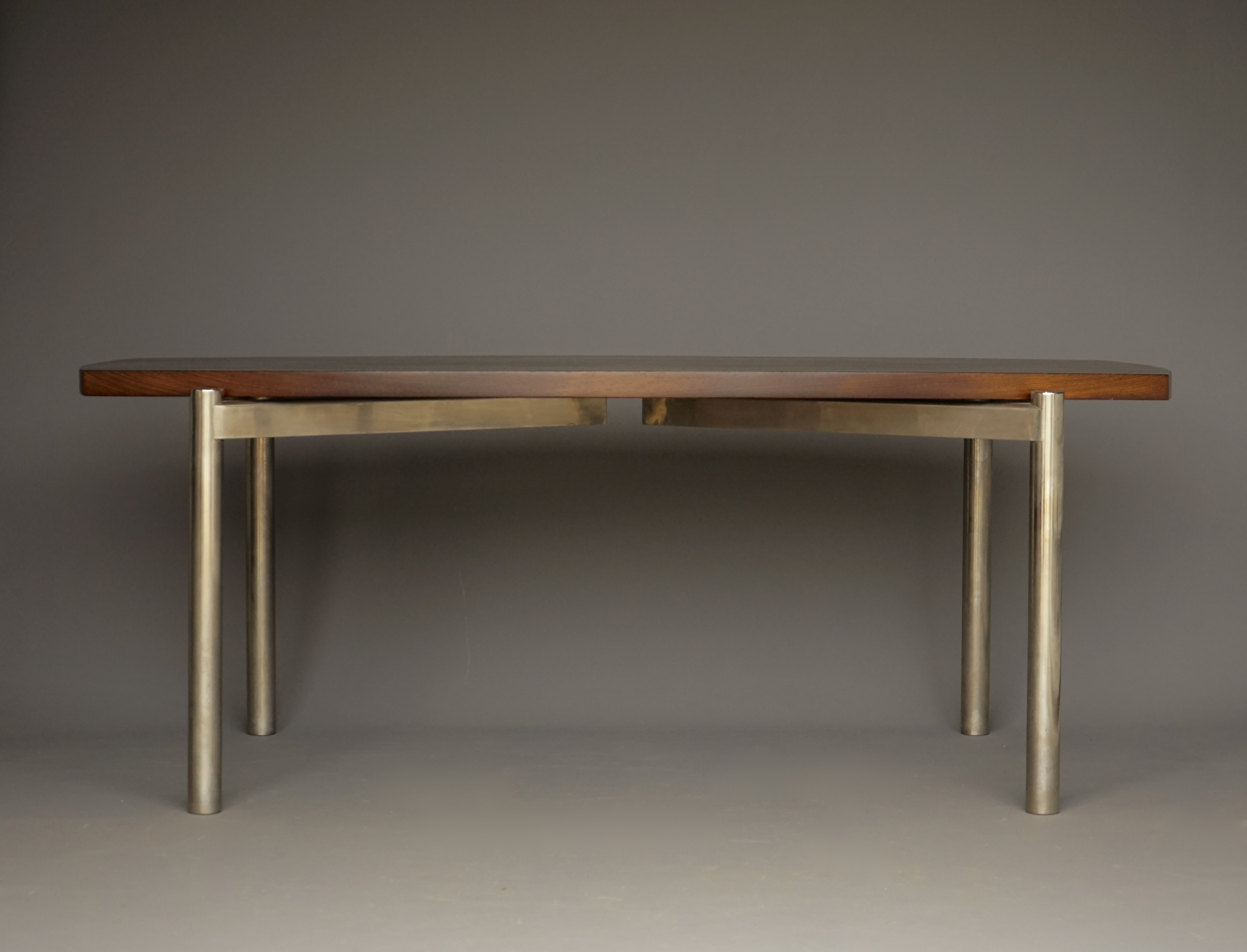
Solid wenge wood with chrome plated two part base. 190 x 86.5 x 72.5cm high

A unique bespoke dining table designed by Dutch architect Wim den Boon. In 1956 Den Boon was the architect of a residential project in the Dutch city of Wageningen – This house that still exists today (although in slightly altered state) and could be regarded as one of his best designs. Den Boon designed the house and most of the furniture for it. This table was part of that bespoke dining room, and was purchased from the family that commissioned the house.
It has a handmade chromed metal base in two triangular sections, and a 4.5 cm thick solid wenge wood top with curved sides that gives this table both a strict modern presence and a considered elegance and warmth.

This is an historical piece of furniture and an important part of the legacy of Wim den Boon as an important Dutch architect and interior designer.

Price: 3.500 euro

http://www.merzbaufurniture.com

Émiel-Jacques Ruhlmann (France 1879-1933)

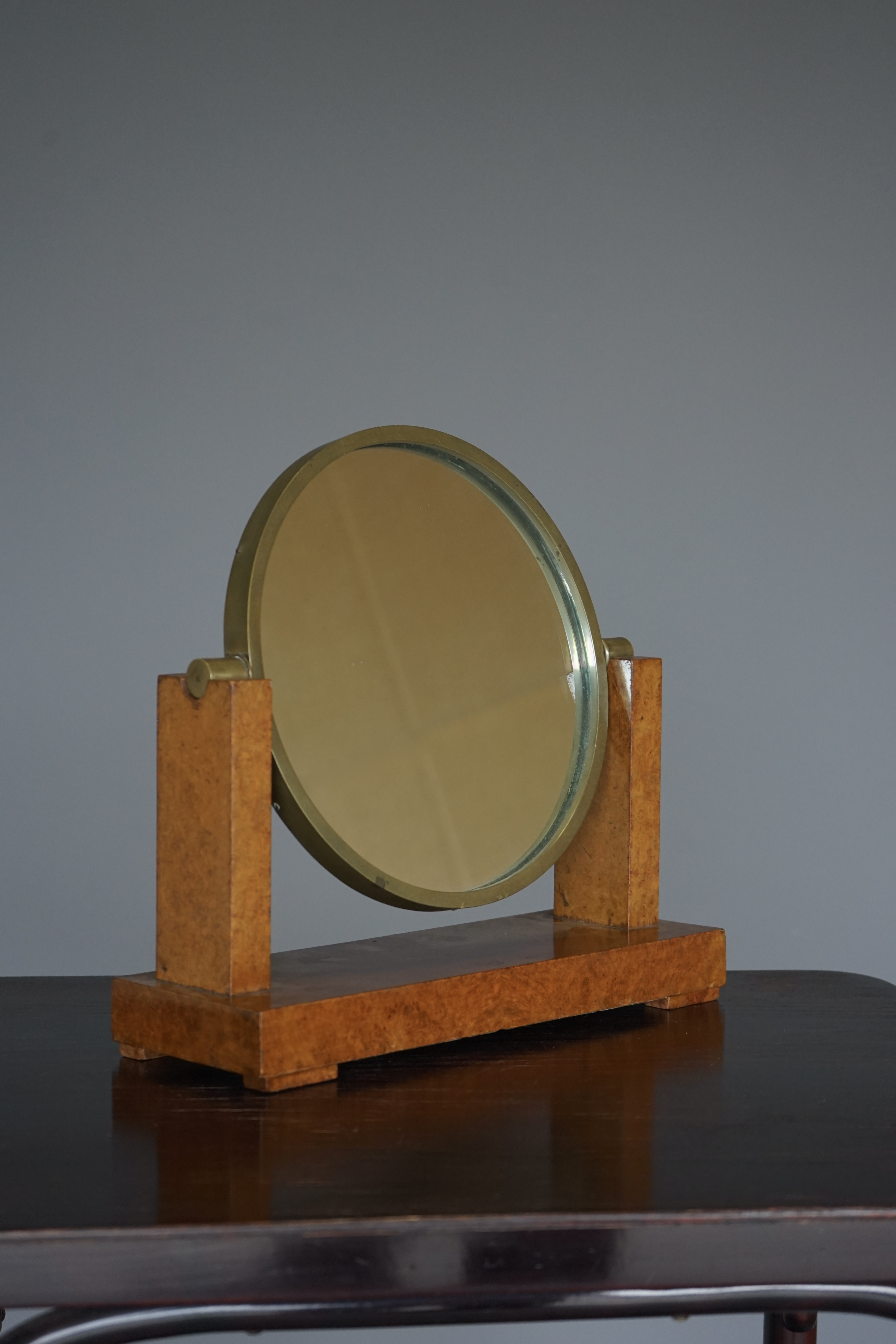
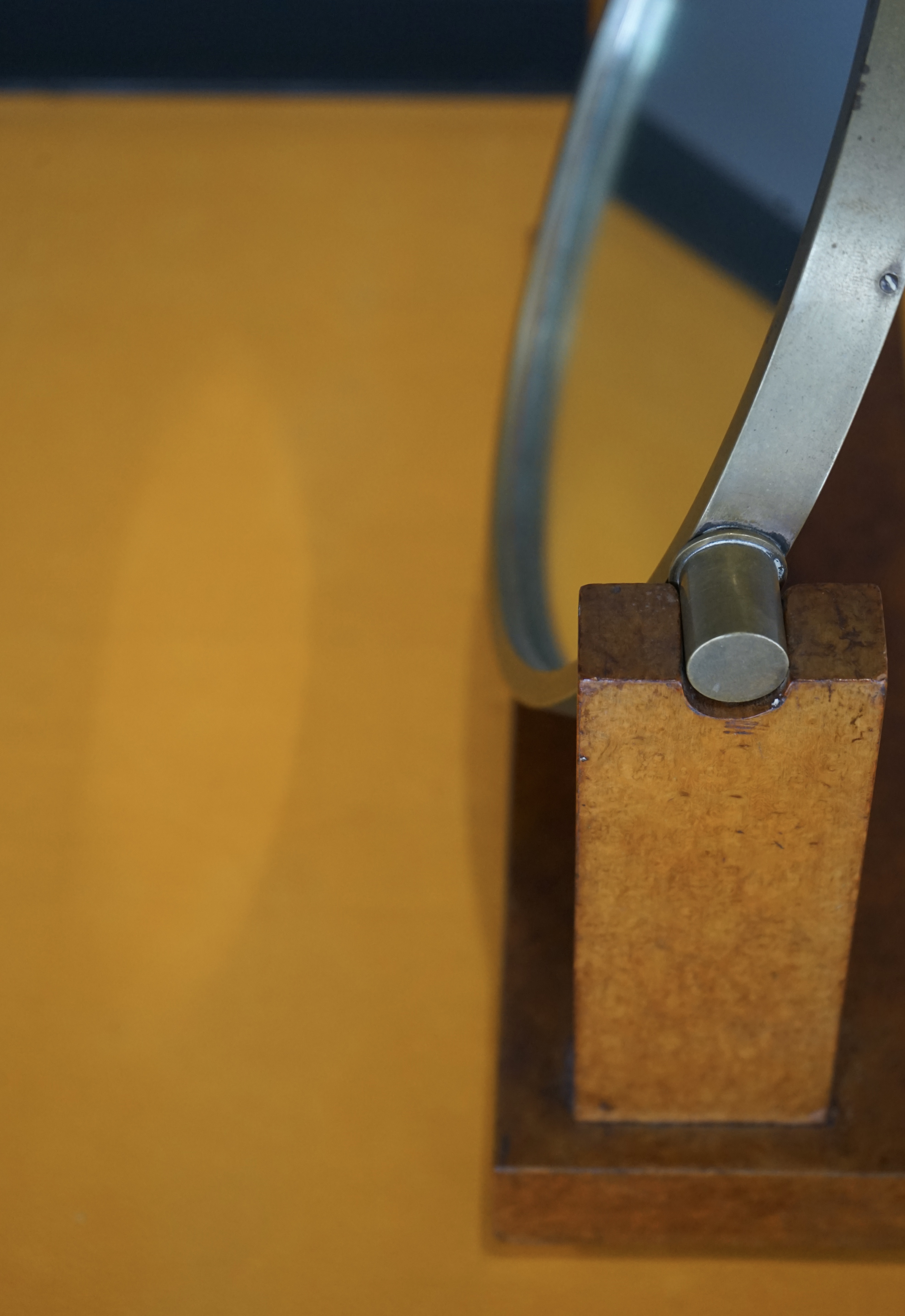
Circa 1920s. Maple wood base with nickel plated mirror frame.

A rare vanity mirror. Signed with impressed marks to both the top of the mirror and the underside of the wooden base. The mirror sits beautifully on the base and allows itself to be positioned easily.

All in original condition.

Price: on request

http://www.merzbaufurniture.com

Eric Gill (Uk.1882-1940)

Holy water stoop. 1930s. Hoptonwood stone with patinated bronze display stand.

18 x 24 x 25cm high (when mounted on stand)

Provenance: By descent to Mary Gill, 1940 and to her daughter Joan Hague, 1963. Acquired from Rosalind Erangey, daughter of Joan and René Hague, 1994. Personal collection 1994-now.


A water stoop (vessel containing holy water) Biographer Fiona McCarthy confirms that Gill carved several water stoops whilst working at Pigotts (the farm house near High Wycombe where Gill lived and worked from 1928). The carved lettering to the underside of this one is evidence that the stone was repurposed for use – It also shows signs of once having once been set into the walls of a church.

Eric Gill, worked as a sculptor, typographer, illustrator and stone carver. Gill designed many fonts still in use today, most notably Gill Sans (1927-1930) and Perpetua (1929). He influenced the next generation of British stone carvers and letter cutters through his work and teachings, and established an informal Arts and Crafts community in Ditchling Common, England.
Gill was a Catholic convert, and after 1913, his work became increasingly involved with religious themes. Moreover, in recent years Gill has become a controversial figure, due largely to the erotic nature of much of his art and his own sexual behaviour/extreme proclivities, as revealed in his diaries.

Price: 11.500 euro

http://www.merzbaufurniture.com

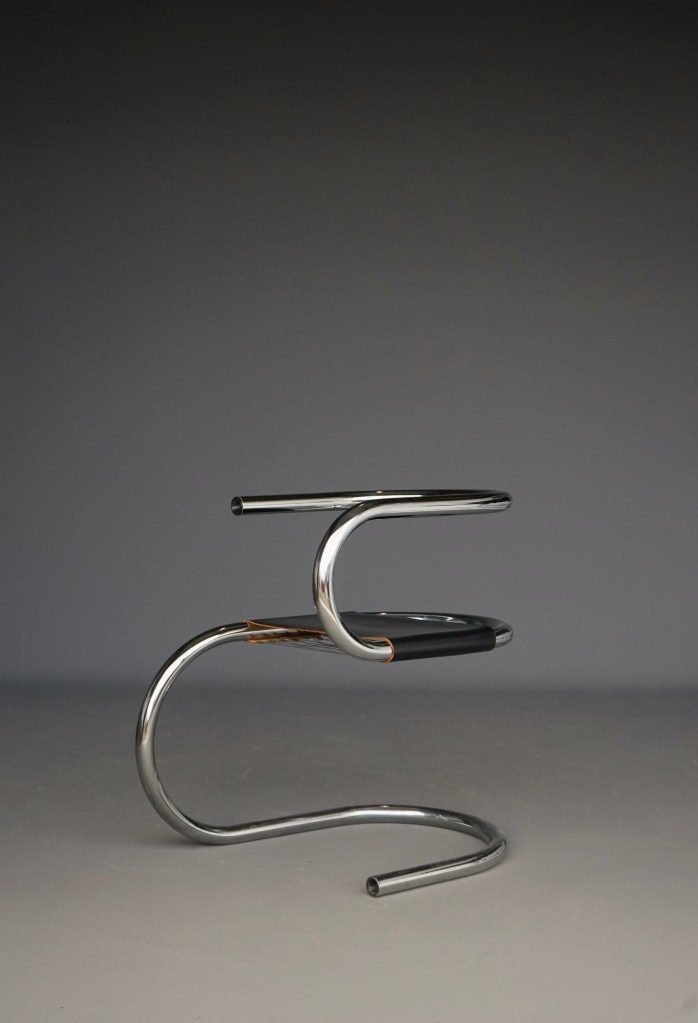
monotube chair

Wim van den Bergh (Nl.c20th)

chromed steel tube with leather slung seat. 48.5 wide x 67 deep x 73cm high.

Wim van den Bergh is an architect, writer, and professor of Housing and Design at RWTH Aachen.

An 80s homage to early modernism this is a highly elegant and rare chair: Only 30 examples of this chair were ever produced (by hand) of which the first prototype was commissioned by Museum Boijmans van Beuningen in Rotterdam in 1981.

Price: 4.700 euro

http://www.merzbaufurniture.com