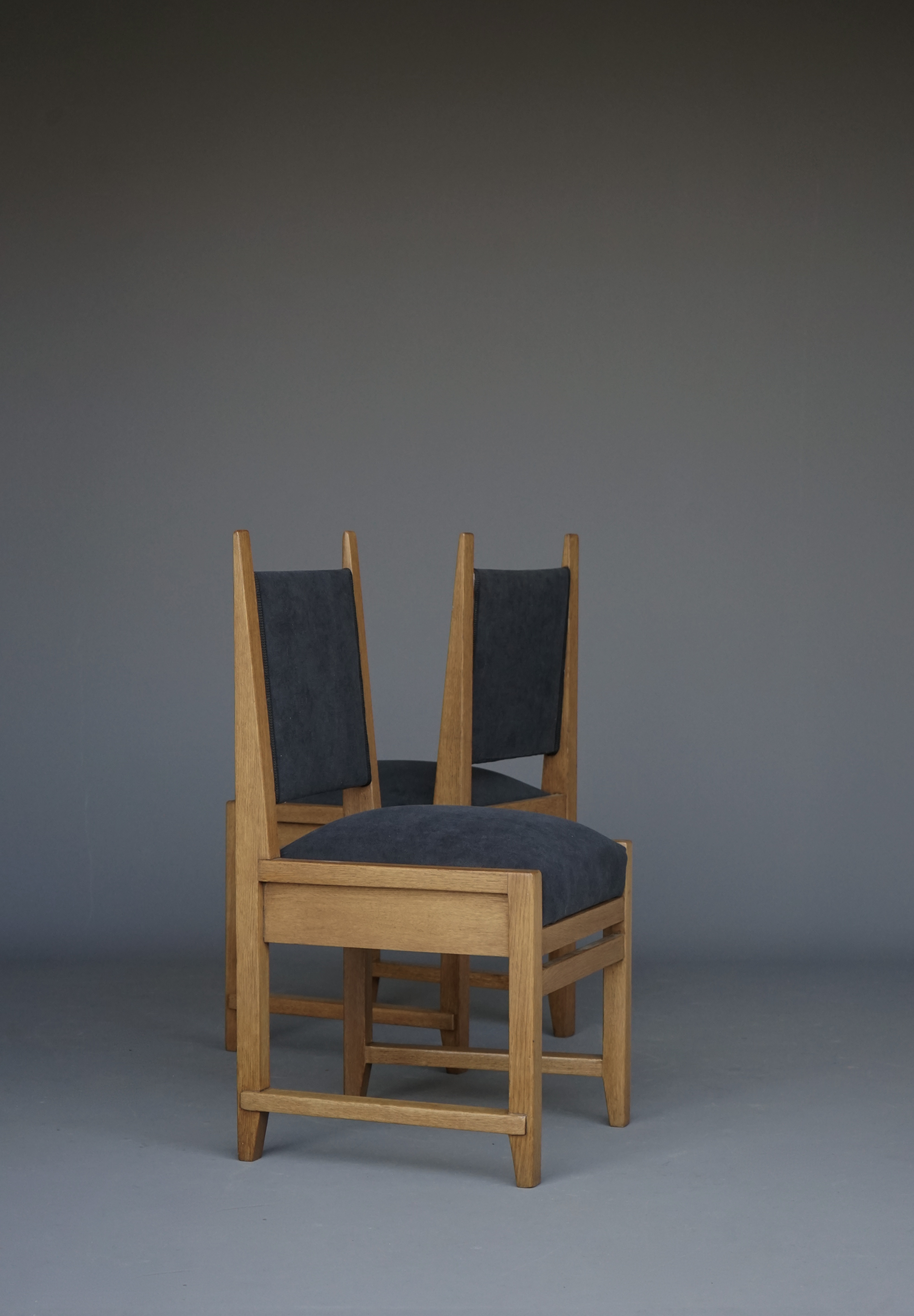
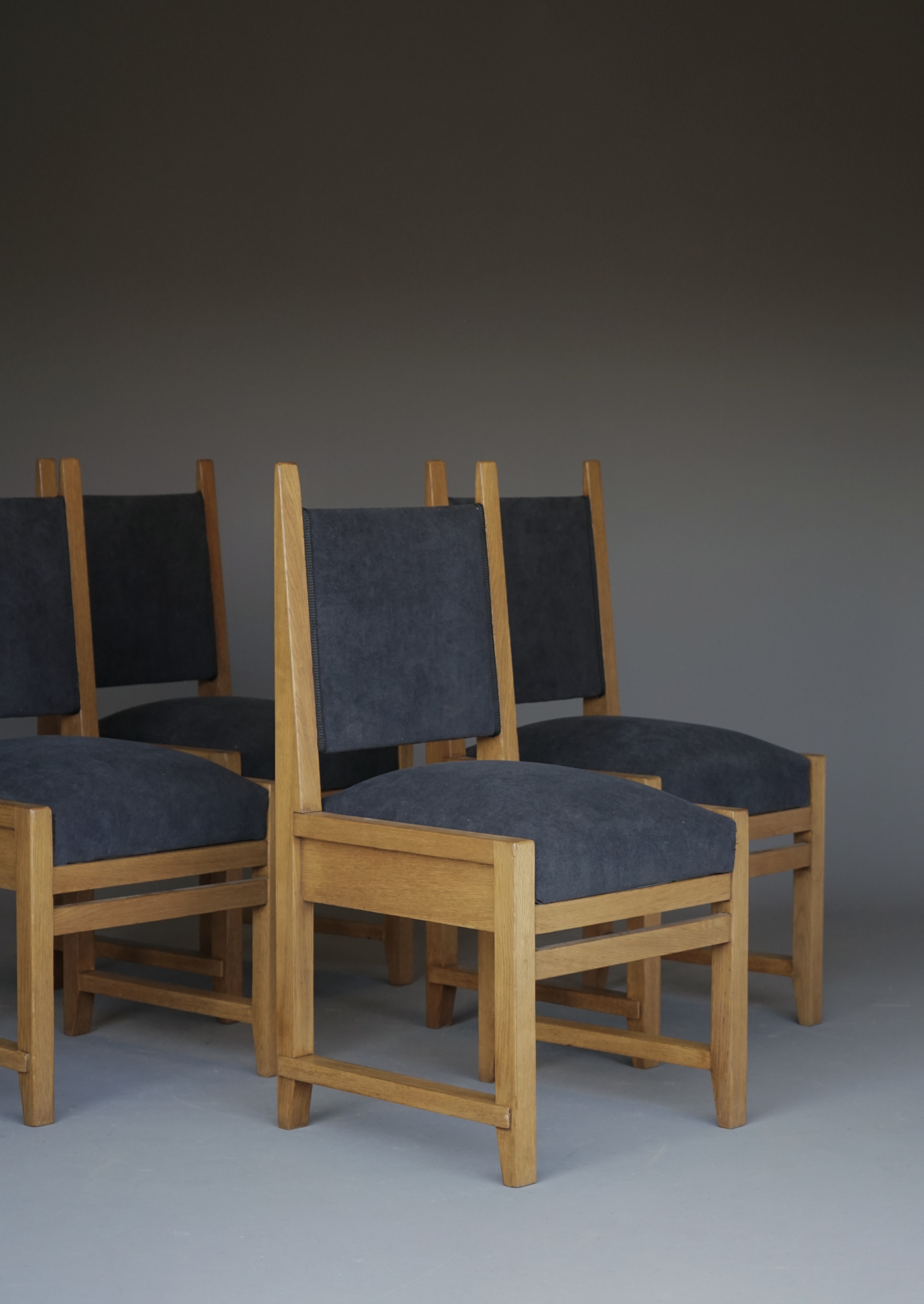
Hendrik (Henk) Wouda (Nl 1885-1946)
Rare set of four oak dining chairs (or two pairs of side chairs).
Later upholstery.
Price: 6.000 euro (set of four)
furniture, art & design
Hendrik (Henk) Wouda (Nl 1885-1946)
Rare set of four oak dining chairs (or two pairs of side chairs).
Later upholstery.
Price: 6.000 euro (set of four)


model 3 desk lamp
Sybold van Ravesteyn (Nl 1889-1983)
Model 3 desk lamp. Metal & lacquered wood.
_Originally designed in the 1926, a few limited productions of the design were manufactured in the 1970s. This particular lamp is a very rare 1970s production that was the most faithful to the original series of only 8 lamps that were made. This version has wooden black and white sections (like the original). It has a screwed in metal plate around the two switches (like the original) and a cleaner top edge (without a plastic protector shield that some versions have)
(please note that this is not a DS 23 Huszár lamp)
.
12 x 10.5 x 26.5cm /without bulb
Lit: Sybold van Ravesteyn architect; Kees Rouw, Nai010 uitgevers/publishers, 2014 pp.59
Price: 2.800 euro
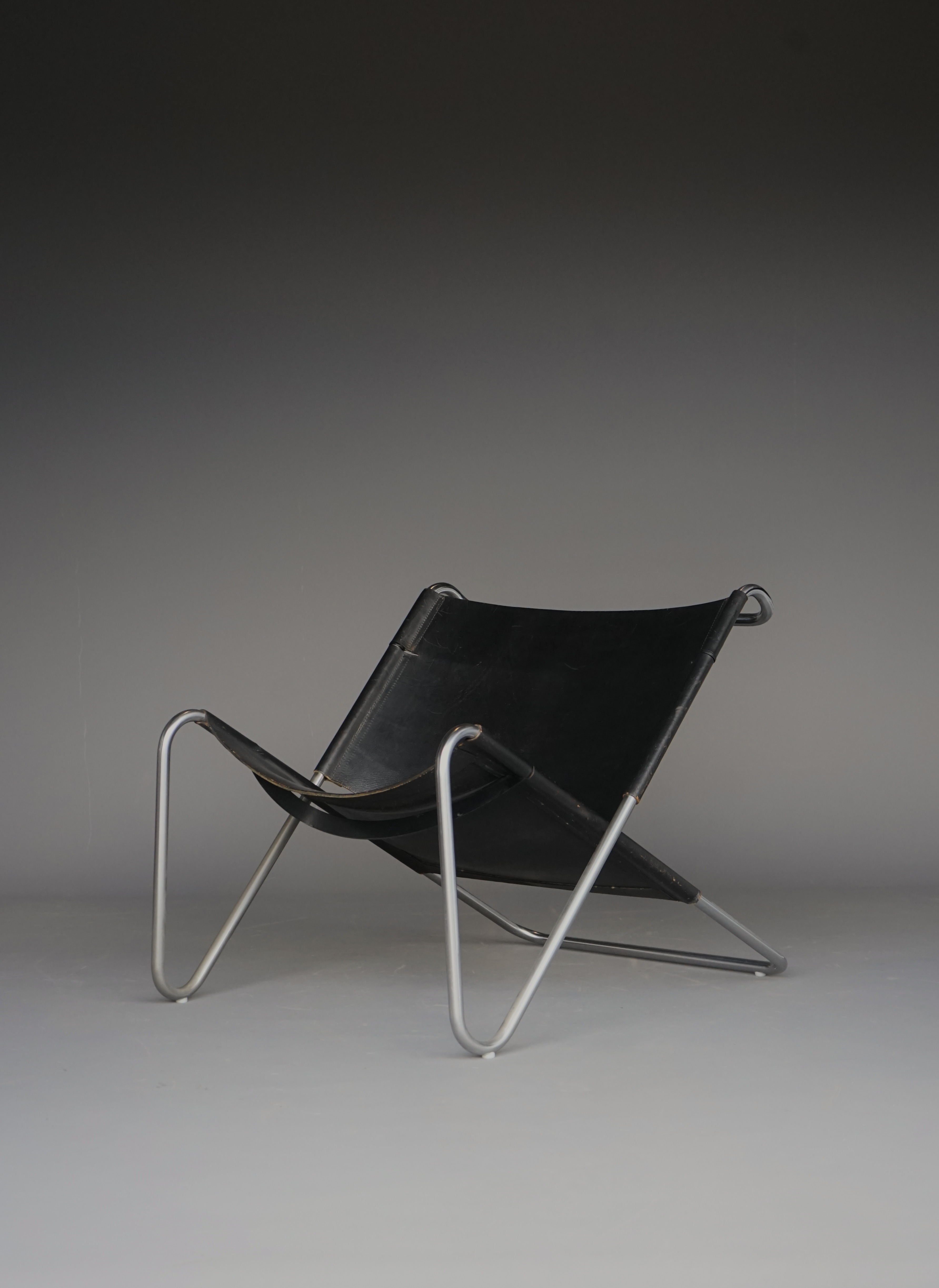
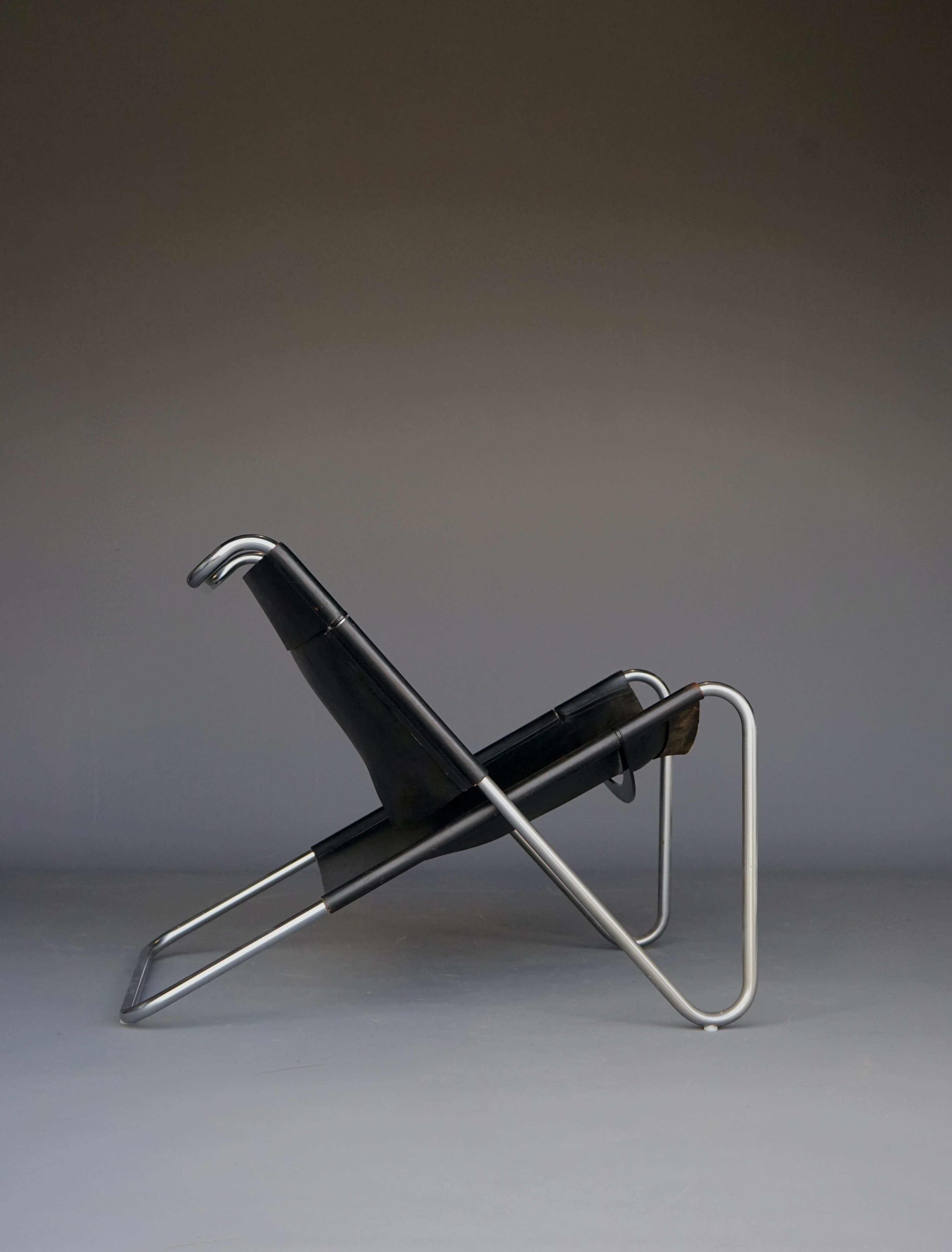
Kwok Hoi Chan (HK 1939-1990)
Rare sz15 lounge chair for ‘t Spectrum 1973.
This sculptural chair was manufactured for a short period during which time it is believed that around only 100 of the chairs were manufactured. This one was purchased from the first owner and is in superb original condition with only minimal signs of age and use.
.
Tubular steel and thick leather 72x90x68cm
Price: 3.650 euro

Mart Stam (Nl 1899-1986)
Model A3-1 armchairs. Circa 1950s. Goed wonen.
Rare pair of armchairs designed by Dutch modernist architect and furniture designer.
Rexine/ vinyl upholstery with oak frames.
Price: 1.850 euro (pair)

A wooden library / shelving unit.
1960s/70s. Teak veneer.
150 x 64 x 79.5cm high
Originally designed by Bauhaus architect Walter Gropius in the 1930s as a newspaper storage cabinet, this version was manufactured in small numbers in Italy in the 1960s (maker unknown).
Please note that this is a solid and well made item that is heavy (note: it can not be dismantled).
Price: 2.700 euro
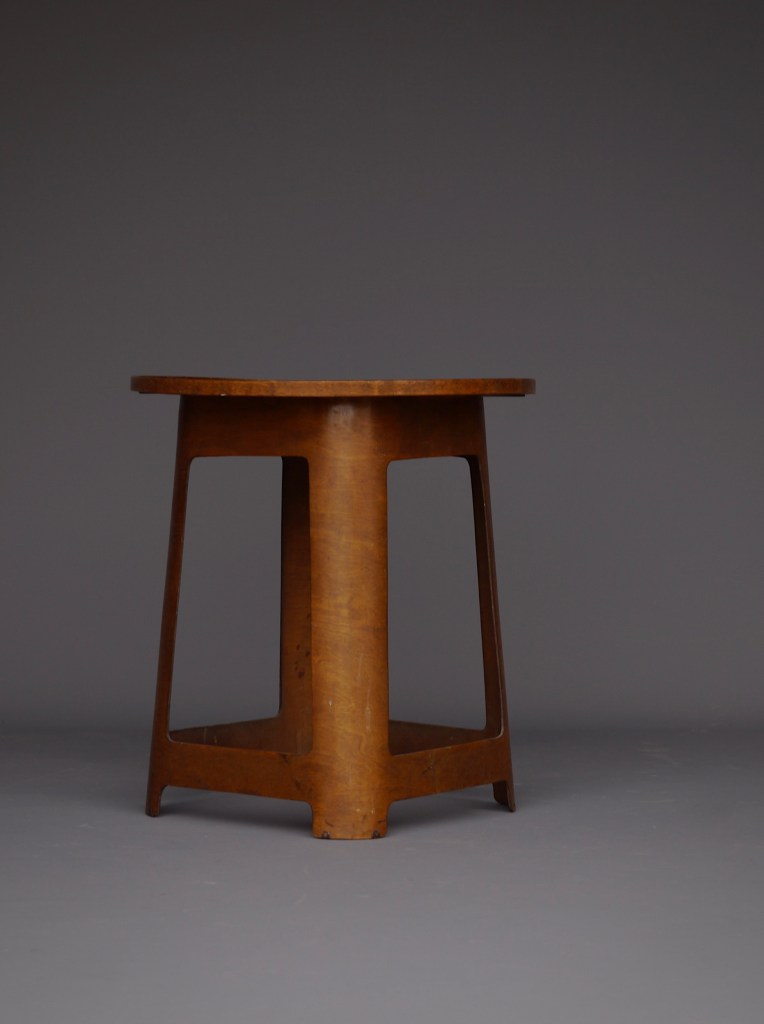

Venesta plywood table/stool for Isokon. 1930s
Plywood No.1 table/stool with its accompanying circular tray. Manufactured by Luterma. Both stool and tray are stamped/labelled Venesta.
The British furniture entrepreneur Jack Pritchard managed Venesta the import company for Luterma in England who later formed the Isokon furniture company which most notably employed Marcel Breuer. These tables/stools were distributed in England post 1933 until 1939 exclusively by Isokon alongside designs by Marcel Breuer and Egon Riss.
Although the designer of the stool remains anonymous, in 2004 the art historian Alastair Grieve described a modification of the original Luterma stool (of which this stool is one) when he wrote that the original design was subsequently re-designed by the architect and founder of the Bauhaus Walter Gropius (hired as a consultant to Isokon). The very slight alterations Gropius made was to include sharper curves to the cut-out squares of the stool. Gropius’s drawings for the redesign can reportedly be found in the collection of the V&A Museum, London.
The separate tray placed on top of the stool is unusual and rare in that it is much thinner than all other trays we have seen. This has led to some minor warping over time (which may have been why it was produced later with a thicker rim?) The thinner rimmed tray may suggest that this was an early production or at the least a more limited production?
h.46.5cm x w.44cm x d.44cm
Literature:-
Price: 3.650 euro
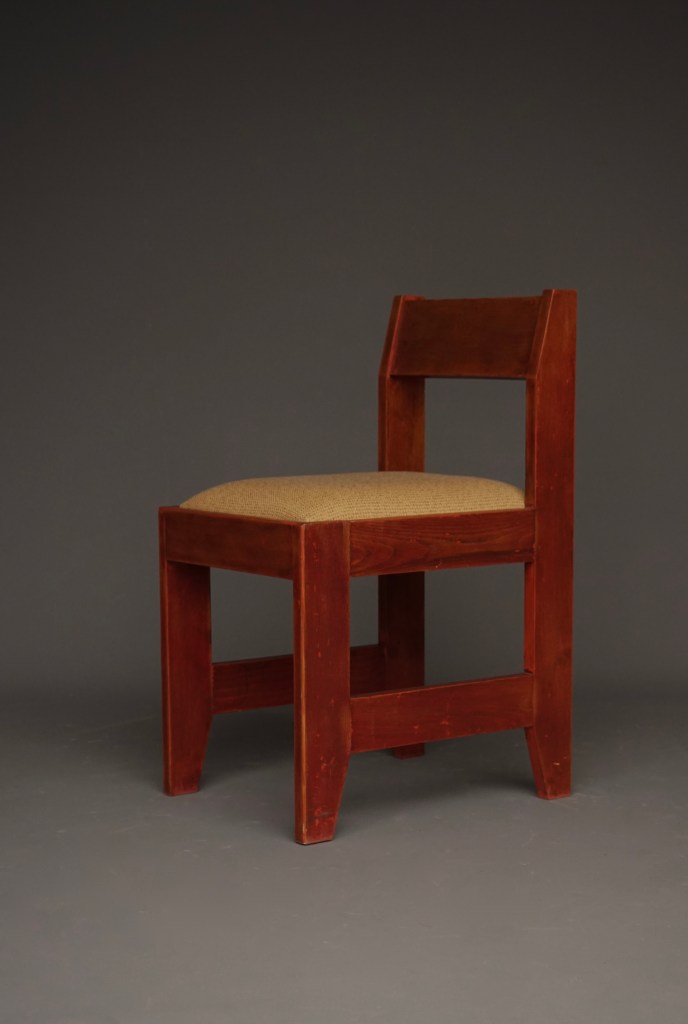
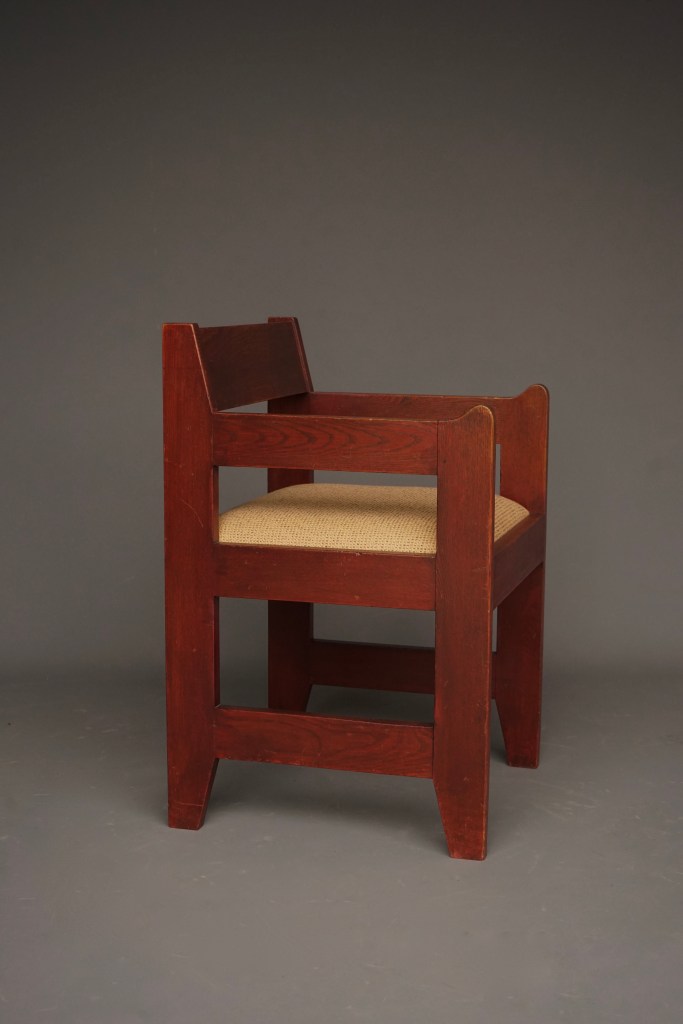
Modernist/Art Deco side chairs.
These Dutch oak chairs in the Haagse School (Hague School) style were manufactured in the early c20th circa 1920s-30s.
Price: 1,450 euro (per piece)
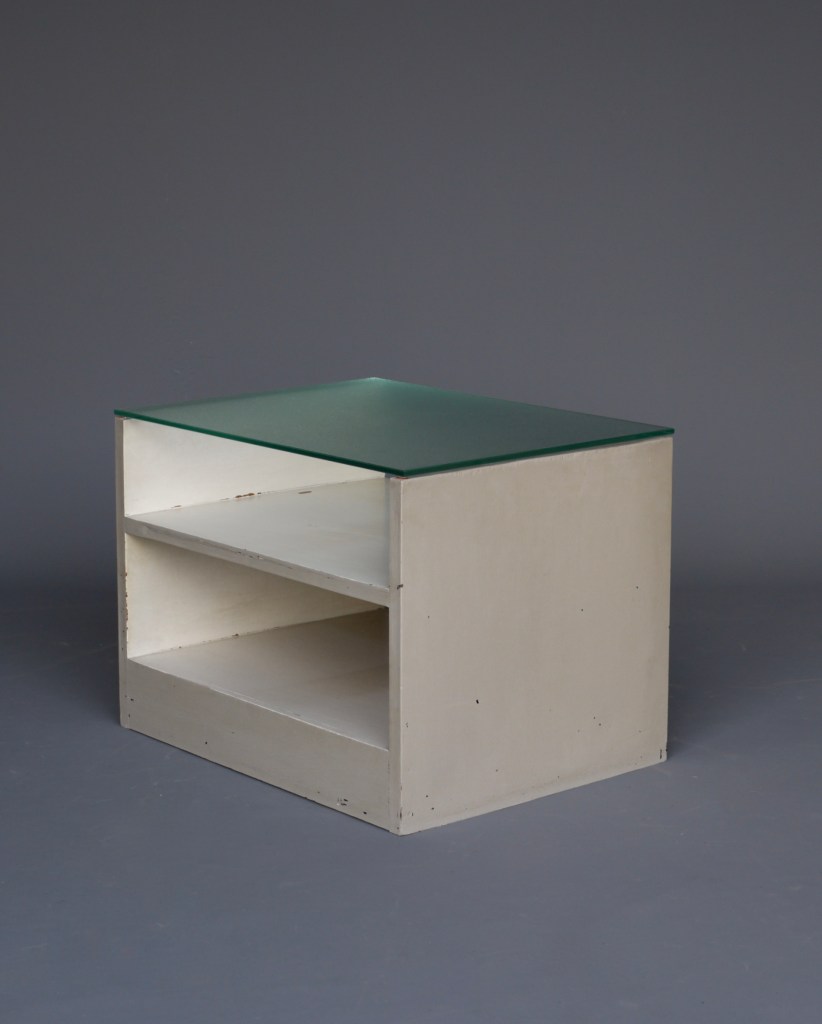
Simple Dutch open-ended bedside unit in the style of Gerrit Rietveld.
Circa 1950s.
Price: 695 euros
 [merzbau]