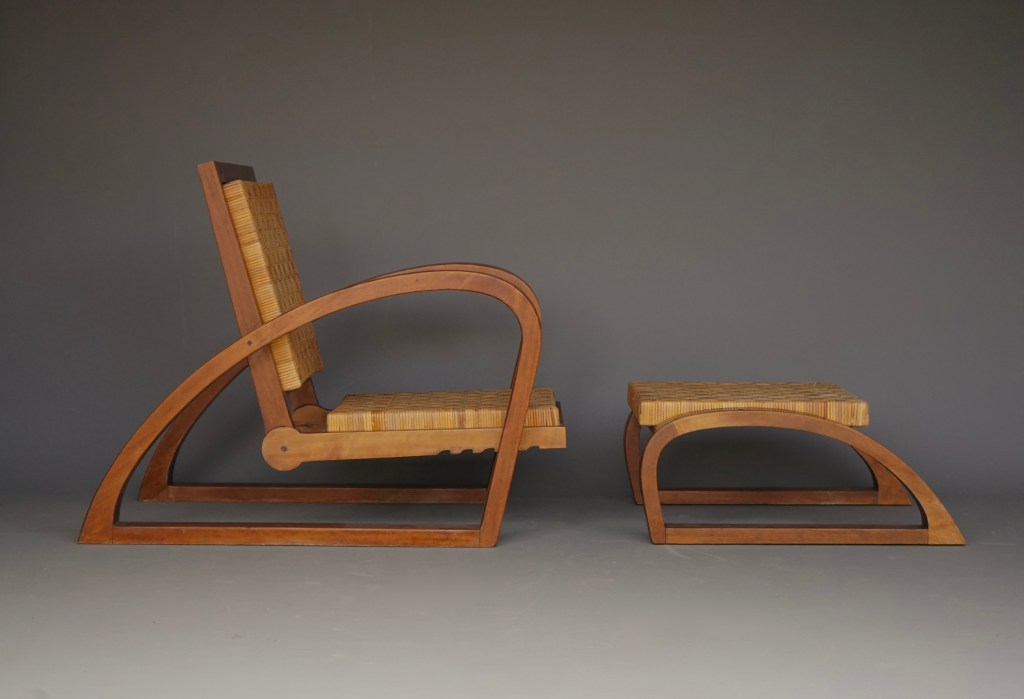
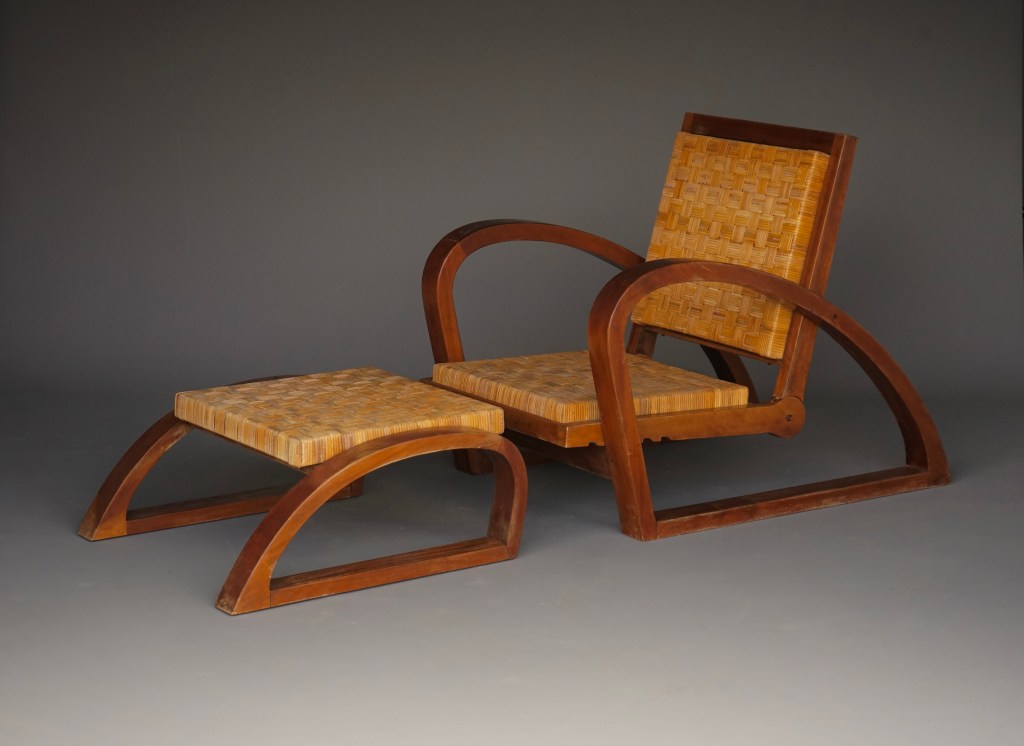
Haagse School / Art Deco settle / bench 1930s

Oak frame with drop-in seat and upholstered back. 103 x 59.3 x 102.6cm high.

A neat little bench in the Dutch art deco / Haagse School style. The upholstery is showing its age – It would benefit greatly from a complete re-upholstery (which we have taken into account when pricing it).

Price: 1.700 euro

http://www.merzbaufurniture.com

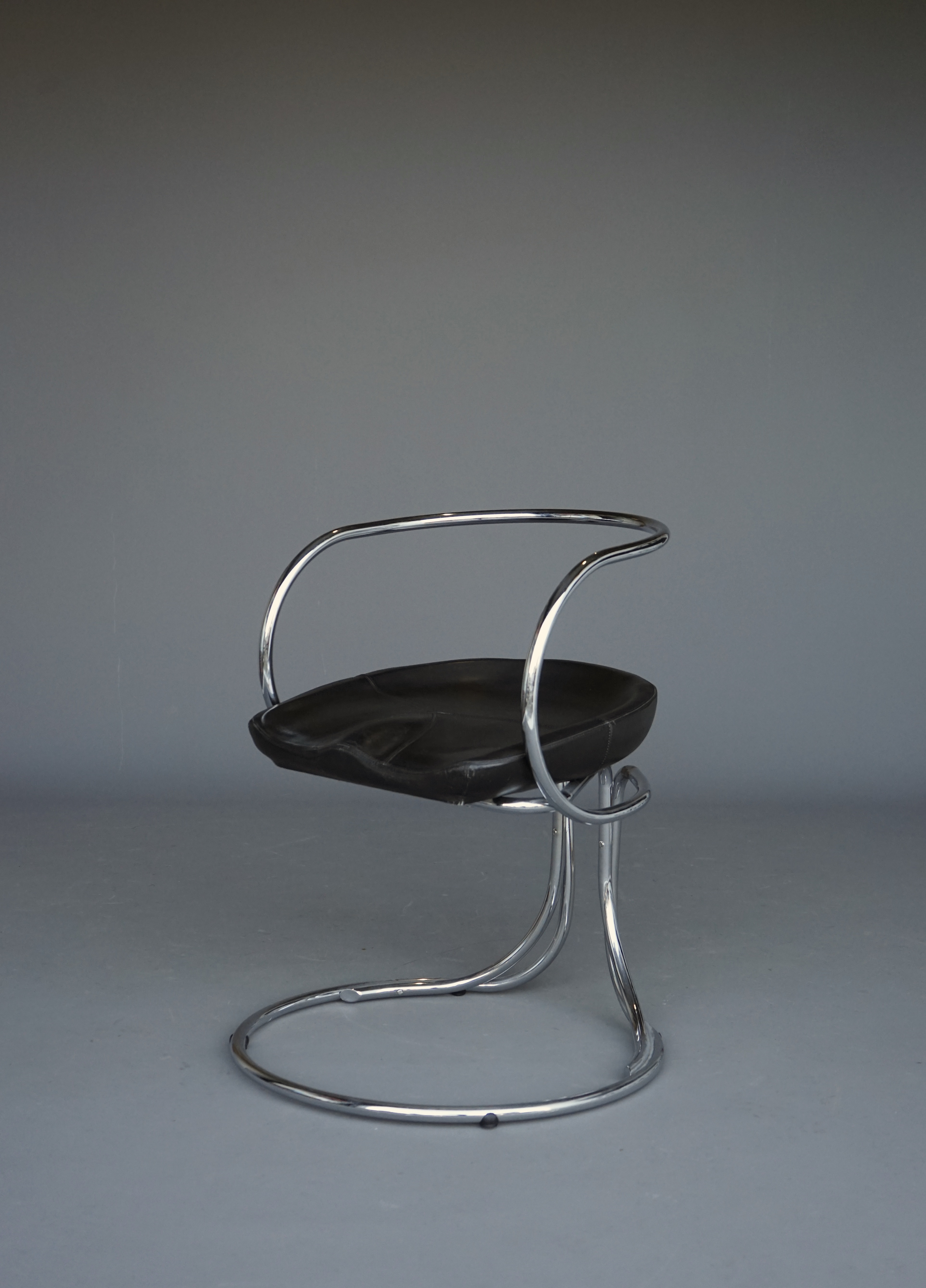
Vladimir Tatlin (Russia 1885-1953)

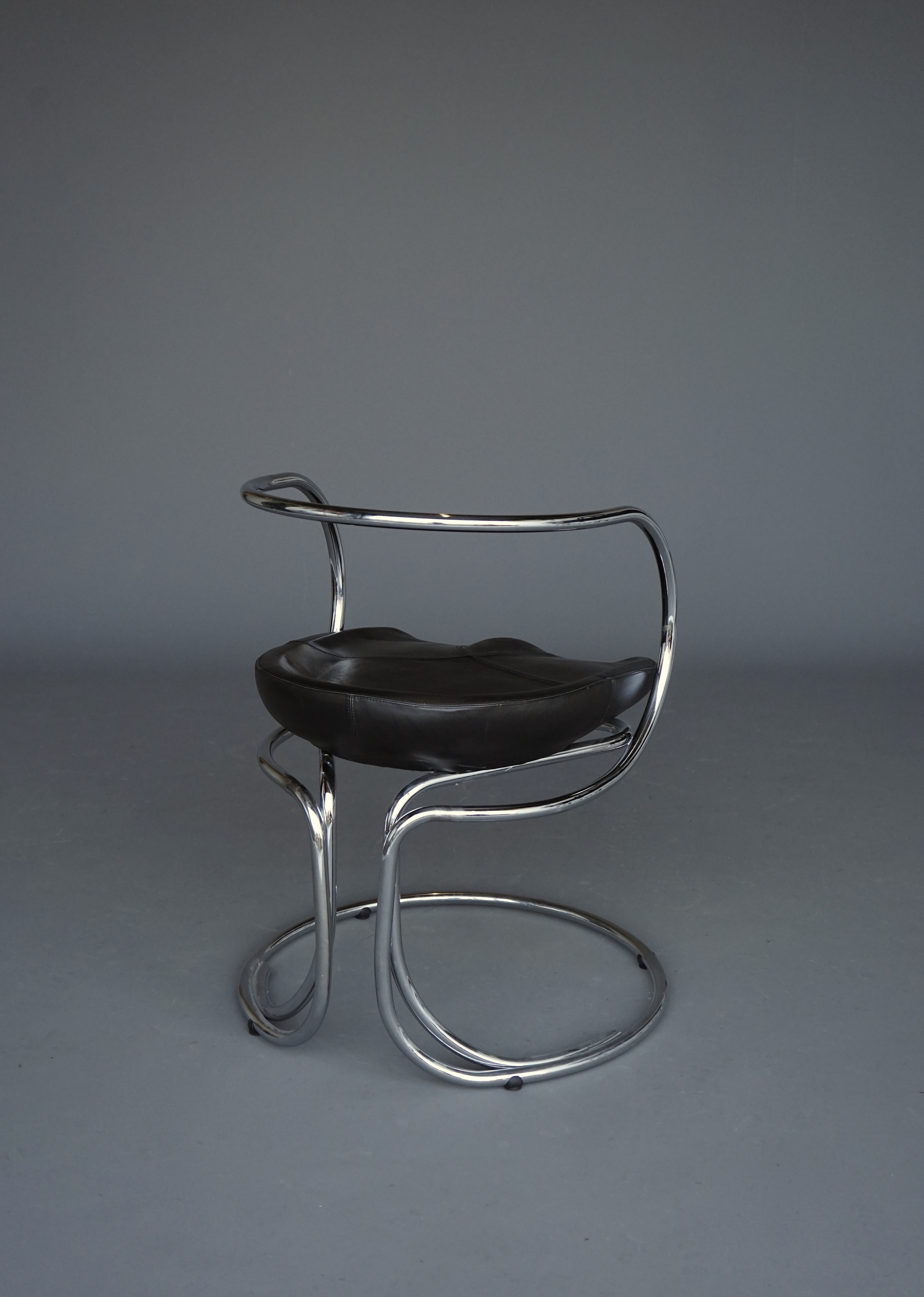
Tatlin Chair

Chromed steel tubular frame with black leather upholstered seat. 55cm x 70cm x 80cm high.

Vladimir Tatlin was a Russian and Soviet painter, architect, and stage-designer. Tatlin achieved fame as the architect who designed The Monument to the Third International, more commonly known as Tatlin’s Tower, which he began in 1919. With Kazimir Malevich he was one of the two most important figures in the Soviet avant-garde art movement of the 1920s, and he later became an important artist in the Constructivist movement

Designed by Russian constructivist Vladimir Tatlin (1885-1953) in 1927. The prototype for this chair was made initially in bent cane. From the 1950s it was manufactured by Nikol International, Italy with a tubular metal frame and leather seat.

Price: 1.450 euro

http://www.merzbaufurniture.com
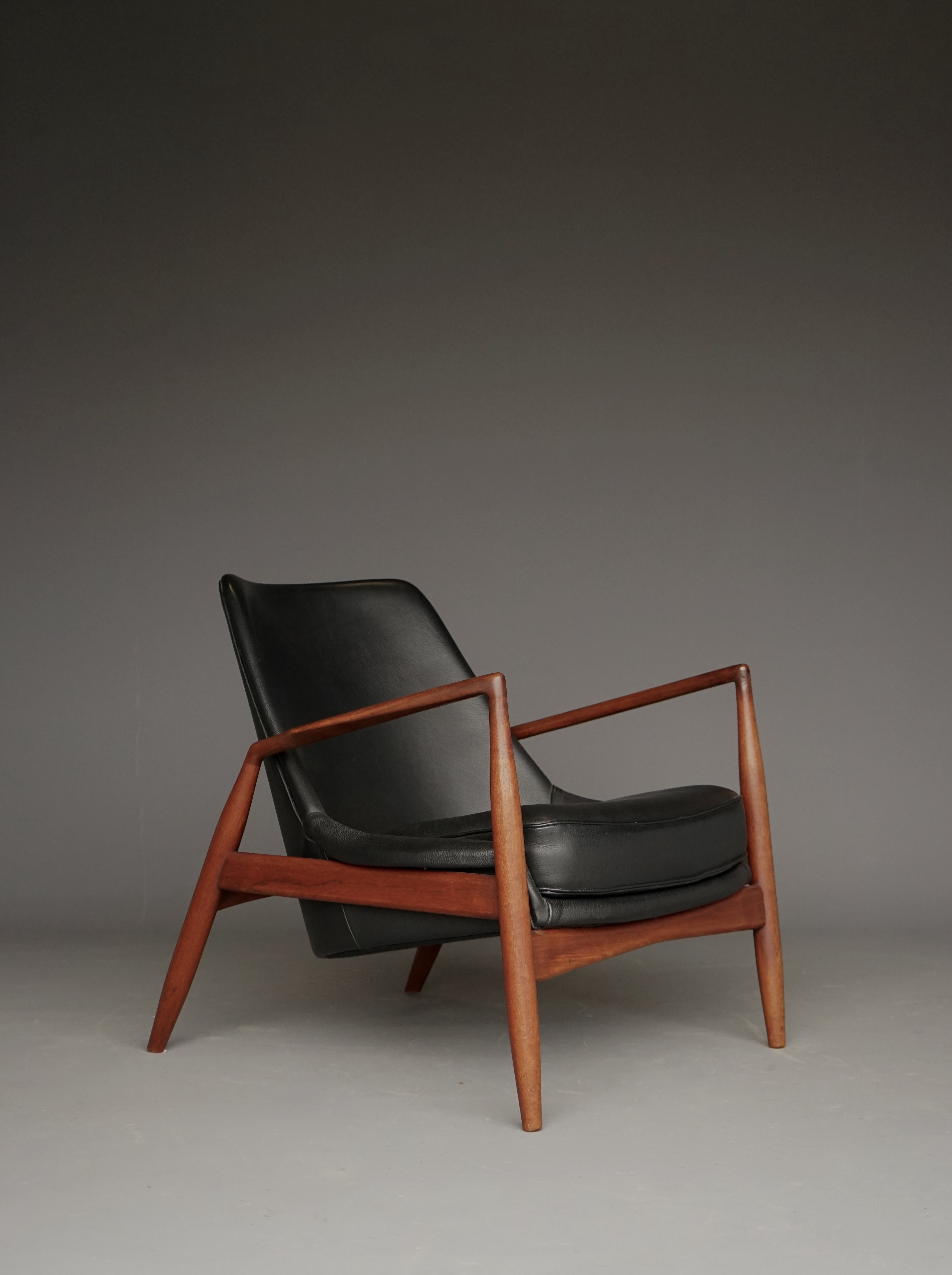
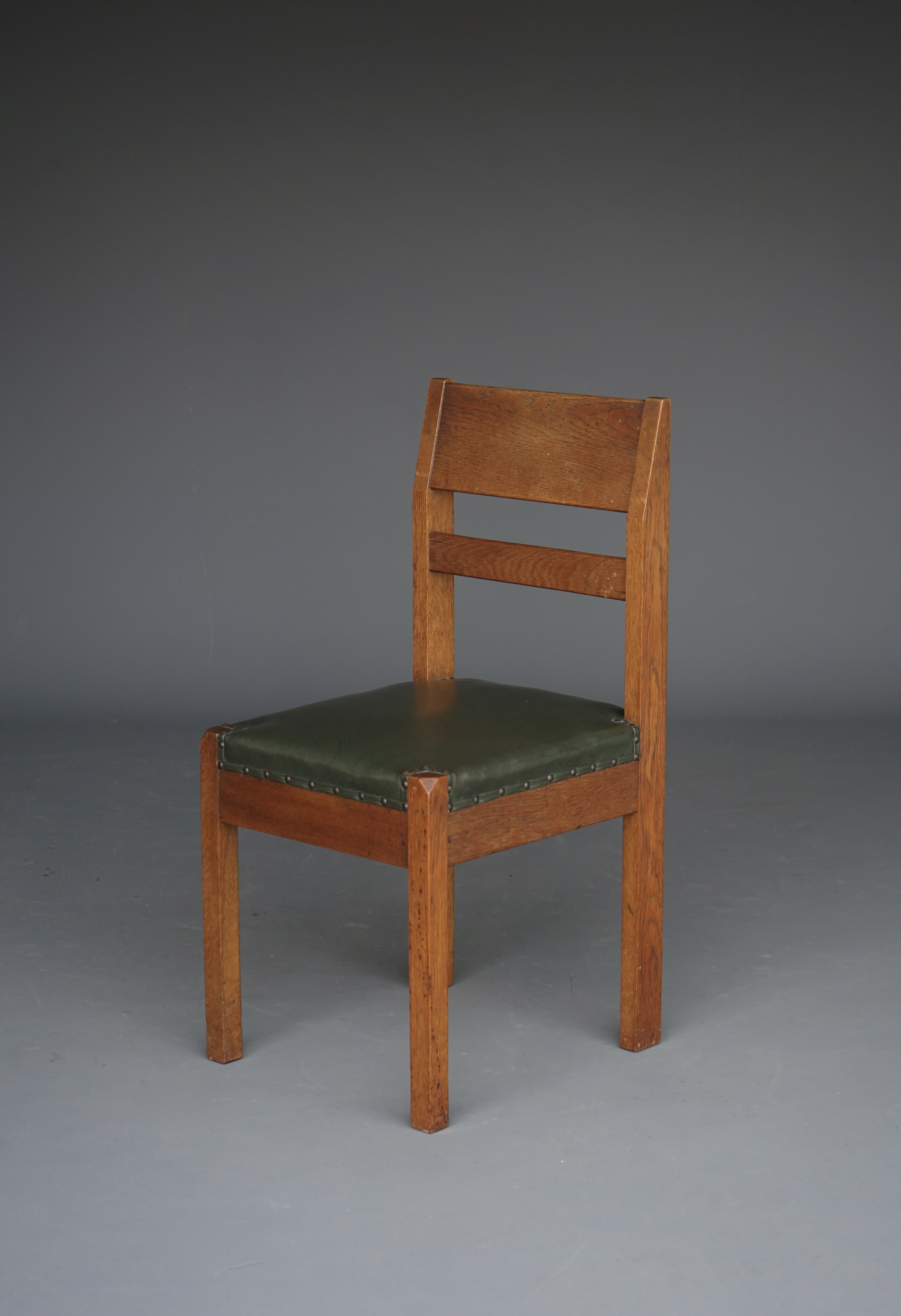
Piet Klaarhamer (Nl 1874-1954)

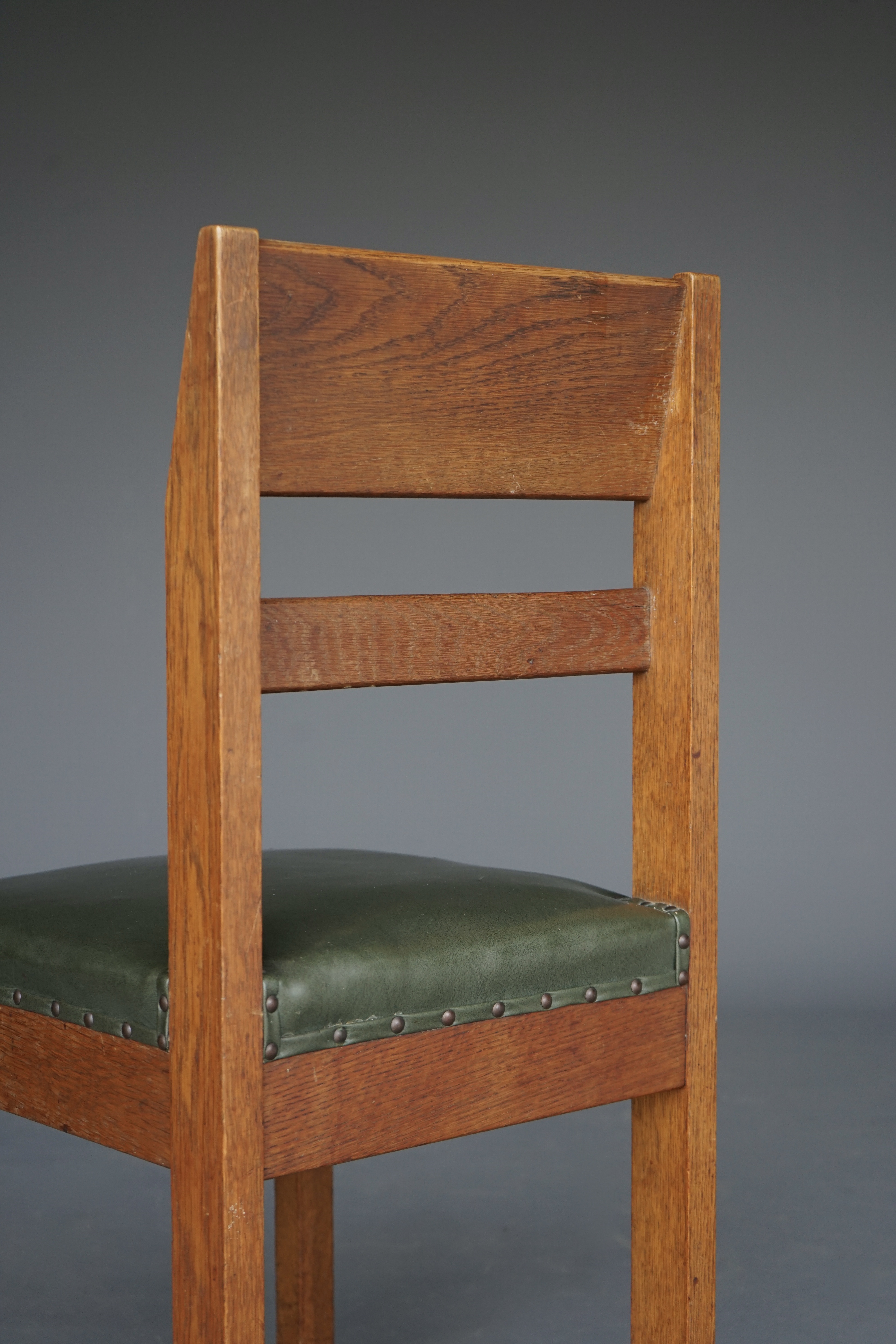
Pair of oak chairs with green leatherette upholstery. Circa 1917.

The early designs of modernist architect Piet Klaarhamer use simple, rudimentary constructions, and demonstrate an honest use of the materials used.

We have two of these chairs for sale – These important chairs were the first pieces of furniture that Klaarhamer designed that were produced in larger quantities around 1917, (although probably still manufactured in very limited numbers) by company called NV Nederlandse Meubel en Houtwarenfabriek in Zaandam.

Klaarhamer’s designs had a clear influence on his students, including the well-known architects Piet Elling and Gerrit Rietveld.
The design of this particular model (without arms) inspired Rietveld in the design of his well known ‘Military Chair’ in 1923. It is a design that is well documented in the monograph on Klaarhamer written by author/historians Marijke Kuper & Monique Teunissen*. This book details a letter (with a sketch of the chair) by Gerrit Rietveld to the architect J.J.P Oud.

Price: 2,400 euro (one sold / only one available)

http://www.merzbaufurniture.com

*Literature: Piet Klaarhamer Architect en Meubelontwerper. Marijke Kuper & Monique Teunissen, nai010. 2014

Leonard Wyburd (Uk 1865-1958)

Liberty & Co ‘Thebes stool‘. Designed by Leonard Wyburd. Mahogany 44 x 40 x 34cm high.

(Evidence of a previous Liberty & Co label to underside).


Manufactured circa 1880s whilst Wyburd was head of the furniture and decoration studio at Liberty’s of London.
As the stool’s name implies, the design of this tripod stool was modelled on ancient Egyptian typologies. The design was the basis of similar stools presented later by both Josef Frank and Adolf Loos (as seen at the Möbelmuseum Wien).

Price: 2.200 euro

http://www.merzbaufurniture.com
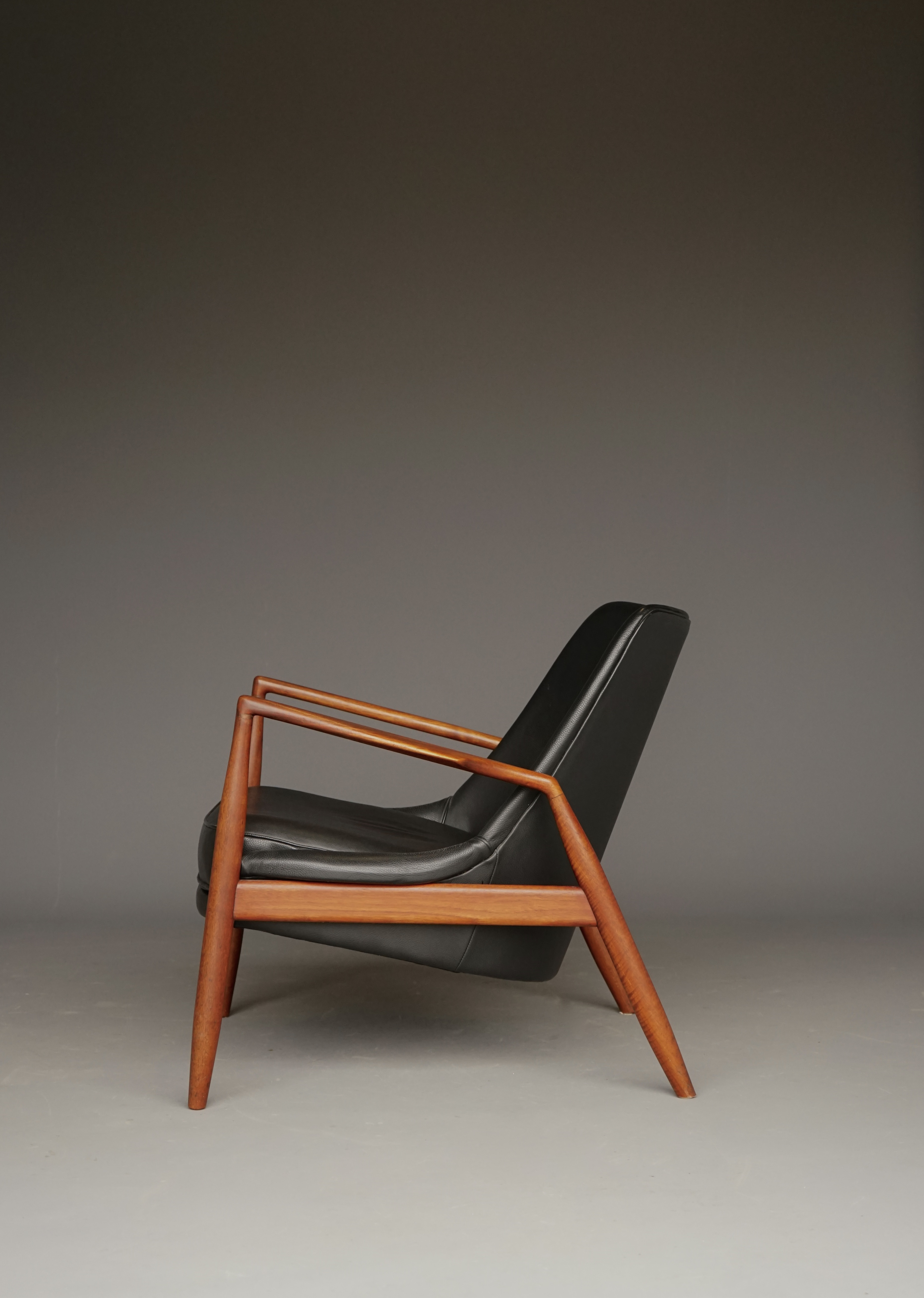
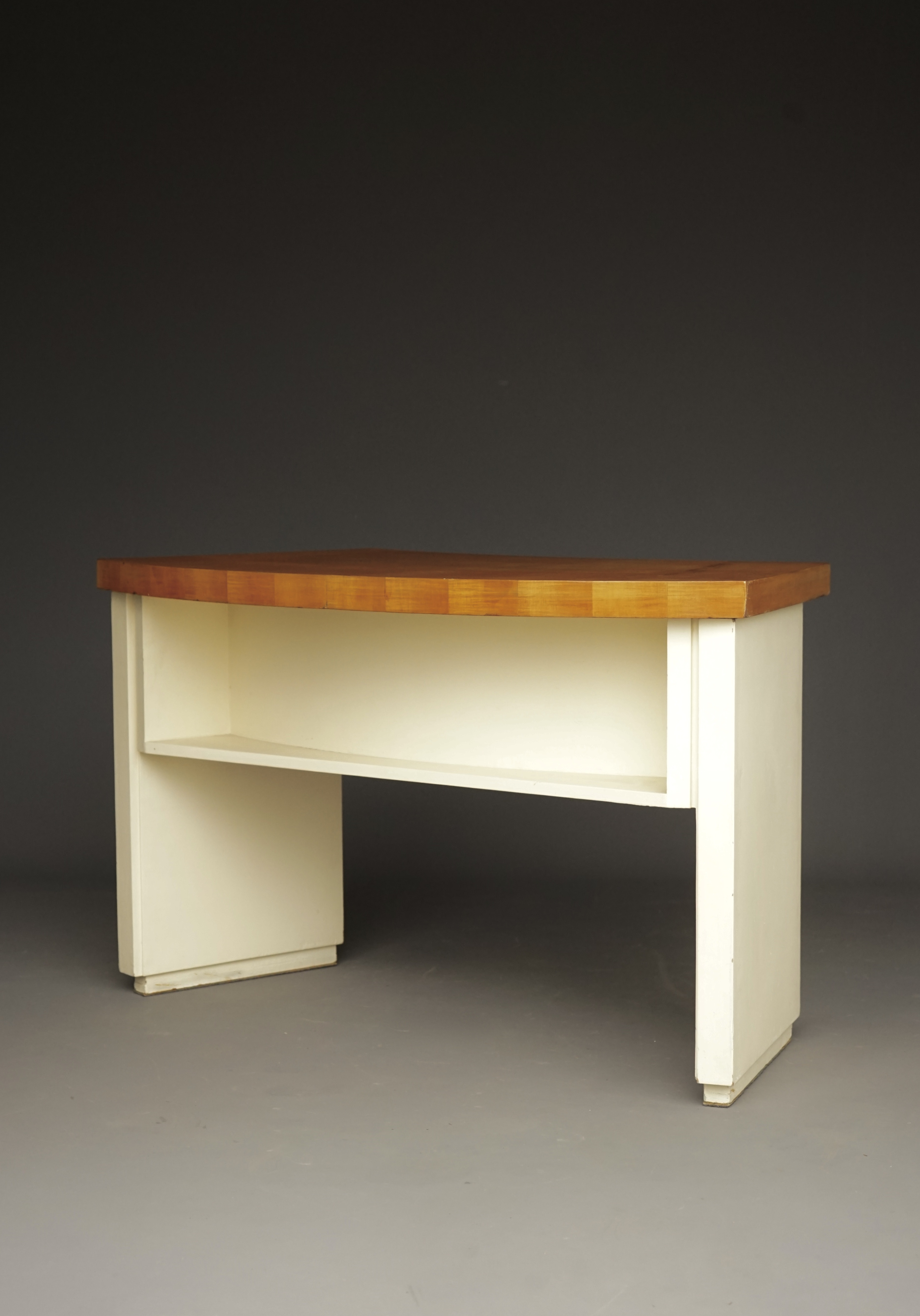
Gebroeders Reens desk

Gebroeders Reens (Nl early-mid-c20th)

Amsterdam desk 1930s

126 x 64 x 75.5cm high. Maple/birch and lacquered wood

A small a Dutch 30s art deco/modernist curved desk. Warm maple veneer with off-white lacquered wood.
This double-sided/freestanding desk was part of the interior of the jewellery shop S.Spyer located at the Koningsplein in Amsterdam. In 1929-1930 the shop was redesigned by Amsterdam architect Harry Elte, giving the shop a more modern Art Deco shopfront and interior. The furniture was executed by the Gebroeders Reens company. (original key monogrammed ‘R’).

Price: 2.700 euro

http://www.merzbaufurniture.com
model 3 desk lamp

Sybold van Ravesteyn (Nl 1889-1983)

Model 3 desk lamp. Metal & lacquered wood.

_Originally designed in the 1926, a few limited productions of the design were manufactured in the 1970s. This particular lamp is a very rare 1970s production that was the most faithful to the original series of only 8 lamps that were made. This version has wooden black and white sections (like the original). It has a screwed in metal plate around the two switches (like the original) and a cleaner top edge (without a plastic protector shield that some versions have)
.
12 x 10.5 x 26.5cm /without bulb

Lit: Sybold van Ravesteyn architect; Kees Rouw, Nai010 uitgevers/publishers, 2014 pp.59

Price: 2.850 euro

http://www.merzbaufurniture.com
Abstract sculpture

1970s Brutalist abstract sculpture. Unsigned.

A large basalt stone sculpture composed of simple modernist/architectural forms. At some time this sculpture has stood in a garden which has resulted in a thin layer of moss on some parts.

It measures 36 x 12 x 45cm high.

Price: 1.650 euro

http://www.merzbaufurniture.com
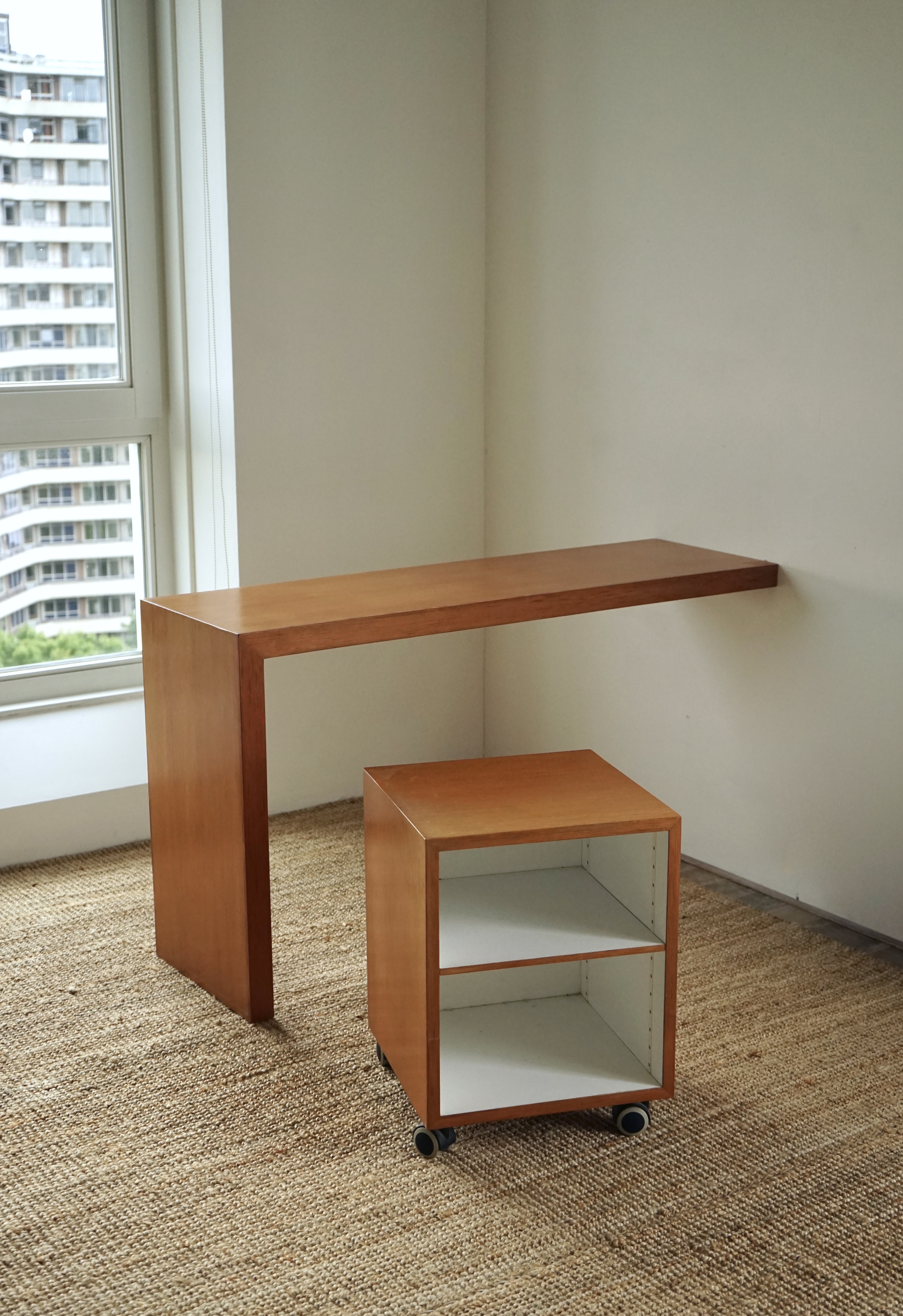
Wim den Boon (Nl. 1912-68)

A small wall mounted oregon pine desk (ladies desk) with accompanying drawer unit.

128 x 39.5 x 72cm high
Designed and made to commission for a private residence in Laren, NL in the 1960s (Like much of den Boon’s work this item documented at the Het Nieuwe Instituut, Rotterdam). It was initially designed to work as a vanity unit, although nowadays can be used as a neat little desk.

Purchased from its initial owner who commissioned it amongst other furniture specifically for their home.

Between the 1950s & 60s, Dutch designer and architect Wim den Boon was at the height of his powers. His success alongside other designers as ‘Group &’ (including Hein Stolle, etc.) and later with Goed Wonen lay in the fact that his purist design of the interiors and furniture fitted in seamlessly with the functionalist design of the late thirties. (Goed Wonen was a foundation and leading magazine formed after the war with the aim of “raising the standard of living in the Netherlands by improving home furnishings in the broadest sense of the word…”)

Den Boon wrote several articles for Goed Wonen – His articles are almost without exception educational, presenting readers sometimes quite forcibly with the liberating nature of the new design. His polemical character, stubbornness, and especially the strongly didactic tone of his articles was too much for many employees and readers of Goed Wonen and in 1950 the editors forced him to resign. It was also around 1950 that he broke his relationship with ‘Groep &’ and established himself as an independent interior designer in The Hague. From then on, his interior designs are increasingly characterised by a very careful treatment of the space that can be very strict, deliberate, and sober but also highly refined. Throughout this golden period of the 50s-60s, an extensive oeuvre was created, varying from small renovations and furniture designs to complete new construction projects for private individuals such as those who commissioned this piece.

This is a unique piece of Dutch mid-century modern design history (please note that we are also selling other items that came out of the same house)

Minor superficial wear and tear. A scratch to the top of the drawer unit and some minor discolouring.

Price: 1.500 euro

http://www.merzbaufurniture.com