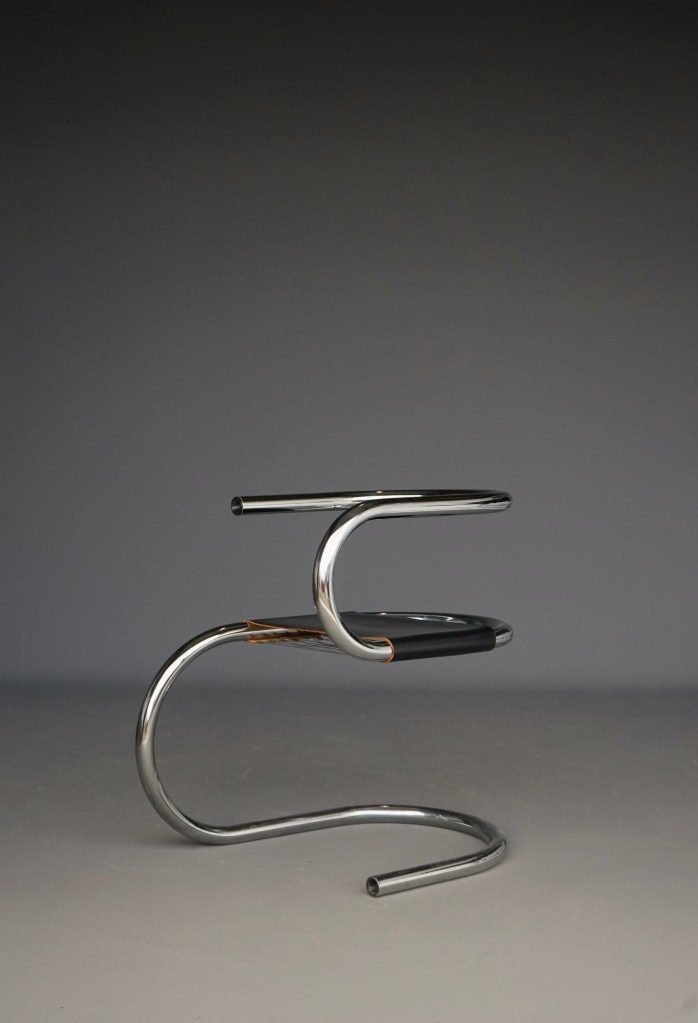
chromed steel tube with leather slung seat. 48.5 wide x 67 deep x 73cm high.
Wim van den Bergh is an architect, writer, and professor of Housing and Design at RWTH Aachen.
An 80s homage to early modernism this is a highly elegant and rare chair: Only 30 examples of this chair were ever produced (by hand) of which the first prototype was commissioned by Museum Boijmans van Beuningen in Rotterdam in 1981.
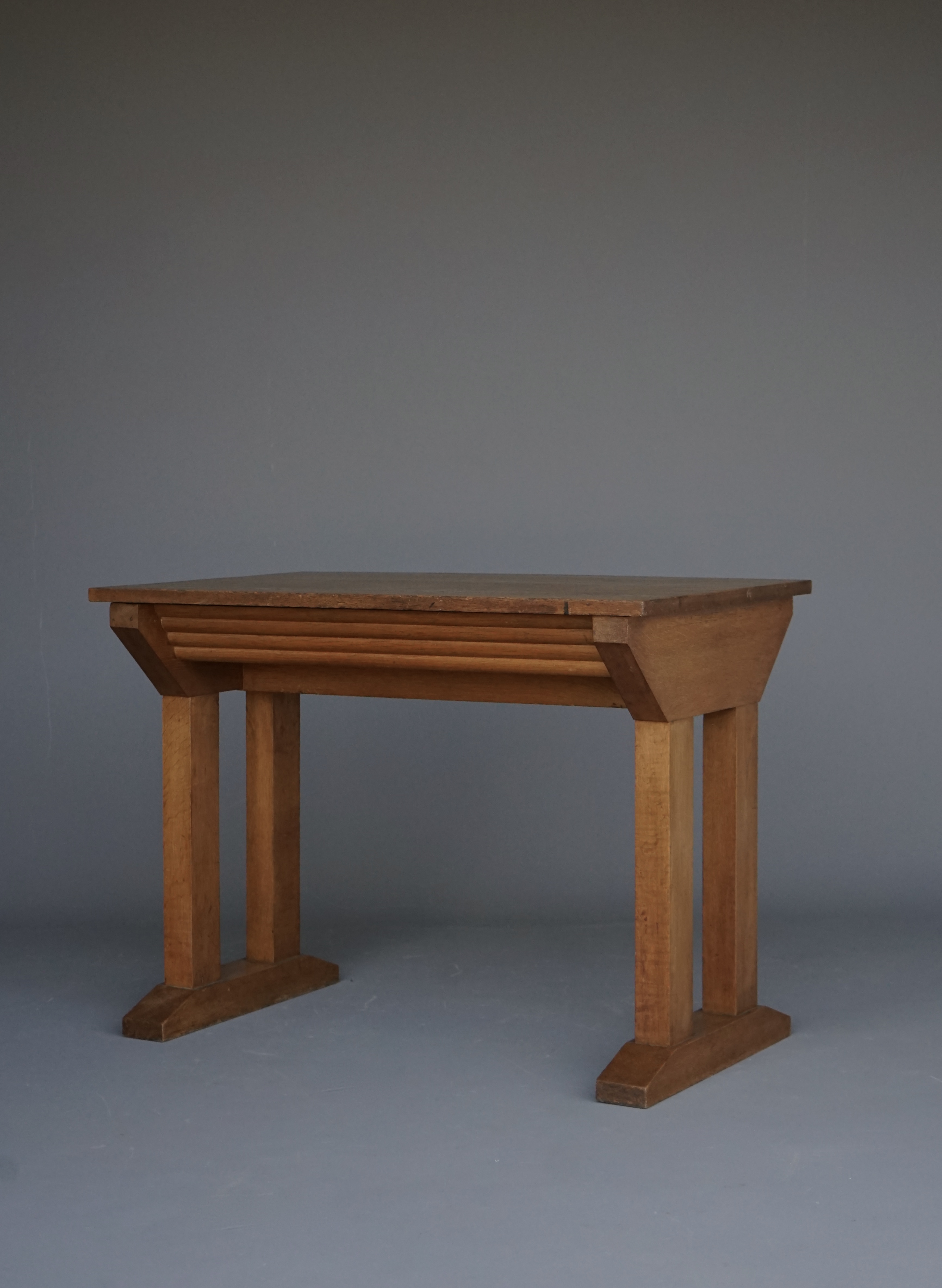
Dutch oak constructivist table. A simple designed small side table (or desk) that combines classical and geometric block components to form a bold design table with quite an architectural feel to it.
There are some old marks and patina from years of use, but overall it is in good solid condition.
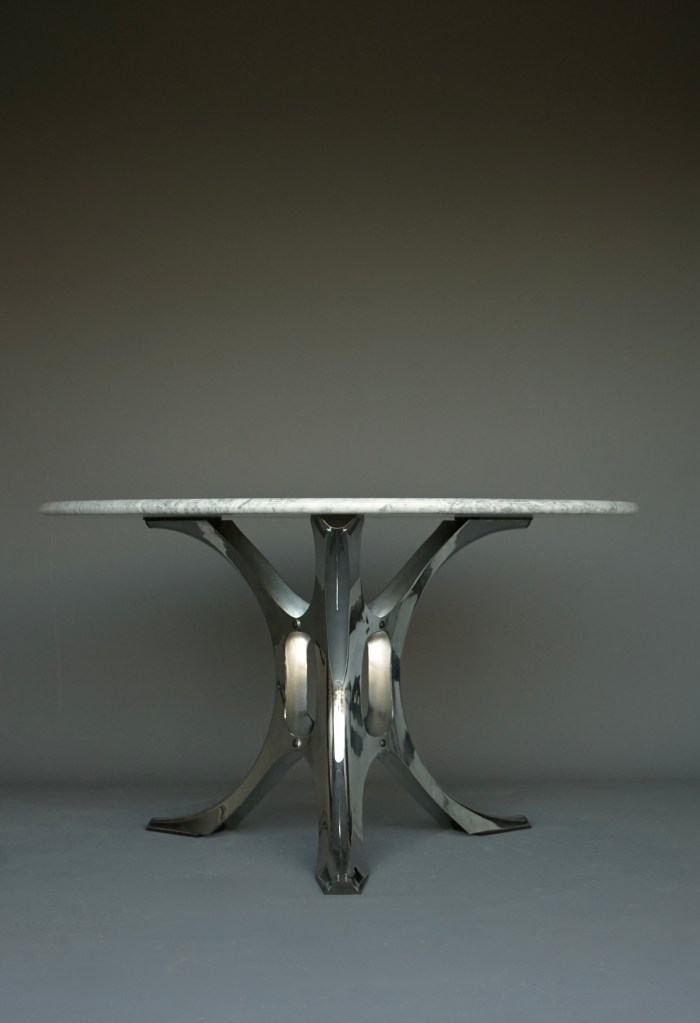
The bumper table is undoubtedly Martin Visser’s most intriguing design, the baroque translation from 1965 of his table base tz06 from the early 1960s. The development of Martin Visser’s bumper table provides insight into and understanding of his design processes: The table’s main feature is its reversible tripod base, later called ‘Abusir’ – Seemingly simple with the three points on the floor and three points to carry the top (in the history of furniture the tripod table is known to be the most stable structure).
Only two series were produced in very limited numbers due to the technical difficulties of manufacturing the base. Spectrum Furniture (‘t Spectrum) manufactured the table as several versions that varied in height, width, materials and finishes – this version with the white carrara marble top.
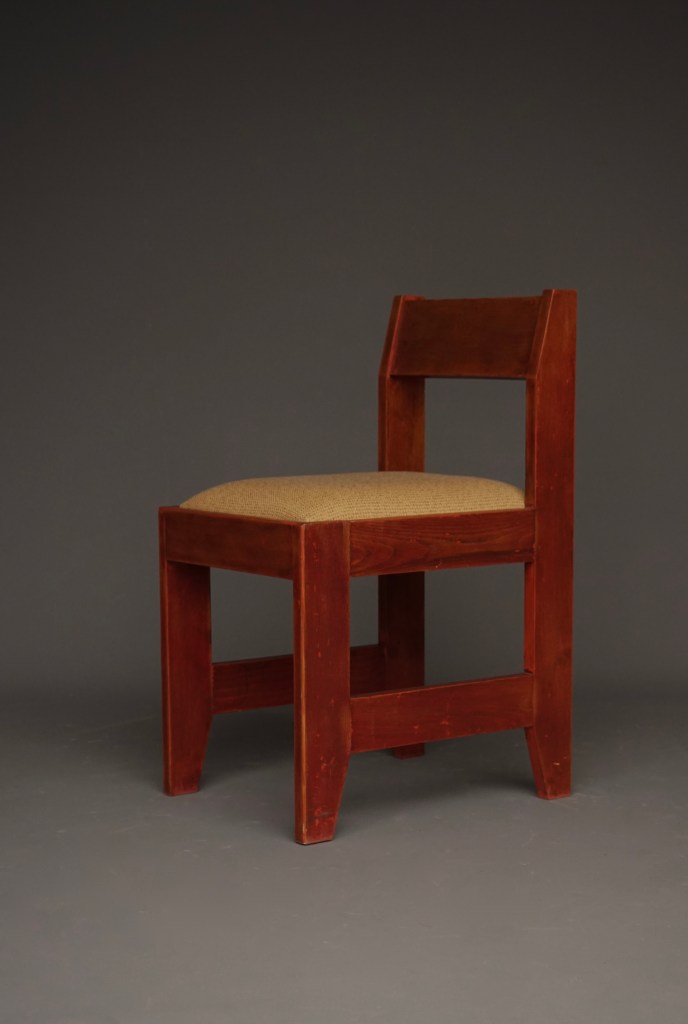
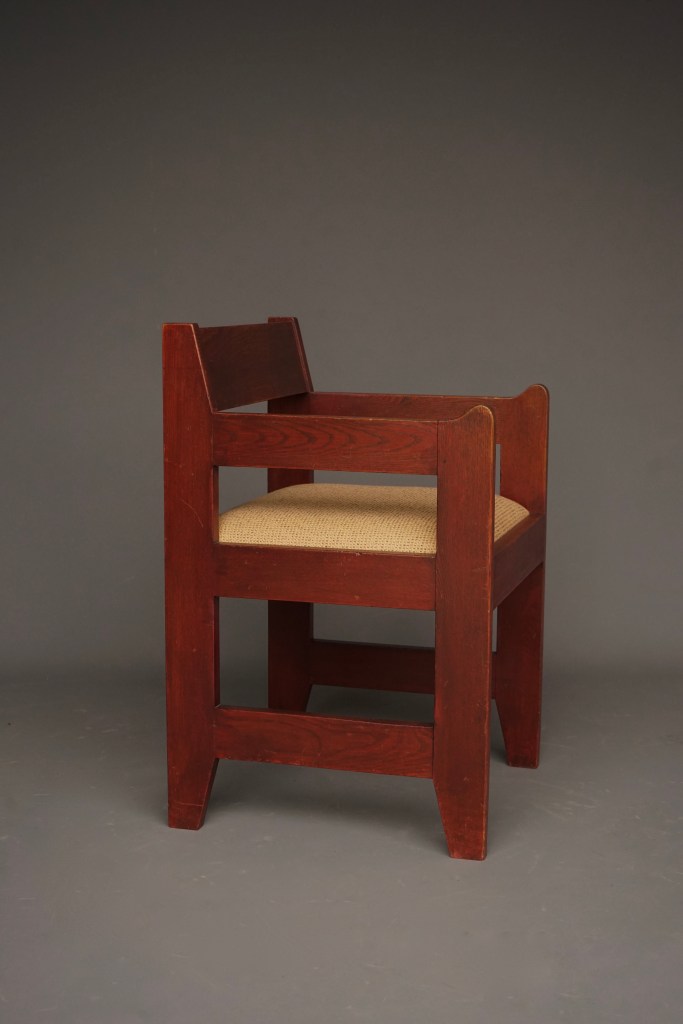
Brutalist / Structuralist chair. Netherlands. Circa 1960s/70s.
Steel & leather/hide.
An interesting architectural chair. Its construction and manufacture lead us to believe that it is possibly a prototype? – Its design reflects the style of post-war structuralist architecture/interiors typical of several Rotterdam architects from the period. (we are still researching the design).
The model 020 ‘Stick’ chair was designed by Dutch industrial designer Bruno Ninaber van Eyben in 1977.
The design is made up of three constituent parts that fit together: two pieces of angled plywood and a length of stick with a round profile. The stick in the middle connects the plywood pieces and functions as the backbone and strength of the chair.
These rare chairs were manufactured in very limited numbers due to the production costs and difficulties. Only 150 of these chairs were produced. Apart from its low production numbers the other reason that so few exist is because they can easily get damaged – Due to the stool’s fragility we recommend that it should be purchased by a design lover that appreciates its sculptural qualities rather than its functionality!




 [merzbau]