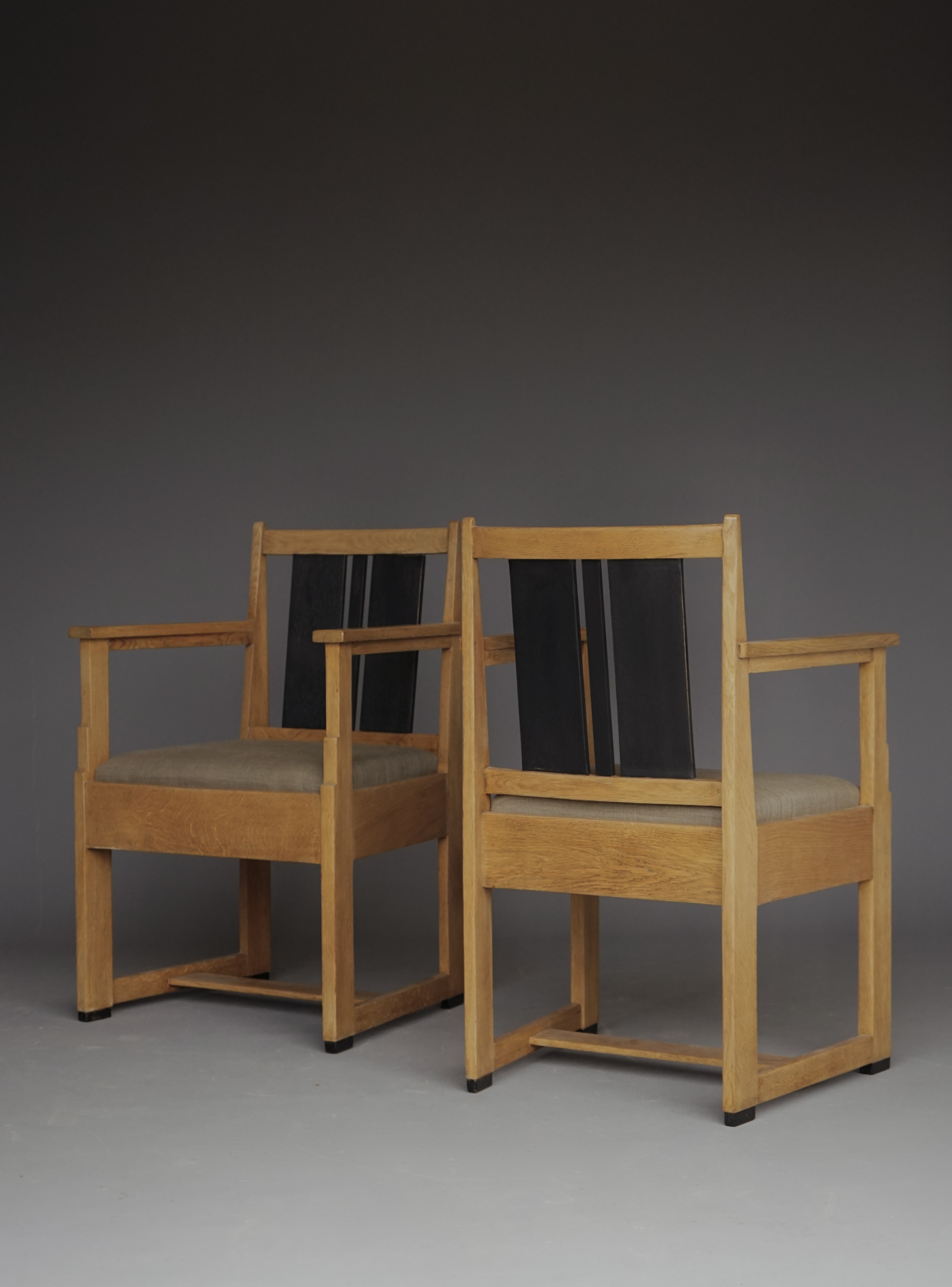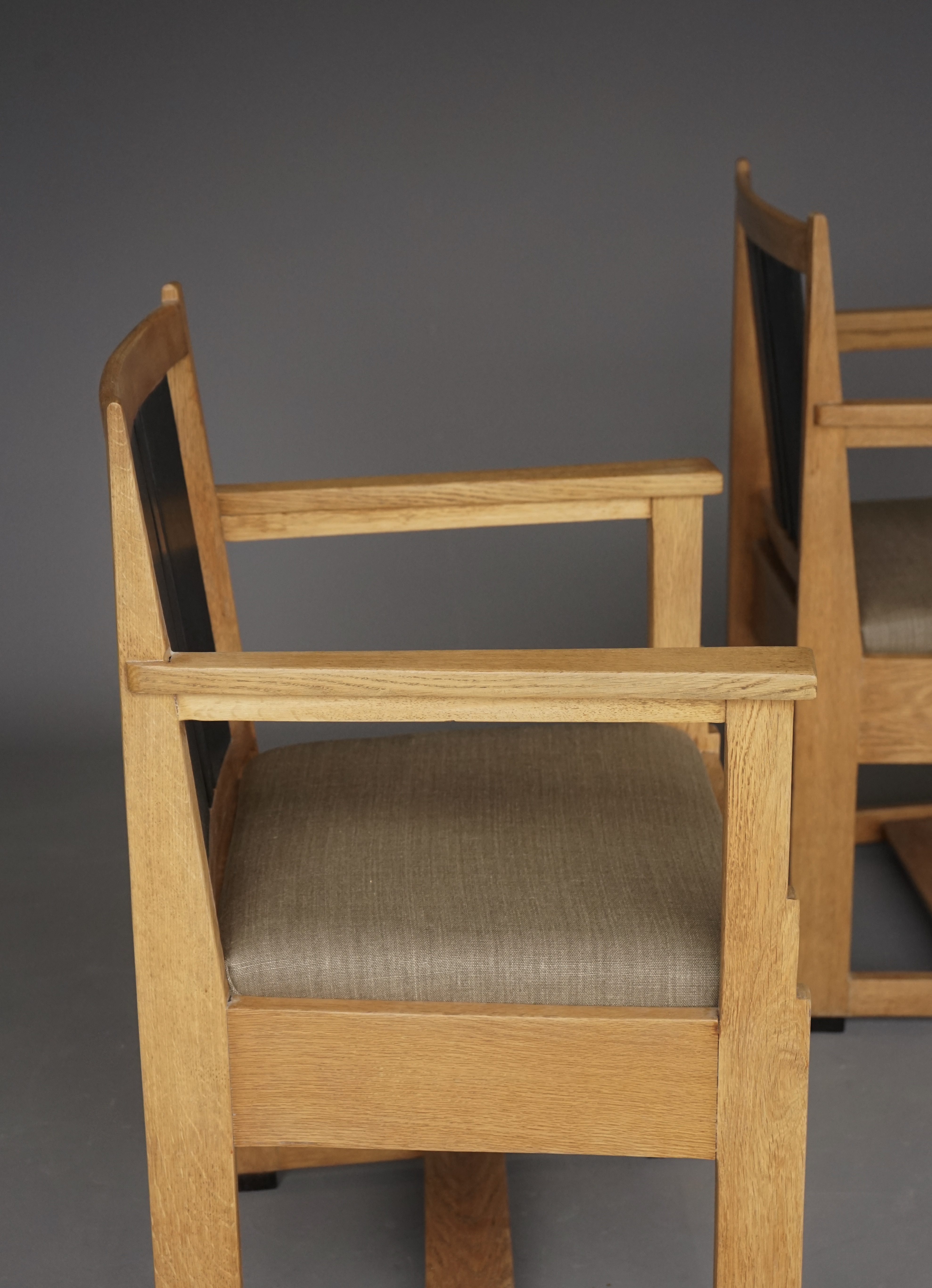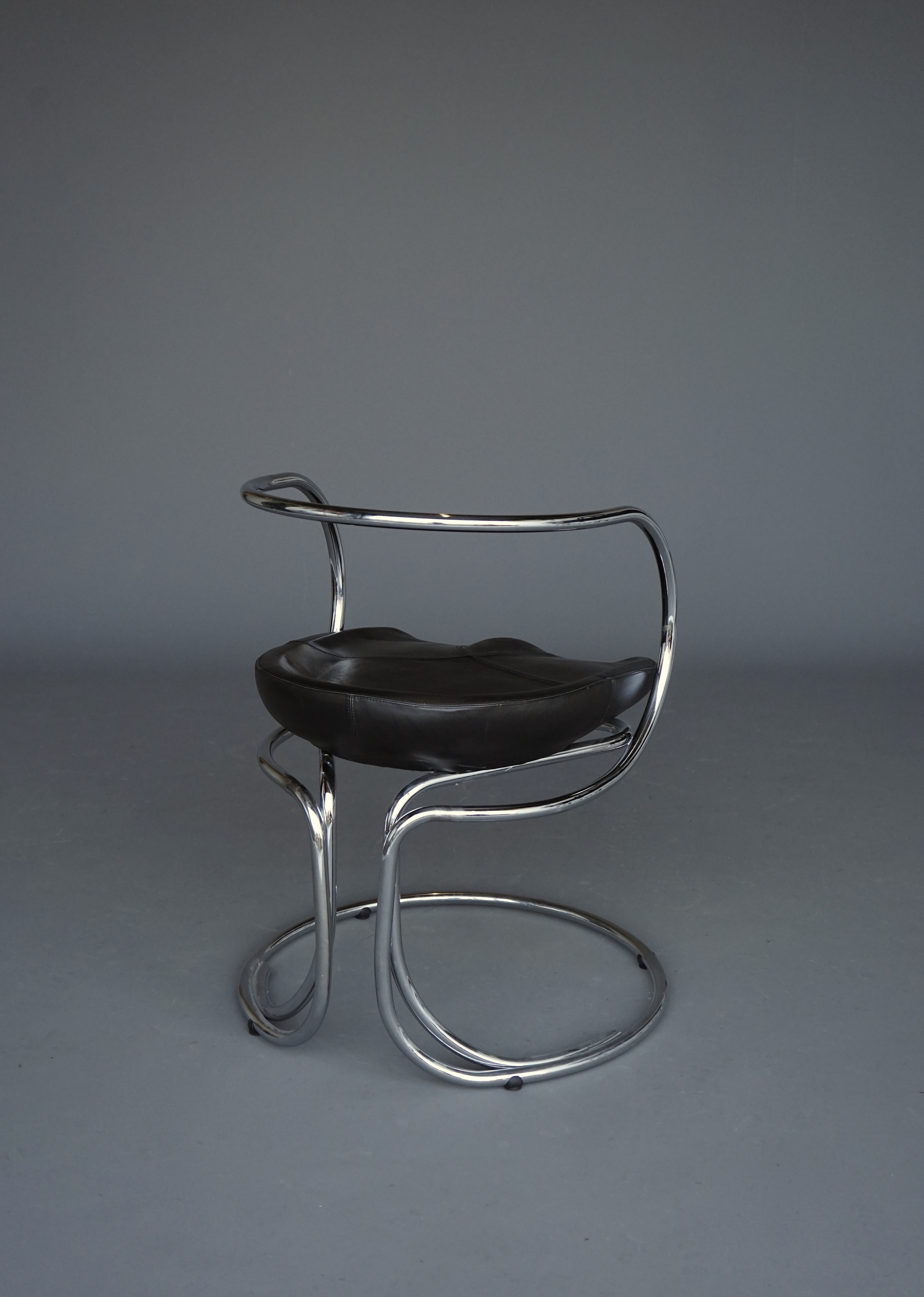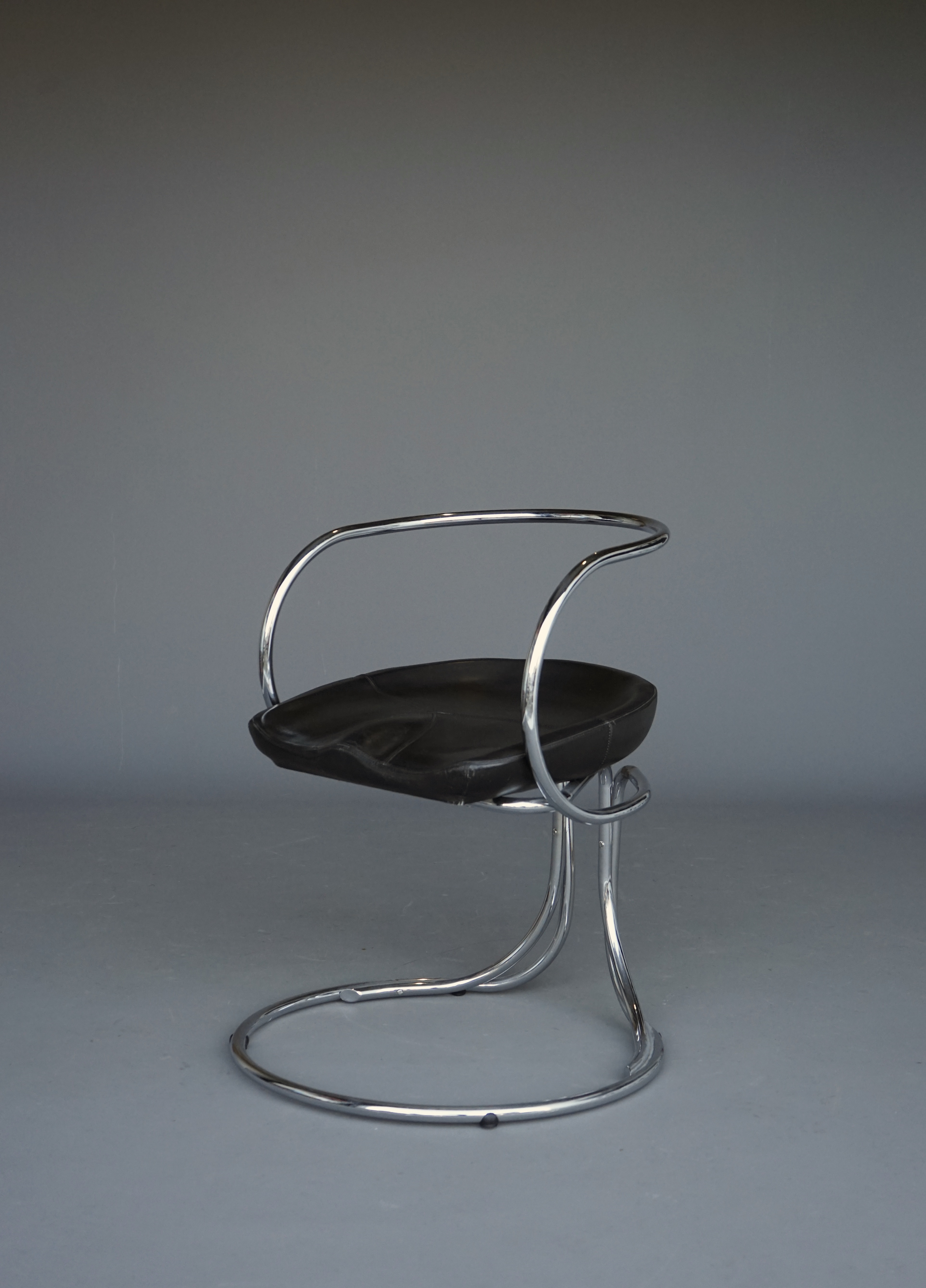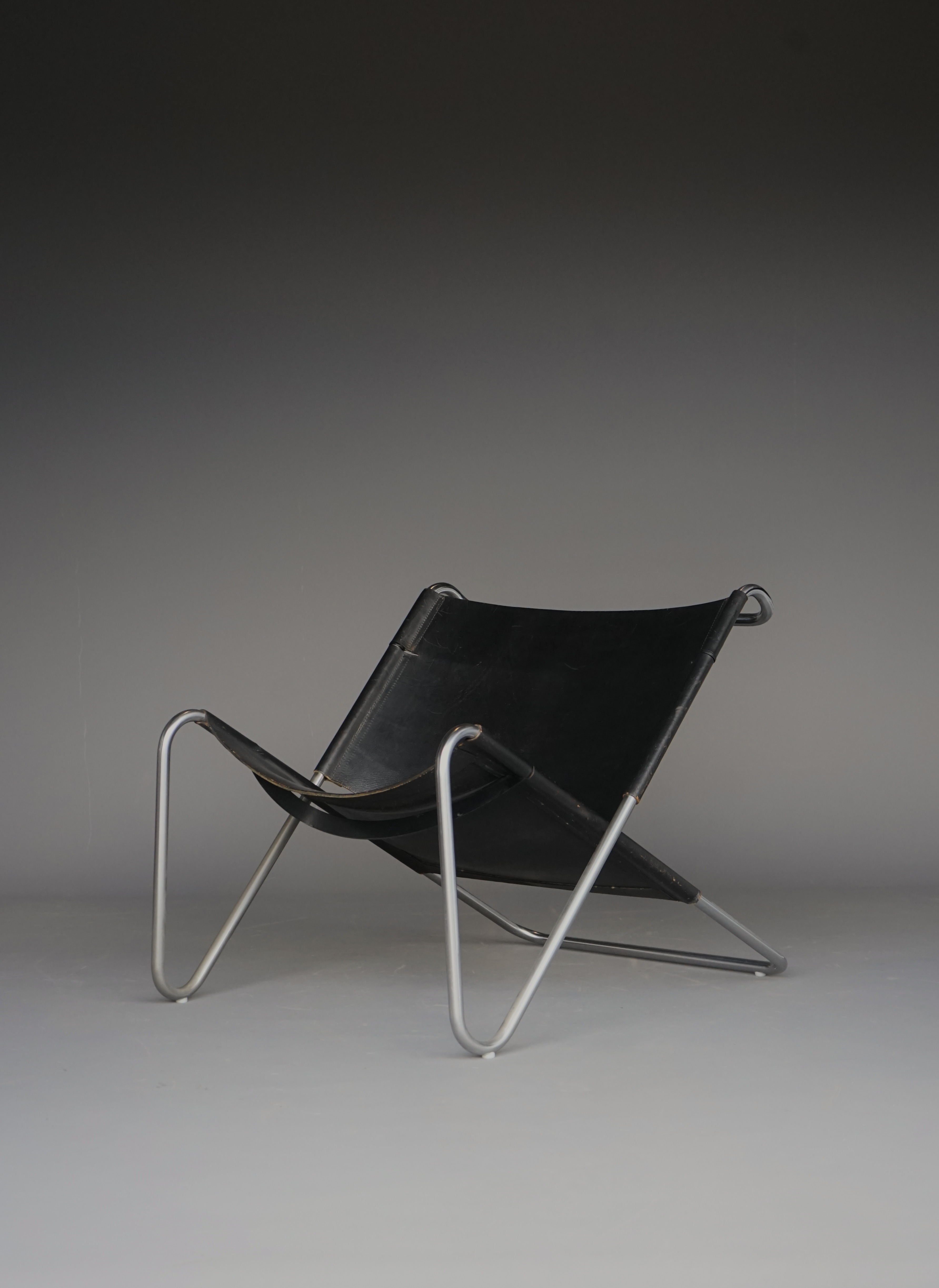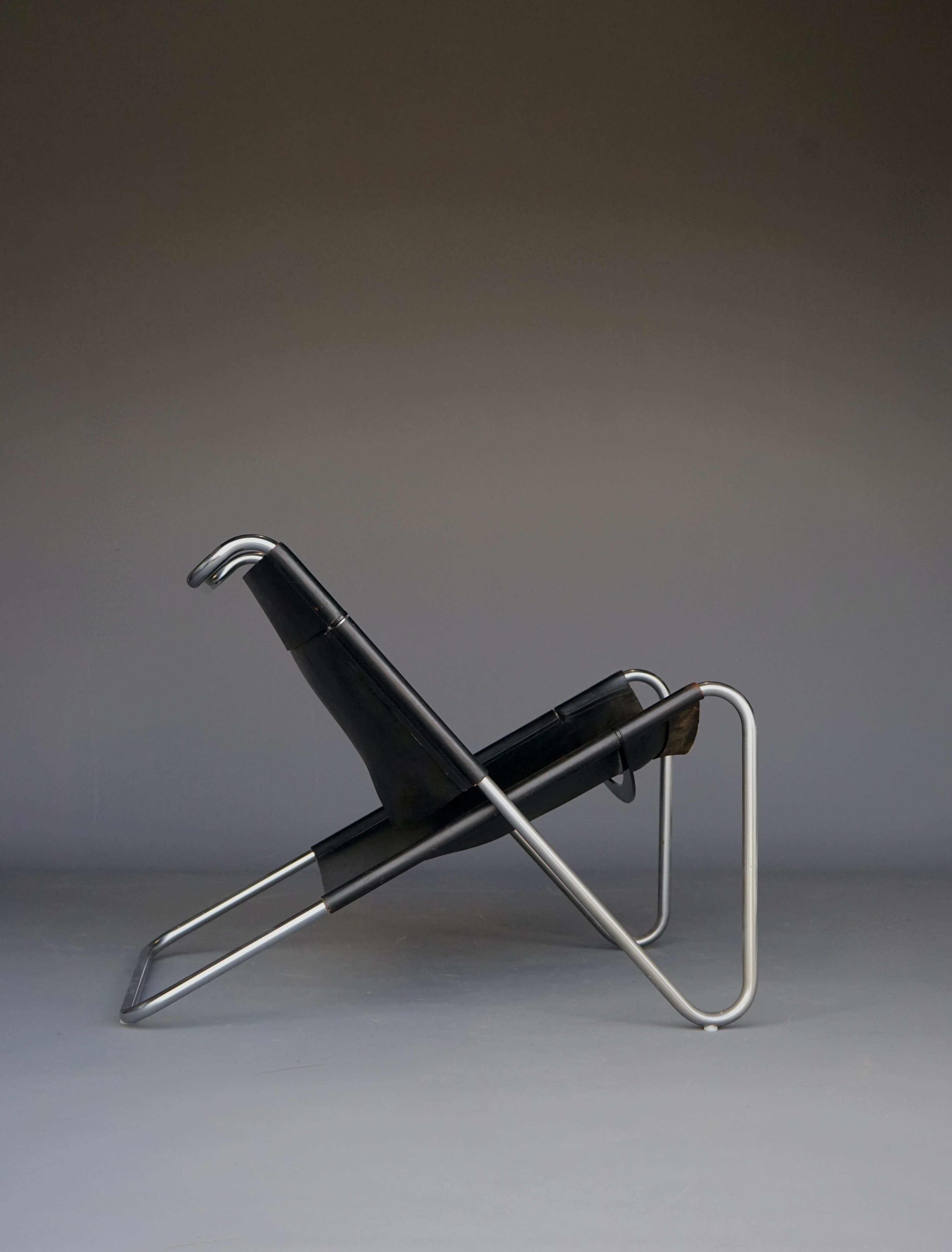
This sculptural chair was manufactured for a short period during which time it is believed that around only 100 of the chairs were manufactured. This one was purchased from the first owner and is in superb original condition with only minimal signs of age and use. . Tubular steel and thick leather 72x90x68cm
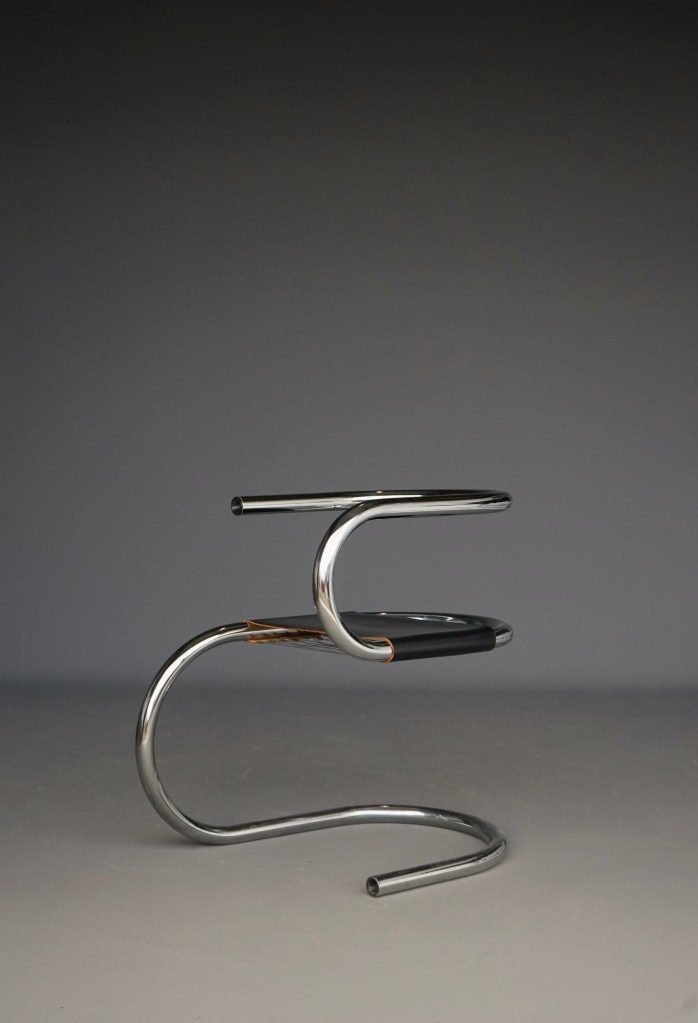
chromed steel tube with leather slung seat. 48.5 wide x 67 deep x 73cm high.
Wim van den Bergh is an architect, writer, and professor of Housing and Design at RWTH Aachen.
An 80s homage to early modernism this is a highly elegant and rare chair: Only 30 examples of this chair were ever produced (by hand) of which the first prototype was commissioned by Museum Boijmans van Beuningen in Rotterdam in 1981.
metal & buffalo leather side chair. Stamped. 1970s/80s.
An elegant sculptural side chair made by the famous French duo known for working across a range of specialisms including architecture, sculpture and furniture design. Like many imaginative artist/designers who came to the fore in the 1980s, their work combines elements of Postmodernism to create a narrative object : Gothic, baroque and brutalism combined in a theatrical narrative. This 1970s-80s art-chair would look fabulous in any stylish interior. It has the maker’s brandished marks to the back of the leather seat.
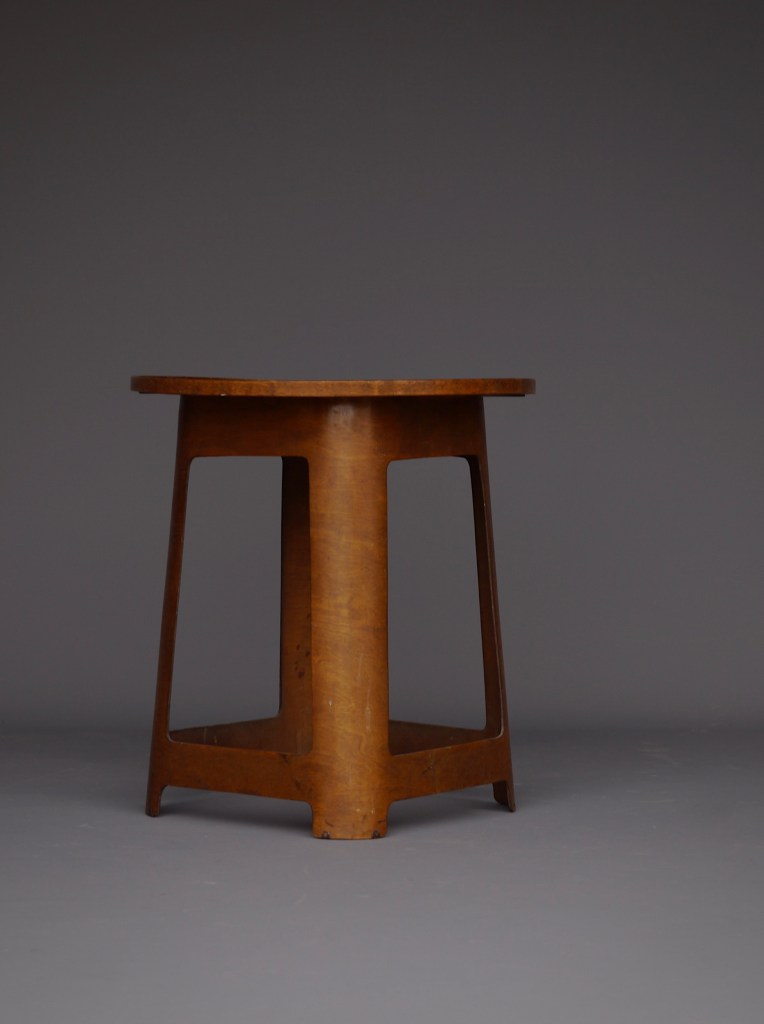
Plywood No.1 table/stool with its accompanying circular tray. Manufactured by Luterma. Both stool and tray are stamped/labelled Venesta.
The British furniture entrepreneur Jack Pritchard managed Venesta the import company for Luterma in England who later formed the Isokon furniture company which most notably employed Marcel Breuer. These tables/stools were distributed in England post 1933 until 1939 exclusively by Isokon alongside designs by Marcel Breuer and Egon Riss.
Although the designer of the stool remains anonymous, in 2004 the art historian Alastair Grieve described a modification of the original Luterma stool (of which this stool is one) when he wrote that the original design was subsequently re-designed by the architect and founder of the Bauhaus Walter Gropius (hired as a consultant to Isokon). The very slight alterations Gropius made was to include sharper curves to the cut-out squares of the stool. Gropius’s drawings for the redesign can reportedly be found in the collection of the V&A Museum, London.
The separate tray placed on top of the stool is unusual and rare in that it is much thinner than all other trays we have seen. This has led to some minor warping over time (which may have been why it was produced later with a thicker rim?) The thinner rimmed tray may suggest that this was an early production or at the least a more limited production?
h.46.5cm x w.44cm x d.44cm
Literature:-
Kermik, Juri (2004) The Luther factory: Plywood and furniture 1877-1940
Daybelge & Englund, (2019); Isokon and the Bauhaus in Britain
Pritchard, Jack (1984); View from a Long Chair: The Memoirs of Jack Pritchard
The model 020 ‘Stick’ chair was designed by Dutch industrial designer Bruno Ninaber van Eyben in 1977.
The design is made up of three constituent parts that fit together: two pieces of angled plywood and a length of stick with a round profile. The stick in the middle connects the plywood pieces and functions as the backbone and strength of the chair.
These rare chairs were manufactured in very limited numbers due to the production costs and difficulties. Only 150 of these chairs were produced. Apart from its low production numbers the other reason that so few exist is because they can easily get damaged – Due to the stool’s fragility we recommend that it should be purchased by a design lover that appreciates its sculptural qualities rather than its functionality!
GebrüderThonet Gmbh. Rare boot-jack bentwood side chair. Manufactured circa 1880s. This design was an adaptation of the model 18 incorporating a shaped additional low bar structure used to help removing a boot or shoe.