A large basalt stone sculpture composed of simple modernist/architectural forms. At some time this sculpture has stood in a garden which has resulted in a thin layer of moss on some parts.
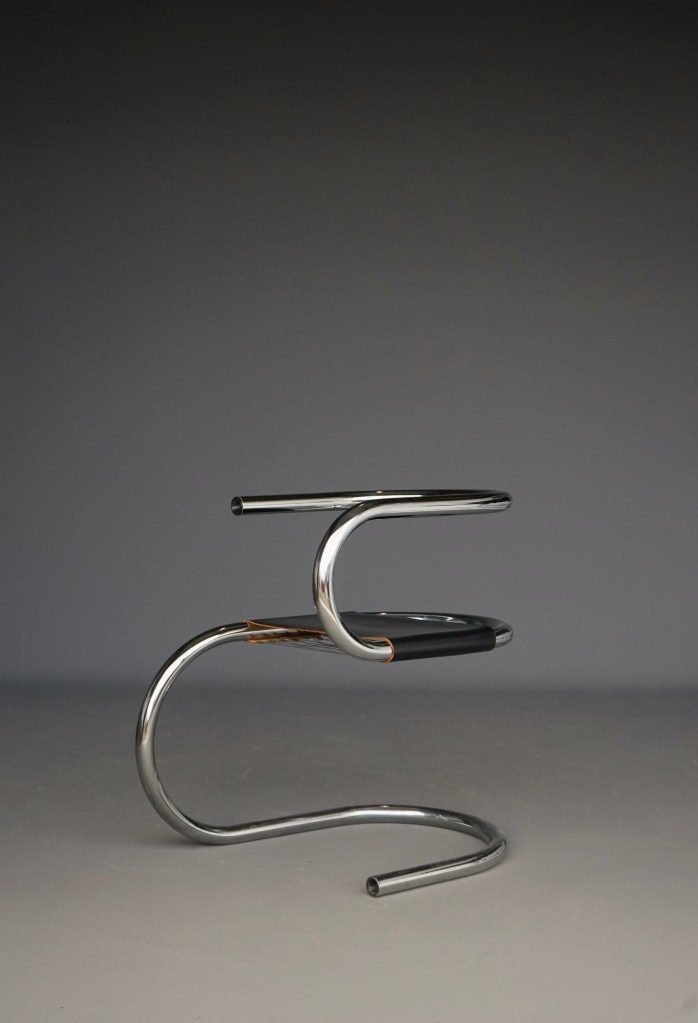
chromed steel tube with leather slung seat. 48.5 wide x 67 deep x 73cm high.
Wim van den Bergh is an architect, writer, and professor of Housing and Design at RWTH Aachen.
An 80s homage to early modernism this is a highly elegant and rare chair: Only 30 examples of this chair were ever produced (by hand) of which the first prototype was commissioned by Museum Boijmans van Beuningen in Rotterdam in 1981.
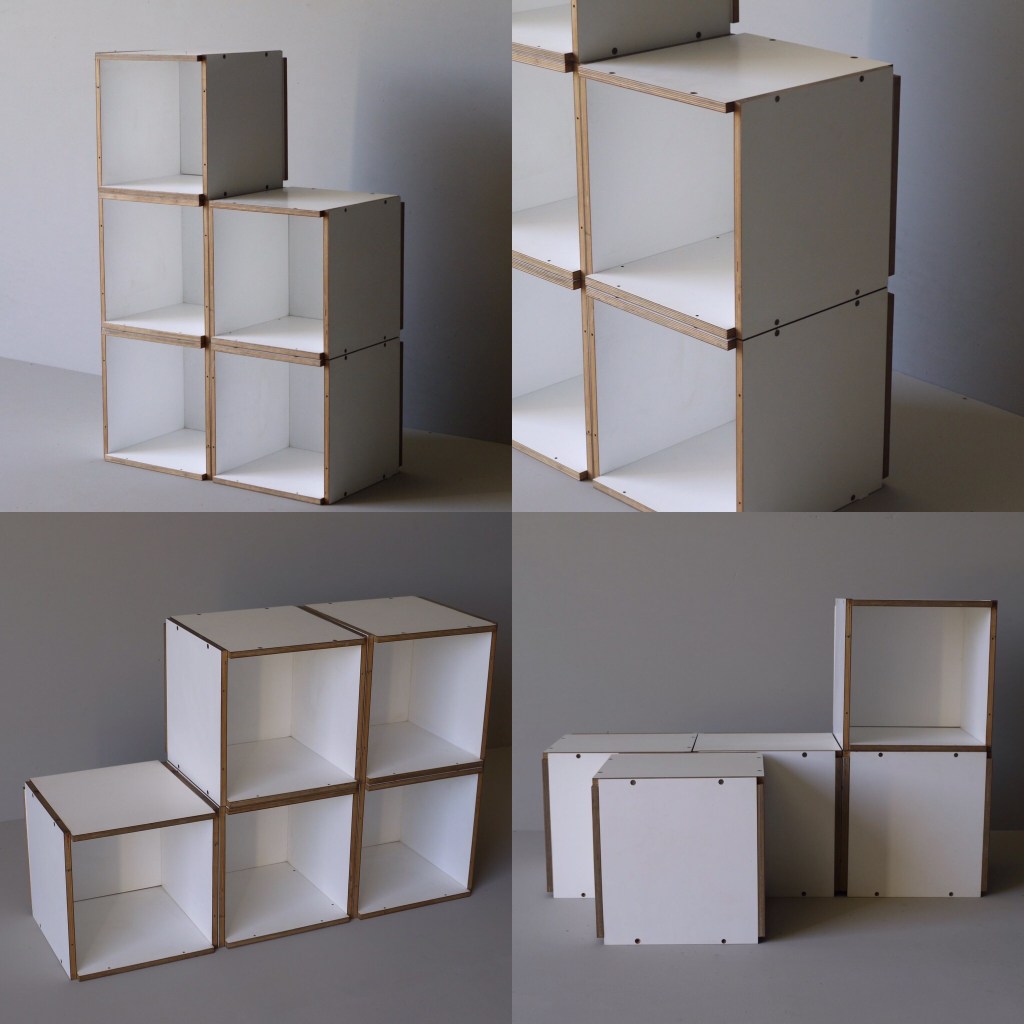
Jan Slothouber & William Graatsma (NL. Mid-c20th) Five original modular cubes from the 1970s. Laminated plywood. . The Dutch duo Slothouber & Graatsma established themselves from the 1950s as artist/designers with the cube form as their key motif around which they developed various principles of cubic construction alongside multiples and variations thereof. Despite its restrictions they admired the cube for its clarity of form. They applied their thinking around it to a variety of objects, and artworks from small jewellery-scale 3d models and games to larger installation works. Highly driven personalities, they considered themselves as discoverers of ‘the many applications of the democratic system of cubics’; a system that would ostensively act to counter the rise of the expressive individualism in post-WWII culture. (They later established the CCC_the Center for Cubic Constructions as a forum for promoting their ideas). Due to their diverse and multidisciplinary output they were never to become global names – But they were a highly respected creative team (representing The Netherlands at the Venice Biennale in 1970) and in 1965 the Stedelijk Museum in Amsterdam honoured them with the exhibition ‘Vier kanten: maat, vorm, kleur, letter’ (Four sides: size, form, colour, letter). Donald Judd for one was a great admirer of their work.
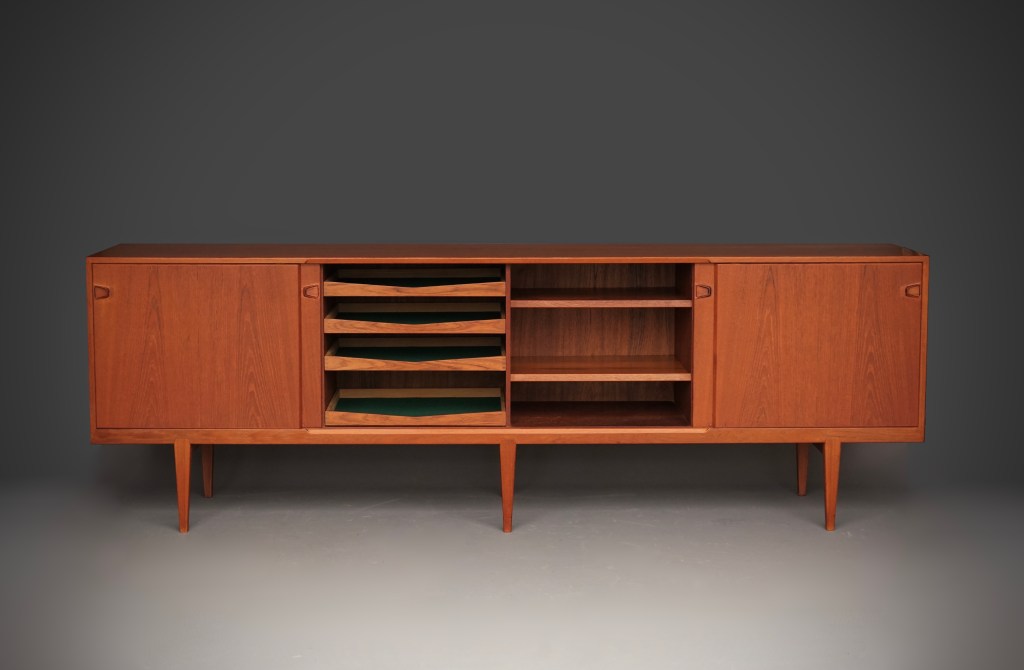
A very rare long teak sideboard with sliding doors designed by one of the best of Danish designers for one of the top Danish companies. The beauty with these sideboards is both the simplicity and modesty of design combined with the highest quality of finish visible especially in the details. It has easy sliding doors and a variety of shelves and drawers inside that can be easily adjusted to the required height.
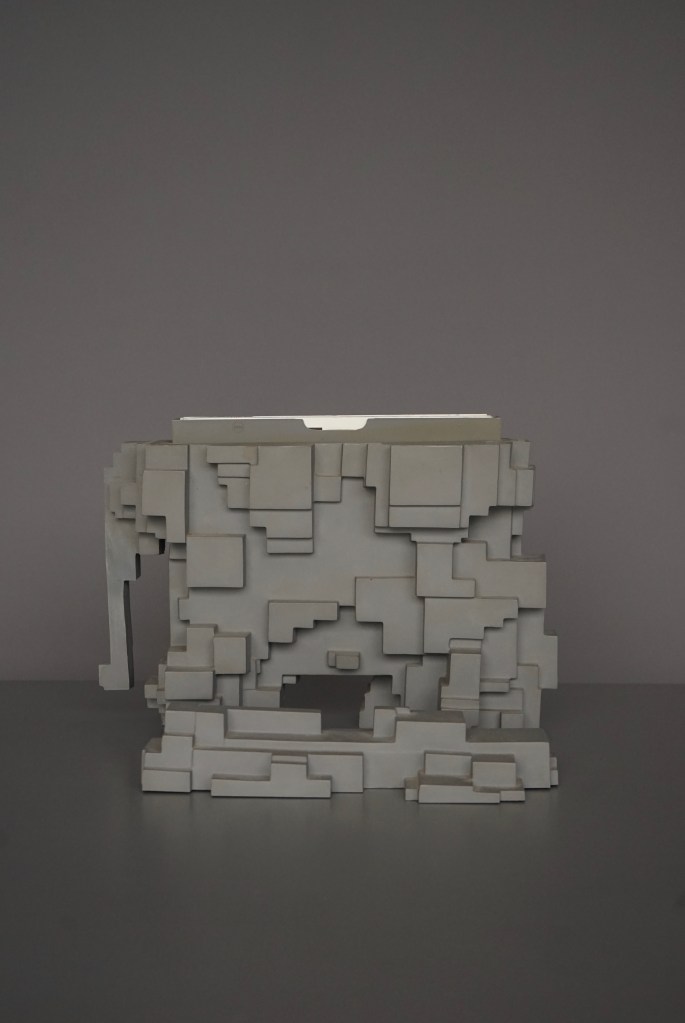
Cubist elephant advertising box. Acrylic resin / linoleum. Circa 1970s.
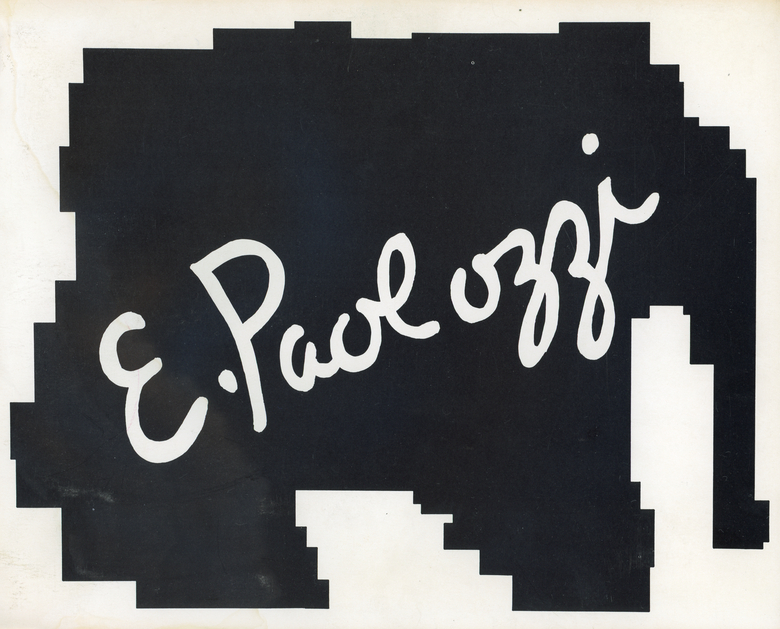
The Scottish graphic designer and sculptor Eduardo Paolozzi was commissioned by the linoleum company Nairn Floors to promote their products to architects and designers in the 1970s. Of the 3000 made, a limited number have survived and are coveted by collectors. Examples can be found in New York’s Metropolitan Museum of Art, the Victoria & Albert Museum etc.
The top of the elephant is a lid that can be removed to reveal an inner compartment containing a selection of pamphlets/ brochures. One of the brochures details the design process from conception to the production stage of the elephant itself.
It has the artists impressed signature and is marked as number 630 from an edition of 3000. It has a presentation card with an indistinct signature (R/D?.Day) as well as all the pamphlets that were supplied with the box (One of the pamphlets has suffered some water damage that has resulted in all the pages sticking together unfortunately but the rest are all still intact) As often happens with these, the elephant’s trunk has been glued back on at some point during its lifetime.
VP-Europe lamp. 1977. Manufactured by Louis Poulsen in the late 1970s.
Chromed plastic foot with moulded glass shade. The lamp’s name Europa derives from the series of lighting designed by Verner Panton for the hotel Europa in Lugano.
This large table lamp has a diameter of 48cm and a height of 63cm which is particularly big for a table lamp. The main component is a mouth-blown shade made of clear and frosted glass. The red painted lamp cap produces beautiful light effects within the lamp.
This lamp was only produced over a short period of time which when combined with the complexity of moulding the glass shade make it one of Verner Panton´s most rare and sought-after lamps.






 [merzbau]