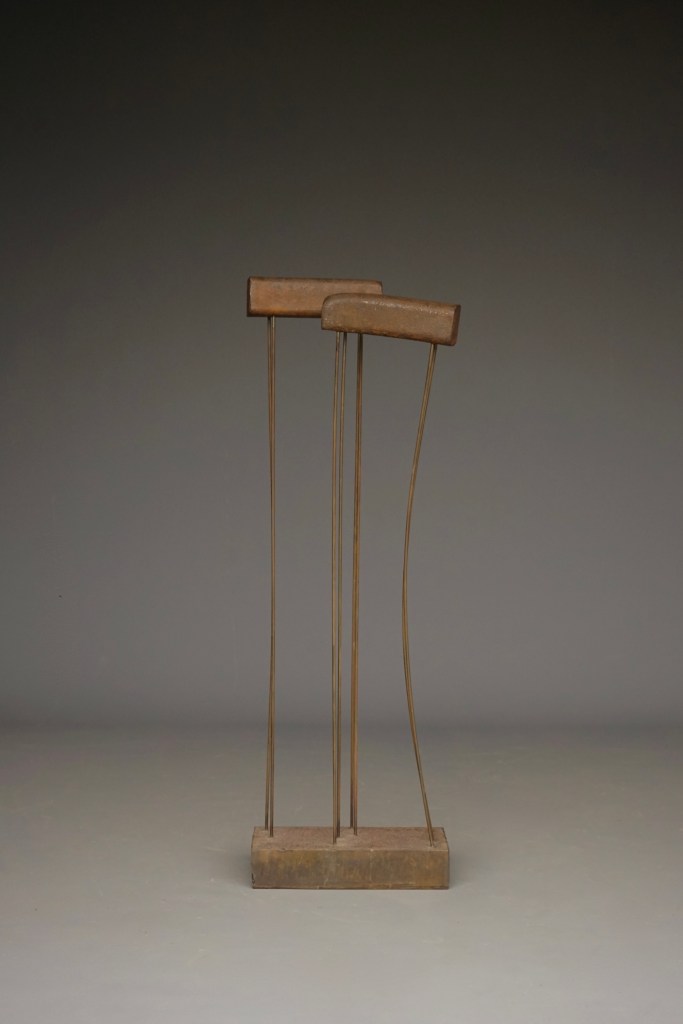
midcentury kinetic sculpture

Circa 1960s standing sculpture in the manner of Harry and Val Bertoia. The sculpture weighs ±50kg. and is made from solid iron and steel. The two standing sections can be easily moved so that they swing slightly from side to side.

38 x 19 x 118cm high

Price: 2.400 euro

http://www.merzbaufurniture.com

Abstract sculpture

1970s Brutalist abstract sculpture. Unsigned.

A large basalt stone sculpture composed of simple modernist/architectural forms. At some time this sculpture has stood in a garden which has resulted in a thin layer of moss on some parts.

It measures 36 x 12 x 45cm high.

Price: 1.650 euro

http://www.merzbaufurniture.com
Eric Gill (Uk.1882-1940)

Holy water stoop. 1930s. Hoptonwood stone with patinated bronze display stand.

18 x 24 x 25cm high (when mounted on stand)

Provenance: By descent to Mary Gill, 1940 and to her daughter Joan Hague, 1963. Acquired from Rosalind Erangey, daughter of Joan and René Hague, 1994. Personal collection 1994-now.


A water stoop (vessel containing holy water) Biographer Fiona McCarthy confirms that Gill carved several water stoops whilst working at Pigotts (the farm house near High Wycombe where Gill lived and worked from 1928). The carved lettering to the underside of this one is evidence that the stone was repurposed for use – It also shows signs of once having once been set into the walls of a church.

Eric Gill, worked as a sculptor, typographer, illustrator and stone carver. Gill designed many fonts still in use today, most notably Gill Sans (1927-1930) and Perpetua (1929). He influenced the next generation of British stone carvers and letter cutters through his work and teachings, and established an informal Arts and Crafts community in Ditchling Common, England.
Gill was a Catholic convert, and after 1913, his work became increasingly involved with religious themes. Moreover, in recent years Gill has become a controversial figure, due largely to the erotic nature of much of his art and his own sexual behaviour/extreme proclivities, as revealed in his diaries.

Price: 11.500 euro

http://www.merzbaufurniture.com

Wim den Boon (Nl. 1912-68)

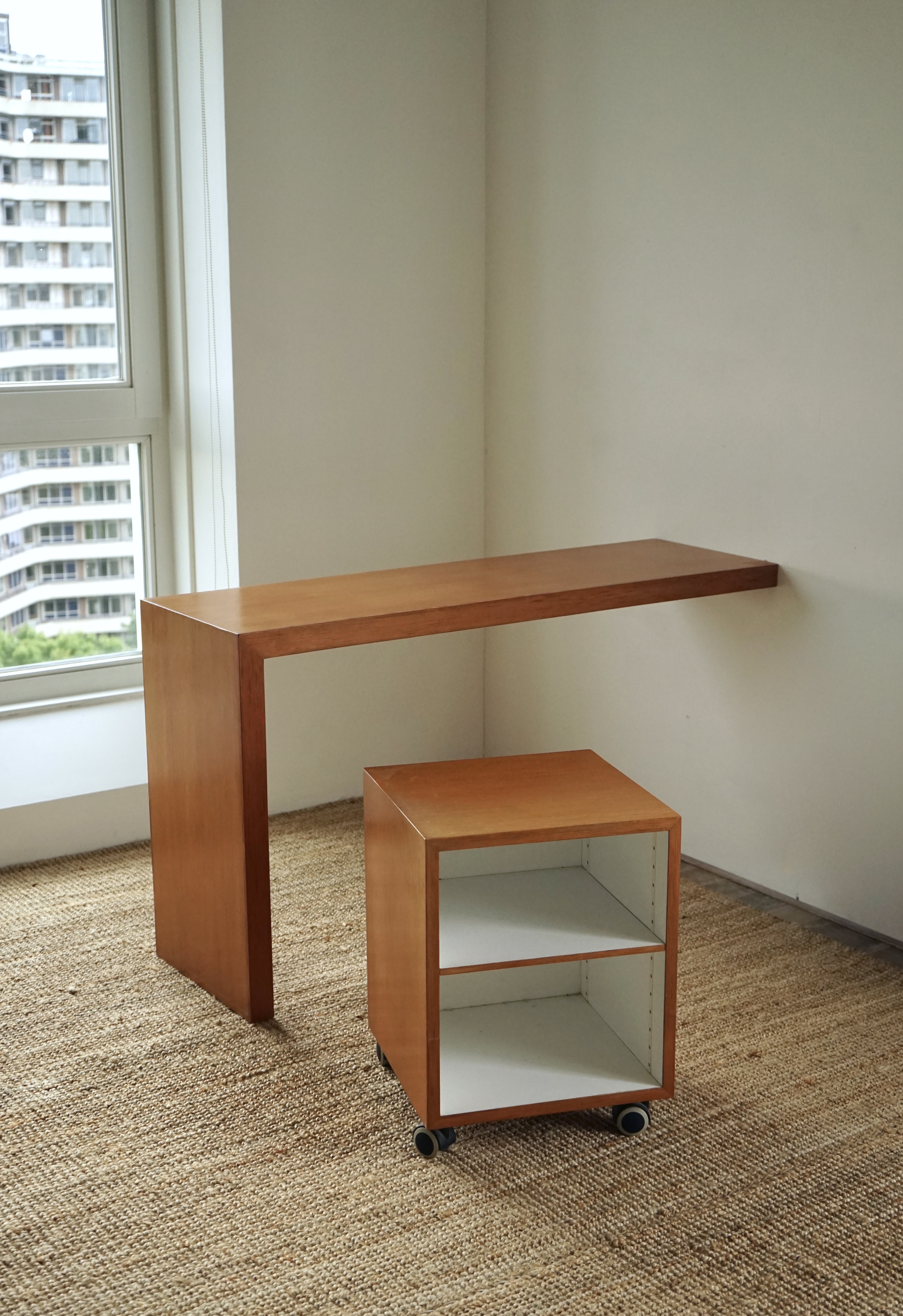
A small wall mounted oregon pine desk (ladies desk) with accompanying drawer unit.

128 x 39.5 x 72cm high
Designed and made to commission for a private residence in Laren, NL in the 1960s (Like much of den Boon’s work this item documented at the Het Nieuwe Instituut, Rotterdam). It was initially designed to work as a vanity unit, although nowadays can be used as a neat little desk.

Purchased from its initial owner who commissioned it amongst other furniture specifically for their home.

Between the 1950s & 60s, Dutch designer and architect Wim den Boon was at the height of his powers. His success alongside other designers as ‘Group &’ (including Hein Stolle, etc.) and later with Goed Wonen lay in the fact that his purist design of the interiors and furniture fitted in seamlessly with the functionalist design of the late thirties. (Goed Wonen was a foundation and leading magazine formed after the war with the aim of “raising the standard of living in the Netherlands by improving home furnishings in the broadest sense of the word…”)

Den Boon wrote several articles for Goed Wonen – His articles are almost without exception educational, presenting readers sometimes quite forcibly with the liberating nature of the new design. His polemical character, stubbornness, and especially the strongly didactic tone of his articles was too much for many employees and readers of Goed Wonen and in 1950 the editors forced him to resign. It was also around 1950 that he broke his relationship with ‘Groep &’ and established himself as an independent interior designer in The Hague. From then on, his interior designs are increasingly characterised by a very careful treatment of the space that can be very strict, deliberate, and sober but also highly refined. Throughout this golden period of the 50s-60s, an extensive oeuvre was created, varying from small renovations and furniture designs to complete new construction projects for private individuals such as those who commissioned this piece.

This is a unique piece of Dutch mid-century modern design history (please note that we are also selling other items that came out of the same house)

Minor superficial wear and tear. A scratch to the top of the drawer unit and some minor discolouring.

Price: 1.500 euro

http://www.merzbaufurniture.com

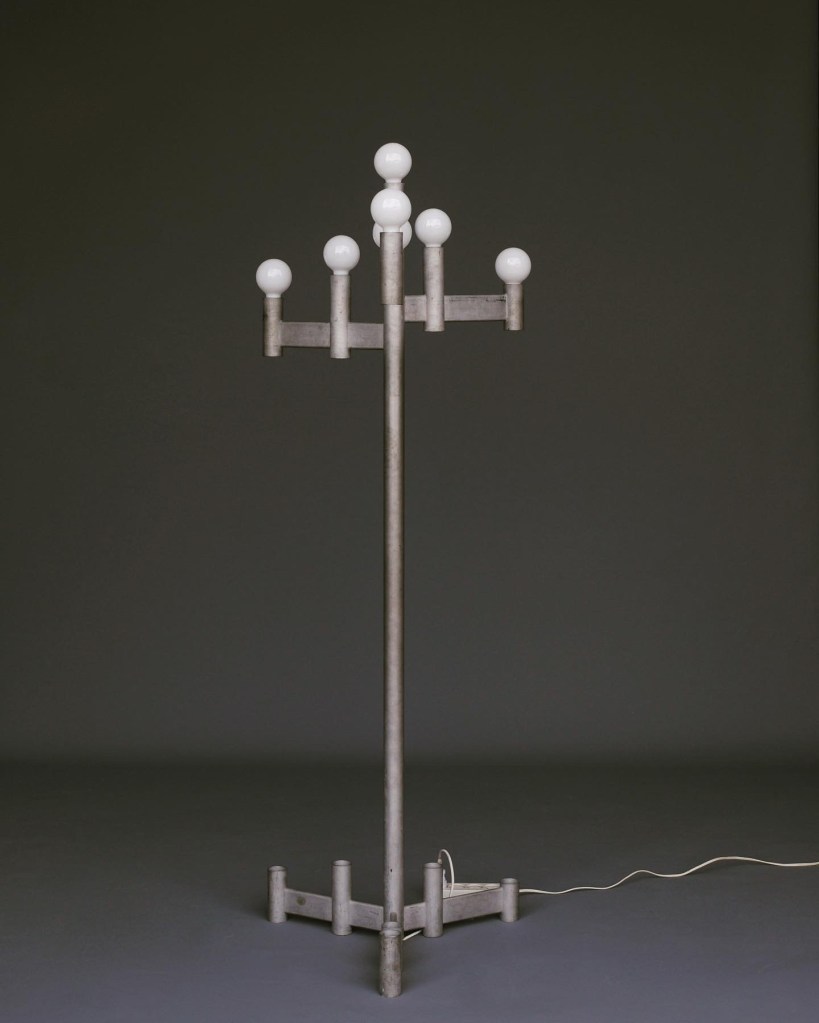
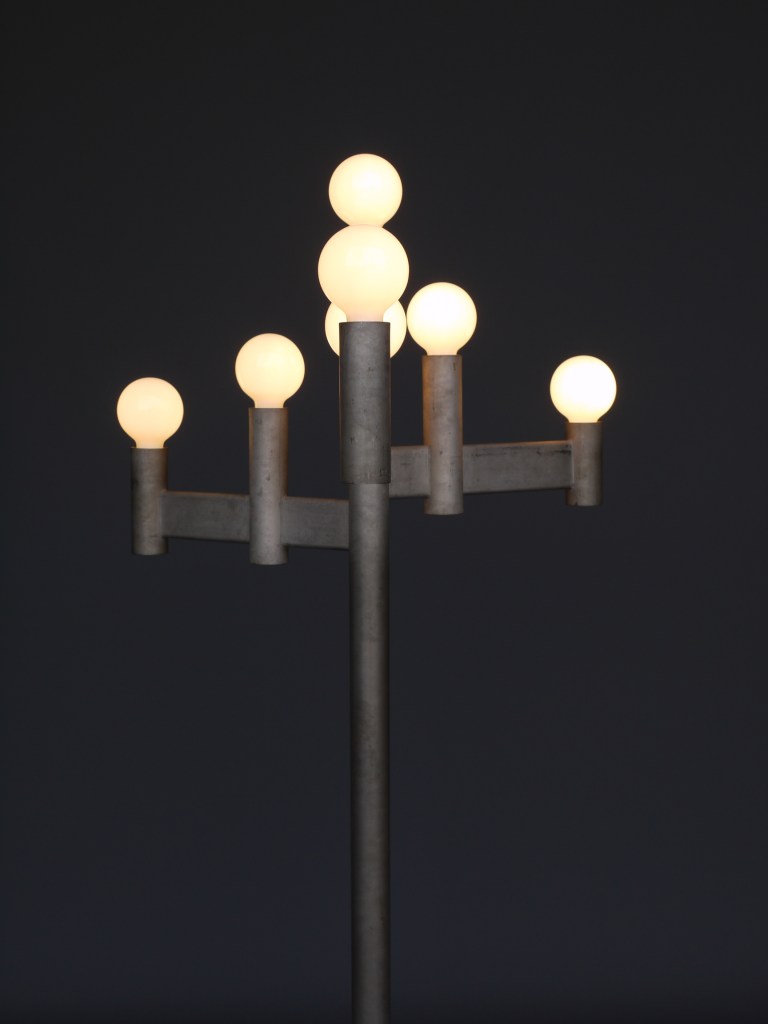
Sep Ruf (attrib.) floor lamp

Sep Ruf (Germany, 1908 -1982)

Brutalist German steel floor lamp attributed to architect Sep Ruf. Circa 1970s.

Price: 1,600 euro

http://www.merzbaufurniture.com

Paul Wintermans bracket table with floating glass

Paul Wintermans (Nl. late c20th)

‘Beugeltafel’ /Bracket table 1980s.

170 x 55 x 42cm high

The architect Paul Wintermans has been designing furniture primarily for architectural projects since the 1980s. This furniture was produced as unique pieces or as very limited productions. Wintermans furniture designs can be found in the collection of the Stedelijk Museum in Amsterdam.

This table is an ingenious engineered design, constructed from three separate pieces: A sheet of glass sandblasted except for two clear stripes that act both as a design feature and help position the two steel rod feet with adjustable fixings. The two feet simply lean into the structure which when combined with the weight of the glass enables the structure to clamp into place.

Price: 1,700.00 euro

http://www.merzbaufurniture.com

Bas van Pelt desk

Bas van Pelt (Netherlands, 1931-95)

EMS, My Home. 1930s

Rare early Bas Van Pelt design double-sided desk

Bas van Pelt began his shop ‘My Home’ in The Hague, Netherlands in 1931 and within a short period the company opened showrooms in other cities such as Maastricht and Amsterdam. The domestic interior design firm focused on producing high-quality modern interior furniture. Eventually right up until into the 1990s Bas van Pelt furniture and fabrics were also sold throughout The Netherlands and beyond by well-known modernist suppliers and manufacturers such as Thonet, D3, LOV and Gispen.

This early Bas van Pelt design desk was manufactured in solid oak wood. It has the Maker/designer’s name brandished in the wood.

Desk: 1,950.00 euro

http://www.merzbaufurniture.com
P1270070 (1)

P1270078

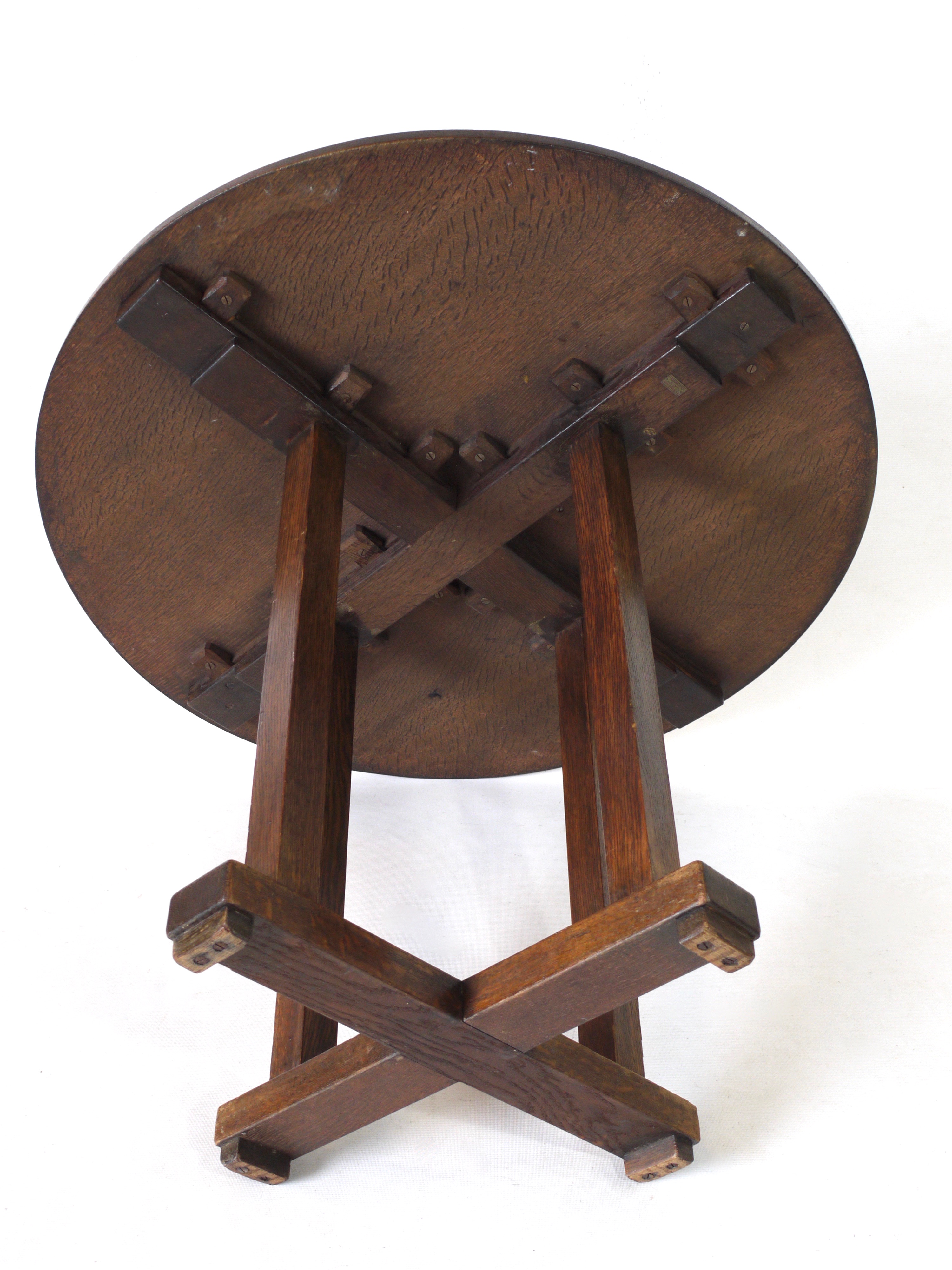
Frits Spanjaard (Netherlands 1889-1978)

Elm wood table for LOV. Netherlands. 1920s

1,500 euro

http://www.merzbaufurniture.com