Art Deco stool

A 1930s Art Deco vanity stool. Unknown origin. (unrestored)

Mahogany and maple wood veneers around a wooden constructed base.

We have left the period linen upholstery – A possible upholstery project or just left as it is.

Price: 1.250 euro

http://www.merzbaufurniture.com

Eric Gill (Uk.1882-1940)

Holy water stoop. 1930s. Hoptonwood stone with patinated bronze display stand.

18 x 24 x 25cm high (when mounted on stand)

Provenance: By descent to Mary Gill, 1940 and to her daughter Joan Hague, 1963. Acquired from Rosalind Erangey, daughter of Joan and René Hague, 1994. Personal collection 1994-now.


A water stoop (vessel containing holy water) Biographer Fiona McCarthy confirms that Gill carved several water stoops whilst working at Pigotts (the farm house near High Wycombe where Gill lived and worked from 1928). The carved lettering to the underside of this one is evidence that the stone was repurposed for use – It also shows signs of once having once been set into the walls of a church.

Eric Gill, worked as a sculptor, typographer, illustrator and stone carver. Gill designed many fonts still in use today, most notably Gill Sans (1927-1930) and Perpetua (1929). He influenced the next generation of British stone carvers and letter cutters through his work and teachings, and established an informal Arts and Crafts community in Ditchling Common, England.
Gill was a Catholic convert, and after 1913, his work became increasingly involved with religious themes. Moreover, in recent years Gill has become a controversial figure, due largely to the erotic nature of much of his art and his own sexual behaviour/extreme proclivities, as revealed in his diaries.

Price: 11.500 euro

http://www.merzbaufurniture.com

Wim den Boon (Nl. 1912-68)

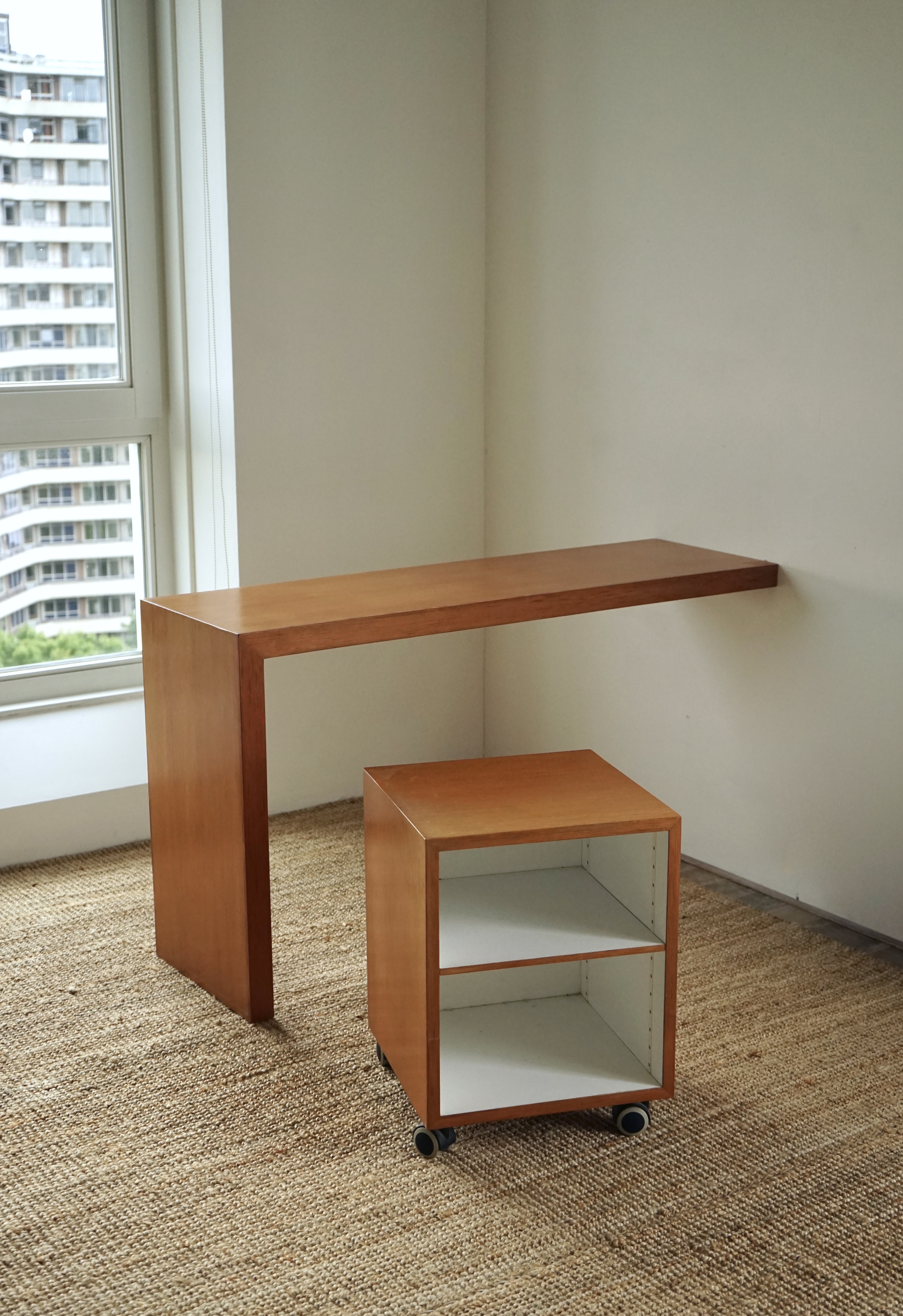
A small wall mounted oregon pine desk (ladies desk) with accompanying drawer unit.

128 x 39.5 x 72cm high
Designed and made to commission for a private residence in Laren, NL in the 1960s (Like much of den Boon’s work this item documented at the Het Nieuwe Instituut, Rotterdam). It was initially designed to work as a vanity unit, although nowadays can be used as a neat little desk.

Purchased from its initial owner who commissioned it amongst other furniture specifically for their home.

Between the 1950s & 60s, Dutch designer and architect Wim den Boon was at the height of his powers. His success alongside other designers as ‘Group &’ (including Hein Stolle, etc.) and later with Goed Wonen lay in the fact that his purist design of the interiors and furniture fitted in seamlessly with the functionalist design of the late thirties. (Goed Wonen was a foundation and leading magazine formed after the war with the aim of “raising the standard of living in the Netherlands by improving home furnishings in the broadest sense of the word…”)

Den Boon wrote several articles for Goed Wonen – His articles are almost without exception educational, presenting readers sometimes quite forcibly with the liberating nature of the new design. His polemical character, stubbornness, and especially the strongly didactic tone of his articles was too much for many employees and readers of Goed Wonen and in 1950 the editors forced him to resign. It was also around 1950 that he broke his relationship with ‘Groep &’ and established himself as an independent interior designer in The Hague. From then on, his interior designs are increasingly characterised by a very careful treatment of the space that can be very strict, deliberate, and sober but also highly refined. Throughout this golden period of the 50s-60s, an extensive oeuvre was created, varying from small renovations and furniture designs to complete new construction projects for private individuals such as those who commissioned this piece.

This is a unique piece of Dutch mid-century modern design history (please note that we are also selling other items that came out of the same house)

Minor superficial wear and tear. A scratch to the top of the drawer unit and some minor discolouring.

Price: 1.500 euro

http://www.merzbaufurniture.com

Kwok Hoi Chan (HK 1939-1990)

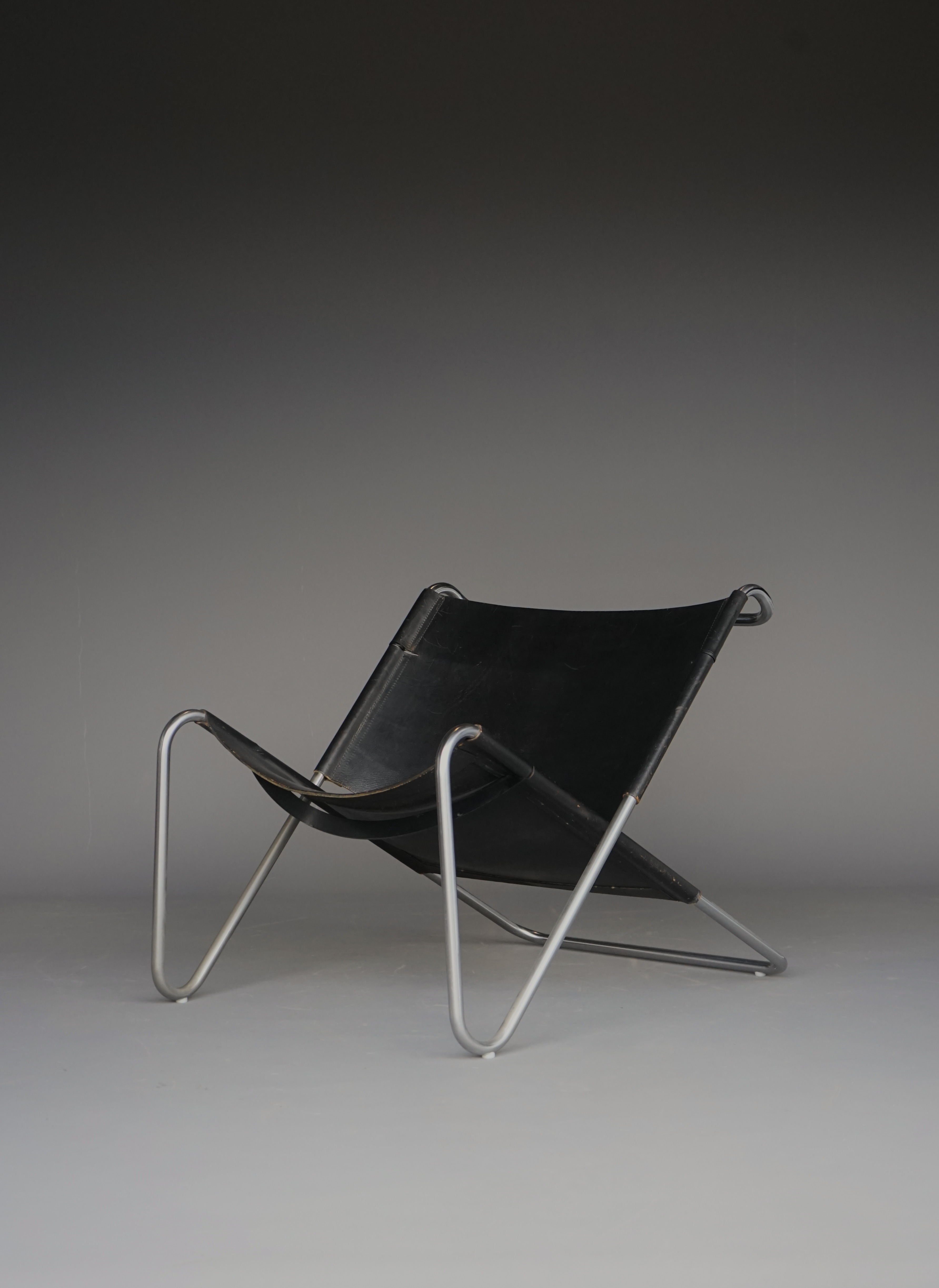
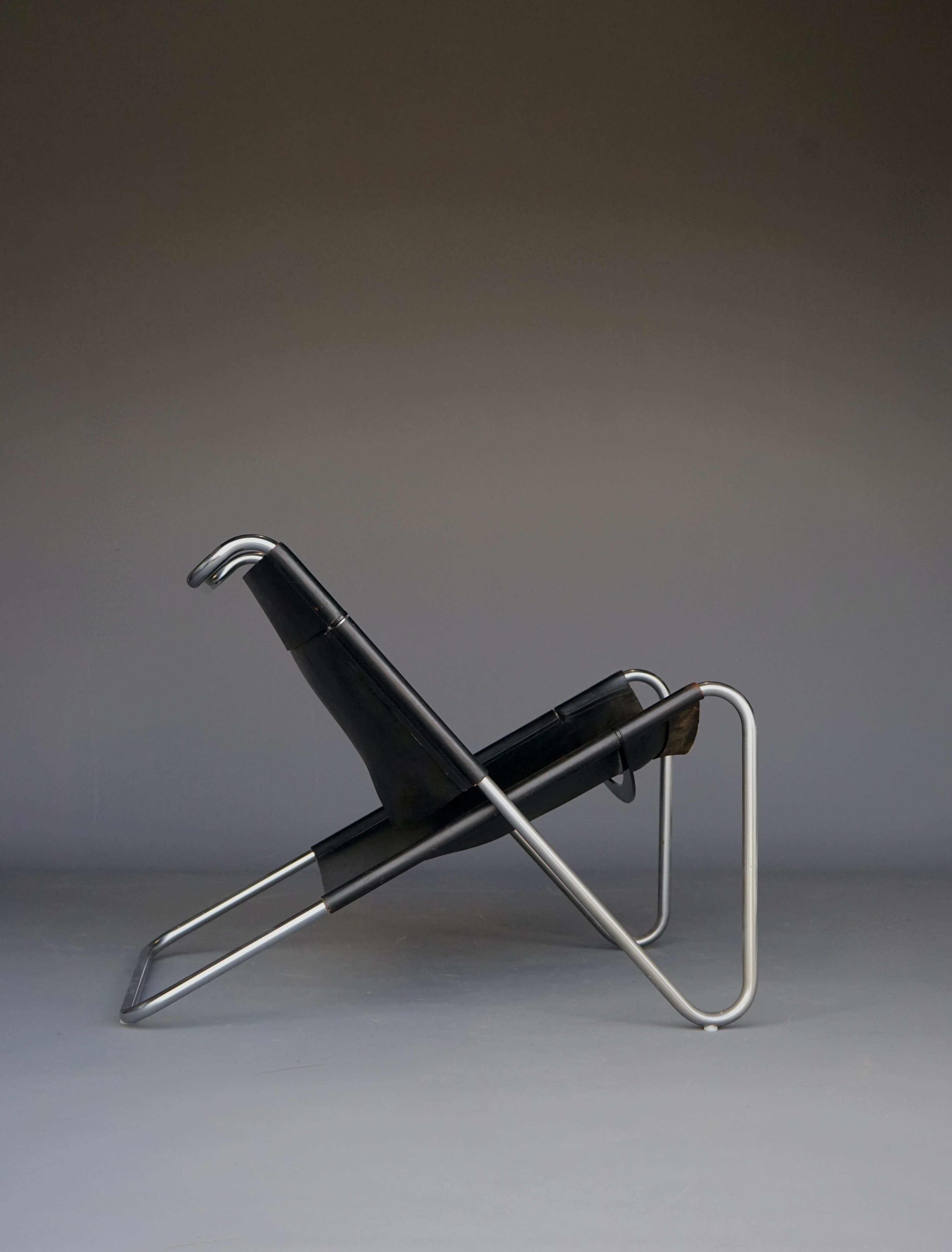
Rare sz15 lounge chair for ‘t Spectrum 1973.


This sculptural chair was manufactured for a short period during which time it is believed that around only 100 of the chairs were manufactured. This one was purchased from the first owner and is in superb original condition with only minimal signs of age and use.
.
Tubular steel and thick leather 72x90x68cm

Price: 3.950 euro

http://www.merzbaufurniture.com
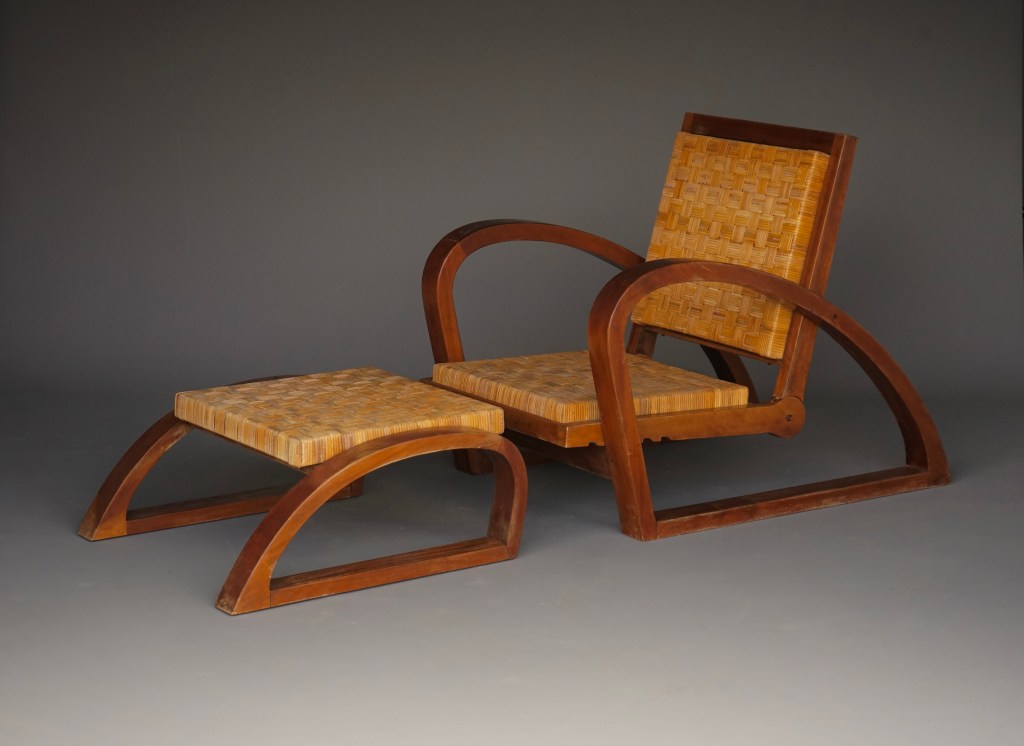
Lounge chair & ottoman

Francis Jourdain /attributed (Fr.1876-1958)

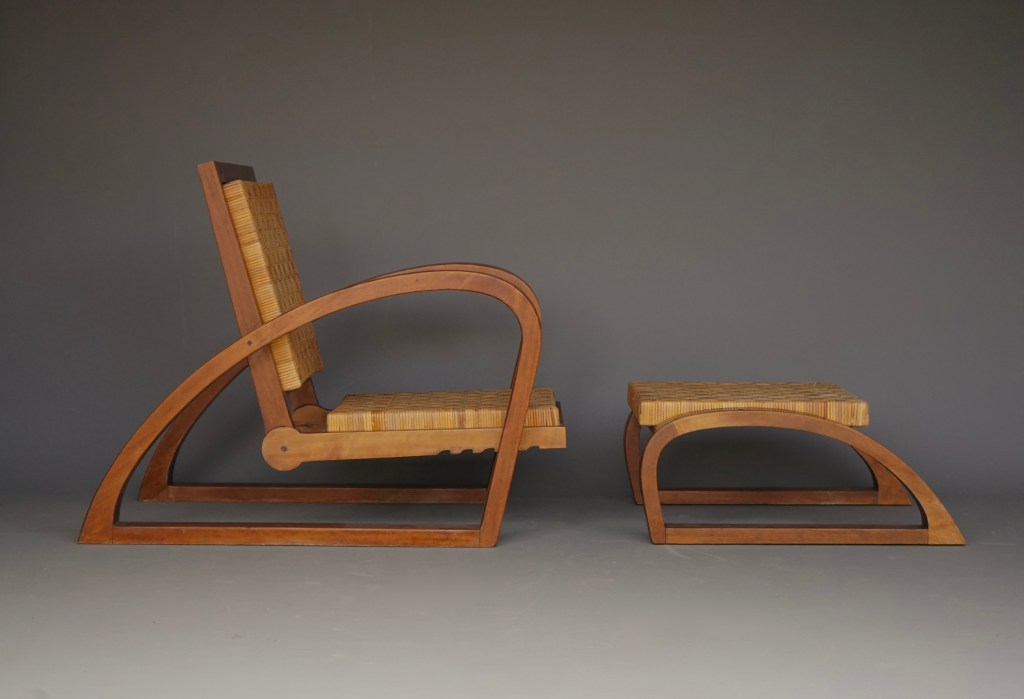
A rare three position lounge chair and ottoman/footstool attributed to Francis Jourdain, 1920s.

This design stands out for its curved lines and the three-position system that allows the seat and backrest to be tilted. Nicely executed out of pear wood and woven cane seat and back.

Price: 7.000 euro

http://www.merzbaufurniture.com

Scarpa 925 easy chairs

Afra & Tobia Scarpa (Italy 1930s – 2000s)

Pair of model 925 easy chairs for Cassina (One with Cassina label to underside)

black aniline leather & walnut/rosewood.

Pair of stunning easy chairs that are always popular as their architectural design complements any modern interior. Designed in 1965 these are early production chairs.

Price: 11,250 euro

http://www.merzbaufurniture.com

Delft School benches x2

bench 1/ 200 x 44.5 x 65.5cm high (seat height 43cm)

bench 2/ 221 x 46 x 65.5cm high (seat height 44cm)

Delft School small oak benches / School of M.J. Granpré Molière or A.J. Kropholler (x2 benches of differing lengths available).

Traditionalism in the Netherlands emerged shortly after the First World War. It was not so much a style as more of an attitude among architects who, in response to Functionalism and the Expressionism of the Amsterdam School, rediscovered the purity and simplicity of traditional country architecture. Under the leadership of M.J. Granpré Molière, professor at the Technical University in Delft from 1924 until 1953, many of these architects gathered in a movement which after World War Two became known as the Delftse School (‘Delft School’). Granpré Molière’s ideas include a preference for tidy brickwork, a minimal use of decorations, the inspiration taken from national architectural traditions and the use of ‘honest’ (i.e. traditional and natural) materials.
https://www.archimon.nl/history/traditionalism.html

Price: 2.500 euro p/p

http://www.merzbaufurniture.com

Stam armchairs

Mart Stam (Nl 1899-1986)

Model A3-1 armchairs. Circa 1950s. Goed wonen.

Rare pair of armchairs designed by Dutch modernist architect and furniture designer.

Rexine/ vinyl upholstery with oak frames.

Price: 1.900 euro (pair)

http://www.merzbaufurniture.com