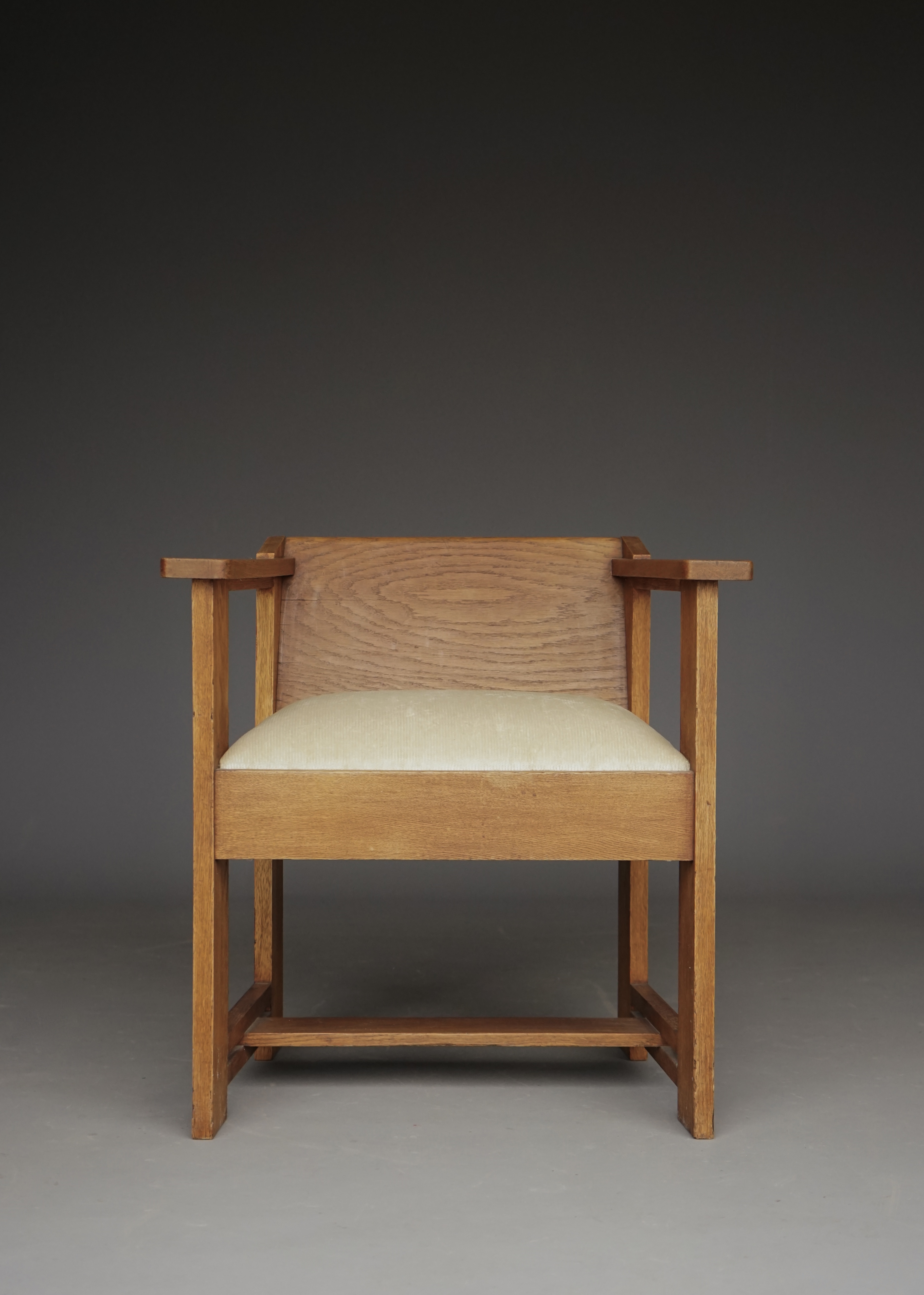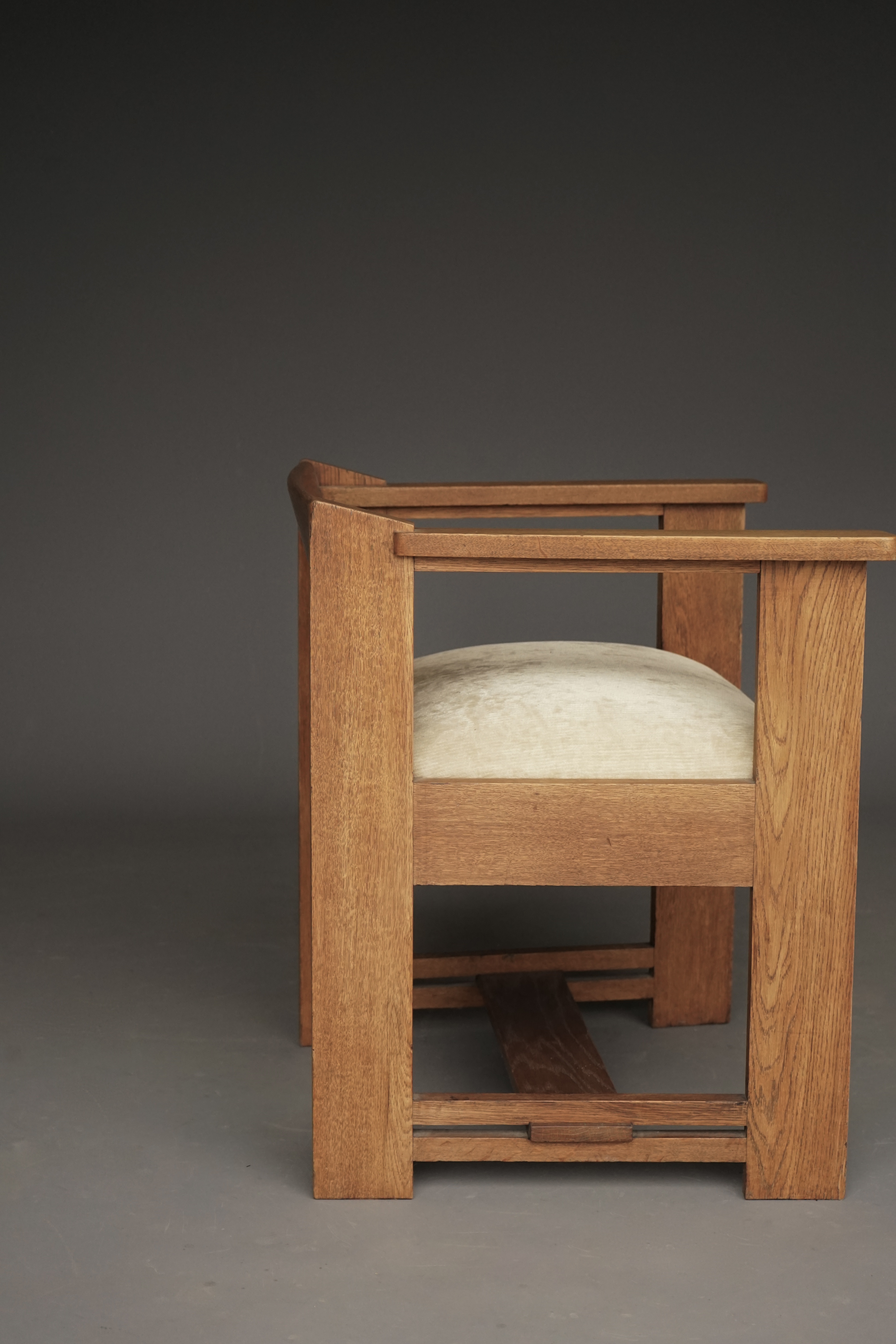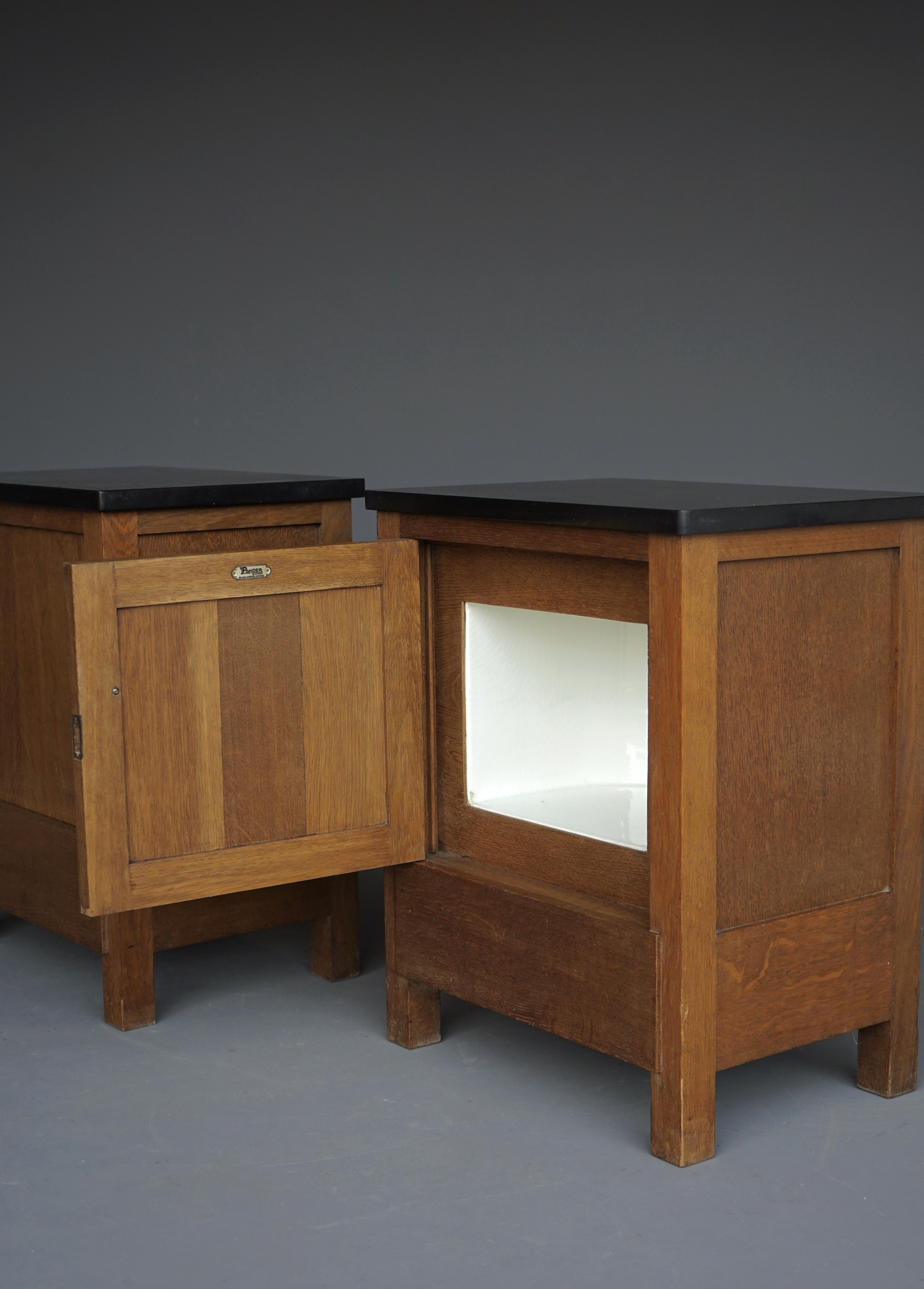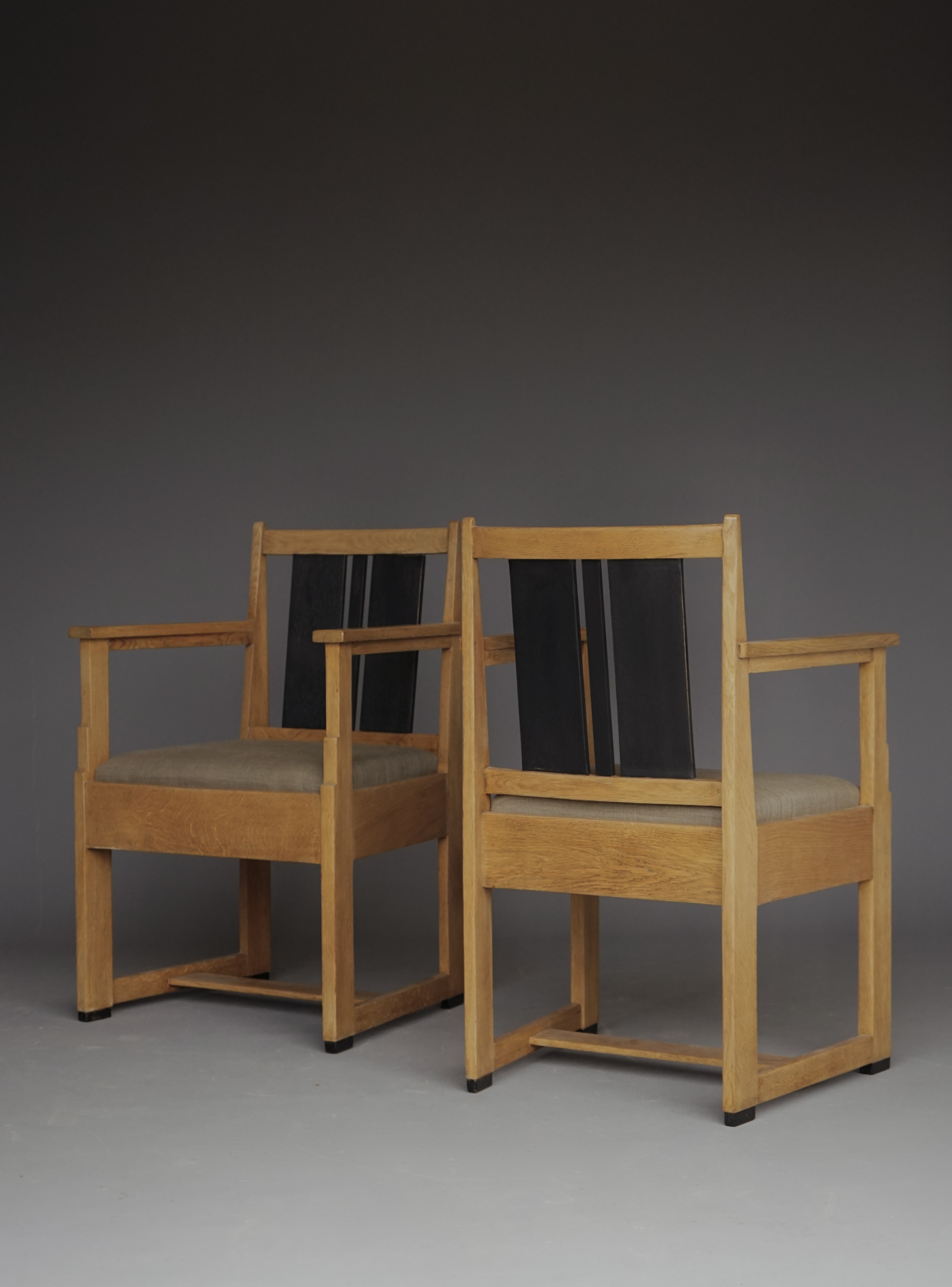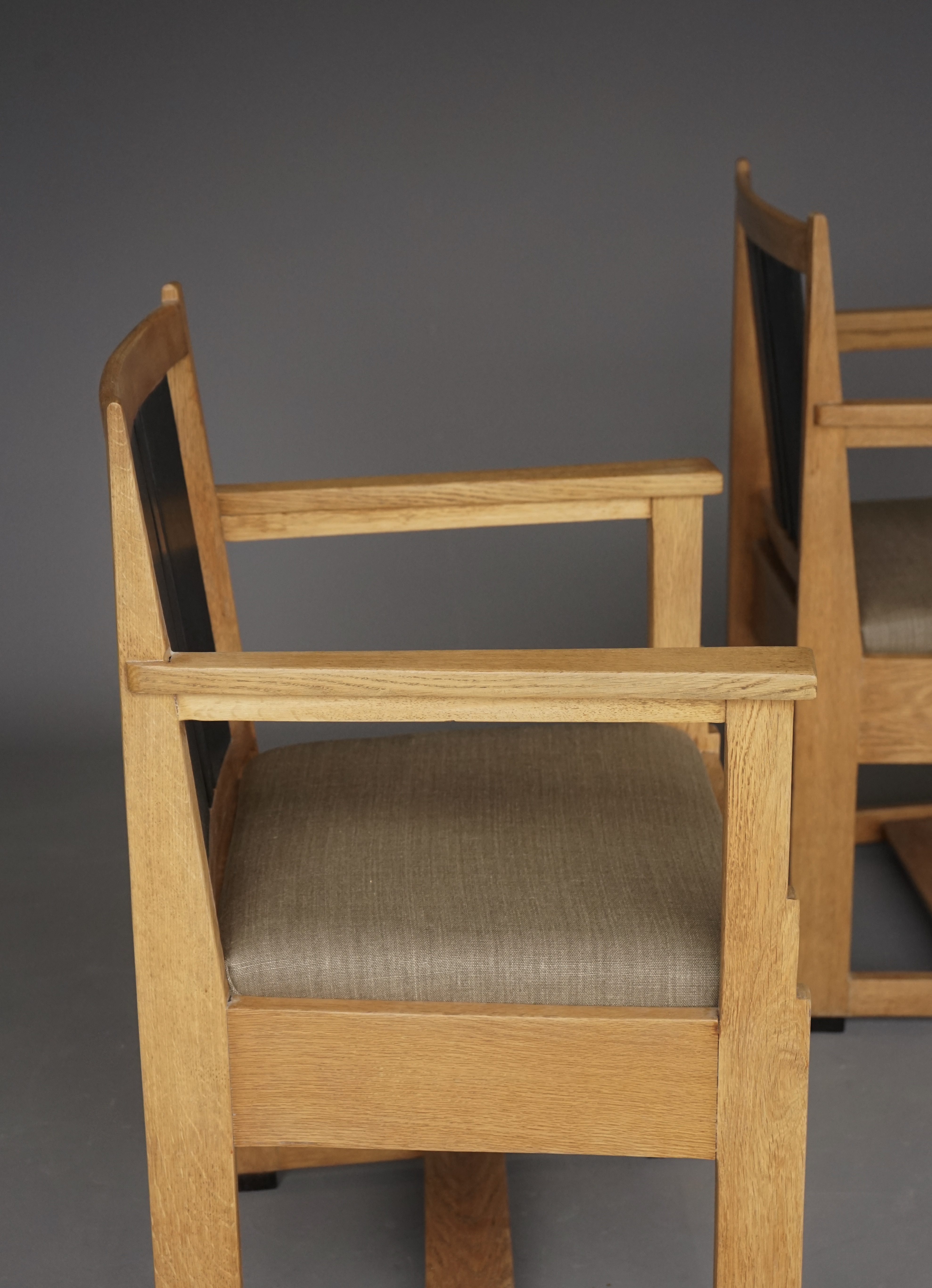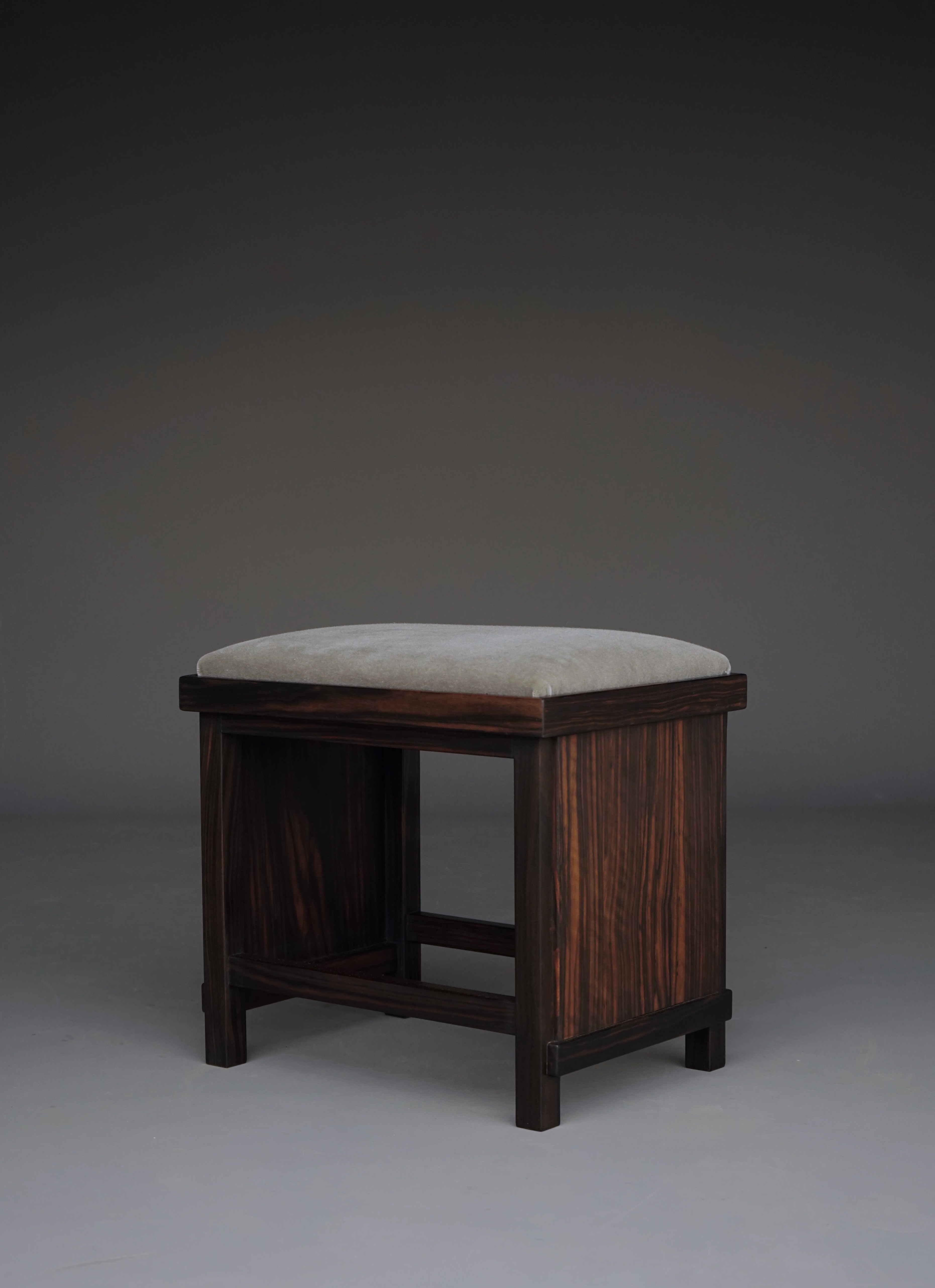
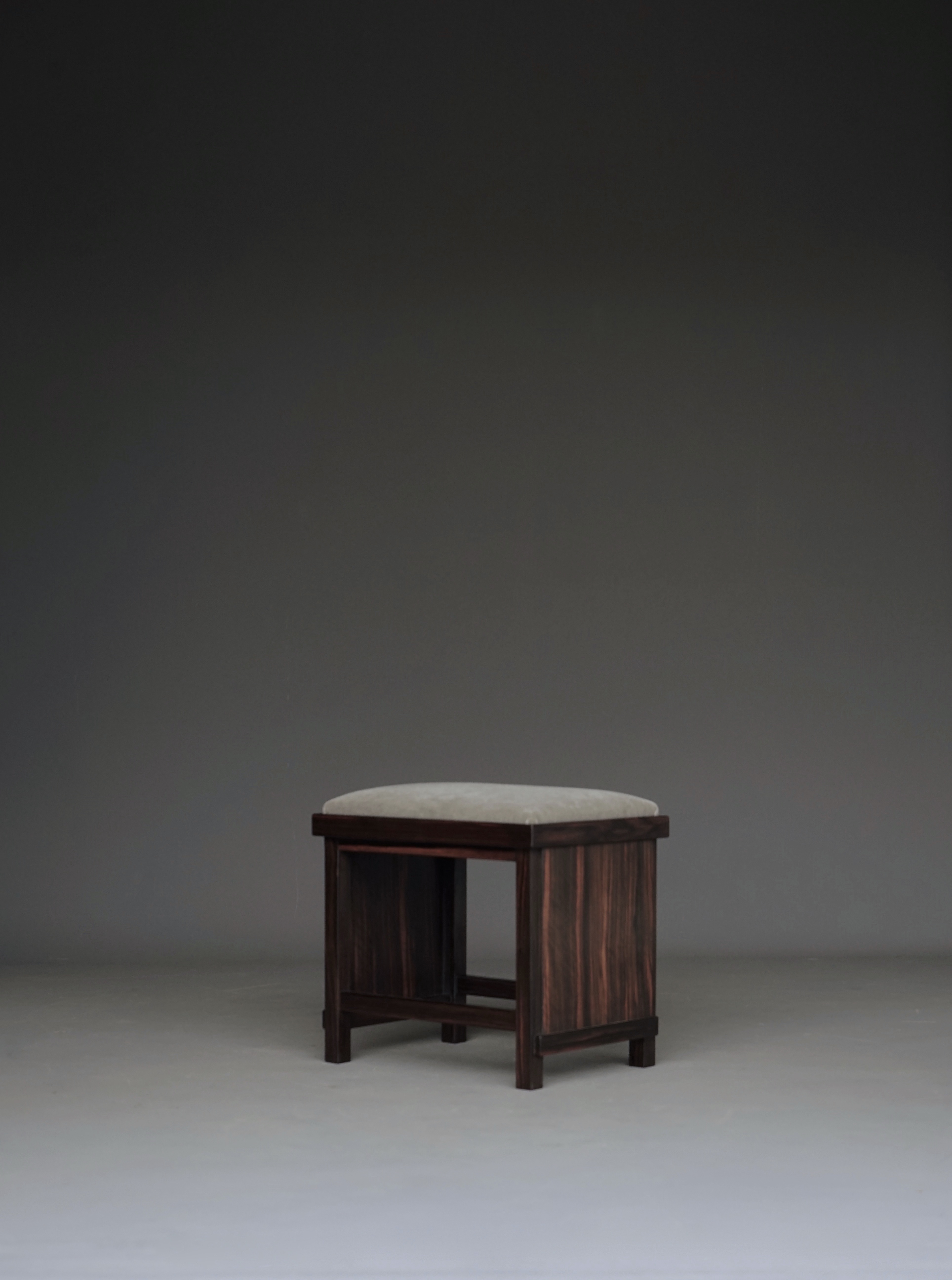
De Rotterdamse Meubelfabriek CH Eckhart (circa 1920s)
Dutch Hague School / Amsterdam School Art Deco bookcase.
190 x 33 x 134cm high.
Mahogany and coromandel woods. A large beautifully made bookcase with two adjustable shelves on each side. Minor signs of age and use. This bookcase came out of a private house with several pieces made by the same company.
Jan Slothouber & William Graatsma (NL. Mid-c20th) Five original modular cubes from the 1970s. Laminated plywood. . The Dutch duo Slothouber & Graatsma established themselves from the 1950s as artist/designers with the cube form as their key motif around which they developed various principles of cubic construction alongside multiples and variations thereof. Despite its restrictions they admired the cube for its clarity of form. They applied their thinking around it to a variety of objects, and artworks from small jewellery-scale 3d models and games to larger installation works. Highly driven personalities, they considered themselves as discoverers of ‘the many applications of the democratic system of cubics’; a system that would ostensively act to counter the rise of the expressive individualism in post-WWII culture. (They later established the CCC_the Center for Cubic Constructions as a forum for promoting their ideas). Due to their diverse and multidisciplinary output they were never to become global names – But they were a highly respected creative team (representing The Netherlands at the Venice Biennale in 1970) and in 1965 the Stedelijk Museum in Amsterdam honoured them with the exhibition ‘Vier kanten: maat, vorm, kleur, letter’ (Four sides: size, form, colour, letter). Donald Judd for one was a great admirer of their work.
The bumper table is undoubtedly Martin Visser’s most intriguing design, the baroque translation from 1965 of his table base tz06 from the early 1960s. The development of Martin Visser’s bumper table provides insight into and understanding of his design processes: The table’s main feature is its reversible tripod base, later called ‘Abusir’ – Seemingly simple with the three points on the floor and three points to carry the top (in the history of furniture the tripod table is known to be the most stable structure).
Only two series were produced in very limited numbers due to the technical difficulties of manufacturing the base. Spectrum Furniture (‘t Spectrum) manufactured the table as several versions that varied in height, width, materials and finishes – this version with the white carrara marble top.
Brutalist / Structuralist chair. Netherlands. Circa 1960s/70s.
Steel & leather/hide.
An interesting architectural chair. Its construction and manufacture lead us to believe that it is possibly a prototype? – Its design reflects the style of post-war structuralist architecture/interiors typical of several Rotterdam architects from the period. (we are still researching the design).
The model 020 ‘Stick’ chair was designed by Dutch industrial designer Bruno Ninaber van Eyben in 1977.
The design is made up of three constituent parts that fit together: two pieces of angled plywood and a length of stick with a round profile. The stick in the middle connects the plywood pieces and functions as the backbone and strength of the chair.
These rare chairs were manufactured in very limited numbers due to the production costs and difficulties. Only 150 of these chairs were produced. Apart from its low production numbers the other reason that so few exist is because they can easily get damaged – Due to the stool’s fragility we recommend that it should be purchased by a design lover that appreciates its sculptural qualities rather than its functionality!
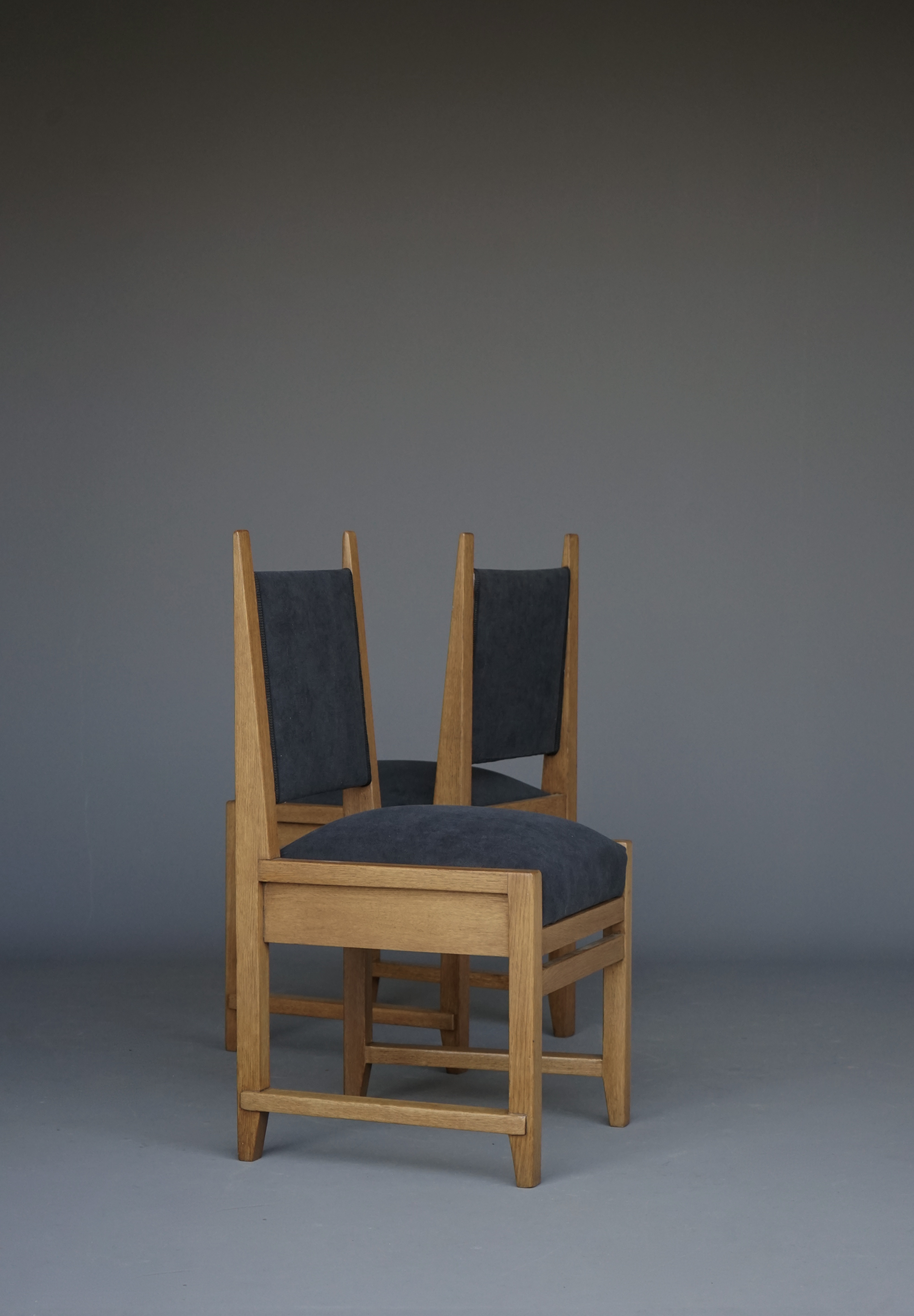
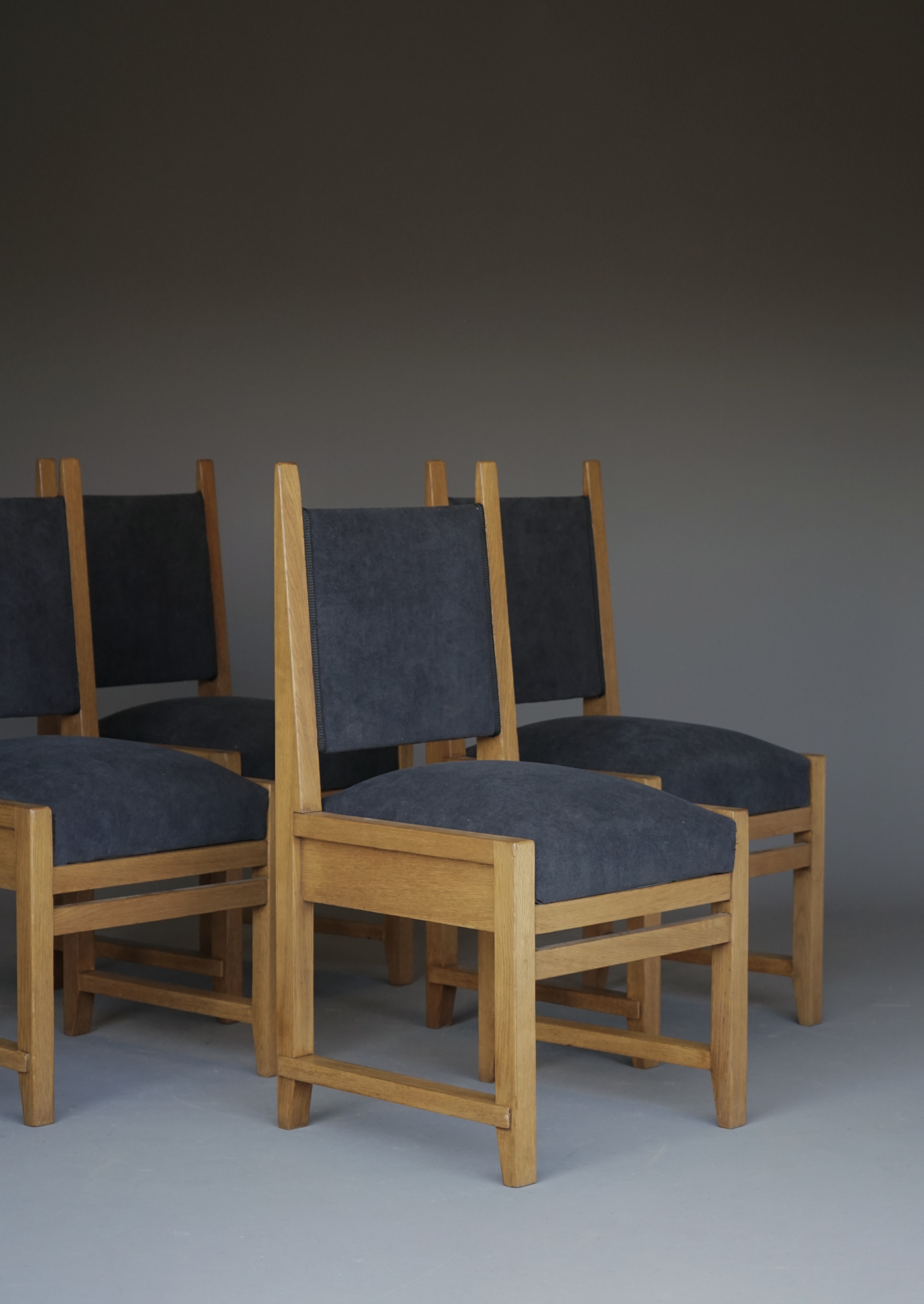
Circa 1920s. A solid oak side chair in the Dutch traditionalist or Neo-Gothic manner. The chair has a very ordered and balanced appearance and combines the predominant styles of the period.
Minimalist object/artwork composed of a series of six plywood cubes with diagonal divisions inside reminiscent of Donald Judd’s plywood art works. Circa 1980s. Beautifully crafted, the six cubes are connected by one or two discrete rubber hinges (with a metal bar holding them in place) that enable the cubes to be unfolded vertically or horizontally in one direction along a single plain.
There are a few possible configurations as shown which enable it to be used as a shelving unit (with limited shelving space), a long bench, or simply as a decorative art object…