x2 Bossche school benches

Jan de Jong / Dom Hans van der Laan (Nl 1904-1991)

Pair of original Bossche School church benches/pews from the Sint-Willibroduskerk in Almelo. 1960s.

Stained pine wood with hand forged large nails.

302 x 67 x 86.5 (seat height 48.5) Note: Measurements are according to van der Laan’s theories of the ‘plastic number’ system.

Two rare long benches designed by the Dutch Benedictine monk and architect Dom Hans van der Laan and executed by fellow architect Jan de Jong for the Sint-Willibroduskerk in Almelo.
The architect Jan de Jong who worked closely together with Dom Hans van der Laan was responsible for the design of the church and its interior. They created an outstanding body of work ,very much defining what is called now the Dutch Bossche School style.
The artist Wim van Hoof was responsible for the entire colour scheme of the church and its interior (including these benches). The colour of the benches is mostly green but has a touch of brown with a silvery blue tint.
The benches were purchased after the demolition of the church in 2005 and is in a very nice original condition.

Price: 11,000 euro (per piece)

http://www.merzbaufurniture.com

Aldo van den Nieuwelaar (Nl. 1944-2010)

Globe Floor lamp. Domani, 1970s.

35 x 35 x 130cm high

A rare floorlamp from the ‘Globe’ series, designed by Dutch architect and designer Aldo van den Nieuwelaar.
Lamps designed by Aldo van den Nieuwelaar such as this one were all produced in small quantities. It has an elegant minimalist one section curved white metal stem with large glass sphere that nests comfortably onto it.

Price: 1.100 euro

http://www.merzbaufurniture.com

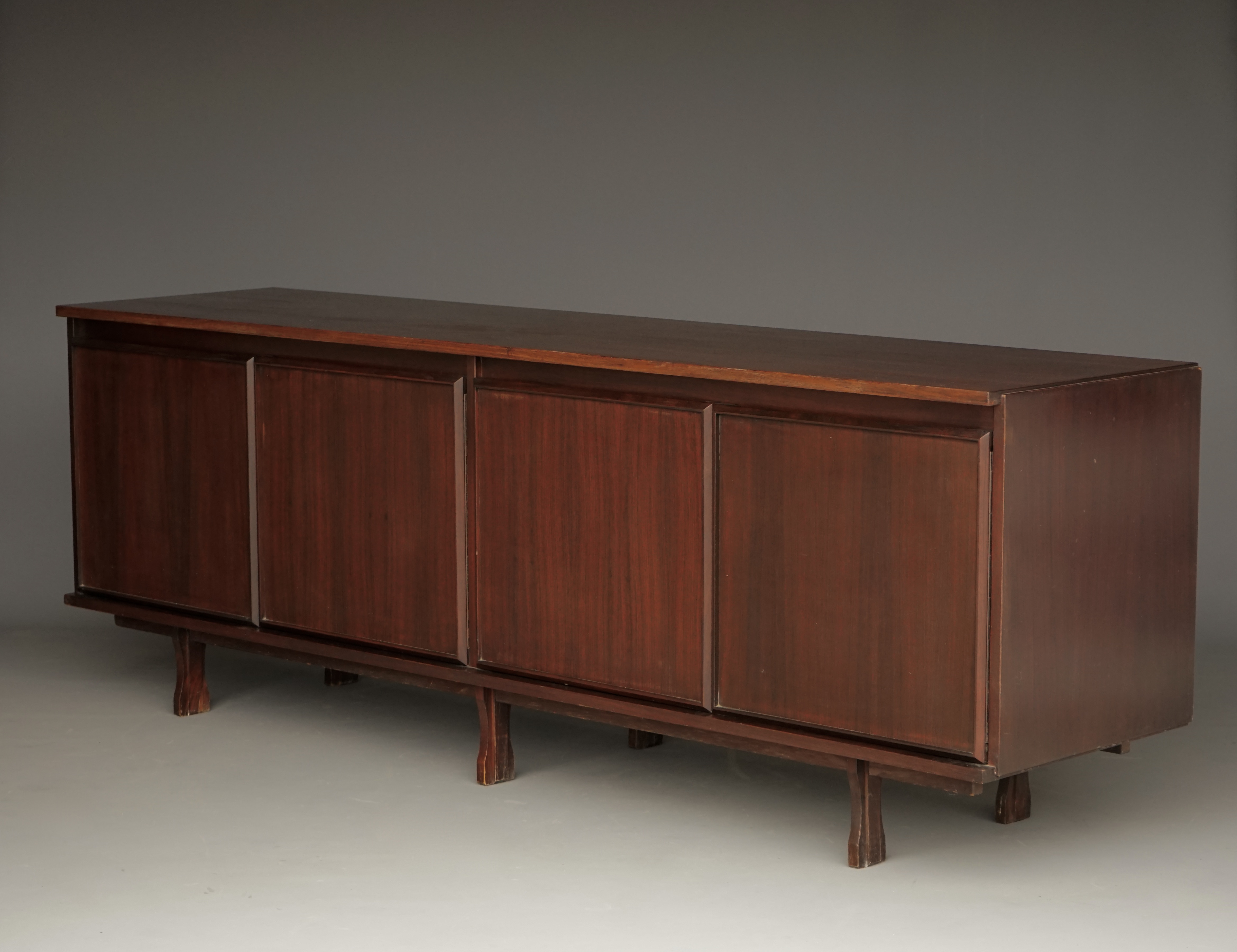
Italian 1960s sideboard

Giovanni Ausenda (Italy mid-c20th)

model ‘Caleno’ credenza/sideboard ±1960s for Stilwood, Italy.

Rosewood & Mahogany. 213 x 53 x 74cm high.

This Brutalist Italian sideboard with subtle architectural details has a strong classical presence. This is what we would call a sideboard for life! Anchored in the right setting this is a timeless design that can look like it has always been there.

Price: 3.600 euro

http://www.merzbaufurniture.com

Art Deco stool

A 1930s Art Deco vanity stool. Unknown origin. (unrestored)

Mahogany and maple wood veneers around a wooden constructed base.

We have left the period linen upholstery – A possible upholstery project or just left as it is.

Price: 1.000 euro

http://www.merzbaufurniture.com

Wim den Boon (Nl. 1912-68)

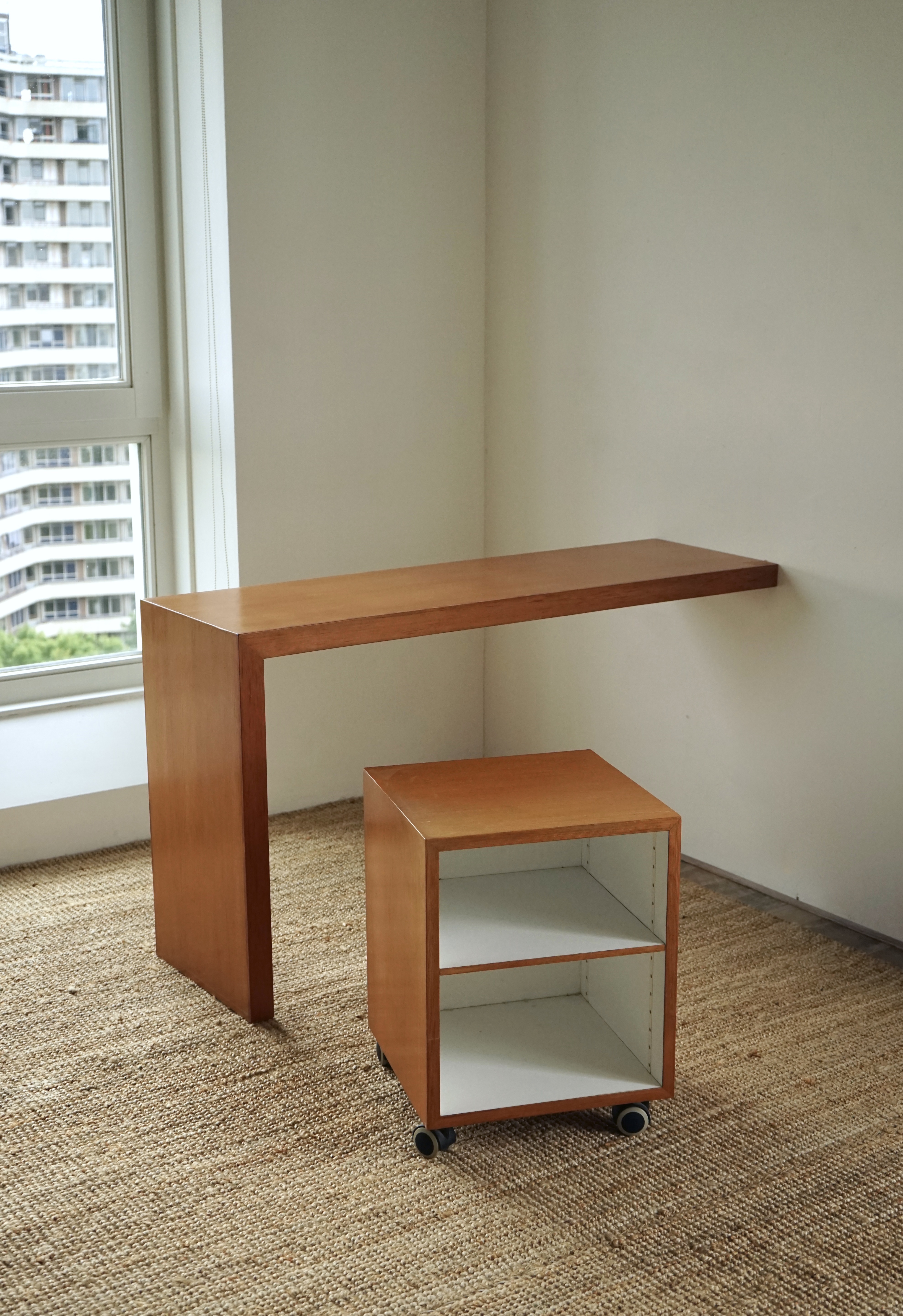
A small wall mounted oregon pine desk (ladies desk) with accompanying drawer unit.

128 x 39.5 x 72cm high
Designed and made to commission for a private residence in Laren, NL in the 1960s (Like much of den Boon’s work this item documented at the Het Nieuwe Instituut, Rotterdam). It was initially designed to work as a vanity unit, although nowadays can be used as a neat little desk.

Purchased from its initial owner who commissioned it amongst other furniture specifically for their home.

Between the 1950s & 60s, Dutch designer and architect Wim den Boon was at the height of his powers. His success alongside other designers as ‘Group &’ (including Hein Stolle, etc.) and later with Goed Wonen lay in the fact that his purist design of the interiors and furniture fitted in seamlessly with the functionalist design of the late thirties. (Goed Wonen was a foundation and leading magazine formed after the war with the aim of “raising the standard of living in the Netherlands by improving home furnishings in the broadest sense of the word…”)

Den Boon wrote several articles for Goed Wonen – His articles are almost without exception educational, presenting readers sometimes quite forcibly with the liberating nature of the new design. His polemical character, stubbornness, and especially the strongly didactic tone of his articles was too much for many employees and readers of Goed Wonen and in 1950 the editors forced him to resign. It was also around 1950 that he broke his relationship with ‘Groep &’ and established himself as an independent interior designer in The Hague. From then on, his interior designs are increasingly characterised by a very careful treatment of the space that can be very strict, deliberate, and sober but also highly refined. Throughout this golden period of the 50s-60s, an extensive oeuvre was created, varying from small renovations and furniture designs to complete new construction projects for private individuals such as those who commissioned this piece.

This is a unique piece of Dutch mid-century modern design history (please note that we are also selling other items that came out of the same house)

Minor superficial wear and tear. A scratch to the top of the drawer unit and some minor discolouring.

Price: 1.450 euro

http://www.merzbaufurniture.com

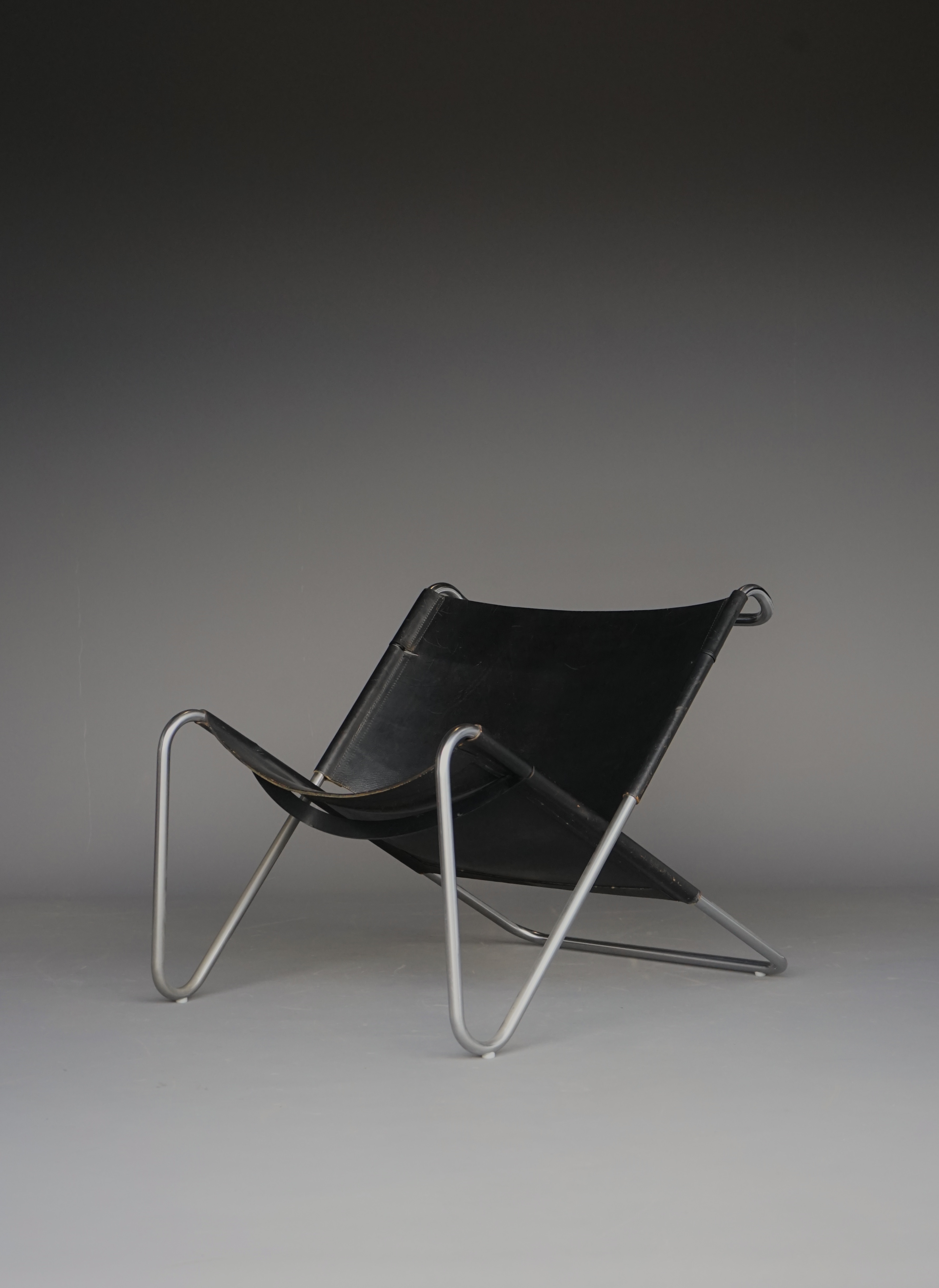
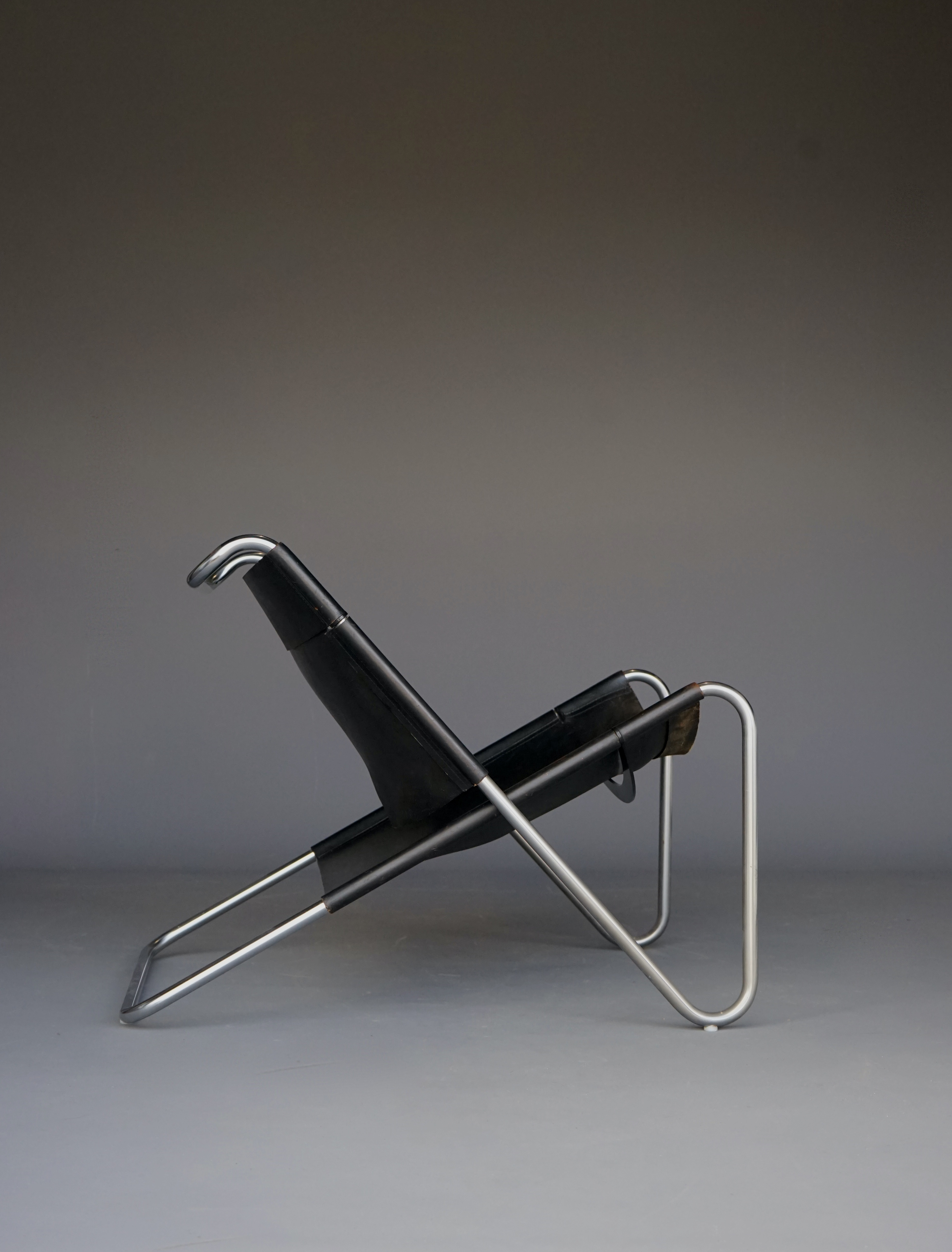
Kwok Hoi Chan (HK 1939-1990)

Rare sz15 lounge chair for ‘t Spectrum 1973.


This sculptural chair was manufactured for a short period during which time it is believed that around only 100 of the chairs were manufactured. This one was purchased from the first owner and is in superb original condition with only minimal signs of age and use.
.
Tubular steel and thick leather 72x90x68cm

Price: 3.600 euro

http://www.merzbaufurniture.com

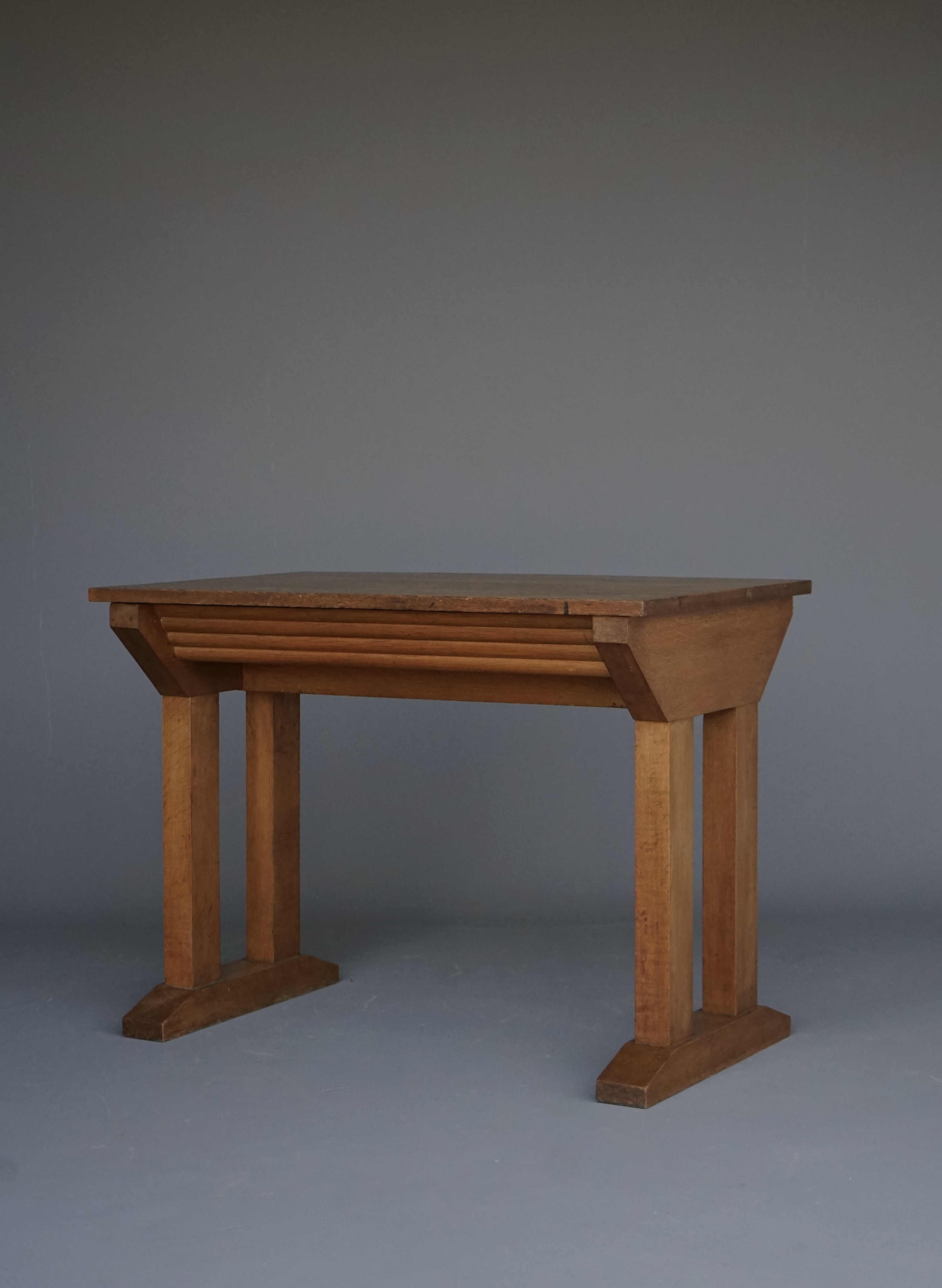
Circa 1930s-40s table / desk

99.5 x 62 x 74.5cm high / solid oak construction.

Dutch oak constructivist table. A simple designed small side table (or desk) that combines classical and geometric block components to form a bold design table with quite an architectural feel to it.

There are some old marks and patina from years of use, but overall it is in good solid condition.

Price: 895 euro

http://www.merzbaufurniture.com

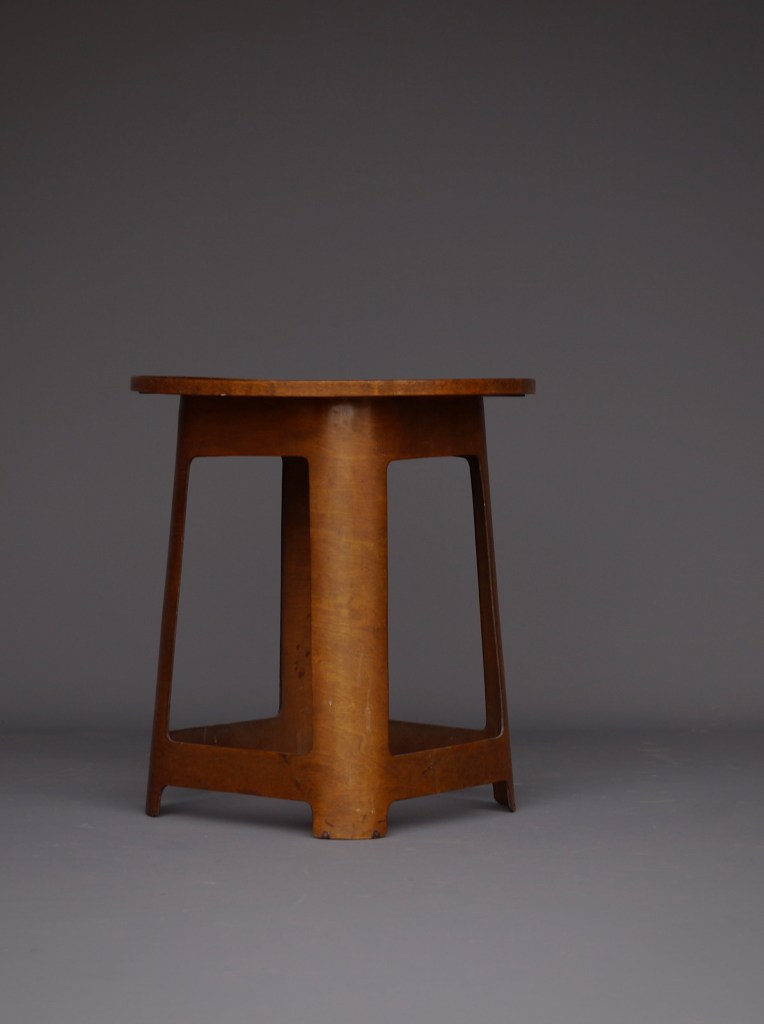
Isokon No.1 Stool

Venesta plywood table/stool for Isokon. 1930s

Plywood No.1 table/stool with its accompanying circular tray. Manufactured by Luterma. Both stool and tray are stamped/labelled Venesta.

The British furniture entrepreneur Jack Pritchard managed Venesta the import company for Luterma in England who later formed the Isokon furniture company which most notably employed Marcel Breuer. These tables/stools were distributed in England post 1933 until 1939 exclusively by Isokon alongside designs by Marcel Breuer and Egon Riss.

Although the designer of the stool remains anonymous, in 2004 the art historian Alastair Grieve described a modification of the original Luterma stool (of which this stool is one) when he wrote that the original design was subsequently re-designed by the architect and founder of the Bauhaus Walter Gropius (hired as a consultant to Isokon). The very slight alterations Gropius made was to include sharper curves to the cut-out squares of the stool. Gropius’s drawings for the redesign can reportedly be found in the collection of the V&A Museum, London.

The separate tray placed on top of the stool is unusual and rare in that it is much thinner than all other trays we have seen. This has led to some minor warping over time (which may have been why it was produced later with a thicker rim?) The thinner rimmed tray may suggest that this was an early production or at the least a more limited production?

h.46.5cm x w.44cm x d.44cm

Literature:-

  • Kermik, Juri (2004) The Luther factory: Plywood and furniture 1877-1940
  • Daybelge & Englund, (2019); Isokon and the Bauhaus in Britain
  • Pritchard, Jack (1984); View from a Long Chair: The Memoirs of Jack Pritchard

Price: 3.650 euro

http://www.merzbaufurniture.com