Jan de Jong (Nl 1917-2001) / Dom Hans van der Laan (1904-1991)

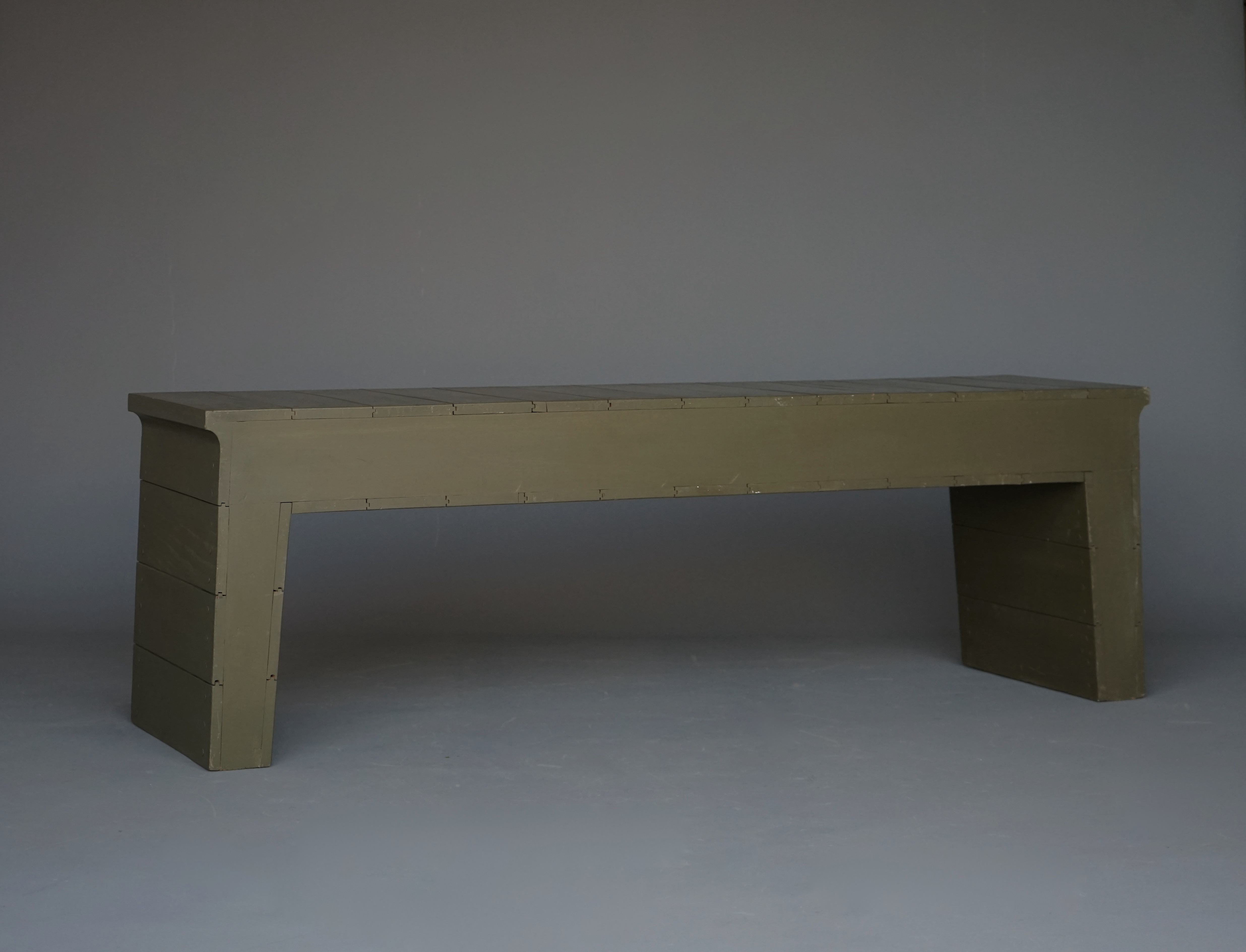
Rare Bossche School bench for Vincentius Church, Netherlands. 1964.

162.5 x 45 x 52.5cm high.

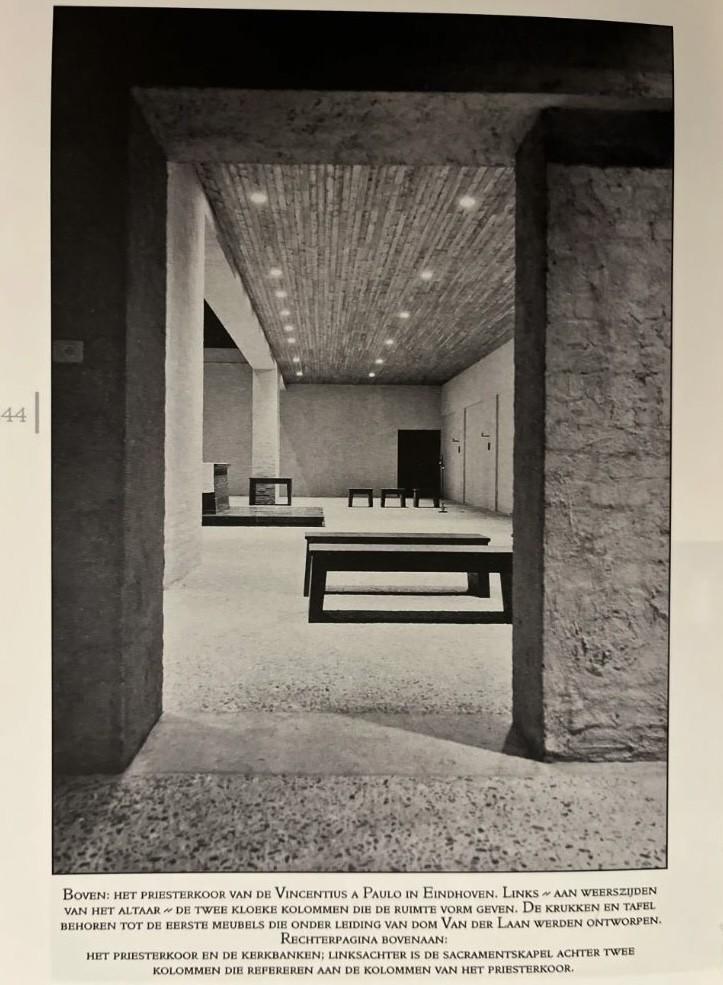
Early design bench (1964, Netherlands) by Jan de Jong, the Dutch Bossche School architect and protegé of the Dutch Benedictine monk and architect Dom Hans v.d. Laan. The bench was made for and used in the Vincentius a Paulo church in Eindhoven; an important early example of Bossche School architecture by De Jong. 

The installation of the furniture for the church was made under the supervision of Dom Hans v.d. Laan. Essentially it was through these early Jan de Jong projects that Dom Hans v.d. Laan was able to witness the realisation of his complex design ideas and beliefs for what was possibly one of the first times.

Price: 5.700 euro

http://www.merzbaufurniture.com

Delft School bench

200 x 44.5 x 65.5cm high (seat height 43cm). Solid oak wood.

A stylish and robust Delft School bench/seat. School of M.J. Granpré Molière or A.J. Kropholler .

Traditionalism in the Netherlands emerged shortly after the First World War. It was not so much a style as more of an attitude among architects who, in response to Functionalism and the Expressionism of the Amsterdam School, rediscovered the purity and simplicity of traditional country architecture. Under the leadership of M.J. Granpré Molière, professor at the Technical University in Delft from 1924 until 1953, many of these architects gathered in a movement which after World War Two became known as the Delftse School (‘Delft School’). Granpré Molière’s ideas include a preference for tidy brickwork, a minimal use of decorations, the inspiration taken from national architectural traditions and the use of ‘honest’ (i.e. traditional and natural) materials.
https://www.archimon.nl/history/traditionalism.html

It is easy to comprehend how subsequent Dutch design evolved into an even more simplified and pared-down version of such furniture as this. There are clear visual similarities to Rietveld or De Stijl.

Price: 2.650 euro

http://www.merzbaufurniture.com

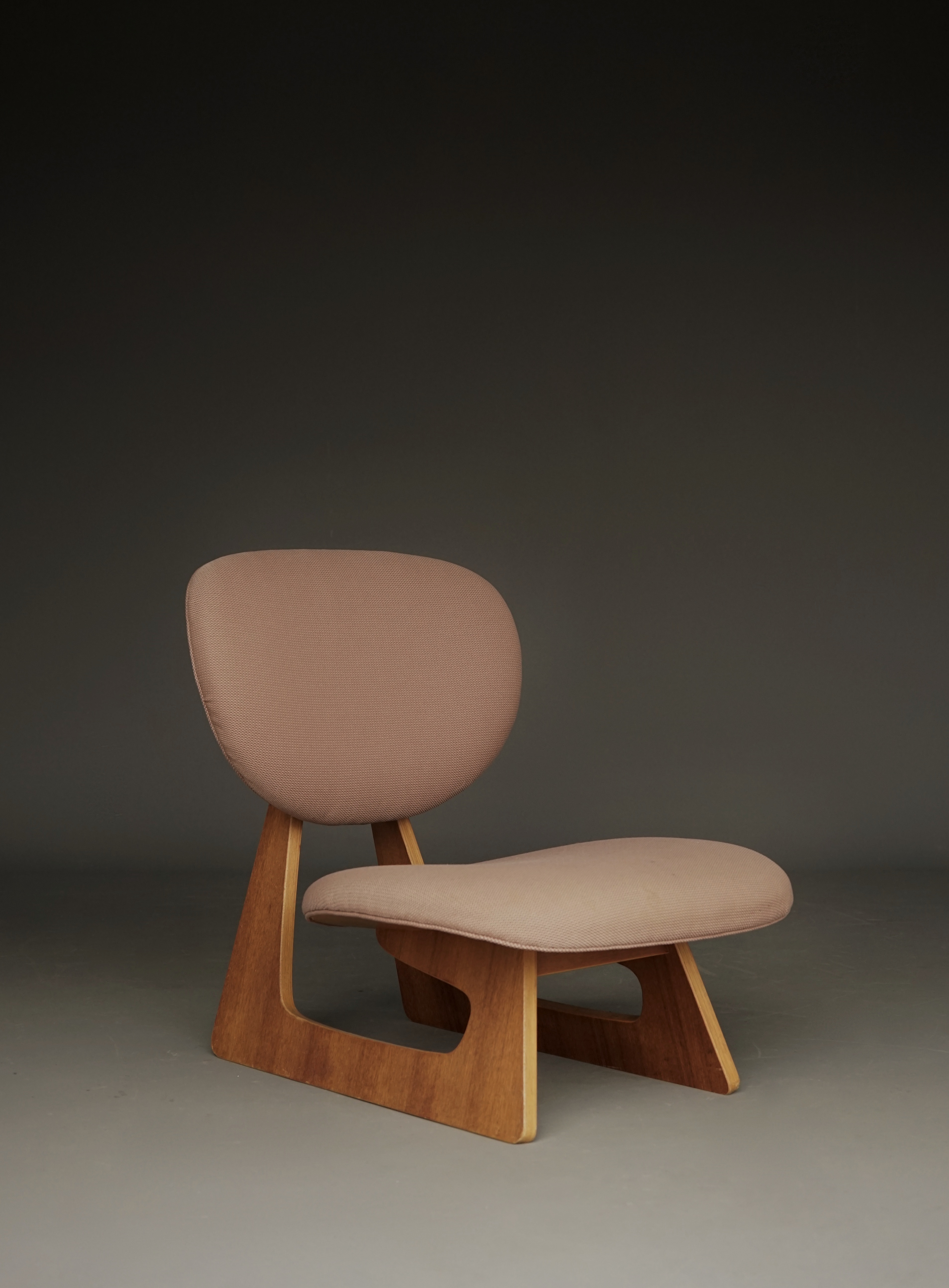
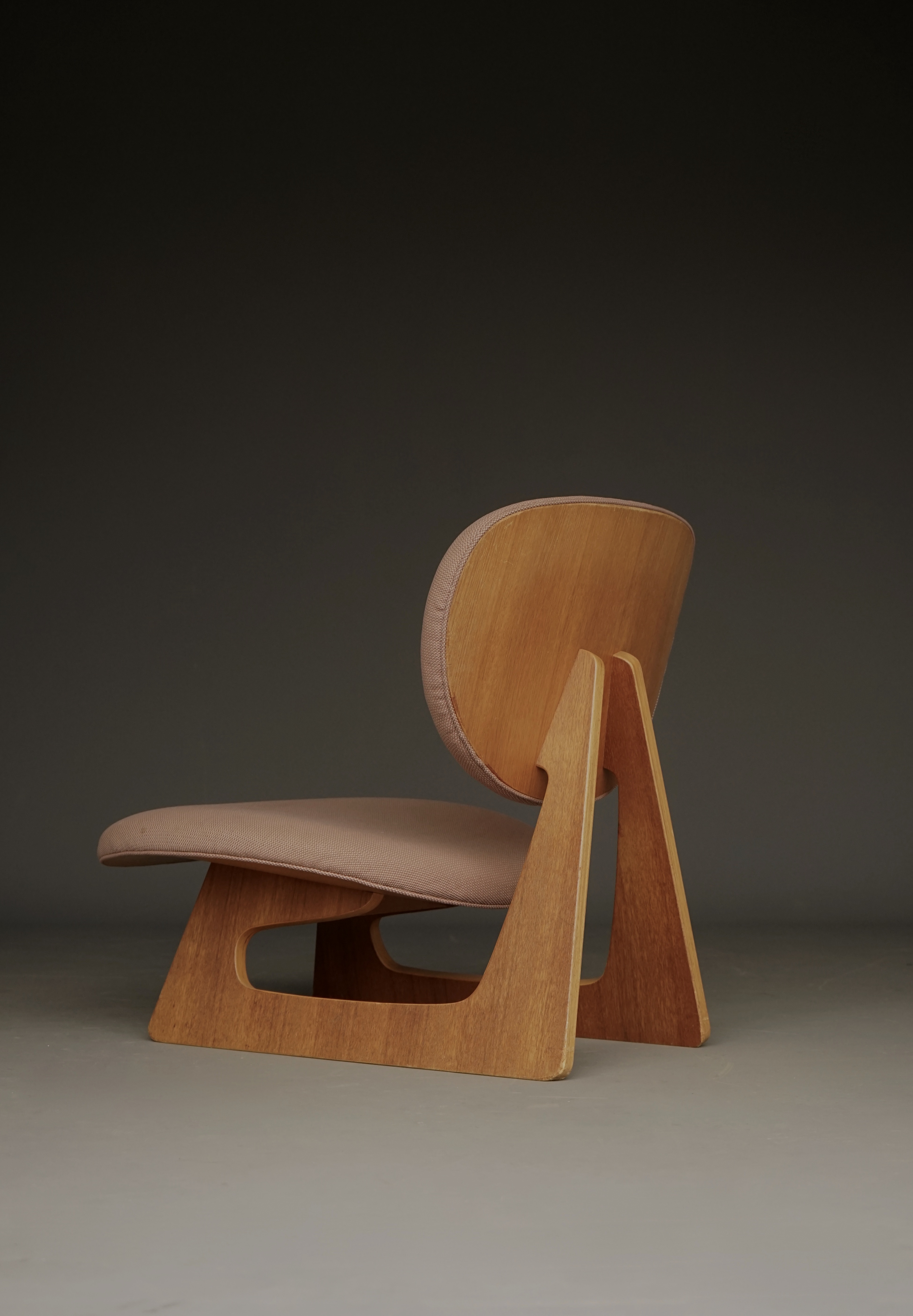
Junzo Sakakura and Daisaku Cho (Japan c20th)

Tendo, Japan. Circa 1970s. (makers label to back). Veneered plywood with original upholstery.

A scarce (outside of Japan) original Teiza Isu (low chair) model 5016 lounge chair. Designed in 1960 by Junzo Sakakura and Daisaku Cho who were prominent Japanese modernist figures who collaborated on iconic postwar furniture.

As the name “low chair” suggests, the low seat, at 29cm, allows you to sit cross-legged or with your legs stretched out. The rear of the seat is slightly sloped, and the thick cushion supports your body, allowing you to sit without straining your lower back.

Original fabric with some minor signs of age and use.

Price: 3.700 euro

http://www.merzbaufurniture.com

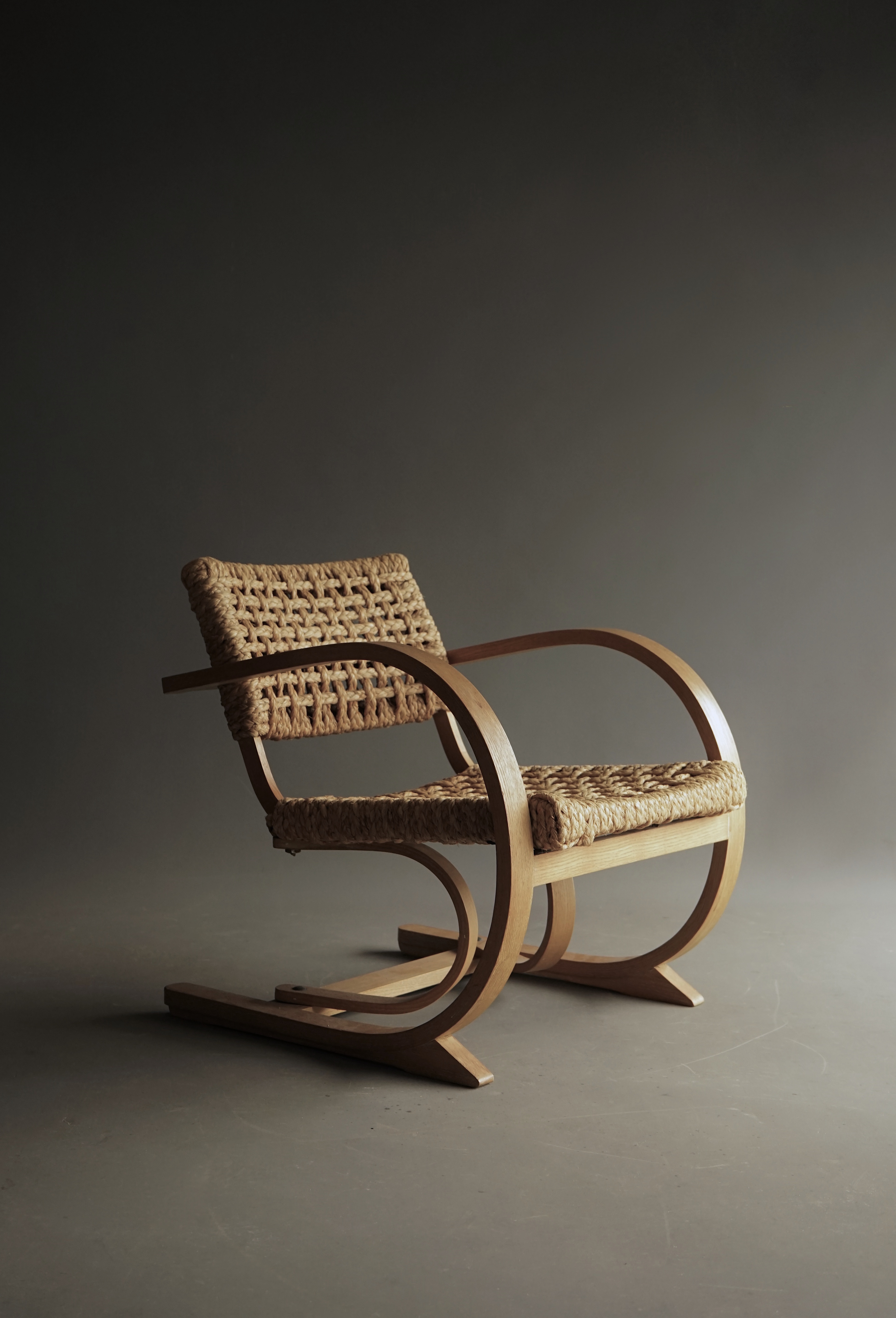
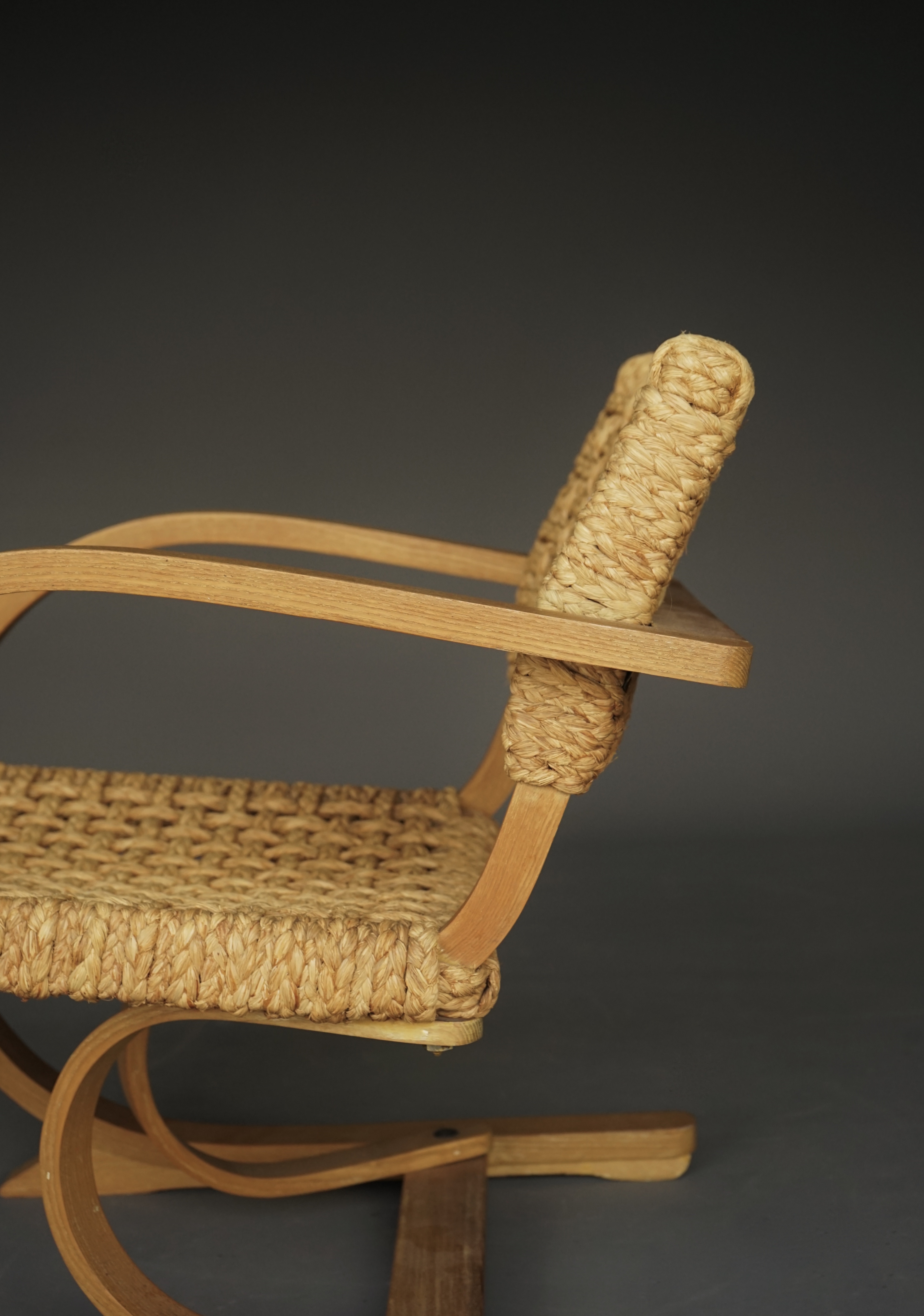
Bas van Pelt (Netherlands 1900-1945)

Oak framed cantilever chair with thick rope woven seat and back. 1930s. My Home/ The Hague.

58 x 68 x 66.5cm high (seat height 35.5cm)

Comfortable chair, designed by Bas van Pelt ca. 1936 for My Home Netherlands.
This chair, designed in 1936 was a precursor to the similar chairs by French designers Andoux & Minet (1940s/50s).

Examples can be found in the permanent collection of the Stedelijk Museum in Amsterdam. Documented in the book ‘My Home: Bas van Pelt, Binnenhuisarchitectuur 1931-95,’ P.Faber, Uitgeverij010.

Price: 3.250 euro

http://www.merzbaufurniture.com

Gaetano Pesce (Italy 1939-2024)

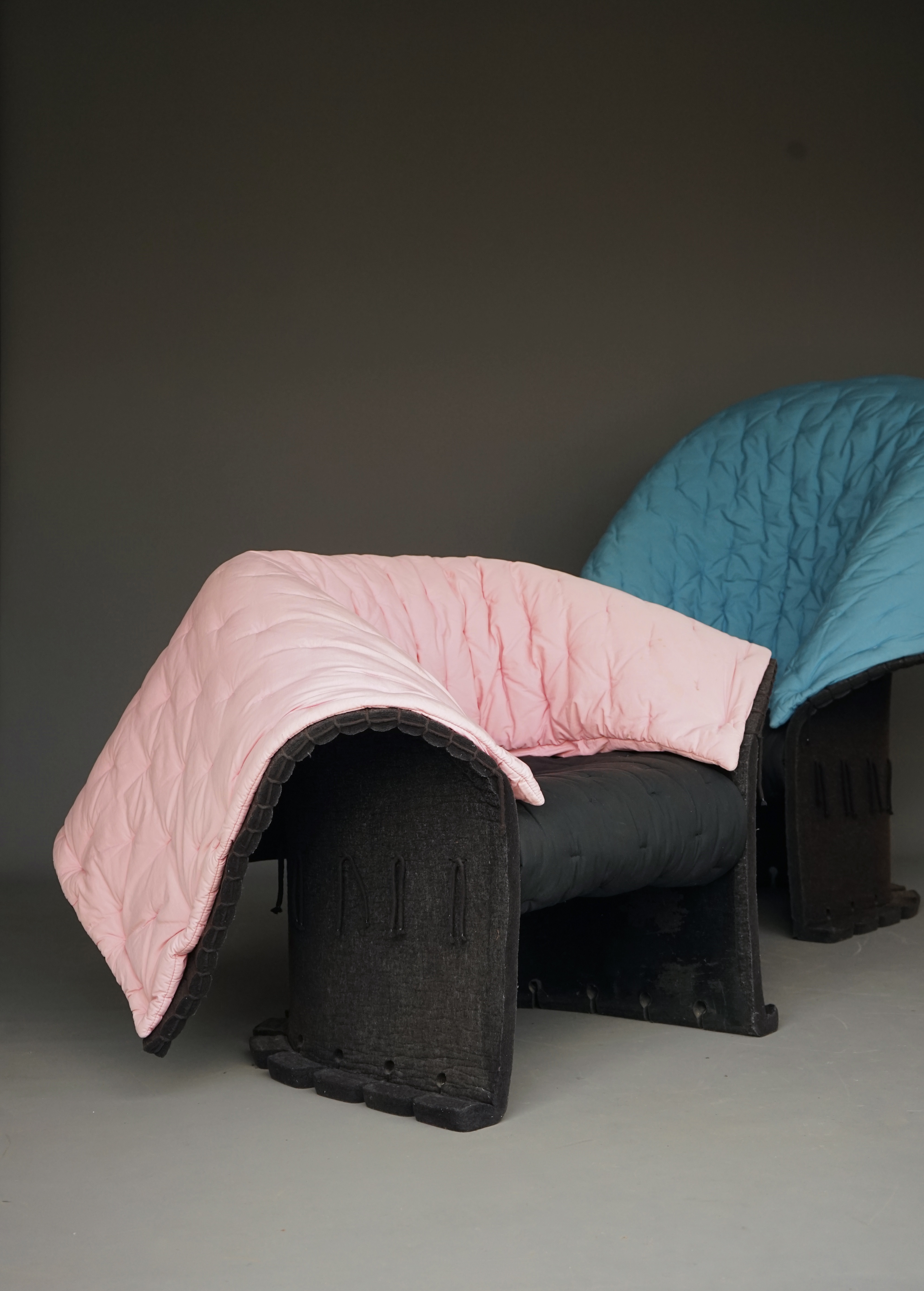
Cassina 1980s. Designed by Gaetano Pesce in the 1980s this is a rare early low back edition feltri (felt) chair which was purchased from its first owner.

113cm wide (at its widest with quilt attached) x 83cm deep x 72cm high (seat height is 44cm)

The feltri chair is a radical 1980s Italian design that brought craft materials and thinking into the realm of product design. Pesce was aware (like the artist Joseph Beuys in the 70s) of the symbolism of felt as an industrial material – serving as a metaphor for warmth, survival and psychological protection. The feltri was manufactured with detachable quilt back and seat covers a variety of colourways  (like many products during the era) in order to appeal to the taste of customers. This chair has a black seat and extra back cushion and a light soft pink detachable quilt (the previous owner used it mostly without the quilt). 

Price: 3.900 euro

http://www.merzbaufurniture.com

Gino Sarfatti (Italy 1912-85)

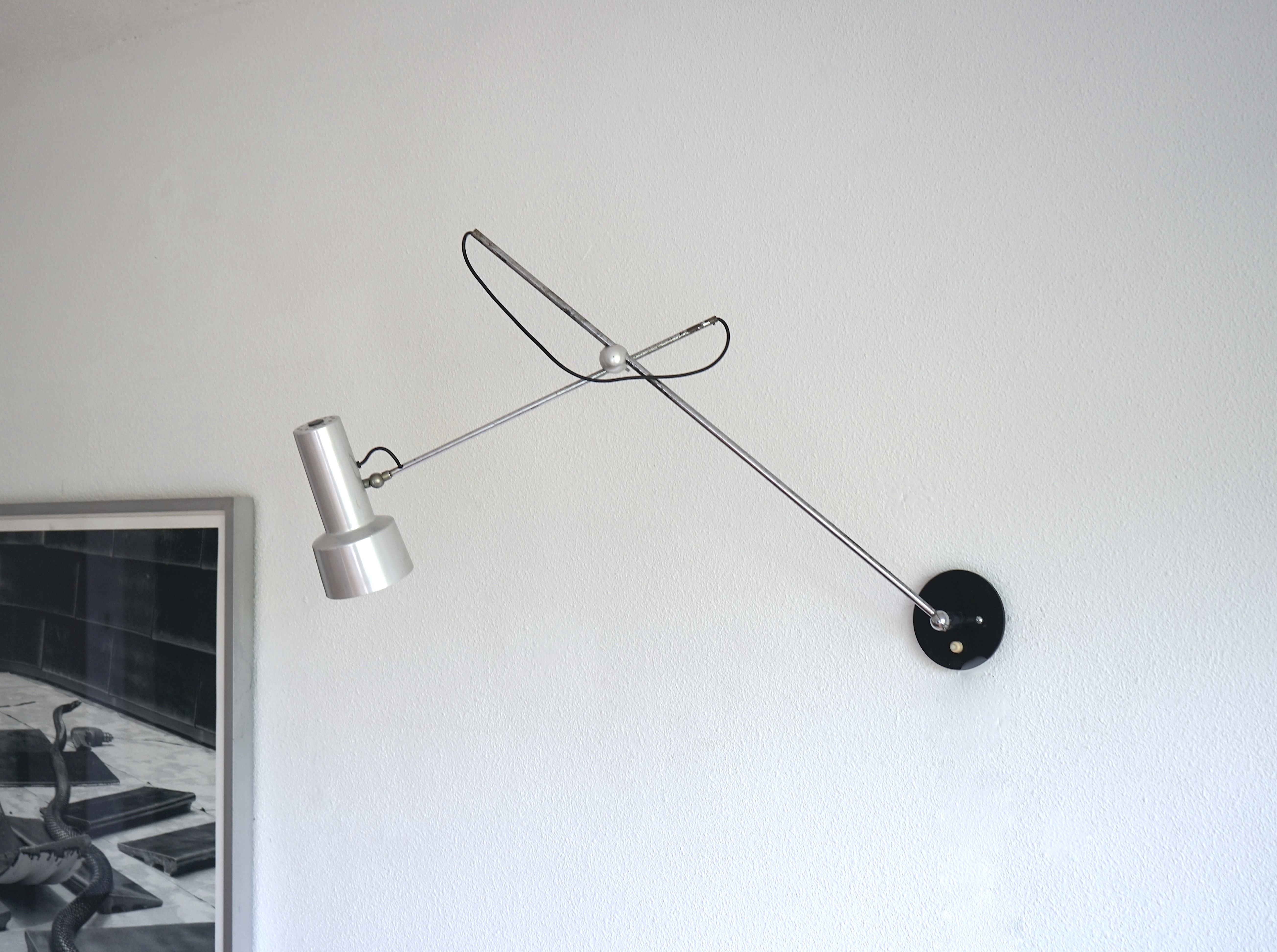
Iconic Gino Sarfatti Model 213 wall lamp designed for Arteluce in 1956. Aluminium shade.

A rare classic Italian modernist lamp in all original, vintage used condition.

Price: 6.800 euro

http://www.merzbaufurniture.com

Alvar Aalto (Finland 1898-1976)

Model 70 two-tier side table. Birch and birch faced plywood.

O.Y. Huonekalu-ja Rakennustyötehdas A. B., Turku, Finland.

A classic 1930s-40s early Aalto production circular table. This table is in superb condition, with restored table top and a wonderful honey glazed colour.

Price: 3.200 euro

http://www.merzbaufurniture.com

Dom Hans van der Laan (Netherlands 1904-1991)

Tulip wood with metal work & inset gemstones.

130 x 98 x 95cm high

A large Bossche School alter table. (that can function as a high table like in a kitchen or shop)

Designed by the Dutch Benedictine monk/architect Dom Hans vd Laan. Unlike most of van der Lann’s furniture this piece is decorated with a narrow frieze that goes all around the base section. The metal and stone decorative elements across the side is possibly by Dutch mid-century metal worker Jan Noyons and colour selected by Wim van Hooff. This rare example of Van der Laan’s designs was part of a collection of furniture came from a post-war church in Amstelveen in The Netherlands. The church was subsequently destroyed, and the furniture sold off.

Note: The tabletop and base can be separated for easier transport.

Price:  4.500 euro

http://www.merzbaufurniture.com