A large basalt stone sculpture composed of simple modernist/architectural forms. At some time this sculpture has stood in a garden which has resulted in a thin layer of moss on some parts.
Originally designed by Bauhaus architect Walter Gropius in the 1930s as a newspaper storage cabinet, this version was manufactured in small numbers in Italy in the 1960s (maker unknown). Please note that this is a solid and well made item that is heavy (note: it can not be dismantled).
Unusual side chair (& table) – Hand-crafted/carved from solid palm wood (coconut wood). Originally purchased in the 1970s. The chair has a new drop-in bouclé upholstered seat.
A superb example of an African Dogon tribal ladder/scale. This example is believed to have been made in Mali from the early to mid-twentieth century. Traditionally the African Dogon ladder was used by the Dogon people to access the upper levels of granaries, climb onto the flat roofs of houses, and bridge clefts in cliffs.
Its repeated forms give it the aesthetic quality of a modernist sculpture.
The model 020 ‘Stick’ chair was designed by Dutch industrial designer Bruno Ninaber van Eyben in 1977.
The design is made up of three constituent parts that fit together: two pieces of angled plywood and a length of stick with a round profile. The stick in the middle connects the plywood pieces and functions as the backbone and strength of the chair.
These rare chairs were manufactured in very limited numbers due to the production costs and difficulties. Only 150 of these chairs were produced. Apart from its low production numbers the other reason that so few exist is because they can easily get damaged – Due to the stool’s fragility we recommend that it should be purchased by a design lover that appreciates its sculptural qualities rather than its functionality!
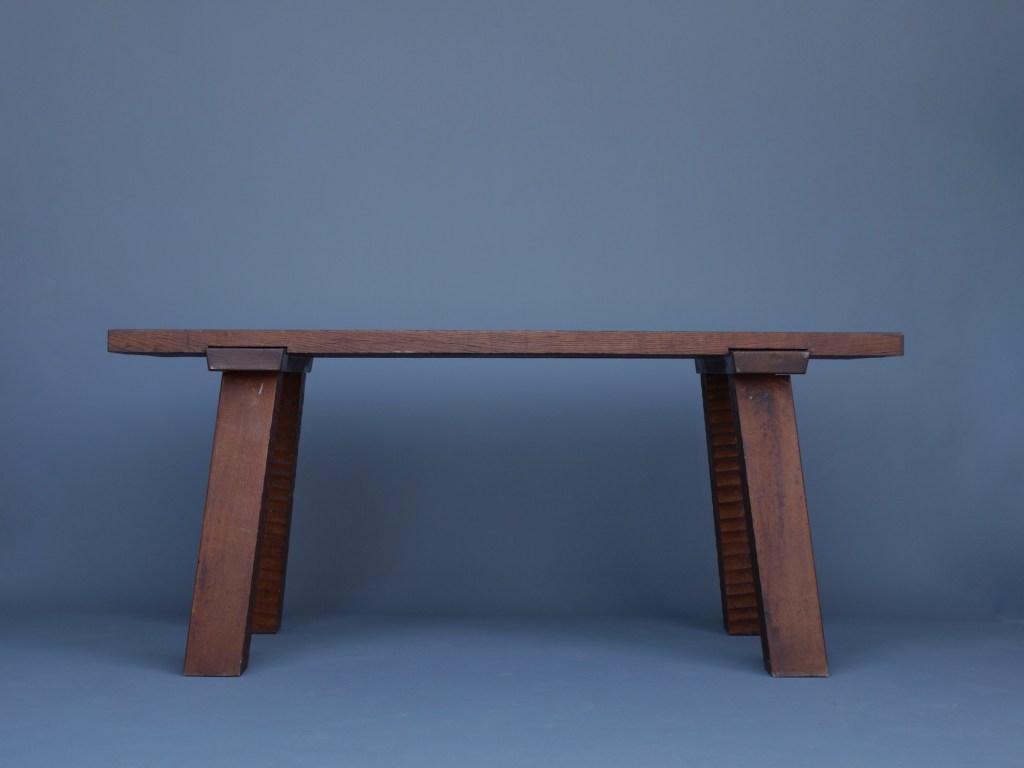
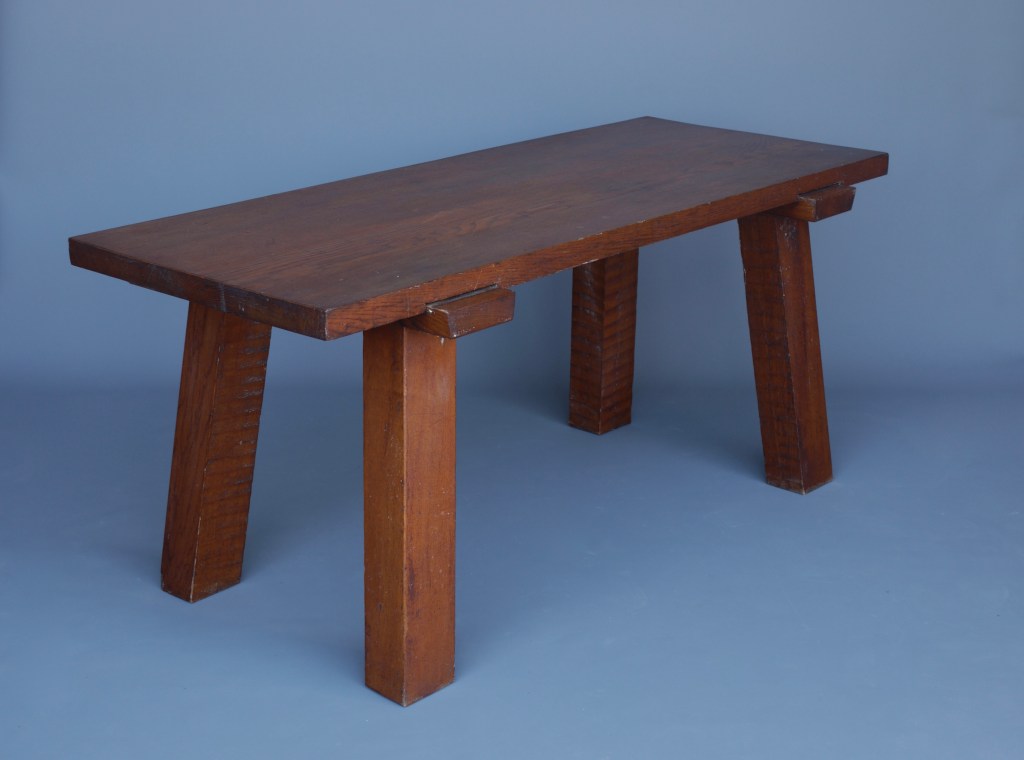
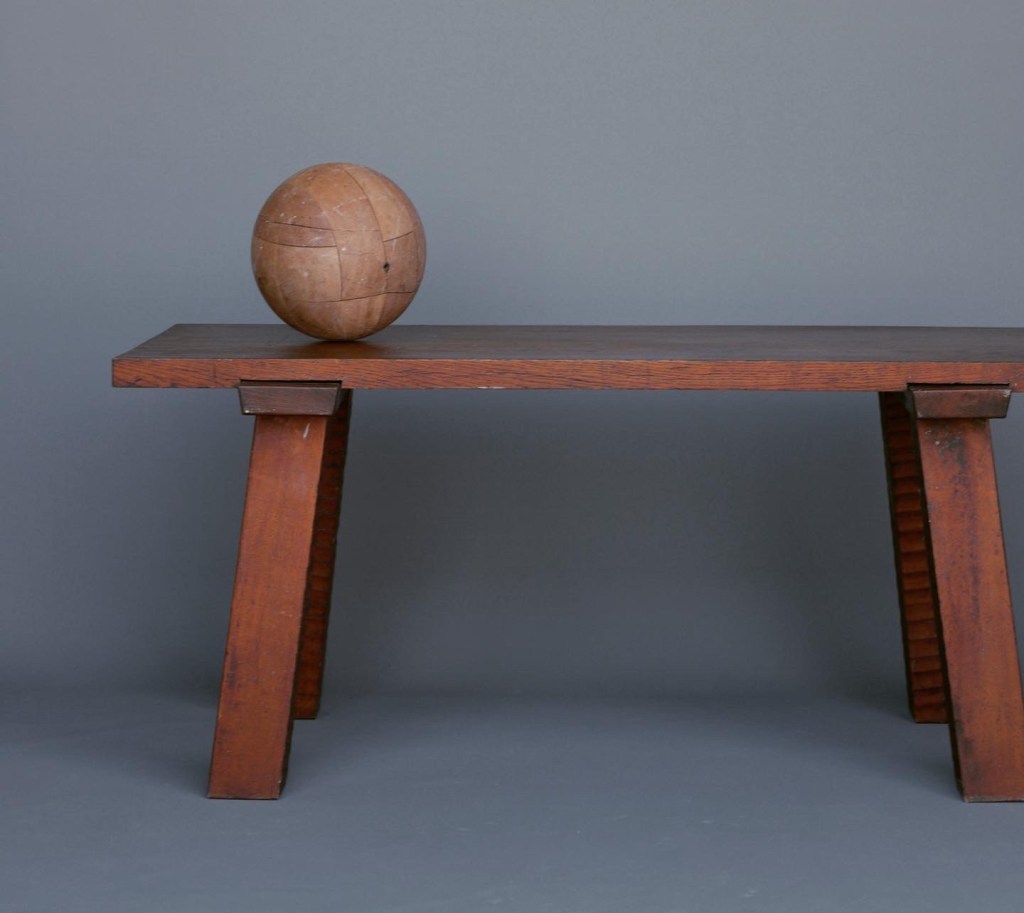
A French solid oak table with a Brutalist simplicity. The table is completely held together using traditional pegged joints rather than nails or glue that lock into place when the table is set into position. Its few features include lengthened integrated cross bars and carved planes to the inside of each leg.







 [merzbau]