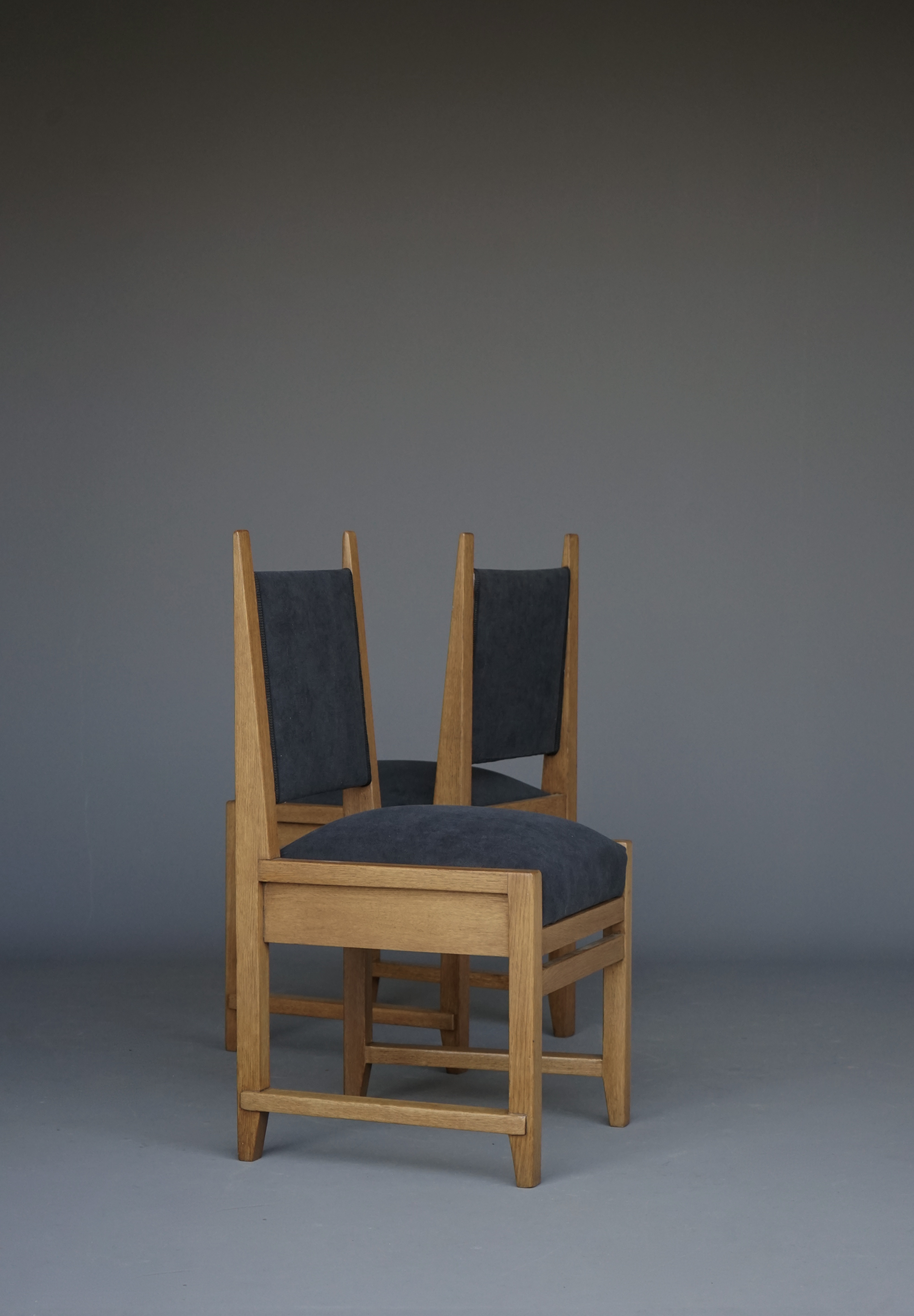
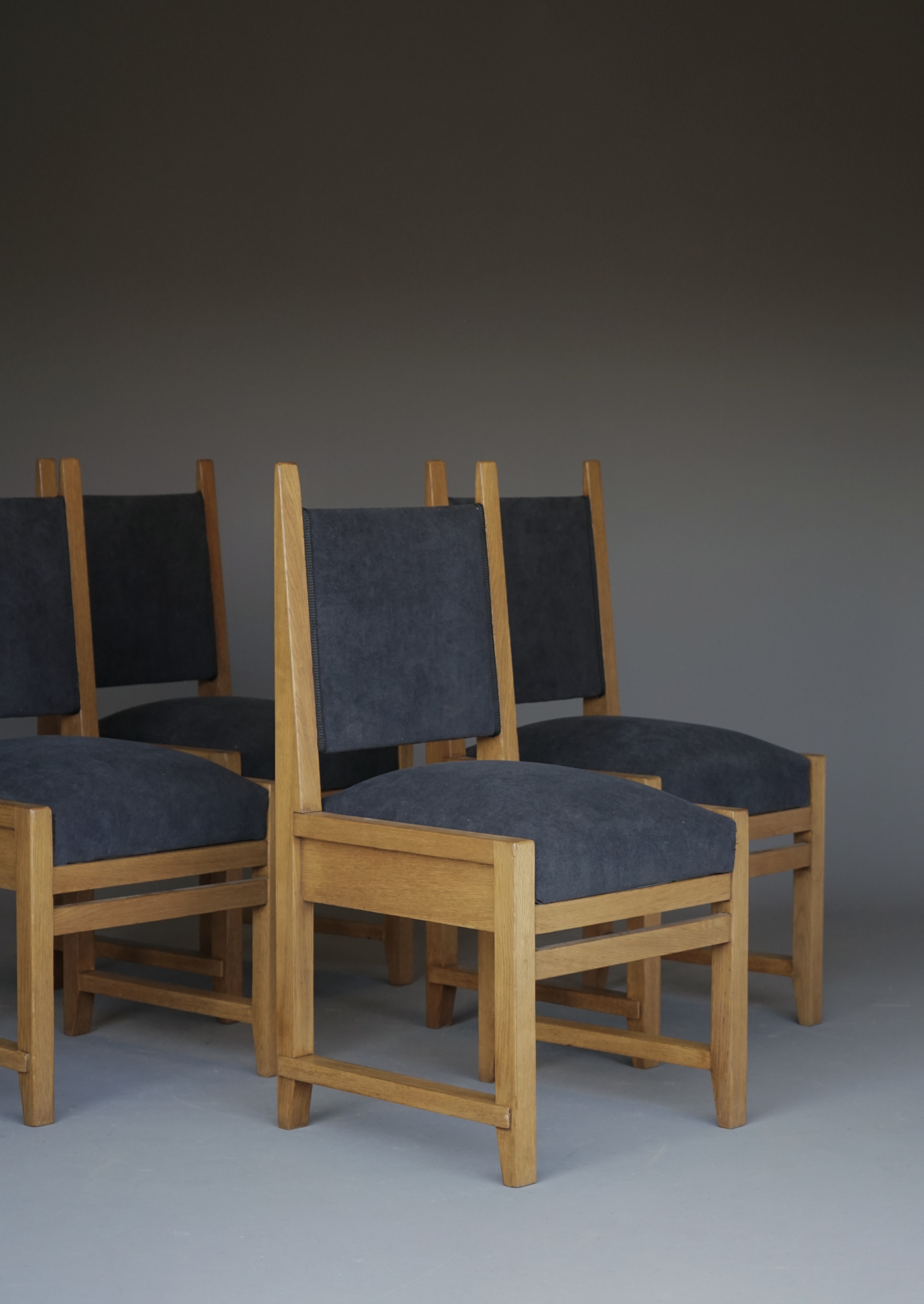
Hendrik (Henk) Wouda (Nl 1885-1946)
Rare set of four oak dining chairs (or two pairs of side chairs).
Later upholstery.
Price: 6.000 euro (set of four)
furniture, art & design
Hendrik (Henk) Wouda (Nl 1885-1946)
Rare set of four oak dining chairs (or two pairs of side chairs).
Later upholstery.
Price: 6.000 euro (set of four)
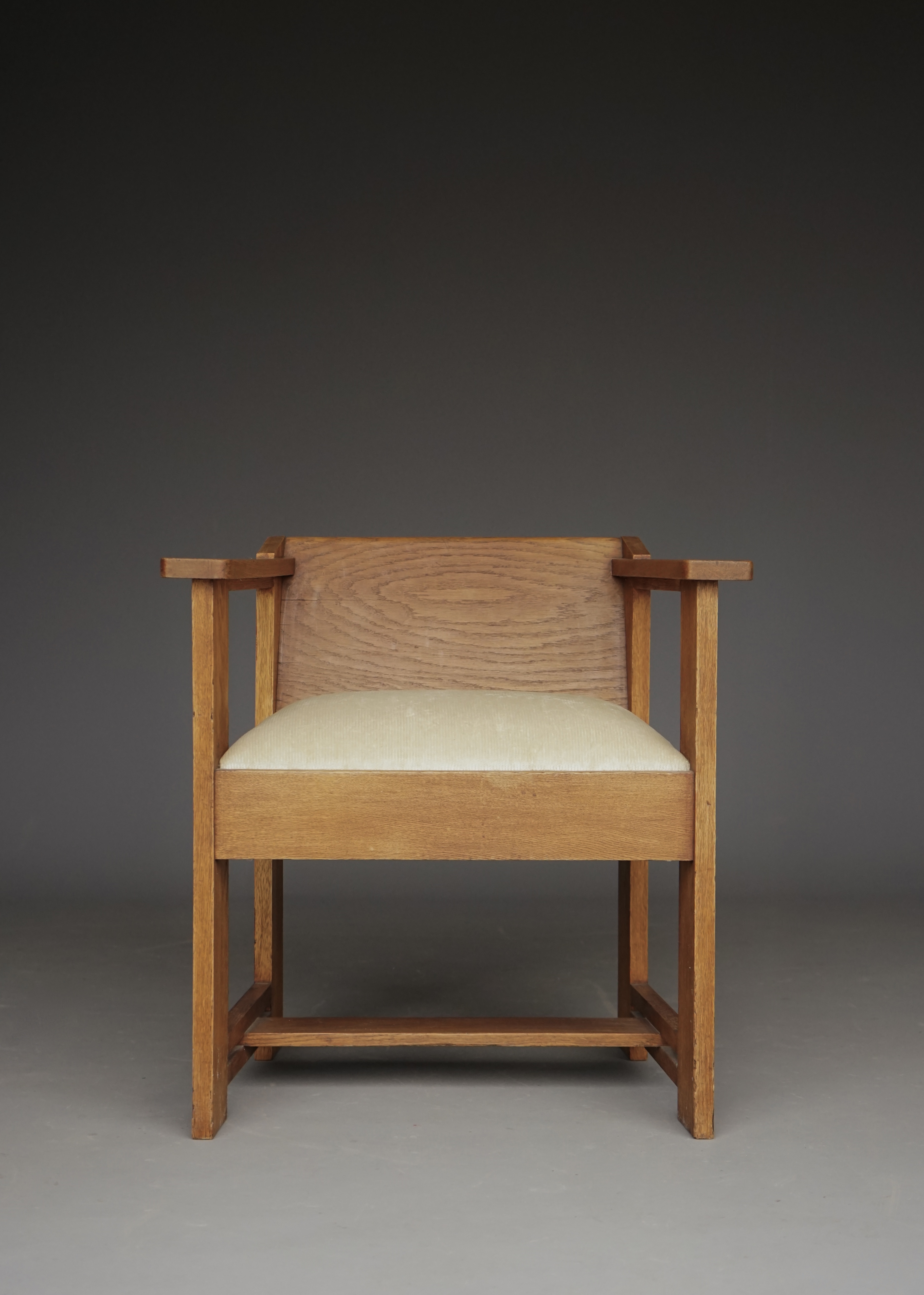
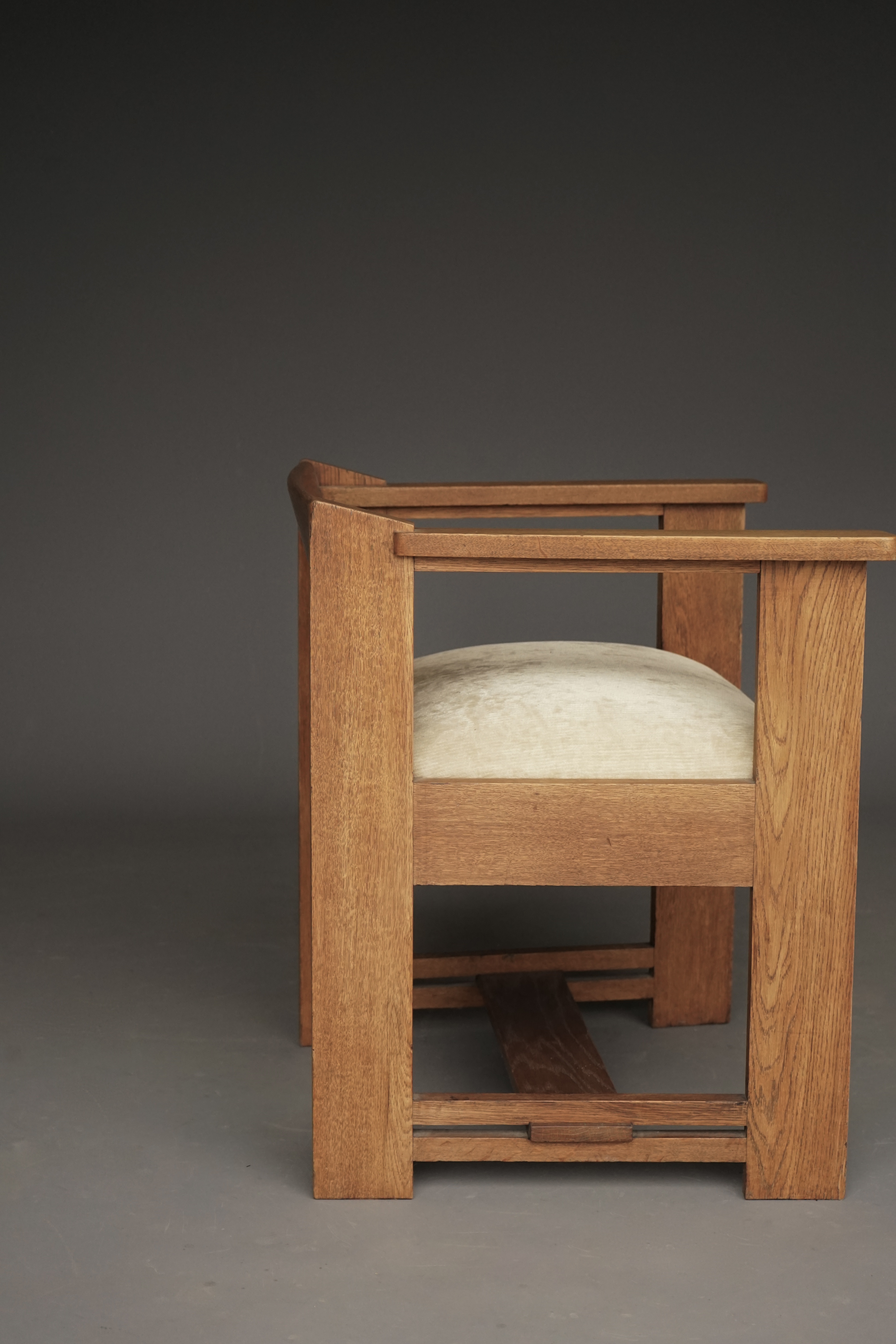
Hague School armchair. Circa 1920s (attrib. to Frits Spanjaard)
Although we have not been able to locate evidence so far to give a definite attribution, the design of this fascinating armchair is loosely attributed to the Dutch early c20th modernist interior and furniture designer Frits Spanjaard (1889-1978)
It is constructed of solid oak wood with a drop-in sprung seat with beige corduroy fabric.
64.5cm wide x 54.5cm deep x 68cm high (seat height 44cm)
Price: 3.850 euro
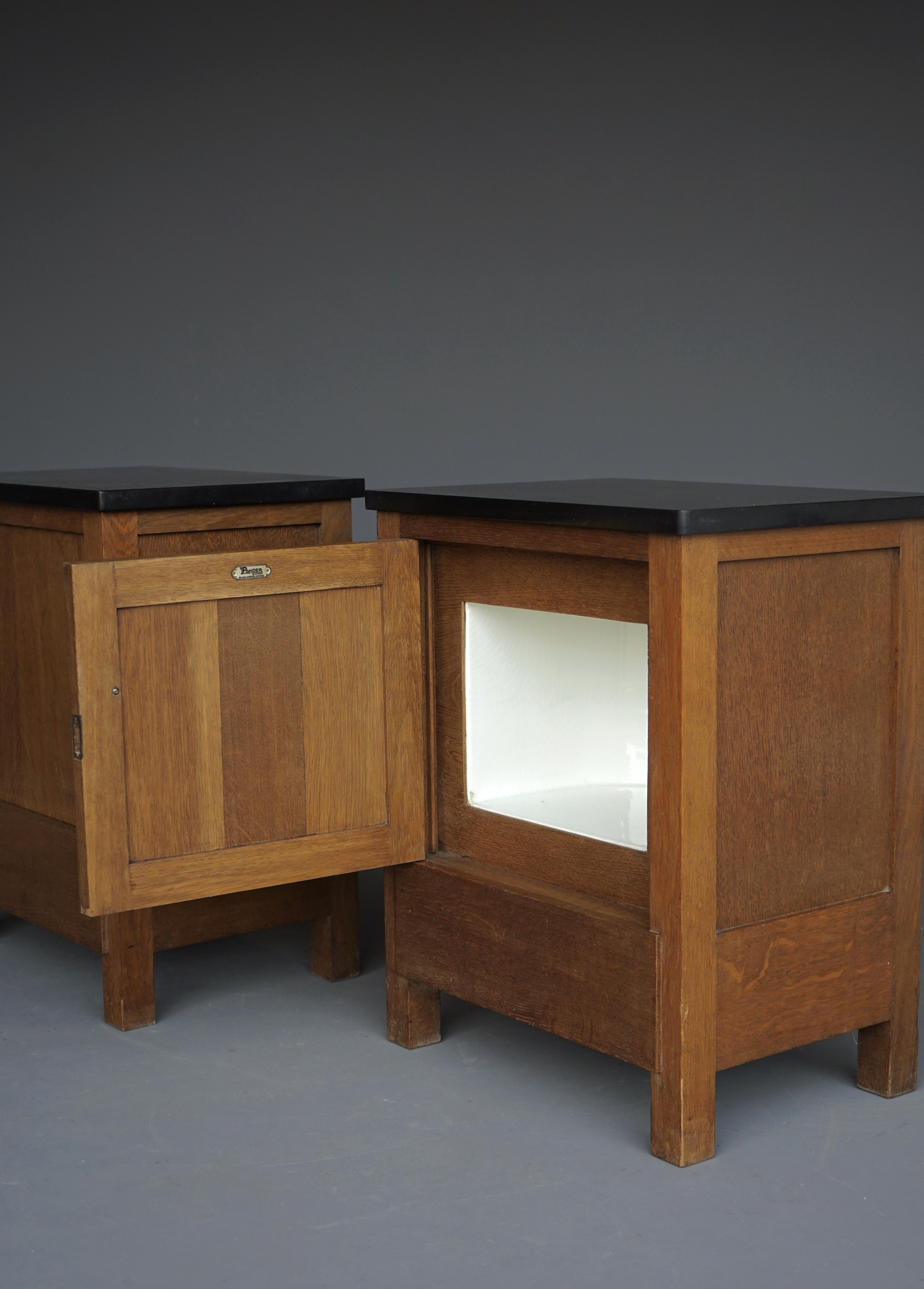

Hendrik (Henk) Wouda (Nl 1885-1946)
Pair of bedside cupboards / pot cupboards.
Oak wood with dark coromandel handles, ceramic interiors and slate tops.
Pander & Zn., 1920s (company labels inside doors). 45 x 32 x 55cm high.
A rare pair of bedside cabinets (or nightstands) by the Dutch architect and furniture designer Henk Wouda (1885-1946).
The cabinets are designed in typical Haagse School style; a fine balance of applied form and weight – In this the Dutch designers were especially influenced by the work of Frank Lloyd Wright.
The cabinets currently contain their original period fittings, namely ceramic pot holders. However, should the buyer wish it would be easy for us to have them removed prior to sending in order to make them suitable for more contemporary storage purposes.
Price: 2,350 euro
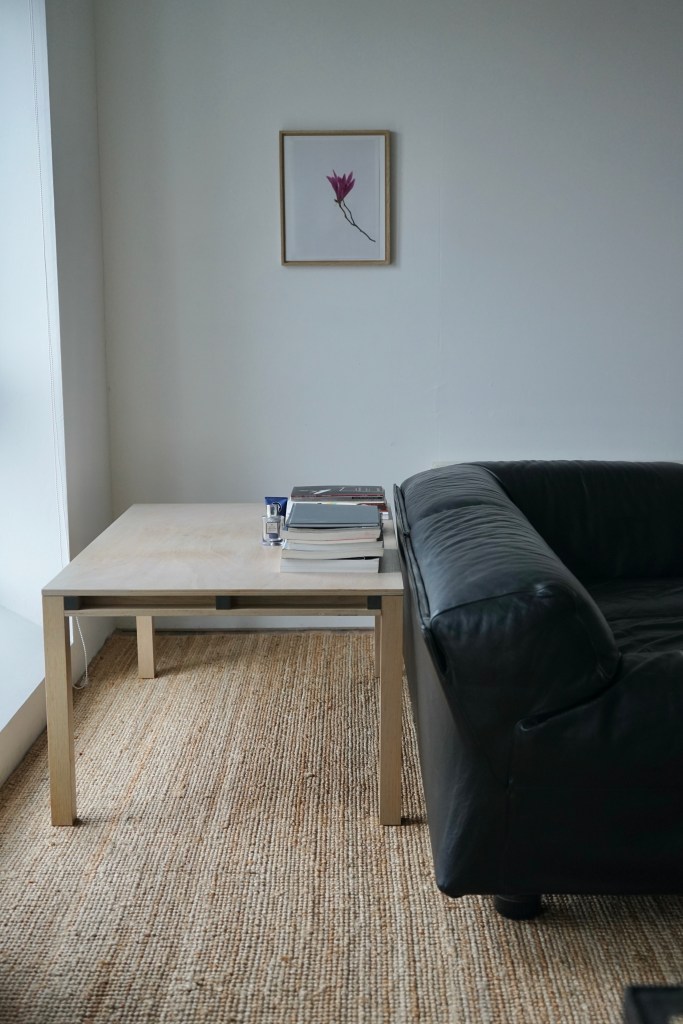
Sofa table/ coffee table. 120 x 80 x 55.3cm high. Lacquered and stained oak and plywood.
A very modestly designed constructivist table whose size measures somewhere between a dining table and a coffee table. It is particularly useful as a table at the back of a sofa as shown. The design of the table is reminiscent of the earlier modernist designs by Gerrit Rietveld/ Vilmos Huszár and the De Stijl movement. (We have images available of its ingenious construction).
This unassuming, simple table was designed by Dutch furniture maker / architect Harry Vogelaars. It is signed and dated 1998.
Note: Cassina ‘Fiandra’ leather four part sofa by Vico Magistretti also available.
Price: 900 euro
Vladimir Tatlin (Russia 1885-1953)
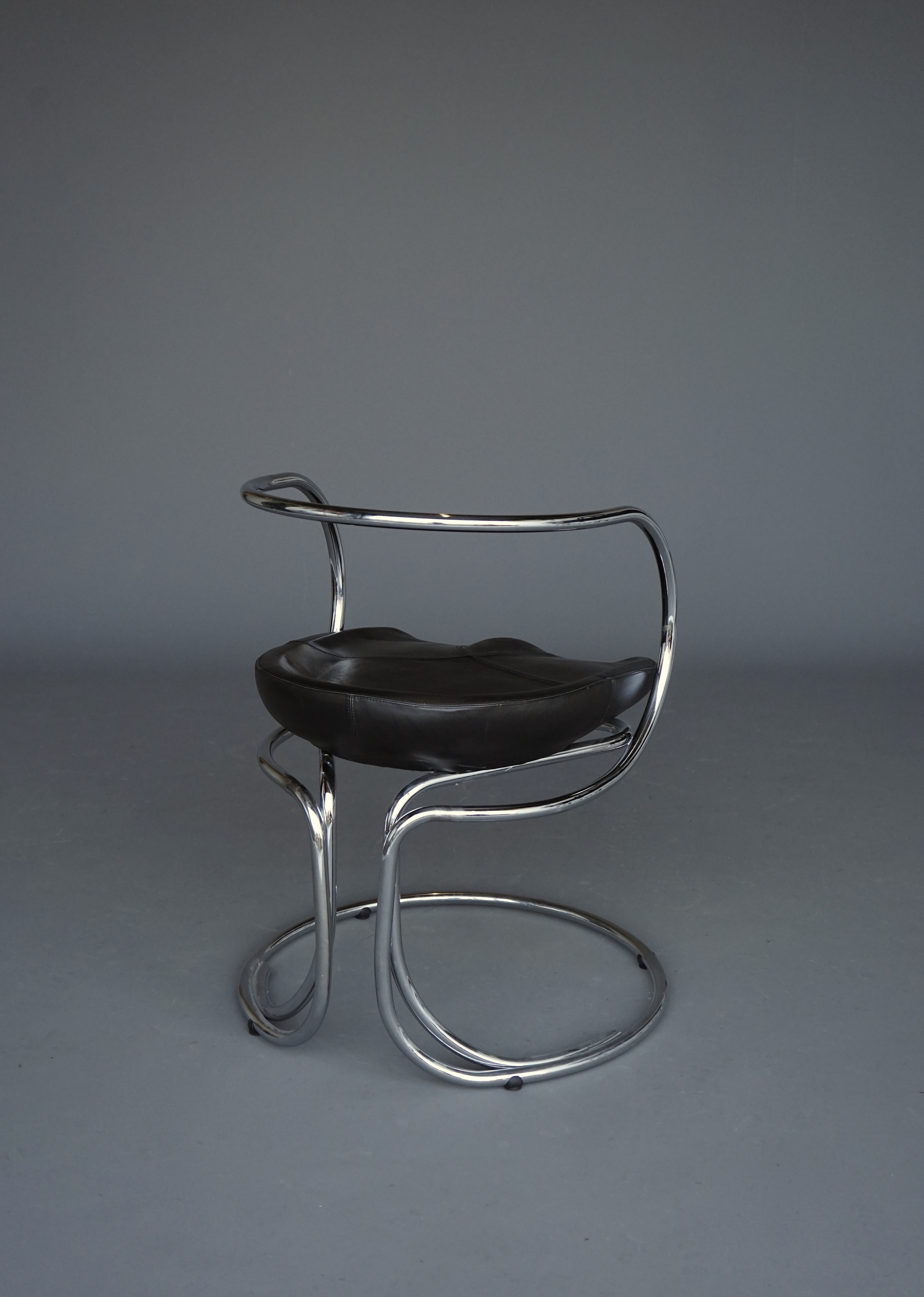
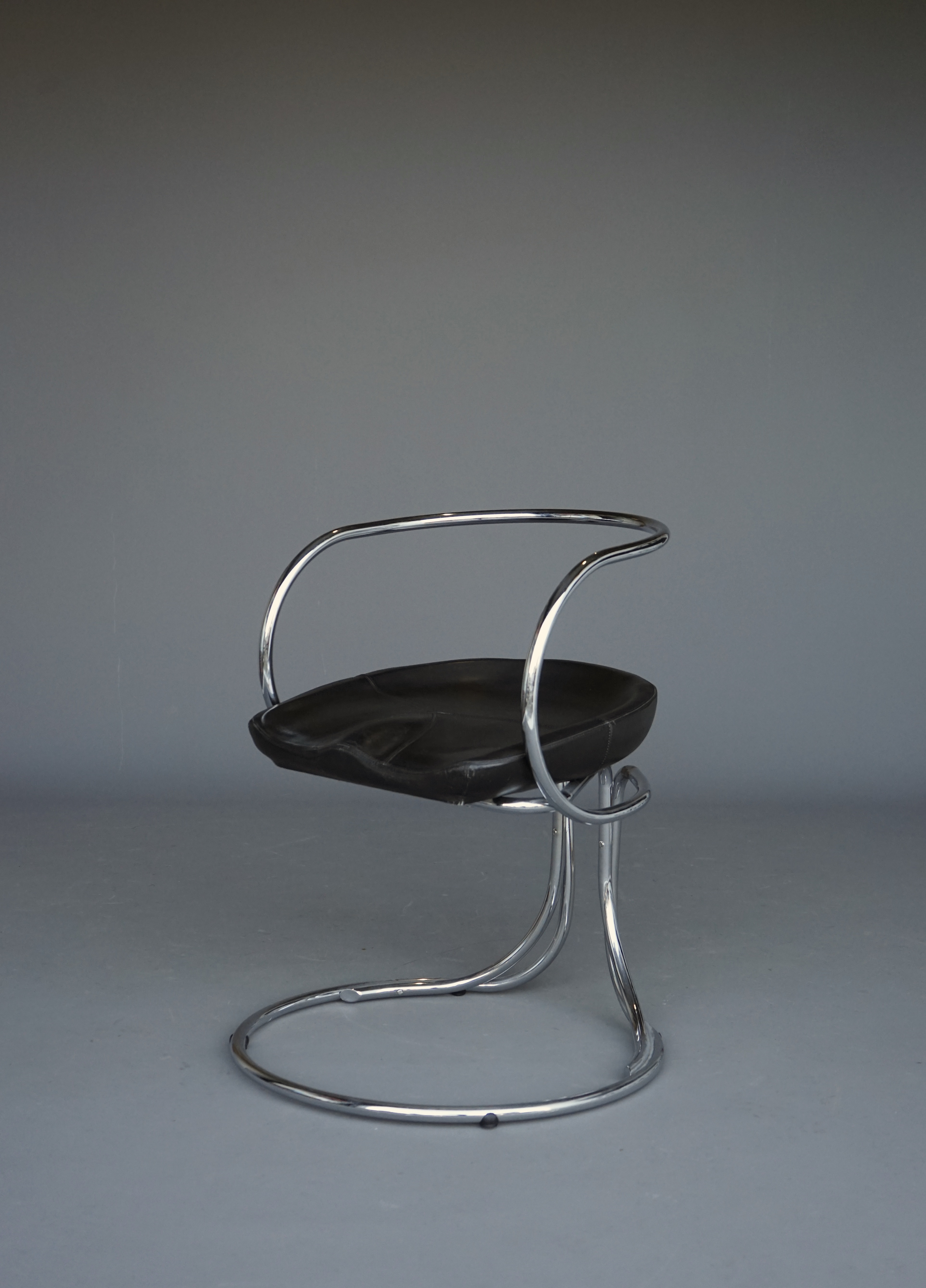
Tatlin Chair
Chromed steel tubular frame with black leather upholstered seat. 55cm x 70cm x 80cm high.
Vladimir Tatlin was a Russian and Soviet painter, architect, and stage-designer. Tatlin achieved fame as the architect who designed The Monument to the Third International, more commonly known as Tatlin’s Tower, which he began in 1919. With Kazimir Malevich he was one of the two most important figures in the Soviet avant-garde art movement of the 1920s, and he later became an important artist in the Constructivist movement
Designed by Russian constructivist Vladimir Tatlin (1885-1953) in 1927. The prototype for this chair was made initially in bent cane. From the 1950s it was manufactured by Nikol International, Italy with a tubular metal frame and leather seat.
Price: 1.400 euro
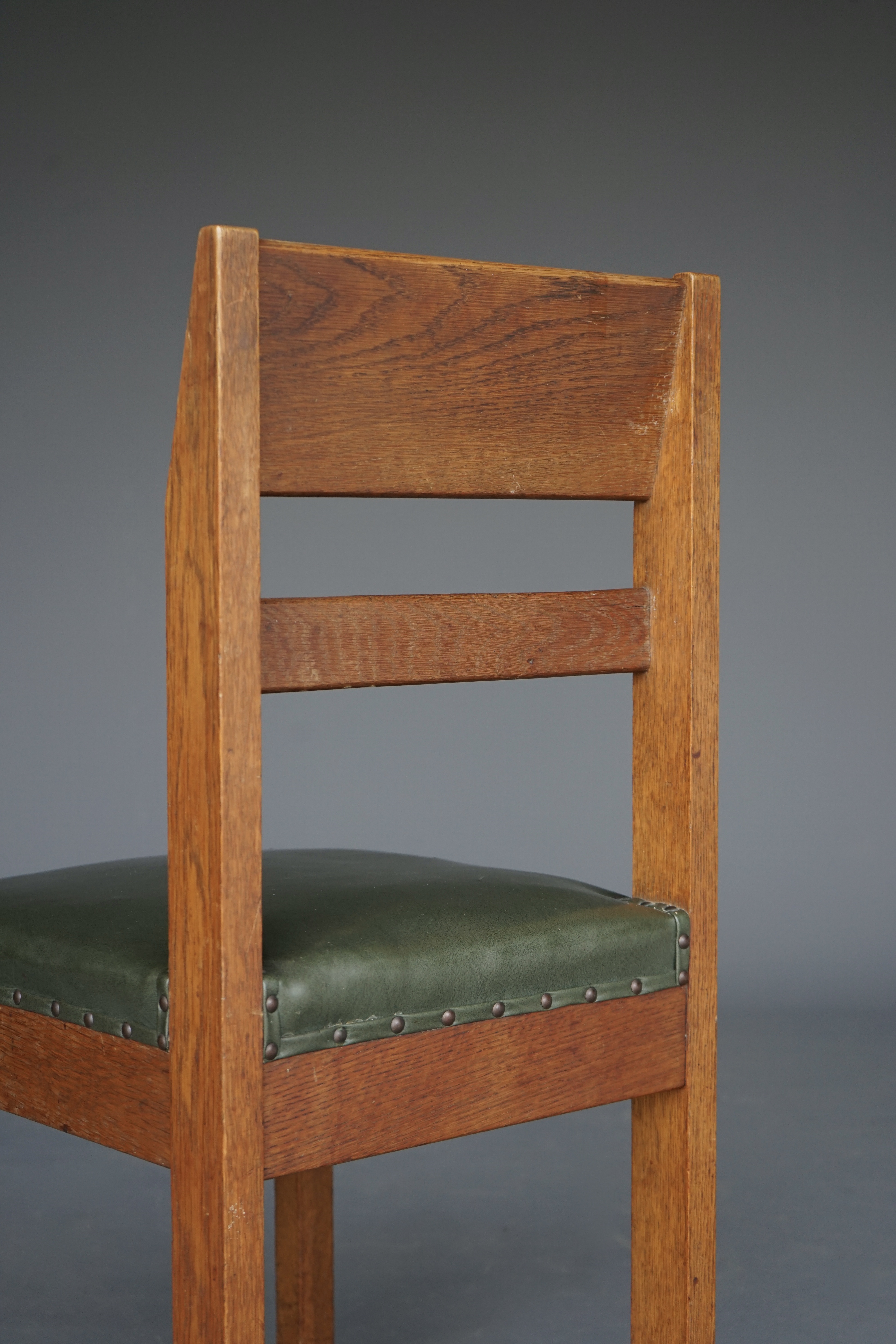
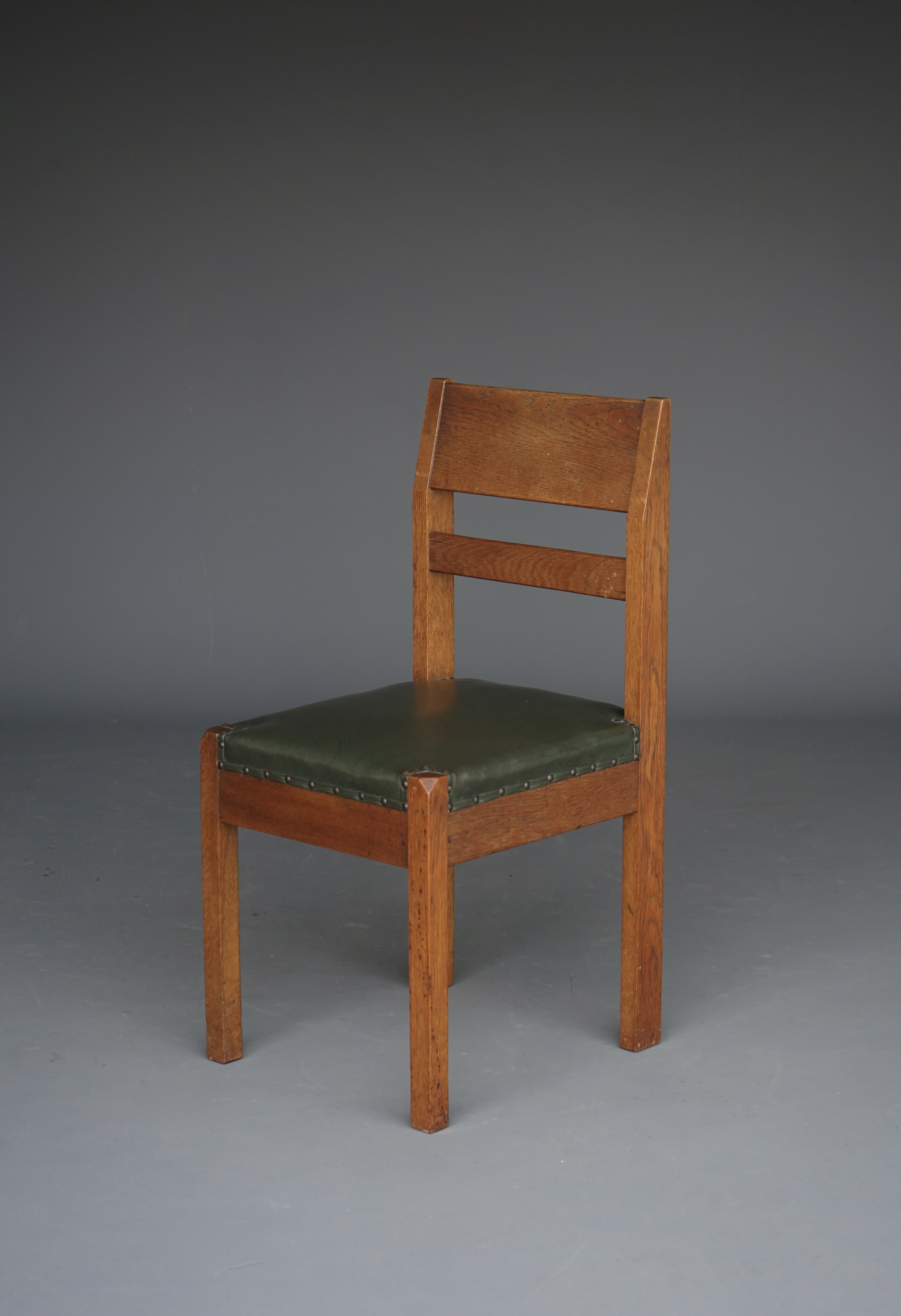
Piet Klaarhamer (Nl 1874-1954)
Oak side chair with green leatherette upholstery. Circa 1917.
The early designs of modernist architect Piet Klaarhamer use simple, rudimentary constructions, and demonstrate an honest use of the materials used.
This important chair was the first piece of furniture that Klaarhamer designed in 1917 with manufacture in mind – However it was ultimately manufactured in very limited numbers by company called NV Nederlandse Meubel en Houtwarenfabriek in Zaandam.
Klaarhamer’s designs had a clear influence on his students, including the well-known architects Piet Elling and Gerrit Rietveld.
The design of this particular model (without arms) inspired Rietveld in the design of his well known ‘Military Chair’ in 1923. It is a design that is well documented in the monograph on Klaarhamer written by author/historians Marijke Kuper & Monique Teunissen*. This book details a letter (with a sketch of the chair) by Gerrit Rietveld to the architect J.J.P Oud.
Price: 2,400 euro. Condition report available.
http://www.merzbaufurniture.com
*Literature: Piet Klaarhamer Architect en Meubelontwerper. Marijke Kuper & Monique Teunissen, nai010. 2014


Ko Verzuu (Netherlands 1901-1971)
A rare toy chair designed by Ko Verzuu for ADO. Circa 1930s.
plywood 19 x 20 x 20.5cm high (with original cushion). Early brandished mark to the underside (with an early understandable misattribution to Rietveld)
Between 1925 and 1955 Dutch designer Ko Verzuu designed many toys under the influence of the Dutch Modernist De Stijl painters. His designs were inextricably bound up with innovations in art, health care and pedagogy in the first half of the 20th century. In 1920, the sanatorium Berg en Bosch was founded in the sanctuary on the outskirts of Apeldoorn. This sanatorium offered rest and care to tuberculosis patients. Once patients had recovered from their illness, returning to regular working life often proved to be difficult. In order to prepare patients better for their reintegration, the sanatorium developed a modern treatment: occupational therapy. One of the ways this took shape was in the production of wooden toys. These toys were given the name ADO; an abbreviation that initially stood for Arbeid door Onvolwaardigen (Labour by the Deficient), but was wisely changed to Apart Doelmatig Onverwoestbaar (Special Functional Indestructible) in 1962.
Price: 1.100 euro

1970s Brutalist abstract sculpture. Unsigned.
A large basalt stone sculpture composed of simple modernist/architectural forms. At some time this sculpture has stood in a garden which has resulted in a thin layer of moss on some parts.
It measures 36 x 12 x 45cm high.
Price: 1.500 euro
 [merzbau]