Krat tafel

Gerrit Rietveld (Nl 1888 – 1964)

Cassina ‘crate’ table. Early edition – late 70s/early 80s.

beech wood. 174.5 x 97.5 x 71cm high.

The original Crate Series were designed by Gerrit Rietveld in 1934 and sold mainly through the warehouse Metz &Co. The furniture was described in the store’s advertising as “weekend furniture,” suitable for “weekend houses, sunrooms, student and children’s rooms“.

This table or desk is a late 1970s or early 1980s Cassina edition. It has a very low manufacturers number (31) stamped on the underside next to the Cassina mark.

Price: 3.500 euro

http://www.merzbaufurniture.com
Wegner oak table

Hans J. Wegner (Dk 1914-2007)

Oak Model AT 310 Extendable Dining Table by Hans J. Wegner for Andreas Tuck, 1960s

A dining table designed by Hans Wegner in 1955. This classic piece of Danish modernism: simple and understated.

Included are two extension leaves that can be stored at the underside of the table. (each leaf is 40 cm wide so it is 160cm wide without the additional leaves)
The table is fully marked at the underside. Andreas Tuck, Denmark.

240 (extended) x 94 x 72cm high.

Price: 3.950 euro

http://www.merzbaufurniture.com
Gebroeders Reens desk

Gebroeders Reens (Nl early-mid-c20th)

Amsterdam desk 1930s

126 x 64 x 75.5cm high. Maple/birch and lacquered wood

A small a Dutch 30s art deco/modernist curved desk. Warm maple veneer with off-white lacquered wood.
This double-sided/freestanding desk was part of the interior of the jewellery shop S.Spyer located at the Koningsplein in Amsterdam. In 1929-1930 the shop was redesigned by Amsterdam architect Harry Elte, giving the shop a more modern Art Deco shopfront and interior. The furniture was executed by the Gebroeders Reens company. (original key monogrammed ‘R’).

Price: 2.700 euro

http://www.merzbaufurniture.com
model 3 desk lamp

Sybold van Ravesteyn (Nl 1889-1983)

Model 3 desk lamp. Metal & lacquered wood.

_Originally designed in the 1926, a few limited productions of the design were manufactured in the 1970s. This particular lamp is a very rare 1970s production that was the most faithful to the original series of only 8 lamps that were made. This version has wooden black and white sections (like the original). It has a screwed in metal plate around the two switches (like the original) and a cleaner top edge (without a plastic protector shield that some versions have)

(please note that this is not a DS 23 Huszár lamp)
.
12 x 10.5 x 26.5cm /without bulb

Lit: Sybold van Ravesteyn architect; Kees Rouw, Nai010 uitgevers/publishers, 2014 pp.59

Price: 2.800 euro

http://www.merzbaufurniture.com
Large Art Deco desk

A high quality 1930s French double-sided desk.

Original key and lockable four drawers. 170 x 75 x 75cm high.

Price: 3.600 euro

http://www.merzbaufurniture.com
Italian 1960s sideboard

Giovanni Ausenda (Italy mid-c20th)

model ‘Caleno’ credenza/sideboard ±1960s for Stilwood, Italy.

Rosewood & Mahogany. 213 x 53 x 74cm high.

This Brutalist Italian sideboard with subtle architectural details has a strong classical presence. This is what we would call a sideboard for life! Anchored in the right setting this is a timeless design that can look like it has always been there.

Price: 3.900 euro

http://www.merzbaufurniture.com
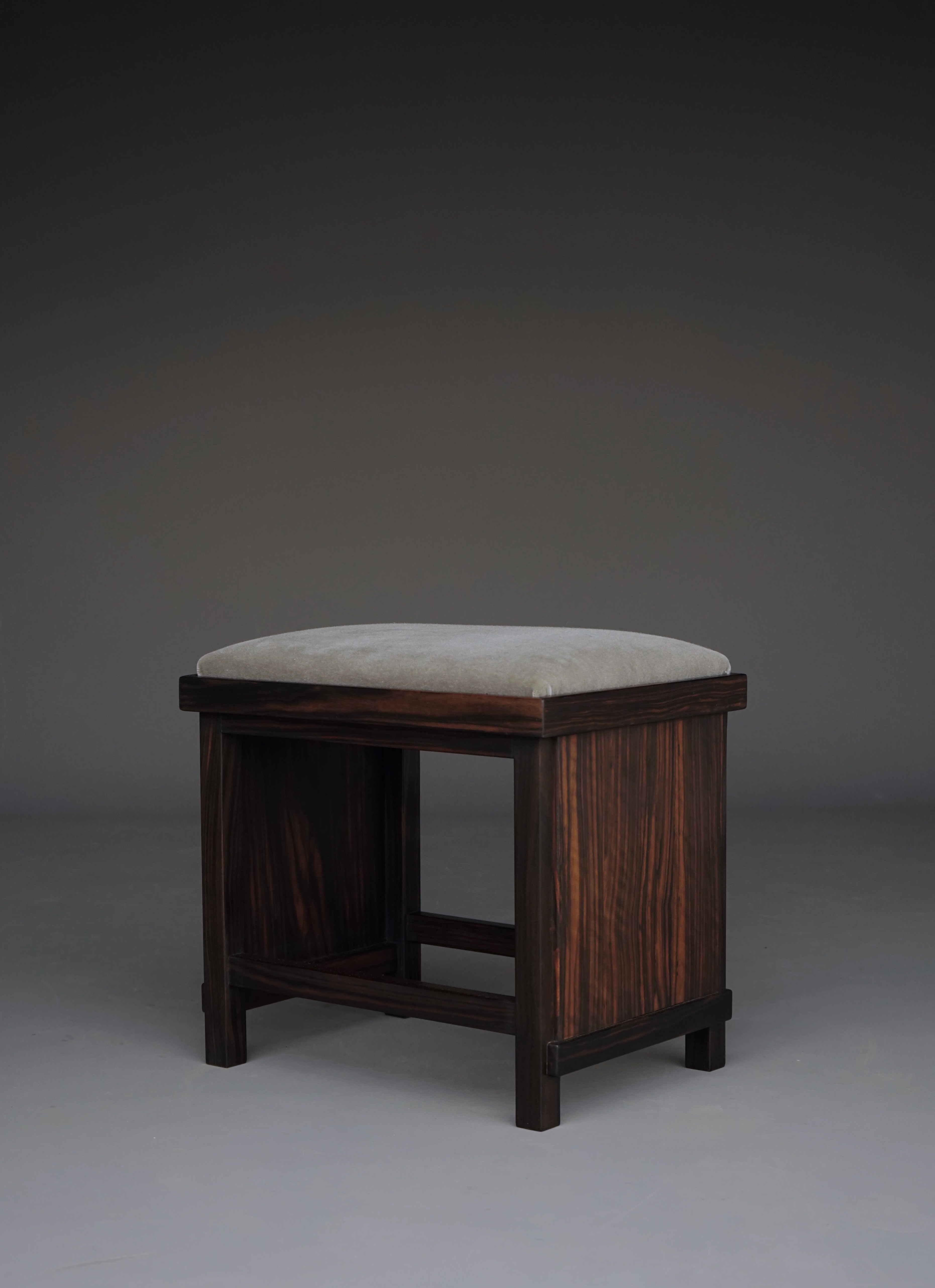
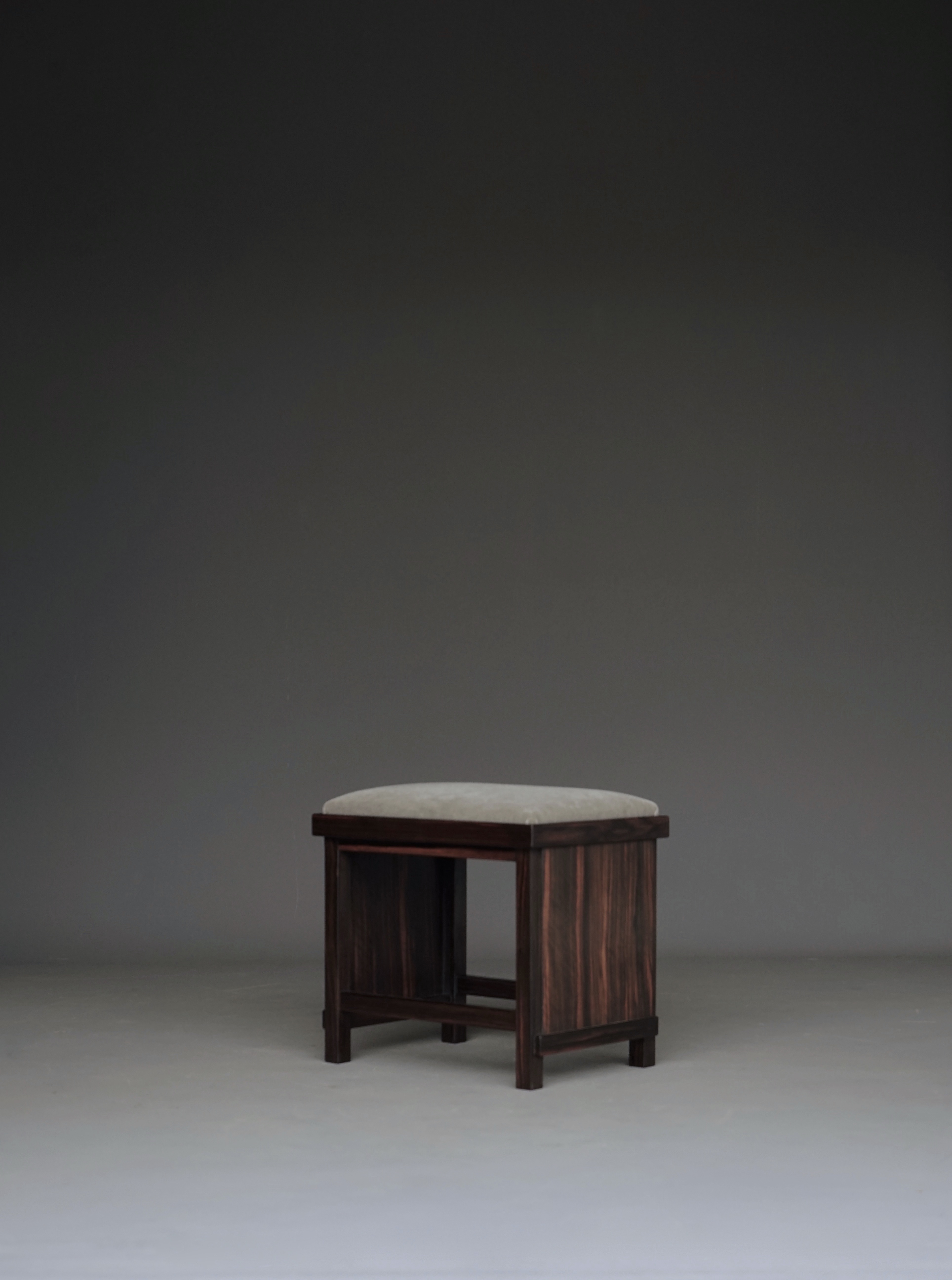
Art Deco stool

A 1930s Art Deco vanity stool. Unknown origin. (unrestored)

Mahogany and maple wood veneers around a wooden constructed base.

We have left the period linen upholstery – A possible upholstery project or just left as it is.

Price: 1.000 euro

http://www.merzbaufurniture.com
Eric Gill (Uk.1882-1940)

Holy water stoop. 1930s. Hoptonwood stone with patinated bronze display stand.

18 x 24 x 25cm high (when mounted on stand)

Provenance: By descent to Mary Gill, 1940 and to her daughter Joan Hague, 1963. Acquired from Rosalind Erangey, daughter of Joan and René Hague, 1994. Personal collection 1994-now.


A water stoop (vessel containing holy water) Biographer Fiona McCarthy confirms that Gill carved several water stoops whilst working at Pigotts (the farm house near High Wycombe where Gill lived and worked from 1928). The carved lettering to the underside of this one is evidence that the stone was repurposed for use – It also shows signs of once having once been set into the walls of a church.

Eric Gill, worked as a sculptor, typographer, illustrator and stone carver. Gill designed many fonts still in use today, most notably Gill Sans (1927-1930) and Perpetua (1929). He influenced the next generation of British stone carvers and letter cutters through his work and teachings, and established an informal Arts and Crafts community in Ditchling Common, England.
Gill was a Catholic convert, and after 1913, his work became increasingly involved with religious themes. Moreover, in recent years Gill has become a controversial figure, due largely to the erotic nature of much of his art and his own sexual behaviour/extreme proclivities, as revealed in his diaries.

Price: 11.000 euro

http://www.merzbaufurniture.com