
1970s large abstract Brutalist sculpture. Painted carved wood and steel.
Unsigned.
58 x 26 x 72cm high.
Price: 2.000 euro
furniture, art & design
1970s large abstract Brutalist sculpture. Painted carved wood and steel.
Unsigned.
58 x 26 x 72cm high.
Price: 2.000 euro
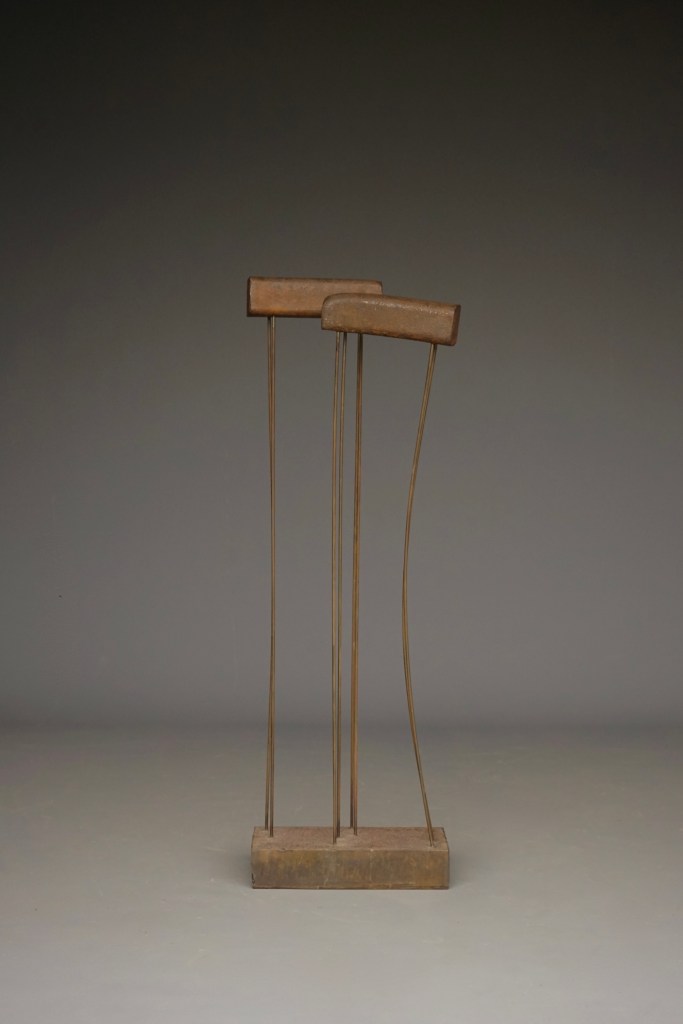
Circa 1960s standing sculpture in the manner of Harry and Val Bertoia. The sculpture weighs ±50kg. and is made from solid iron and steel. The two standing sections can be easily moved so that they swing slightly from side to side.
38 x 19 x 118cm high
Price: 2.200 euro

Hans J. Wegner (Dk 1914-2007)
Oak Model AT 310 Extendable Dining Table by Hans J. Wegner for Andreas Tuck, 1960s
A dining table designed by Hans Wegner in 1955. This classic piece of Danish modernism: simple and understated.
Included are two extension leaves that can be stored at the underside of the table. (each leaf is 40 cm wide so it is 160cm wide without the additional leaves)
The table is fully marked at the underside. Andreas Tuck, Denmark.
240 (extended) x 94 x 72cm high.
Price: 3.950 euro
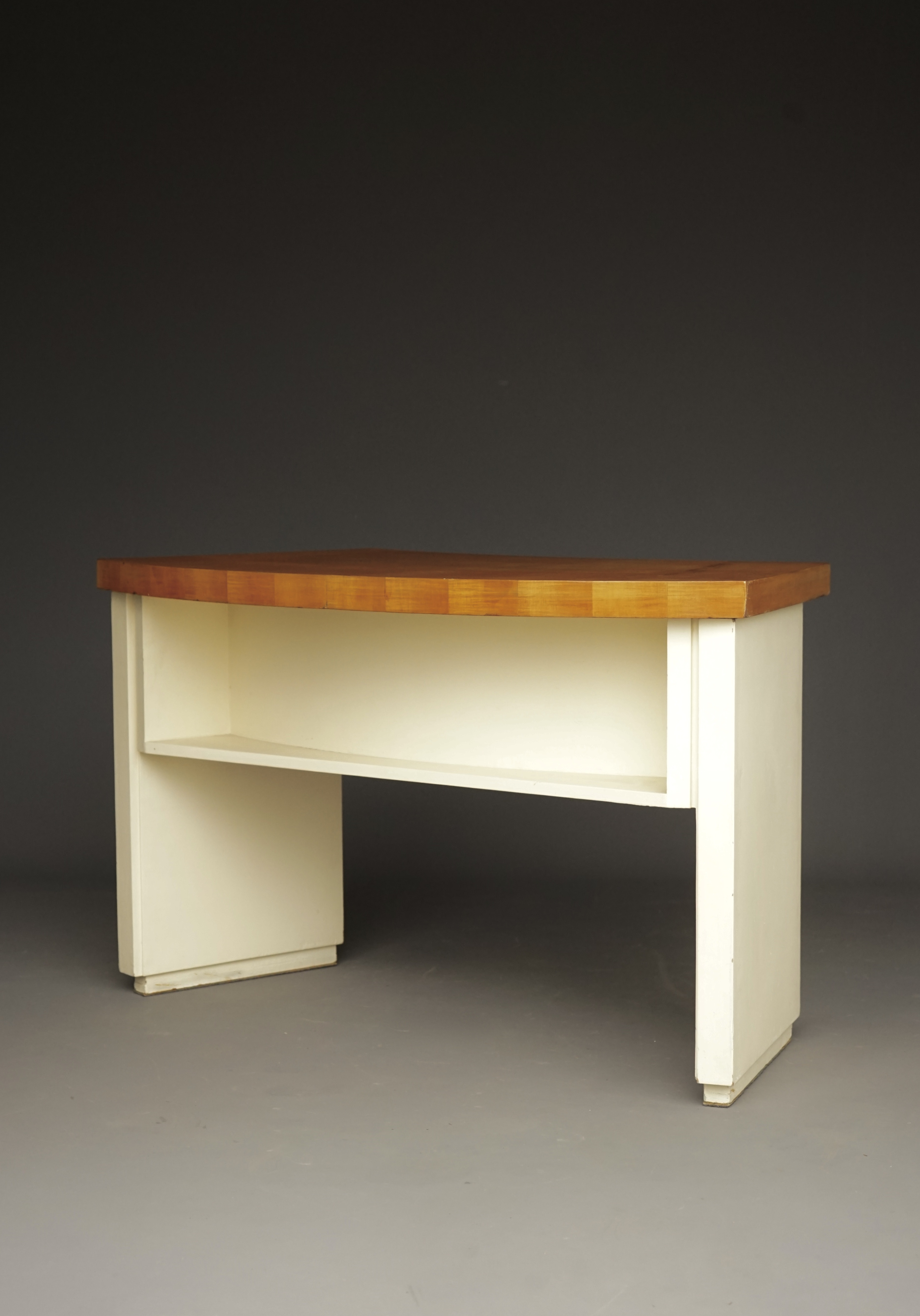

Gebroeders Reens desk
Gebroeders Reens (Nl early-mid-c20th)
Amsterdam desk 1930s
126 x 64 x 75.5cm high. Maple/birch and lacquered wood
A small a Dutch 30s art deco/modernist curved desk. Warm maple veneer with off-white lacquered wood.
This double-sided/freestanding desk was part of the interior of the jewellery shop S.Spyer located at the Koningsplein in Amsterdam. In 1929-1930 the shop was redesigned by Amsterdam architect Harry Elte, giving the shop a more modern Art Deco shopfront and interior. The furniture was executed by the Gebroeders Reens company. (original key monogrammed ‘R’).
Price: 2.700 euro


model 3 desk lamp
Sybold van Ravesteyn (Nl 1889-1983)
Model 3 desk lamp. Metal & lacquered wood.
_Originally designed in the 1926, a few limited productions of the design were manufactured in the 1970s. This particular lamp is a very rare 1970s production that was the most faithful to the original series of only 8 lamps that were made. This version has wooden black and white sections (like the original). It has a screwed in metal plate around the two switches (like the original) and a cleaner top edge (without a plastic protector shield that some versions have)
(please note that this is not a DS 23 Huszár lamp)
.
12 x 10.5 x 26.5cm /without bulb
Lit: Sybold van Ravesteyn architect; Kees Rouw, Nai010 uitgevers/publishers, 2014 pp.59
Price: 2.800 euro
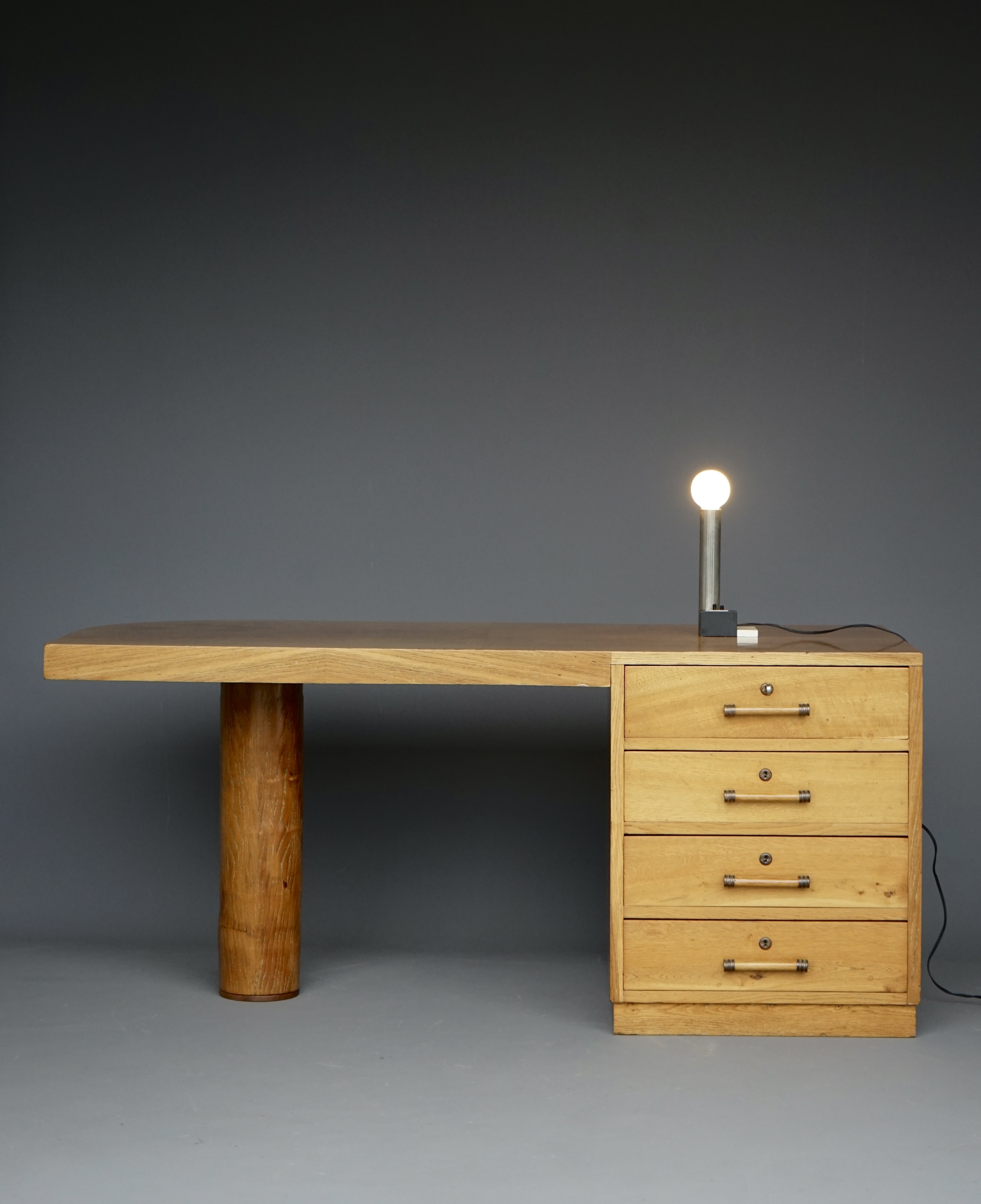
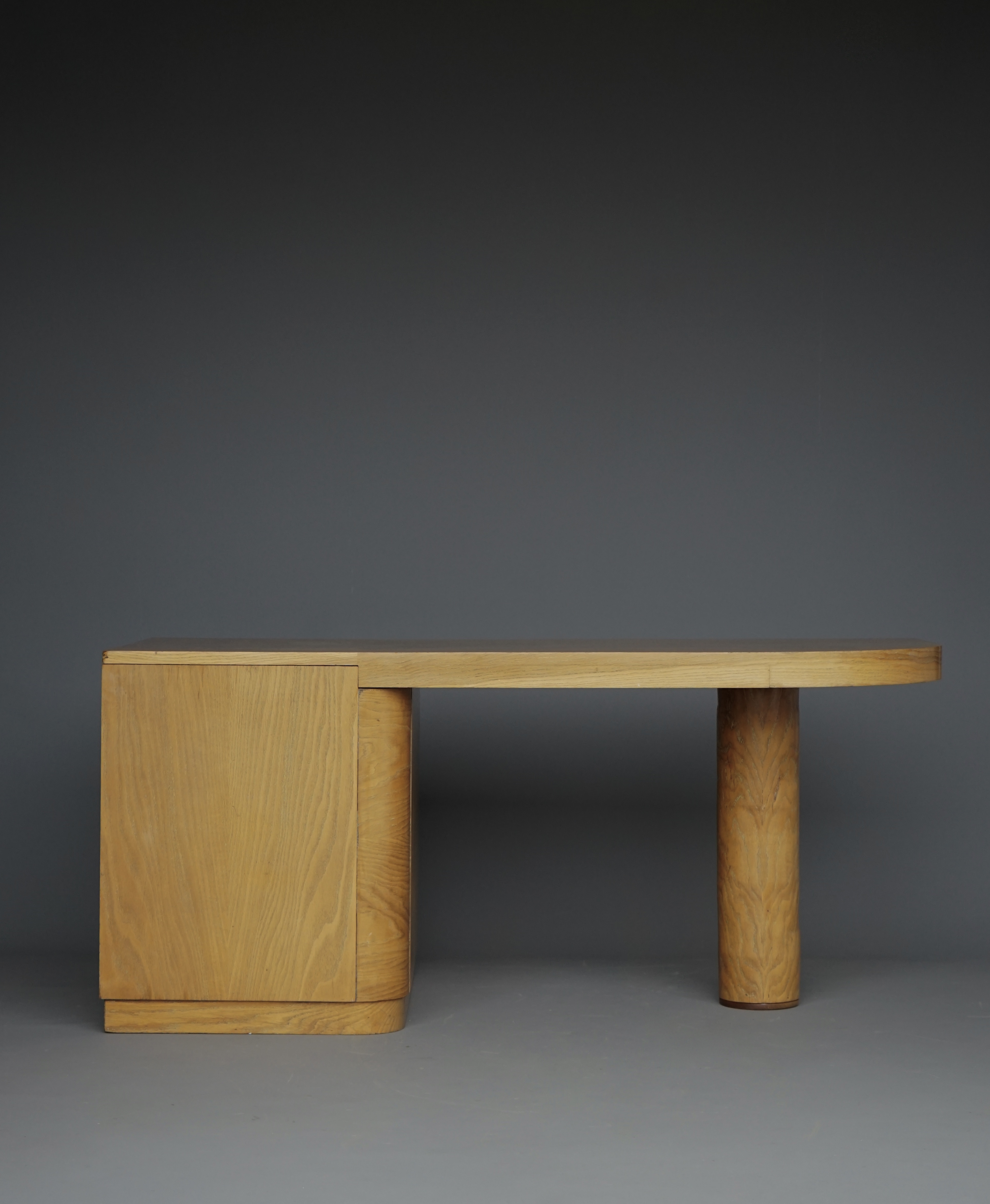
Large Art Deco desk
A high quality 1930s French double-sided desk.
Original key and lockable four drawers. 170 x 75 x 75cm high.
Price: 3.600 euro

Jan de Jong / Dom Hans van der Laan (Nl 1904-1991)
Pair of original Bossche School church benches/pews from the Sint-Willibroduskerk in Almelo. 1960s.
Stained pine wood with hand forged large nails.
302 x 67 x 86.5 (seat height 48.5) Note: Measurements are according to van der Laan’s theories of the ‘plastic number’ system.
Two rare long benches designed by the Dutch Benedictine monk and architect Dom Hans van der Laan and executed by fellow architect Jan de Jong for the Sint-Willibroduskerk in Almelo.
The architect Jan de Jong who worked closely together with Dom Hans van der Laan was responsible for the design of the church and its interior. They created an outstanding body of work ,very much defining what is called now the Dutch Bossche School style.
The artist Wim van Hoof was responsible for the entire colour scheme of the church and its interior (including these benches). The colour of the benches is mostly green but has a touch of brown with a silvery blue tint.
The benches were purchased after the demolition of the church in 2005 and is in a very nice original condition.
Price: 11,000 euro (per piece)
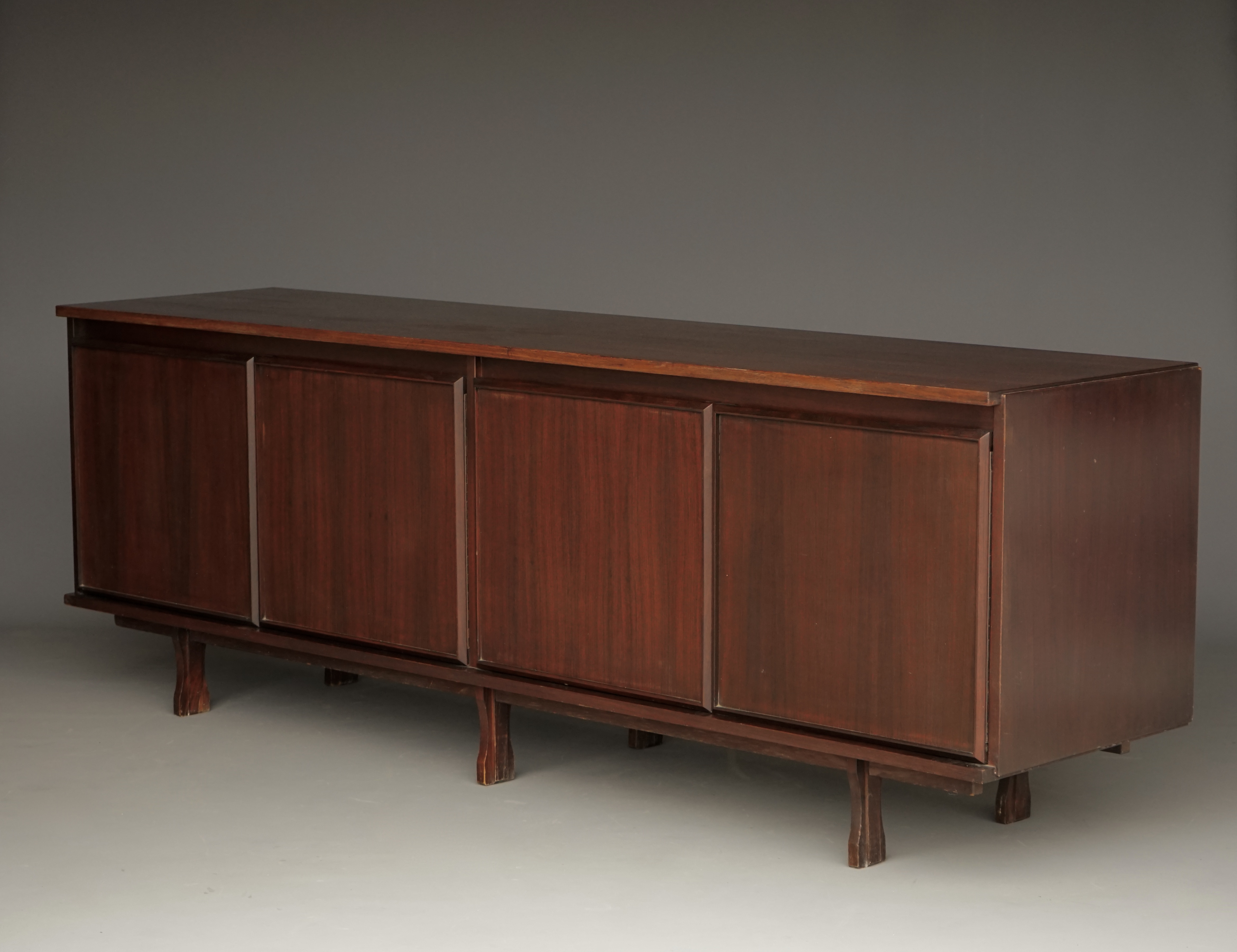

Italian 1960s sideboard
Giovanni Ausenda (Italy mid-c20th)
model ‘Caleno’ credenza/sideboard ±1960s for Stilwood, Italy.
Rosewood & Mahogany. 213 x 53 x 74cm high.
This Brutalist Italian sideboard with subtle architectural details has a strong classical presence. This is what we would call a sideboard for life! Anchored in the right setting this is a timeless design that can look like it has always been there.
Price: 3.900 euro
 [merzbau]